
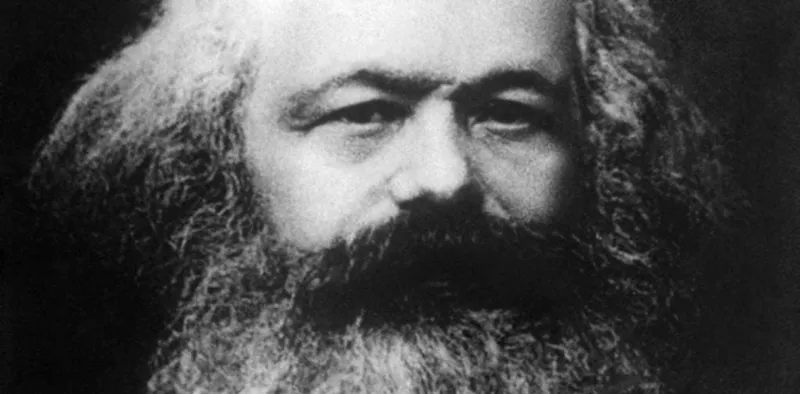
The Relevance of Marx
During the lifetime of great revolutionaries, the oppressing classes constantly hounded them, received their theories with the most savage malice, the most furious hatred and the most unscrupulous campaigns of lies and slander. After their death, attempts are made to convert them into harmless icons, to canonize them, so to say, and to hallow their names to a certain extent for the “consolation” of the oppressed classes and with the object of duping the latter, while at the same time robbing the revolutionary theory of its substance, blunting its revolutionary edge and vulgarizing it.
Lenin, State and Revolution
It wasn’t that his life is of no interest. Nor is it that you can divide his ideas and work from his life. This is barely true of any thinker, but is perhaps especially untrue of revolutionary thinkers. One of the myths about Marx is that he spent all his time hunched over books, disdaining the fray, withdrawn into a world of ideas. Marx was an activist all his life, passionately involved in almost all the great liberatory struggles of his time – from Chartism to the fight against slavery – even when his personal circumstances, or a downturn in the pace of events, forced him to be involved from afar.
I just wasn’t interested in going to gaze at samples of his handwriting. I reasoned that, to the extent that the exhibition relate facts, they’d probably be facts I already knew (Marx is one of a very few things I know quite a lot about). I certainly was not interested in hearing the kinds of interpretations of Marx – his ideas or his life – that the British Library was likely to offer. I remember being surprised by the surprise some people showed at the gloss on events offered by the Royal Academy at their exhibition of Russian Revolutionary art in 2017. Really, what do people expect?
Anniversaries and commemorations tend to be odd affairs, especially when they involve the commemoration of revolutionaries by the mainstream. The 2018 anniversary produced a rash of such drivel in the British media.
In 1991 the great Marxist journalist Paul Foot wrote about “the old English disease” of “revolutionary necrophilia – the love and worship of revolutionaries long after they are safely dead”. It often involves cringeworthy misunderstanding and/or misappropriation of those revolutionaries. The example we are perhaps most familiar with nowadays is Martin Luther King. We all (I hope) know how grotesquely King is misrepresented by today’s culture as it appropriates and sentimentalizes him. The example Foot gave in ’91 was of the Observer commemorating the 200th anniversary of the publication of Thomas Paine’s Rights of Man by asking Princess Anne to deliver a children’s lecture about it. Paine, as I’m sure my readers will know, was one of the most incendiary republicans in history, and the anti-monarchy sentiments in Rights of Man helped ignite the American revolutionary war.
(As I republish this, we are witnessing almost the entire mainstream in paroxysms of disapproval and paranoia over the student protests against the genocide in Gaza. Many are pointing out that the protestors are being subjected (in addition to violent attacks from pro-Israel groups and police) to more or less exactly the same spurious criticisms and insults - sometimes recoded - that were lobbed at the Civil Rights movement and the anti-war movement in the 1960s, often by people who would claim to be sympathetic to those movements and their ideals. As someone once said: a liberal is someone who is against every war except the current one, and supports every protest except the ones now underway.)
While there is, as Foot pointed out, something bizarre about this sort of thing, it is also understandable when looked at from a certain point of view. After all, contrary to some still widely-held and widely-promoted ideas, ‘communist’ regimes are not uniquely guilty of having been born in violent revolution. The capitalist world is the product of a series of revolutions which shook the world every bit as much as, say, October 1917. Indeed, modern Russia is a capitalist country, whereas, in 1917, it was only nascently capitalist, which most of its economy still effectively feudal. This means we should include October 1917 in our list of revolutions which gave rise to the capitalist world. However this happened, and whatever the intentions of the people who made it, in retrospect we probably have to see the Bolshevik revolution as a bourgeois revolution, at least in its long term effect. (There is a school of Marxist thinking about bourgeois revolution - associated with Isaac Deutscher, Maurice Dobb, Christopher Hill, etc - which sees them as definable by their consequences, regardless of the consciousness or intentions of those who make them.)
In my opinion, October 1917 was a great act of collective democracy which gave birth to a rudimentary workers’ state. But, after a relatively brief period of genuine socialist potential, a combination of factors - the blockading and invasion of Russia by foreign powers, the ruinous civil war against the counter-revolutionary Whites, the failure of workers’ revolution abroad (especially in Germany) leading to the isolation of revolutionary Russia, the decimation of the Russian working class, and flaws in the Bolshevik conception of socialism - led to the ultimate form of the Soviet Union as a form of bureaucratic state capitalism. After the fall of ‘communism’, all free-market capitalism had to do was step in and take over a system basically already ready for it. It had to expropriate loads of state property – and did, in a feeding frenzy that sent poverty skyrocketing. But the capitalist basis and framework – industrial production, wage labour, an exploited working class and an exploiting ruling class – was already there.
The point here is that, if you want to blame Marx for the Soviet Union, you have to therefore admit that he’s one of those revolutionaries who helped make the world we currently live in, much like Paine and Jefferson and Robespierre. Even if you attribute some of the guilt of 20th century ‘communism’ to him, you still – if you’re honest – have to see him in a pantheon of Early Modern and Enlightenment thinkers who helped give birth to the modern world via much suffering. (As it happens, I agree with the superb Marx scholar August Nimtz, who evaluates Marx and Engels as among the most important democratic influences of their age.)
The bourgeois thoughtworld is very comfortable forgetting or moralising about horrors which helped bring it into existence. Or disavowing them. The French Revolution is a key event in the fall of the feudal world and the rise of the capitalist world. And yet so many of today’s reactionaries like to talk about it as if it is some alien event which actually inaugurated the anti-capitalist, anti-liberty tradition of totalitarian leftism. The truth is that you wouldn’t have the modern Western world without the Terror (and you always have to remember Twain’s words about the other Terror, the previous Terror, the forgotten one that lasted for thousands of years). Nor would you have it without the English Revolution or the American Revolution. The capitalist world was born in bloody revolution, in suffering and horror, just as much as the ‘communist’ world was. That’s history; so far, anyway. Marx saw the history of human civilisation up until the dawn of socialism, i.e. the history of class society, as pre-history. Only after the freeing of humanity from the alienation of class would real human history begin; a profoundly, exhilaratingly optimistic and humanistic vision. At the same time, Marxism is – as Terry Eagleton has eloquently observed, drawing on Walter Benjamin – the only philosophy which faces head-on the Tragic fact that, because human history has up until now been the history of class society, progress and horror are not unfortunate bedmates but as inextricable a dyad as Jekyll and Hyde. The capitalist world reigns, and so forgets or normalises or redefines its own bloody origins into nullity while loudly moralising about the horror it thinks it can get away with disavowing. This isn’t just how it treats history. It is ongoing policy.
The point I wanted to make, before moving on, is that Marx is approached – at least in the less avowedly partisan sectors of the bourgeois ‘means of mental production’ – with, at best, the same ambivalence that bourgeois thought always shows when talking about the great revolutionaries. They will ignore those whom they can ignore (usually those belonging to the obscured unhistory of the unpeople such as Toussaint L’Ouverture for instance), recuperate those whom they can spin, and ideologically manage those who can neither be ignored nor endorsed.
Hence this periodic thing you get in the media about ‘the return of Marx’.
In 1998, when I’d been studying Marx and Marxism for a couple of years, I started reading International Socialism, the scholarly journal of the UK Socialist Workers Party. (As I always take pains to point out when this issue comes up, while I share a fair amount of theoretical agreement with the ideology of the International Socialist tendency, I was never a member of the British SWP.) The very first issue I received and read – #79, Summer 1998 – had the rhetorical question ‘The Return of Marx?’ on the cover, announcing an editorial by John Rees, in which he examined what the back cover called “the revival of interest in Marx among media pundits and academics”. Rees devotes most of his editorial to an ostensible revival of interest in Marx among left-leaning intellectuals as the overpowering hegemony of ‘postmodernism’ begins to wane in the academy. But he also recounts some mainstream media thinkpieces, such as an Independent on Sunday Review Section article, a piece about Marx in the Financial Times, and a Guardian feature about the Communist Manifesto.
The 150th anniversary of the publication of the Manifesto was the main cause of all this broadsheet Marx talk. But there was another context. The previous year had seen the so-called Asian Financial Crisis, a – to quote the Wikipedia article – “period of financial crisis that gripped much of East Asia beginning in July 1997 and raised fears of a worldwide economic meltdown due to financial contagion”. In the following chain reaction “most of Southeast Asia and Japan saw slumping currencies, devalued stock markets and other asset prices, and a precipitous rise in private debt.”
Michael Roberts, the Marxist economist who blogs here, has written about the capitalist world’s failure to properly recover in its customary way from the crash of 07-08 in his excellent book The Long Depression. (This, for my money, takes its place alongside Andrew Kliman’s The Failure of Capitalist Production and Paul Mattick Jnr.’s Business as Usual as one of the best Marxist books about the crash and its aftermath – they don’t agree on every point, but only a fool would expect them to, or object that they don’t.) Roberts also published an excellent little book called Marx 200, which I fervently recommend to everyone.
Roberts has an amusing section later in the book in which, in line with our theme here, he goes through some recent debate about Marx in the mainstream. The level of ignorance about Marx’s actual ideas among the economists and thinkers charged with debating him for public edification is equal parts hilarious and infuriating, much like watching celebrities denounce the evil drug ‘cake’ for Chris Morris. The experts are foxed by ‘objections’ to Marx that don’t stand up to the slightest actual reading. At least, when he turned up for his debate with Žižek, Jordan Peterson admitted that - after years of pontificating about the failures of Marx - he had only just started ‘doing the reading’ by checking out the opening pages of the Communist Manifesto.
It is one of the peculiar ironies of history that there are no limits to the misunderstanding and distortion of theories, even in an age when there is unlimited access to the sources; there is no more drastic example of this phenomenon than what has happened to the theory of Karl Marx in the last few decades. There is continuous reference to Marx and Marxism in the press, in the speeches of politicians, in books and articles written by respectable social scientists and philosophers; yet with few exceptions, it seems that the politicians and newspapermen have never as much as glanced at a line written by Marx, and that the social scientists are satisfied with a minimal knowledge of Marx. Apparently the feel safe in acting as experts in this field, since nobody with power and status in the social-research empire challenges their ignorant statements.
Eric Fromm, Marx's Concept of Man
Eric Fromm wrote the above lines in 1966, and they have only become more true with time.
Far from being yet another useless fluff piece, Roberts’ book is Marx commemorated in a useful way. It is just about the best short and clear introduction to Marx’s economic thought that I know of (Roberts only brings in the wider aspects of Marx’s worldview where necessary to show how ‘joined-up’ Marx’s thinking was). It is also a forthright and uncompromising defence of Marx as an empirically-confirmed economic realist, and of his economic analysis as scientific (in the broad sense). Unlike so many Marxists today, Roberts unapologetically defends Marx’s original ideas as still valid and as powerful lenses through which to understand the current state of capitalism. Most especially, Roberts champions – rightly, in my view – Marx’s analysis of capitalist crisis as being primarily caused by what Marx called ‘the law of the tendential fall in the rate of profit’ (LTFRP).
I won’t go into it here but it is essentially a claim that capital’s own inescapable drive to pursue profit tends, paradoxically, to push overall profit rates down. In order to raise the rate of profit, capitalists reduce the amount of what Marx called ‘variable capital’ (i.e. payments for human labour) in the production process. In the process, they reduce the amount of value in the commodity that is produced, because value - in capitalism - is abstract, homogenous, socially necessary human labour time. At the phenomenological level of prices, what happens is this: less money is paid to workers, less money is charged for commodities, more profit is made, but simultaneously the rate at which profit (and thus capital) accumulates slows down. It is this innate tendency of capital - offset by countervailing factors but periodically prevailing - which regularly pitches capitalism into crashes and recessions. As the falling rate of profit triggers attempts to compensate with what Marx called ‘fictional capital’ - essentially credit - bad investments pile up until a crunch occurs and then crunches its way down the chain of creditors and debtors. This is what Marx actually meant by ‘overproduction’. He did not, again contrary to myth, claim that crashes were caused by overproduction (more stuff is produced than workers can afford to buy). When he talks about overproduction, he sees this as a consequence of the falling rate of profit and the recession. It is the contraction of the capitalist market in the face of falling profit rates which converts production into overproduction.
The evidence for the LTFRP, as marshalled by an Argentinian Marxist called Estaban Maito, shows that the rate of profit has been falling, worldwide, pretty much since capitalism began. In my opinion, by combining Roberts’ account of the ‘long depression’ with some version of the ‘creeping fascism’ theory advanced by Neil Faulkner et al, we can understand what is happening in the world today. Fascism is, at its most fundamental level, capitalism in decay, a response on the part of the capitalist system to blockages in capital accumulation. The capitalist world has run out of the ability to fool itself that neoliberalism has solved the accumulation crisis which hit once the long post-war boom (powered fundamentally by Cold War arms stimulus spending or ‘military keynesianism’) started to decay. Faced with a spiral of stagnating profit rates (not necessarily a death spiral but a crippling spiral all the same), capitalism is systemically reacting by generating authoritarian governments. Their populist/fascistic nature is an adaptation to the global ascendancy of representative (oligarchical) democracy as the optimum form for capitalist government (itself already hollowed out into what Peter Crouch calls ‘post-democracy’ by the neoliberal decades).
Having said all that, the LTFRP is a much-disavowed idea, even among so-called Marxists. Roberts makes a clear, simple, powerful, empirical case for its continued relevance. Impressive evidence is also to be found in a collaborative volume he co-edited called World in Crisis. Restating and insisting upon the relevance of the LTFRP is a very worthwhile thing to be doing these days, I think, because the most influential voices within Marxism – David Harvey, for instance – do not give the LTFRP the primacy it deserves, whereas Marx called it “the most important law in political economy”. Too often even those who advocate Marx are actually advocating a needlessly diluted or ‘amended’ version of his thought in which - whether they mean to imply this or not – his critique of capital seems to centre on its tendency to result in inequality, and/or things like the credit system.
I remember seeing Richard D. Wolff chat with Michael Brooks on The Majority Report, and after Brooks asked him why Marx’s ideas show that capitalism needs to be replaced owing to its inherent flaws, Wolf proceeded to talk about inequality and the credit system! Now these are undoubtedly huge problems, and Marx hated capital’s production of artificial social inequality. But issues like inequality and a rampaging credit system are, in principle, addressable and reformable. In principle you could heavily regulate the financial sector, and get the state to redistribute wealth a bit – and problem solved without having to get rid of capitalism! And this is what most supposedly Marxist commentary these days seems – knowingly or otherwise – to imply.
Marx’s criticism of inequality is one of those things the dictatorship of the commentariat feels relatively safe talking about, even if they then fly off on irrelevant digressions about how workers are affluent now – as if that disproves Marx. As it happens, Marx knew full well that workers might get wealthier in relative terms. He writes about how wealth and poverty are socially and historically relative to the development of the productive forces, and to the level of social development.
It is also the case that, contrary to the assumptions of every gallumphingly ignorant popular anti-Marxist, ‘equality’ was simply not Marx’s ideal nor his goal. Marxism has never claimed the equivalence of all humans. Marxism is not and never has been about ‘equality of outcome’. Marx and Engels specifically rejected egalitarianism, in the sense that they were against abstracting real humans away into ideals, and against ideal plans to enforce equality from above, all of which they critiqued as emanations of an older and superseded conception of socialism. Marx was never concerned about equality, but rather with freedom. Socialism, for Marx, is the social state in which, unseparated from the means of production, and thus de-alienated from labour, humanity would be free to develop its powers and capacities, socially and individually - each being a precondition of the other.
But Marx demonstrated, most especially in his theory of crisis, that capitalism is inherently morbid and self-destructive. He once wrote “the real barrier of capitalist production is capital itself”. It needs to be replaced, and that is a revolutionary imperative not a reformist one. It can’t be cured, or even efficiently regulated – not for long. Left to continue, it will continue generating waste and misery.
At a time when the stakes have never been higher, and when Marx is genuinely back on the agenda of many people in a way he hasn’t been for ages (fatuous thinkpieces to one side), we need to be clear about these things – if only to mark out lucidly the difference between an authentic, revolutionary Marxian critique of capitalism and some species of more-or-less Marx-flavoured left-reformism. Most left economics is dominated by Keynes anyway, which makes it barely even reformist. Marx is a much needed alternative. (He also has the added advantage of having been right on every major point.) But there’s no point turning to him if we’re not clear that he thought capitalism needed to be done away with. This clarity is worth fighting for.
Let’s assume, as my dear friend El Sandifer did in her book Neoreaction a Basilisk, that we are fucked. That’s a fair assessment, as things stand. But reality, as dialectical materialism teaches us, does not exist in snapshots. Things change. But only if we change them. There is still, as unlikely as it seems, a world to win.