
Fatherlands
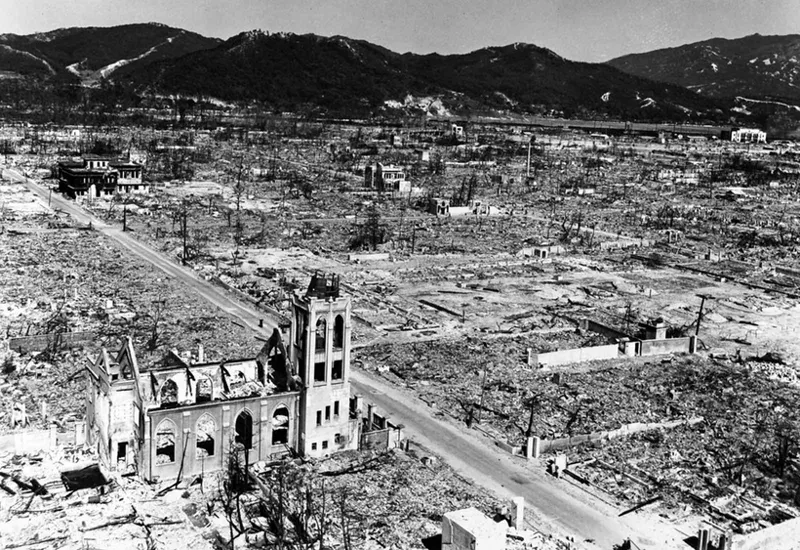
The Nazis won the war. They invaded and colonised the Western consciousness. They marched into, occupied, and restructured our heads. They redrew the maps in our minds. They razed and rebuilt our perceptions. They re-engineered our entire civilisation. They purged the libraries of our brains of the books they didn’t like, and convinced many of us to burn those books, happily, with smiles on our faces, certain that in so doing we were fighting intolerance and tyranny. They wrote new books, and we filled the shelves with them. They rewrote our entire story, and we still live in their unfolding plot.
The counterfactual genre tends to imagine that, in a victorious Nazi state, the Holocaust would be a dark secret.
In reality, if Germany had won, today the Holocaust would be known about in Germany.
It would be part of public consciousness; a small part. It would even be studied, talked about, theorised; by a few.
The twenty-first century Nazi state would be perfunctorily apologetic, and claim moral superiority anyway. Indeed, the ‘mistakes’ of the past would be one way in which that state, that society, comprehended and oriented its sense of its own moral superiority.
There would be melancholy films and TV dramas. There would be sumptuous and melancholy documentaries. They might begin with declarations that the war began with good intentions, started by men of good faith. They might tell of how Rommel was a decent man.
There would be an industry devoted to it.
Students in school might learn of it as a tragedy of the past. Their teachers would stress the way it self-assembled, almost by accident. They would stress the deadly Soviet threat. They would stress Stalin’s gulags. They would stress the exigencies of war. They would stress that the leaders of Germany then were men ‘of their time’.
And dissidents would use it to challenge their culture. And centrists and conservatives within the Nazi state would charge that ‘the left’ talked about it too much. They would prefer to efface it, and focus on the crimes of official enemies, always situating Germany as morally superior by default. Those accused of talking about it ‘too much’ would be the “blame Germany first crowd”. The German public would learn, via a million conservative pundits and talking heads, the mantra that “the Jews killed their own people too”, and imagine that this meant something.
There would be many ordinary Germans who would find the “constant” talk about it infuriating. They would wave the banners of the SS as their “heritage” and denounce the “politically correct thought police” who wanted to “rewrite history”.
There might have been civil rights struggles in the Nazi state as it negotiated the late twentieth century, or early twenty-first, and eased itself out of outright totalitarianism, as a victorious state which didn’t need to stay on a permanent total war footing would might have done.
Such struggles would have caused waves of statues to be erected. There might even, by now, be controversy about those statues. They might become flashpoints.
“Well, Bismarck was a conservative German nationalist too! Should we take down the statues of Bismarck? Or Frederick the Great?”
The knowledge of the Holocaust would not stop any TV News show, or newspaper, or politician, or broadcaster, or intellectual, in twenty-first century Nazi Germany, from proclaiming the greatness of the living German Reich, her devotion to human rights, to democracy, to liberty.
Twenty-first century Nazi Germany would continue its bloody adventures abroad – because imperialist, settler-colonial empires can’t just stop being what they are, and need maintaining – and they would be justified every time as humanitarian interventions, evidence of a messianic devotion to spreading German values.
Anyone who raised history would be impatiently dismissed.
“Yes, yes, yes, but that’s the past… what are we going to do today?”
If twenty-first century Nazi Germany were allied with Britain, criticism of its exploits would be dubbed the “anti-Germanism” of the left, and BBC News, if they ever had anti-war activists on, would put them opposite pro-war pundits who would angrily denounce their “reflexive opposition to anything Germany does”.
Even so, satirical news shows might occasionally criticise the government for going too far.
“This isn’t who we are,” the host might say, to pious applause.
The swastika flags would flutter over the mass graves, old and new. Even the critics, the dissidents, would drape themselves in those flags.
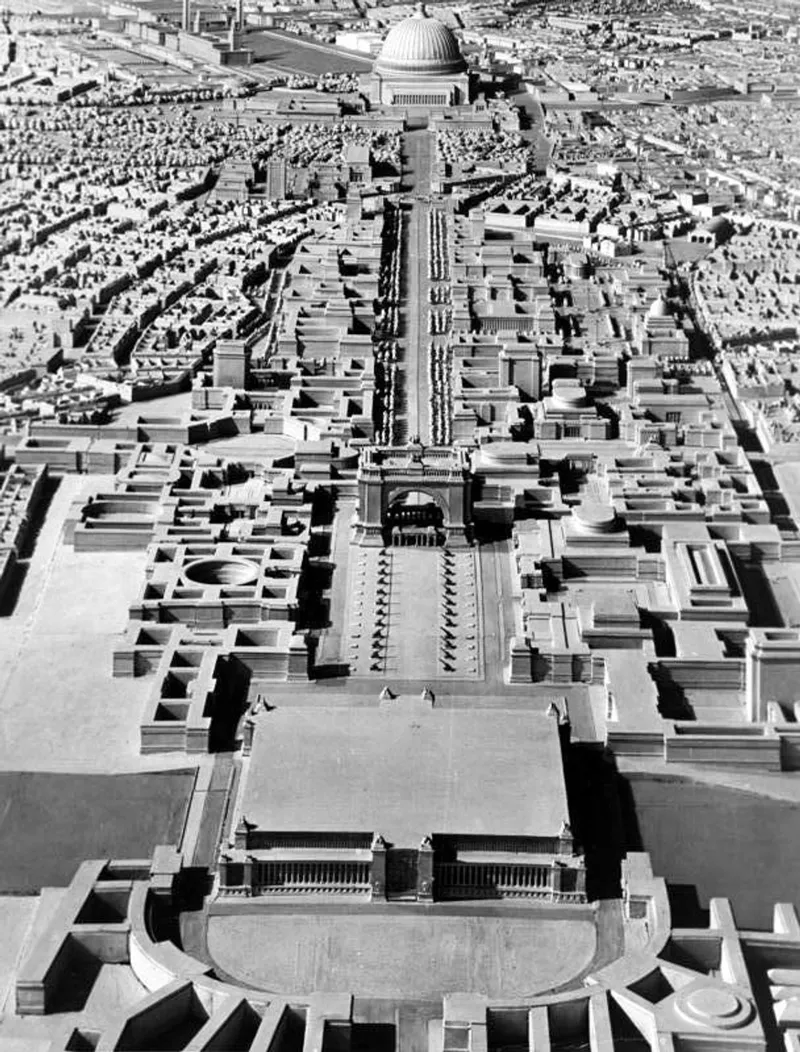
People living in New Berlin would browse the shops along the picturesque Eichmannstraße, maybe buy coffee table books devoted to the work of the genius Albert Speer, and stop to eat lunch on a park bench in the Himmlerplatz, with its beautiful flower beds.
There might even be little plaques to the murdered, next to posters for horror films about golems.
You might even be able to buy mezuzahs and menorahs in the souvenir stores.
And nobody but a few lunatics would find any of this odd.
Comments (8)
This feels more relevant than ever.
I revisit this piece regularly. I hope one day it will be published more widely. Thank you
One could be forgiven for thinking the South won the Civil War.
Lost Cause? How can it be lost if you didn’t actually lose?!?
Bravo.
This and your Dr Who fanfic about the Berlin Wall are maybe my favourite pieces by you.
oof. thank you.
fantastic, thank you for this