
Low Level C Arrays
Understanding C and C++ Arrays at the Low Level
Introduction to C Arrays
Arrays in C are fundamental data structures that allow the storage of multiple elements of the same data type in contiguous memory blocks. This structure enables efficient data manipulation and quick indexing, which are crucial for tasks such as sorting algorithms, buffer management, and handling large datasets.
Definition and Memory Layout
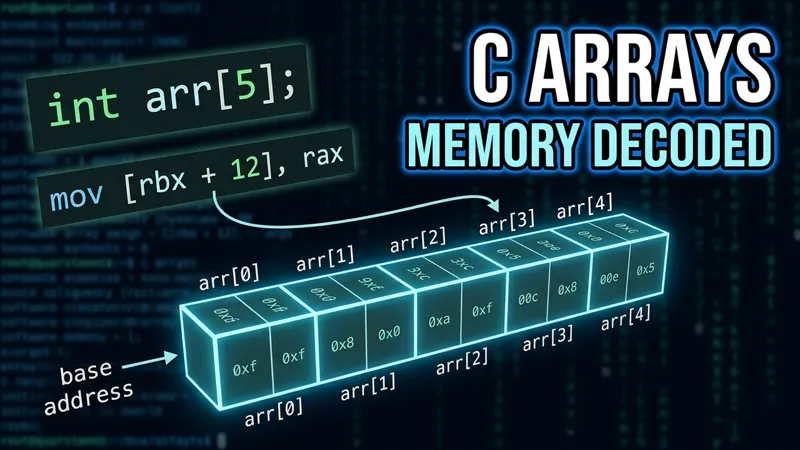
In C programming, an array is a collection of elements, each identified by an index or key. The elements are stored in contiguous memory locations, which means that the entire array occupies a single, unbroken block of memory.
Arrays are a cornerstone of both C and C++ programming, providing a structured way to handle collections of data efficiently. While C offers the raw power and flexibility necessary for low-level programming, C++ enhances this capability with robust STL containers that simplify array management and improve safety. Understanding how arrays are stored and manipulated at the low level not only deepens your programming knowledge but also equips you with the skills to write more optimized and reliable code.