
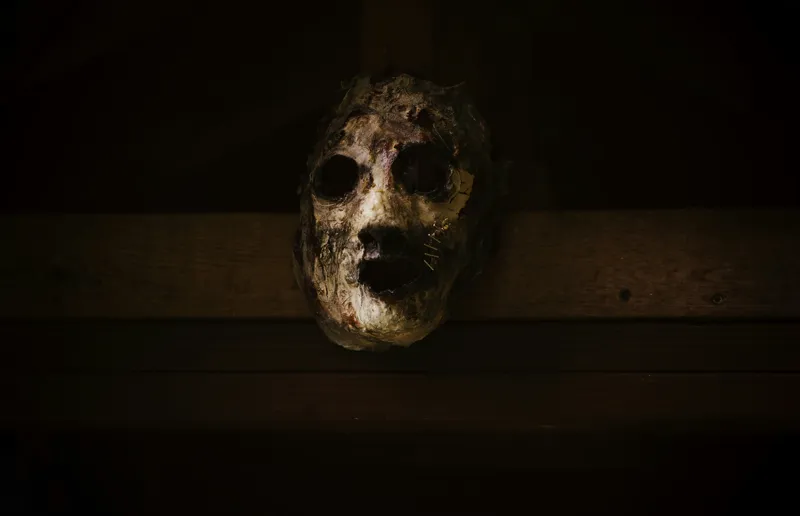
To Live Amongst The Haunted
What is it to be haunted? In the traditional sense, the classical version of the ghost story, it's to experience visitations from a restless spirit, a person whose soul or spirit has not crossed the boundary between the living and the dead to be at peace. Usually because they've suffered some kind of injustice in life, somehow connected to their death, they remain between these worlds. It may be direct, like a murder, or it may be something closer what we legally recognize as manslaughter, where the intent to kill wasn't there, but the actions lead to death. The haunting then becomes this unfortunate soul's attempt to secure something in the realm of accountability, justice if it's available, at base some kind of recognition of their humanity in having the truth of their death revealed. It is to have their lives, of which death is an inextricable part, remembered truthfully, to have their existence and humanity recognized. It is this aggrieved soul attempting to reach across the veil between life and death to assert that their humanity had worth enough for the truth of it to be recognized and remembered by the living.
Hauntings aren't the only stories we tell about things coming from the Other Side though, are they? We aren't only visited by the restless dead, attempting to cajole us into recognition and accountability.
There's another story we tell about things from beyond the barrier of mortality, but those things aren't looking for the living to recognize their humanity, because they were never human. In the most common versions of this story, they're older than any human spirit could be, and though they may attempt, at least initially to convince they are human, that what we're seeing or being told about is a haunting, but that's not what it is, is it? These entities, they use subterfuge to create confusion to their advantage, but their end goal is suffering, degradation and destruction of the humanity of the living. This is, of course, the narrative of possession.
I've struggle, for quite some time, to describe what is happening in my country. One particularly troubling aspect has been the way the vocabulary we use fails us. I can't escape the recognition this vocabulary we use has been shaped, at least in part, to fail us. It is often shaped in a way with the purpose to obscure the possible, in both the positive and negative senses. It is shaped by the desire to obscure that we might be able to create a better, more just future, one where our humanity is recognized. It is also shaped by the desire and instinct to obscure the fact that we are only human, and in so being, capable of the inhumanity of human beings in the past, as well as convincing ourselves there are some among us who transcend humanity. It is used to create the impression that through the triumph of the will, they have become more than human, and if we just try hard enough, we can become so too.
I've never accepted the existence of the supernatural. I have, at points, tried. It's just not in me. I don't believe in ghosts, demons, superhuman abilities bestowed on us by supernatural beings. I don't believe in Supreme Beings, and as follows, I don't believe they have armies of otherworldly minions, carrying out their will on the mortal plain, either directly or through exercising influence over human beings. I believe we're human, and that's it. I also believe we have a very hard time accepting and acknowledging all that this means, the full spectrum of variation within the human animal, and the many different influences which create our behavior.
This isn't to say I don't have respect for stories of ghosts, demons and gods, and what they can say to us, what they do for us. Storytelling seems to me, to be another way we work out what it is to live, which means to be among the living. Even when it involves stories of an afterlife, some place beyond the plain where mortality rules all things, it's still about what it is to live, and to live together. A significant portion of my life has been dedicated to my faith in storytelling, and it's become clear in this last quarter or so, there is no human endeavor I'd rather dedicate my time and energy to. It serves us, and I want nothing so much as to serve us through it. This is the closest thing I have to a faith. It is a faith built on what has been passed down to me, the storytelling of human history, as well as observing the importance of storytelling in human experience and affairs.
In those human affairs, especially in this day where technology and media have acquired such a significant place in our lives, we use vocabulary like, "dominant narrative" as opposed to "the most common version of the story told/believed." It's certainly more efficient, in terms of being fewer words, but it simultaneously obscures the fact that competing narratives are just that, stories.
It's interesting though, considering how this faith has shaped my life, how much I recognize the way story and language shape our lives, that in my endeavors to accurately assess and describe the reality of our times, I've always been reticent, felt some kind of shame at the idea of mixing the language of storytelling with the language of the real, the now. We use words like news, analysis, commentary to describe the way we tell stories of the world as we live in it, hoping they speak to people in the present, and that they are preserved to shape the understanding of the people in the future about how we experienced the sequence of events that will be their past.
It seems though, we're becoming more and more aware that like storytelling, the various arts of fiction, this language of non-fiction, "news" and the now is unable to escape the same parameters of story in more ways than not. The author, the writer, is incapable of telling a story that doesn't carry evidence of their experiences and the perspective those experiences have shaped. The language used can reveal or obscure, sometimes doing both. What one chooses to include or omit, says a lot about the perspective of the writer, and at the very least, can speak to intent or ignorance. Either of those things can also shape how an audience receives that story, but also defines who the intended audience is and so on.
As a result, we're coming to a better collective understanding that these divides between the fictional and factual are far more porous than we want to believe, and that a story can hue closer to one than the other, with or without a motive to mislead. We are encountering, now more than before, wrestling with the difference between fact and truth. Fiction, storytelling, at it's best, reveals truths. Non-fiction, news, history, at their best, reveal facts. There is an overlap here though, isn't there? We attempt to gain knowledge of the facts in order to reveal or form the wisdom of the truth.
In a way, this speaks to the difference between the ghost story and the possession story too. The ghost story is predicated on revelation of facts in the past, often to shape behavior in the present. It does't just serve justice, it serves accountability, a preservation or restoration of peace, harmony and security for a person, people or community. The revelation of harms done reveals not just those harms, but the capacity for them in their perpetrator, and offers knowledge, the truth of understanding what happened to the person who so badly needed their humanity recognized, sheer need or the laws of justice and harmony in some metaphysics, have allowed them to breach that barrier between the living and the dead. The ghost story is about the recognition of tragedy in the past, and the prevention of further tragedy in the present or future.
The possession story is something different. It is a story about deception. It can be a story about manipulation too, of wounds from past harms real or perceived, and the need for those wounds to be healed or at least for the sting of their pain to be lessened. It can also be a story of the manipulation of need. It can be the promise of status, power, wealth or even simply companionship, the salve for loneliness, but even these, we most often find, are wounds still festering. The possession story is always about deception though, a half truth at best. The aim of whatever malevolent thing, which was never human and has plagued humanity since our beginnings, is torment, misery, violence, suffering and destruction, be it of the individual, a family, a community or an entire people. These things, these entities are the distillation of cruelty, given metaphysical form. Even those are byproducts though, aren't they? Especially in the stories even loosely in Christian tradition, they are the product of certainty. The certainty of the belief in supremacy. Everything these beings, these entities are attempting to achieve are expressions of the belief in that supremacy, through domination achieved through pain and fear. They are figures of jealousy and grievance. They hate humanity, because they have been supplanted from their place of supremacy. They aim to reduce those qualities which differentiate humanity from themselves, through taking control, ownership, "possession" of the corporeal body and inflicting the maximum of pain, suffering, indignity and fear that they can. They are cruelty given will, and exist only for its perpetration and perpetuation.
I've struggled with the usage of terms like "left and right" for some time now. Conservative and liberal/progressive. They've been rendered essentially meaningless. The past few weeks have been a kind of shining example of how useless they are in defining much of anything, a breakage in my ability to recognize them as having any meaning that matters with any significance. This breakage has come from the simultaneous and overlapping narratives about Graham Platner, running for the US Senate in the state of Maine, and Zohran Mamdani, running for mayor of New York City.
Arguments have been put forward to say Graham Platner's tattoo, a totenkopf used as a symbol by the Nazi SS, is "No big deal, because it was the product of youth, peer pressure and ignorance, and it's better to have someone who speaks to the needs of working people than to reject them on that basis." This is, ostensibly, a call to center Platner's message about the failure of the economy to serve working class people, because it exists to serve the wealthy. It does, however, seem uninterested in the large number of working class people whom the Nazis found unworthy of life and attempted to exterminate. It's hard to find fault in their lack of comfort, lack of certainty in the qualifications of someone who could bare that symbol as long as Platner has.
During the same period Platner gained attention on the national stage, Zohran Mamdani has upset the politics of New York City (to a degree that is, quite frankly, stunning) by speaking to various issues of affordability for the majority of the city's residents. This has been a winning message, as Mamdani positively trounced former governor Andrew Cuomo, and current mayor Eric Adams in the Democratic Party primary.
Cuomo, despite his tenure as governor being a fiasco of sexual harassment and abuse, as well his handling of COVID-19 being a major contributing factor, if not the cause, of the deaths of thousands of senior citizens, had the backing of the New York Democratic Party establishment, as well as their wealthy donor base. Adams, currently the mayor, has been plagued by corruption scandals and an indictment. Both men, somehow believed themselves worthy to continue to ask the people of New York for support in their candidacies. In an age where satire is being outpaced by reality on a daily basis, this level of hubris is surprising. New York City politics though, has never lacked for hubris and confounding pageantry.
The story of Mamdani's victory over Cuomo in the primary is one of competence, clarity and old fashioned retail politics over incompetence, entitlement, evasion of clarity, and the technocratic politics of the Democratic national party.
At the same time the argument was being made that Graham Platner's Nazi tattoo wasn't enough to disqualify him, Zohran Mamdani was put in a position to either directly address the xenophobic, racist attacks being leveled at him by Cuomo, Adams and eternal independent candidate Curtis Sliwa (which even by the standards of Islamophobia in NYC were shocking), or demonstrate to the public, and Muslims of NYC specifically, that he believed this treatment of Muslims is acceptable.
Mamdani chose to give what will likely be seen as one of the more masterful speeches in the early 21st century, by confronting that Islamophobia, and directly relating it to the fact that it is Islamophobia which has required he be "the Muslim candidate," as opposed to the candidate who campaigned on the promise to address the issues of affordability that all working New Yorkers face. One of the more searing comments of in that speech, and one that speaks to this erasure of meaning between left and right or Democrat and Republican or liberal/progressive and conservative was that when you can no longer tell whether racist, Islamophobic attacks are coming from Democrats or Republicans, it reveals how normalized it has become.
Depending on your perspective, this is either an irony or a tragedy, in context of the way Graham Platner has been framed. An illuminating question in this comparison is, "How much grace would be extended Zohran Mamdani if he were revealed to have a tattoo of some piece of symbology from one of the different groups who believe it is their responsibility and right to enforce their interpretation of Islam through overwhelming cruelty and violence to those that oppose them in that effort? What exactly would have been the response should Mamdani have been found to have acquired a tattoo of a symbol which could be construed as an identification with Muslim supremacy?"
That these discussions about Mamdani and Platner are happening concurrently, demonstrates we have talked about our politics and our nation in terms of left and right, red and blue (it's meaningful to note here that in many European countries, those colors and their representation is swapped) for so long these have all become more or less meaningless. This, in some part, has been the result of the Democratic Party attempting to react to the degree the Republican Party has become the reservoir and standard bearer for white identity and white grievance as a politic, the party of Christian white nationalism. Through the efforts of both the well meaning and the malevolent, the waters have become so muddied, distinctions of left and right are indistinguishable, even when they are presented in ways which would have made them clear five or ten years ago.
They are also distinctions which serve to uphold and sustain the belief, assumption, understanding that politics are somehow separate from the experience of daily life. They foster the illusion that politics are something outside of, in vague relation to who we are and how we live, reducing the relationship they have to the two way relationship between the conditions we experience and "politics." They reduce politics to a "choice" of perspective, as if we are simply choosing between Coke and Pepsi. We say things like, "Exposure can change perspective," and that limits the degree to which exposure is itself an experience, also shaped by conditions and politics. This is, after all, what the arguments related to echo chambers are about, isn't it? What are you willing to expose yourself to. This has been couched, overwhelmingly, in how one approaches social media. If you're not willing to subject yourself to a consistent, persistent pattering of insults, abuse and degradation, you are "retreating to an echo chamber," as if books, podcasts and speeches which will also expose you to the beliefs and values of the people this categorization treats as your ideological other, without that constant string of epithets and insults, don't exist.
We don't speak of or approach these things with the recognition of the whole person. It's not a coincidence that those who have espoused a gospel of cruelty and whose goal is to secure their ability to create suffering of The Other, have both attempted to enclose our understanding of each other in the micro, and have also expressed these things in the language of the spiritual.
As a person who has no belief in the otherworldly or supernatural, this does not mean I am absent a conception of the "spiritual." It is, to me, related but also different, more expansive than the concept of holistic. It is a conception that includes the ineffable, the things within human beings and experience that we don't currently and may never have the capacity to measure, because we are attempting to understand how to measure them as if we can be outside the inescapable limits of human experience and consciousness. We can't measure love. We know it exists. We feel it, we experience it, we know that the way we experience and feel it shapes our lives and how we see each other. I've spent a good portion of my life trying to understand, measure and investigate storytelling. We have invented entire vocabularies dedicated to communicating our ideas about it. Yet, when you really get down to it, all we can really say is (a) it does so much, it's impossible to fully express what it does, (b) we only have a limited, vague grasp of what it is, and (c) we have even less of a grasp on what makes it good. Then, there is the fact that these ideas often exist in competition with each other, directly contradictory. Yet, any one of us would be hard pressed to find a person on the planet who can honestly say a story, of some kind, has never substantially moved, inspired and/or influenced them, and that stories haven't helped them form their understanding of the world. Storytelling, the creation of it, the learning about it, the engagement with it, is in this way a spiritual pursuit for me, personally.
For all these reasons, the continued use and formulation thought that becomes discussion around the ideas of left and right, conservative and liberal, are useless and in being useless, should be abandoned. This framework may describe some relationship to a perspective on economics, but one of the things at the base of our current divisions is whether or not one believes economics alone is a valid and sound basis for a politic, and beliefs about economics don't necessarily inform beliefs about much else. The framework of left and right is a language and vocabulary that describes nothing, and in this, it makes sense why its adoption and injection into our political consciousness has been so thorough. It gains its legitimacy not through its efficacy, but through the legitimacy being conferred by individuals with power, institutions and systems that have required and enforced its use. In turn, it helps to obscure incompetence in those individuals, institutions and systems where the recognition of our humanity is concerned. Consider that despite racism being a direct contributing factor in the existence, conditions and evolution of the both Graham Platner and Zohran Mamdani's campaigns and the narratives surrounding them exemplify is the failure of these systems and institutions to recognize human beings in their fullness, and the controversy surrounding both comes down to the forces within our politics and culture which serve to essentialize, reduce, and dehumanize. These only serve to enable and excuse cruelty and suffering.
We are collectively capable of better. We can't achieve that by continuing to nurture, support and communicate value for institutions being run by ideas that have failed us. Language isn't just a word game, in the way politicians and pundits refer to it and play it. It is the foundation for how we develop and nurture understanding and new ideas or we stultify, calcify and demonize them.
Looking at the people who engage in political action, the way our politics actually works, it's hard to see better words to describe the divisions the nation is currently forming its political alliances over, the way we experience what shapes our understanding of them than this difference between haunted and possessed.
Things like party affiliation, even stances on specific policy no longer accurately reflect where one falls on the political spectrum within the US (if they ever really did). More than anything, what defines the spectrum of US political thought now, is the perspective one has on history and it's purpose as a human project. Why do we create this record, research and analyze the events of the past it details? Why do we try to leave a record of events for those who will continue this project in the future?
This isn't in any way a particularly new division, but the revelation of its primacy is. We have always had different interpretations on what can be inferred or understood from the collection and analysis of facts and sources in the past, about the past. This is part of the project that is history though, and in principle, good. What we have now is a division over the concept of what a fact is and isn't. It's not a question of methodology, a question of veracity or legitimacy of a source based on proximity to events or any of the other necessary questions. The divide is instead over whether the perspective on our history, as a project, is one to gain lessons we can use today in building a better future or if the point of this project is to reify and uphold a singular narrative about national identity, regardless of its relationship to factual accuracy and as a result, what it may teach us about a better future. It is a question of whether we see history as a lesson about how best to ask, and what questions to ask about the use of power.
"Does history haunt you or are you possessed?"
It's a more revelatory question than whether one perceives themselves as left or right, red or blue, liberal or conservative. Whether you hear the ghosts of our pasts as elders whose lessons were often earned in blood and suffering or whether you hear a chorus of cheerleaders for a celebratory sense of national identity, forged in triumph and victory, will say more about what you believe about the present than red or blue, left or right. Is history many narratives, often defined by their proximity and experience with power or is it a single narrative whose legitimacy is defined by the possessors of power, in the past or the present?
This is a framework to understand our current conditions, the things driving the actions and events of our day, which may or may not be history tomorrow, depending on whether one of these perspectives achieves dominance. Controlling how and what is taught as history defines the available options in the future, what will be our descendants present, how they understand it and what they understand as possible within it.
This framework, haunted and possessed, presents something else I appreciate. It muddies the waters of the concepts of spiritual and religious within our political narratives. I am an atheist, yet I understand and appreciate what the stories we've told about hauntings and possessions symbolize, why we evoke them so similarly across time, geographic distance and cultures. The vocabulary and symbolism of the spiritual has a much broader use and application than the strictly religious. The dilution of the power of the vocabulary and symbolism of the spiritual in service of religion only, comes through beginning to, and continuance of, using them in other contexts. By nature, it demonstrates proof there isn't and never has been a singular narrative, about the spiritual, religious or historical.
I'm no exception in all of this either. I find myself living among the haunted. I can't do anything for the dead. They are dead. Nothing can change that. There's no help I can provide them now. My opinion of them changes nothing about the conditions in which they lived or the actions they took (or didn't take). I can learn the lessons they provide though, the lessons they created by living and making (or not making) decisions, and in so doing, be as useful as possible in service of preventing and decreasing cruelty and suffering among the living. Not because I believe cruelty and suffering can necessarily be completely eliminated, but because one of those lessons the dead have to teach is that vigilance and efforts to prevent cruelty and suffering by those who believe they have a right to inflict them, are what make the difference in whether we accept and enable tyranny and atrocity.
It also affords me some space to question and lessen my own appetite for cruelty and suffering. A person possessed doesn't always make that choice, and even when they do, it is driven by their own suffering, some part of their humanity wounded or denied. Possession comes about through manipulation and/or happenstance. There can be a deal made with some devil or demon, and even in those instances it is almost always under duress, and never under the conditions of informed consent. It has been the condition of being haunted by the ghosts of our past that have alerted me to, and lit in me the desire to be free from, those devils and demons I didn't consent to. It is an ongoing effort to identify and exorcise the kinds of racism, sexism, misogyny, homophobia and ableism that are the birthright I never consented to, and wouldn't have if the option had been available, and about which I've also been the target of manipulation and subterfuge. These devils and demons are passed on, with the understanding it is the ghosts of our past who have the most power to create the desire to exorcize them, and those still possessed by these devils and demons fight to prevent our becoming acquainted with the ghosts of our past, because to hear our ghosts is to acknowledge that the devils and demons are still creating the desire to have the power to enact cruelty and suffering on the living, at worst, or the desire to live in ignorance of it, at best.
In the way we tell stories of possession, the individual or individuals who experience the possession are both the cause of the harm and a victim. Further cruelty, more punishment is never the solution to possession. It changes nothing. The first priority is to free the possessed from the grips of the cruel thing which has taken them over, the thing driving them as if they are nothing better than a meat machine whose controls they have secured. It's only after this accountability can come, and from this hopefully, restoration and harmony. From accountability, an accounting to foster the understanding of what made them vulnerable to this possession, what harms resulted from the possession, springs the arduous negotiation of restitution. Not just because the harmed deserve it, but because the formerly possessed themselves are unable to experience harmony and are further exposed to future possession through shame, recrimination and isolation. These are practical necessities. It is to understand whether or not the formerly possessed fully understood and had full knowledge, they have been an instrument of cruelty by powers who used subterfuge and manipulation. It is to provide a path to freedom from the shame that so often twist human beings spiritually, emotionally and psychologically, giving birth to the desire to cause pain and suffering, as well as offer ourselves a path to freedom from the way these same desires are so often born of resentment, justified or otherwise. It is to acknowledge harmony and peace are not separate, nor are they states of grace afforded by some Supreme Being, but they are conditions we create through their cultivation.
It is also to recognize the haunting, in the traditional way these stories have been told, rewards curiosity. The haunting is resolved through the investigation we have about the source of the haunting. The presumed person we are haunted by had a life. The process of haunting stories involves answering the questions about the conditions of that life, and its end. How they lived is inextricably connected to when they lived, which is so often connected to how and why they died. The reward, at the end of these haunting stories, is harmony between the living and the dead, and often, preservation of peace, a restoration of harmony among the living, as some living person is brought to accountability. If there is no living person to bring to account, there is still a new peace, a new harmony through the revelation of the truth of the life and death of the ghost haunting the living.
Possession is a story often associated with punishment as the price for curiosity. A curiosity for "forbidden" knowledge and/or experience. The forbidden knowledge can be that of cultures or cultural beliefs seen as "dangerous," somehow contradictory to the dominant cultural and religious beliefs. It can be the result of the curiosity/drive to experience the forbidden... freedom from norms and traditions related to everything from sex to art. Possession is the cautionary tale about not taking the dominant cultural and religious beliefs as law, and the consequences one can pay. It's a tale of subterfuge, leaving ones self open to manipulation by a conniving power greater than ones self. In this, it feels very much like it fits the description of, "Every accusation is an admission."
Maybe this isn't a new vocabulary that would be preferred. What's clear is the vocabulary and symbolism it engages aren't accurate, and the continued use of the old vocabulary, the traditional vocabulary, is being used for exploitation and manipulation in the service of maintenance and expansion of power by those who already have it, against those who have little. It is enabling and encouraging cruelty. It's also clear, we can expect little good, little to get better in our future, should we continue to allow curiosity to be treated as a thing worthy of punishment and without much reward. I am haunted by these things, the way they echo in the present from the past, today.