
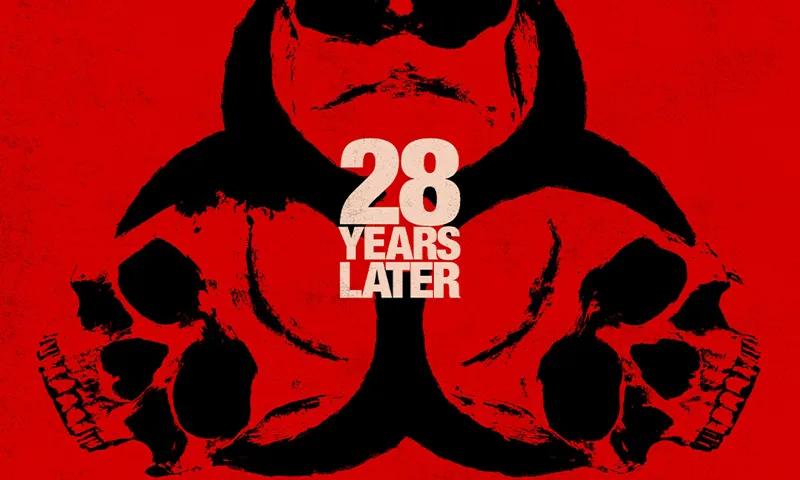

28 Years Later (Danny Boyle, 2025)
SPOILER FREE REVIEW
28 Years Later is a brilliant, beautiful and deeply humane film. It is both a lament and a warning about the retreat into traditionalism. Its beauty is in escaping pedantry and didactic lecturing because a deep sadness is laced fully through it. In choosing this, it also evades accusation, coming instead to something more like sympathy or pity. Its brilliance is in recognizing the coming of age tale as the vehicle through which to communicate both its lament and its warning. Tradition has left those who've retreated into it unprepared for the realities of the world, and not just those brought on by the circumstances of the day within the film's world, but those realities inescapable in life regardless of circumstances. As a result, they are incapable of preparing the next generation for either, leaving their children the choice of a confounding prison of tradition or exile.
The original film in this world/universe/franchise, 28 Days Later proved that as a duo Danny Boyle and Alex Garland could marry an energetic visual style, a gift for putting the right actor for the right role, a sharply perceived, concisely told, yet deeply humanistic story, in a coherent, distressing, but moving film. They prove it again with 28 Years Later, a film that is simultaneously in debt to the history of the zombie film, and a new iteration.
This is a visually stunning film, in its approach to beauty, the grotesque and that unusual space of the macabre that can be equally both. Boyle's sense of visual style, his use of camera movement, his understanding of how new technology can help him express those, are all in top form. Portions of this were filmed using innovative rigs involving 20 iPhone 15s hooked to a rig that arranged them in a semicircle, giving Boyle the portability needed, as well as a way to communicate something specific where it was necessary and would make a difference for the audience.
Boyle's eye for matching actors and roles is also key to its success. Jodie Comer, Ralph Fiennes, and Aaron Taylor Johnson are as good as they've been in their best performances. Boyle's flare for being able to work with child actor's has never been as clear or as necessary, and as a result, previously unknown Alfie Williams will be one of the break out stars of the year. Twelve and thirteen at the time of shooting, Williams performance is flawless, and naturalistic to a degree many much more seasoned actors never achieve. The performances are worth the price of a ticket alone.
This is the second of this year's masterpieces within the horror genre, with Ryan Coogler's Sinners being the first. Both films, in their own ways, are contending with ideas of how tradition and dominant social order shapes their characters and world view, and are using the horror genre to express moving, humanistic observations and statements. They are examples of why horror is a necessary part of storytelling, as well as why storytelling isn't just necessary, but vital in our current conditions.
SPOILER HEAVY CRITIQUE AND ANALYSIS
Boots (Infantry Columns)
We're foot—slog—slog—slog—sloggin' over Africa Foot—foot—foot—foot—sloggin' over Africa (Boots—boots—boots—boots—movin' up and down again!) There's no discharge in the war!
Seven—six—eleven—five—nine—an'—twenty mile to—day— Four—eleven—seventeen—thirty—two the day before (Boots—boots—boots—boots—movin' up and down again!) There's no discharge in the war!
Don't—don't—don't—don't—look at what's in front of you. (Boots—boots—boots—boots—movin' up an' down again); Men—men—men—men—men go mad with watchin' 'em, An' there's no discharge in the war!
Count—count—count—count—the bullets in the bandoliers. If—your—eyes—drop—they will get atop o' you! (Boots—boots—boots—boots—movin' up and down again) There's no discharge in the war!
Try—try—try—try—to think o' something different— Oh—my—God—keep—me from goin' lunatic! (Boots—boots—boots—boots—movin' up an' down again!) There's no discharge in the war!
We—can—stick—out—'unger, thirst, an' weariness, But—not—not—not—not the chronic sight of 'em— Boots—boots—boots—boots—movin' up an' down again, An' there's no discharge in the war!
'Tain`t—so—bad—by—day because o' company, But night—brings—long—strings—o' forty thousand million Boots—boots—boots—boots—movin' up an' down again There's no discharge in the war!
I—'ave—marched—six—weeks in 'Ell an' certify It—is—not—fire—devils, dark, or anything, But boots—boots—boots—boots—movin'up an' down again, An' there's no discharge in the war!
by Rudyard Kipling
Excerpts of the poem above were included in the first trailer for 28 Years Later, released in December of 2024. It is a uniquely disquieting trailer. Originally published in 1903, it was received then as a satirical tribute to British troops then marching through Africa. It was the trailer editor who found it. Director Danny Boyle had been looking for a piece of music that would fit the section it appears in the film, and after seeing it used in the trailer, decided to use it, recognizing the relationship implicit between satire and horror, as well as it's relationship to the themes in the film.
Twenty-three years ago, 28 Days Later, the first collaboration between Boyle, and Alex Garland as screenwriter, introduced the world to Cillian Murphy and was an immediate critical and financial success. It's recognized as being responsible for the zombie renaissance of the '00s. It is also in the rare company of being as close to a universally venerated classic, within in horror fandom and without, as one can find. A few years later, Boyle and Garland executive produced the sequel, 28 Weeks Later, which received a more lukewarm reception critically and commercially. They have in common that they are in the 21st century context, and are uniquely British films, occupied with the state of the United Kingdom when each was made.
There is a uniquely perfect symmetry to the inclusion of Boots, and not just because of the content of the poem. Kipling, for nearly the whole of the 20th century, was considered one of the greatest writers the English language had produced. His work was uniquely British, concerned with its time as well. He spent that time being considered among the titans of the tradition of British literature, a cultural icon, whose work was also venerated here in the United States. As has been true of so much of the cultural creations of the early and mid 20th century, Kipling has come under reappraisal, and his unquestioned place in the canon of English language literature has been challenged, in no small part because of his unquestioning support for British military adventurism and his less unquestioning, but still quite supportive stance on British imperialism. The question, essentially is, "Is this the kind of man, whose values are clearly reflected in his work, we want to reify?"
The challenge to tradition has been happening for a few decades, across not just Britain and the UK, but what we think of as the Western world. To say it hasn't been met openly is an understatement. Here in the US, we're currently on an accelerated spiral to authoritarianism, marching forward under the slogan "Make America Great Again." In France, it resulted in the short lived exaltation of Marie Le Pen, and her racist and ultranationalist party. Thought defeated, they still carry more weight than is rational with too large a portion of the French pulbic. 28 Years Later is concerned with Britain and Britain's response to this effort to re-examine its understanding of the past (by nature a challenge to tradition). The backlash to this challenge to the previously unquestionable was the disastrous exit from the European Union, colloquially referred to as Brexit, sold to the public under the auspices of retaining British tradition and national identity.
28 Years Later is a brilliant, beautiful and deeply humane film. It is both a lament and a warning about the retreat into traditionalism. Its beauty is in escaping pedantry and didactic lecturing because a deep sadness is laced fully through it. In choosing this, it also evades accusation, coming instead to something more like sympathy or pity. Its brilliance is in recognizing the coming of age tale as the vehicle through which to communicate both its lament and its warning. Tradition has left those who've retreated into it unprepared for the realities of the world, and not just those brought on by the circumstances of the day within the film's world, but those realities inescapable in life regardless of circumstances. As a result, they are incapable of preparing the next generation for either, leaving their children the choice of a confounding prison of tradition or exile.
Alfie Williams plays Spike, the protagonist through whose perspective the film unfolds. Williams, only twelve or thirteen during filming, is a revelation. Danny Boyle has proven again and again he has an uncanny recognition of talent. In Shallow Grave, he began his collaboration Ewan McGregor and Christopher Eccleston. McGregor would become an internationally recognized name as the result of their next collaboration, Trainspotting. Along with a unique, interesting career, an entire generation now recognize him as their Obi Wan Kenobi. In 28 Days Later, he introduced the world to last years Best Actor Oscar Winner, Cillian Murphy, generally recognized as one of the great actors of his generation. 28 Days Later also raised Eccleston's profile to a degree he's remained a working actor in film and television, including being cast as the man to bring back on of the most iconic characters to have emerged in modern British history, Doctor Who. Alfie Williams is equipped with all he needs to become the next in that line of extremely talented actors whose career ascent is put into overdrive with a Danny Boyle collaboration. To put it bluntly, the kid is fucking phenomenal. As Amber T, Head News Writer for Fangoria adeptly pointed out, he holds his own and doesn't get blown off screen by either Jodie Comer or Ralph Fienes, both excellent actors, who are as good in 28 Years Later as they've ever been.
Spike has the unenviable task of many children whose parents and communities retreat into traditionalism as a way to attempt to shut out the realities of life and the world. He has to make the adult decision everyone around him can't. I say can't, instead of won't, because unlike the adults on Holy Island who are trying to guide him, he's not trapped by any sense what came before. The only world he's known is the one where Britain has been quarantined by the rest of the world, to prevent the Rage Virus from spreading. Britain is, as Farrell, one of the soldiers says during the last act of 28 Days Later, an island. "What do you do with a diseased island? You quarantine it." Its sequel, 28 Weeks Later, is about the failure of the institutions the world looks to for order. Namely, the US military, is much less effective than advertised.
It's not a coincidence that before leaving on his first "hunt," the leader of the village council tells Spike, "If you don't come back, no one will come looking for you." The central question at the heart of 28 Days Later was represented by Selene (Naomia Harris) and Jim (Cillian Murphy). In the conversation they have in Frank (Brendan Gleason) and Hannah's (Megan Burns) flat, Selene says to Jim that Frank and Hannah need them more than Jim and Selene need Frank and Hannah, and that Jim needs to accept that if he allows them to slow him down, he's going to get himself killed. Selene's perspective is one of a brutal practicality. By that time, we'd already seen the vicious economy with which she'd dispatched Mark (Noah Huntley) when he was likely infected. Selene had been with Mark when they saved Jim from a pack of infected, but she didn't hesitated for a millisecond to dispatch him, in brutal fashion, with a machete. Jim tries to tell Selene, contrary to her belief, he does understand the stakes, he understands what's happening, and she essentially blows him off, taking him to be some combination of too naive and not hardened enough.
We see not long after, Jim does understand the stakes, when in a gas station he kills an infected child. He doesn't hesitate. It doesn't seem to cause him any major existential crisis, where in most films and storytelling, the protagonist would come to a serious inner conflict if forced to kill a child, even if that child presented a genuine threat, as this one does. Jim does understand, and stands somewhere between the brutal practicality of Selene's perspective, and what she thinks is his naivete. The finale of 28 Days Later is Jim doing exactly what Selene spent the first half of the film saying she wouldn't. He goes back to English manor where the British Army soldiers have set up, rescuing them from becoming the equivalent of concubines and brood mares.
Christopher Eccleston's Major Henry West is applying a brutal practicality of his own. The new circumstance they find themselves in isn't so different, as far as he's concerned, it's people killing people. His unit was succumbing to despair though, and his solution was to tell them they would find women, in order to begin to rebuild. Essentially, a crude plan to repopulate. Looking at it from today's vantage, it is eerily similar to the obsession with birth rates among the far right, Christian white nationalist perspective which has come to be core of the American right.
Jim's return to their makeshift compound purposely presents him in the same stuttered camera effect, the same constant full speed movement and brutal efficiency as the infected. Jim has been infected with rage, but not the virus, and what balances it, what prevents him from becoming no different than the infected, is the sense of love and connection he has for Hannah and Selene.
The entire first film is a repudiation of the kind of "brutal practicality" the village elder is espousing to Spike, but it is part of the tradition of Holy Island, and in this, isn't something new. Connecting it back to the first film establishes this is tradition in British culture, a way of seeing the world already proven to fail in the timeline of the franchise. At the end of 28 Days Later, Hannah and Selene are alive and well, because Jim went back for them, and he is alive because he had someone to care for him after Major West shot him. The only thing that saves us from becoming part of the Rage mob or self deluding sadists, is our connection to each other, and that we honor it.
We see, in 28 Years Later, this worldview, this practical brutality that says "I can't afford to care enough for others to risk for them," creates an ever tightening spiral of isolation. Britain has been quarantined by the world. Holy Island has quarantined itself from Britain, and Spike's mother, Isla, is essentially quarantined from everyone except Spike. This tradition plays a significant role in alienating Spike from his father and the rest of Holy Island.
With Britain quarantined entirely, Holy Island, whose connection to the mainland is a causeway that's only accessible in low tide, has had the benefit of being able to prevent a siege by the infected, but it's also meant a kind of self quarantine. They've retreated instead into an illusion of pastoral past and narratives of the former glory of Britain as a nation and empire. As an American somewhat baffled by the fact that our British cousins have yet to strip the monarchy of their lands and fortunes, and reappropriate them, seeing a picture of the Queen overlooking the proceedings in celebration of Spike and Jamie's return was almost comical. The fortunes didn't save the nation, and the lands are now the dominion of the infected, yet there she was, in all her thin lipped glory, peering over everyone. It made me wonder what the likelihood was that in the world of 28 Years Later, the royals had shipped out twenty-eight years earlier, their progeny now living in comfortable seclusion in ill gained compounds in some former part of the British Empire.
Holy Island is a cradle, and it does serve to help protect it's inhabitants, but tradition has become a prison. There are people on the island who know Dr. Kelson (Ralph Fiennes) could be reached, yet they fear of him, born from an imagined scenario behind a scene witnessed once fifteen years earlier. It prevents any of them from taking Isla (Jodie Comer), Spike's bed ridden, increasingly non-lucid mother to see him. It's Spike who has to make the decision to get his mother to Kelson. It seems a little too close to reality, especially considering Garland and Boyle's statement about the nature of patriarchy's need to establish a sense of order through the control of women and their bodies in 28 Days Later, that the inability to see past tradition is resulting in a woman not being able to access the health care she needs.
Kelson's sense of tradition is rooted in the combination of science of medicine he was educated to use in the world before, and the foundational call of medicine in the Hippocratic Oath, "First, do no harm." From this, he's built new rituals, because the new reality for Britain isn't one he has the sea to protect him from. His are rituals to both honor his sense of tradition, what is good in the world, worth remembering and holding onto, and to grapple with a world that has changed.
There are parallels between Spike in 28 Years Later and Jim in 28 Days Later too. Jim doesn't experience the initial outbreak of infection. He doesn't experience the 28 days of trauma and terror it inevitably came with. He just wakes up in a different reality. Not to say this wouldn't be difficult and traumatic, but it is different than the rest of the people we meet in the course of that film. Very soon after he wakes up, he has Selena and Mark to explain to him what is happening. Some part of the experience of initial outbreak would be not knowing much of anything, at all. Jim gets a very small dose of this, but it's comparatively short. Selene, on the other hand, witnessed the outbreak. She witnessed the fall of London and experienced all that came with it. This would effect how one comes to their perspective on all of it, in comparison to Jim, whose presented with a new reality, instead of experiencing process of degradation of the old. To this degree, it makes sense that Jim is still able to marry some part of his way of seeing and understanding the world in a way that Selene isn't.
Jim is also looking for a father figure in 28 Days Later. This could be taken as a kind of sense of extended adolescence, but it makes more sense as an expression, an outlet, of grief. Among the things Jim didn't experience, was what lead his parents to take their own lives. He comes out of his coma, and his parents are dead. That he's searching for a father figure, finding one first in Frank and then in Major West, isn't surprising.
Spike, because this is the only world he's ever known, doesn't have the connection to the old world that the adults in his home do. He mirrors Jim's experience with London. Spike wasn't shaped by the experience of the fall of Britain, learning they were going to be indefinitely quarantined, and the many different experiences and emotions that would necessarily come along with all of it. The people on Holy Island, are in many ways doing something very practical, very understandable, and it's to Boyle and Garland's credit that they don't lean into accusations. How the people of Holy Island come to this state of being makes sense. It makes just as much sense that the next generation would begin to deviate from that, because they're being shaped by the world as it is, not as it was. Spike rejects his father, who doesn't seem to be in the minority on Holy Island, seeing in his father a lack of moral character, not the consequences of this reification of the past, this tradition Holy Island has created is costing. Spike is confronted with the costs and results of the mythology that tradition leads to, in quick succession. First, his father lies about what occurred on their trip to the mainland, creating the kind of heroic narrative the tradition requires, followed immediately by witnessing his father's infidelity, with both of those compounded by finding out someone who is a trained medical doctor, that might be able to tell them what's wrong with Spike's mother, within walking distance on the mainland.
It causes Spike to have to challenge the idea that there is nothing on the mainland but enemies. When Jamie takes Spike for his first hunt, the hunt itself is the primary purpose. There's some lip service paid to scavenging for supplies, but Jamie says anywhere they might go, that would be in range to make it back to the causeway before the tide comes back in, has already been scavenged for anything of worth. The entire point of leaving Holy Island is to kill infected, that don't otherwise present a threat. Boyle connects this to the history of Britain, and the media narratives about that history, through including Kipling's poem, and archival footage from television and film presenting warfare of Britain's past. Britain didn't become an empire because it saw the peoples and places beyond its island kingdom as equal to itself. It's a history of conquest, a tradition built on the narrative glorifying that conquest and creating heroism of the violence it requires. One of the central questions in the reappraisal of Kipling within British culture, and Western Literature more broadly, is his relationship to this, and Boyle including Boots, creates reference to this exact divide. The dismissal and challenge to conversations asking these questions about Kipling and his place in English Literature is the attempt to preserve a sense of tradition and a sense of a noble, heroic national or cultural identity, unchallenged by questions about its brutality and the consequences it wrought.
We've experienced a backlash to the similar questions here in the US, about our literary figures, our cultural institutions etc. The backlash to Critical Race Theory has been central to the far right, and is itself inherent in the idea there is an "Again," a past we can return to which would Make America Great. As an academic discipline it challenges the sense of inherent innocence and nobility of "The American Project," because it has illuminated that our narratives of atrocities as "mistakes," made by people who didn't know better, were as (or more) often calculated campaigns executed by power and greed.
One of the pieces of beauty in Garland's script, Boyle's execution, and Aaron Taylor Johnson's performance of Jamie though, is that he isn't malicious. Holy Island isn't a state or a world power. It's a group of people trying to comfort themselves, survive a difficult circumstance, and make meaning in an indifferent world. Jamie is trying to prepare his son for the society Spike is expected to belong in. His lies, his infidelity, who he is, are all shaped by it. He delivers the lies expected of him, the one's told in the way tradition requires to adhere to the sense of nobility and to glorify an otherwise senseless violence. His infidelity is the product of the role he's been prepared for as a man in this regression into an even more patriarchal social order. His wife isn't capable of fulfilling the caretaking roles expected of women, so they've fallen to him. Additionally, that Holy Island has branded Kelson a madman means there was no chance of diagnosis or treatment for her ailment, no chance of lessening her pain and her symptoms. It's not something he can protect her from and he's pretty clearly unprepared for being a caretaker to her as well. No one on Holy Island is. It's not right, but it's also not at all shocking, in these circumstances, he turns to a woman who gives him the kind of attention which affirms those parts of his masculinity his wife can't, as well as giving him a distraction from the ways he can't meet its standards. Jamie is trying to both meet the requirements the traditions of his community demands, and experience something other than struggle and failure.
28 Years Later, rightly, diagnoses tradition (including those of gender) as a trap, and does so in a way that makes clear the power of social order to box people into them. It's also why Spike has to have these illusions broken in such quick succession. Had these three revelations happened over a six month period, it allows the social power of normalization to do its work. "My father is a liar," becomes, "Most of the father's embellish the stories of their son's first hunt." "My father is an adulterer," would certainly have become, "Men have needs that you're mother can't fulfill. It's nobody's fault. It's just the natural order." The question of Kelson would have been buried under the surety of his madness. It is how the traditional narratives of group identity which clash with current reality continue. The compounding of these three things in such short time prevents that social order from doing it's work, and gives Spike the motivation to take his mother inland to find Kelson.
It will be easy, in our world, one shaped by twenty years of digital revolution, to see Jamie as simply an asshole. There is a degree of truth to this. At the same time, he's a tragic character, trapped between the dictates of his community's traditions and expectations, and the actual needs of his family. Jamie's world stopped moving forward in 2000 or so, and Holy Island has regressed from there. To erase the tragic nature of this character in favor of the simple moral judgment on him as an individual, is to take the easy way out, and this individualization of a broader failure and ineffectiveness, helps to obscure power of tradition when it does fail us.
Fortunately for Spike, the father figures he encounters come in the opposite sequence to those Jim encountered. Where Frank, the first father figure Jim comes across, was a kind, caring man, the next one Jim finds, Major West, was a sadistic, fascistic patriarch. It's also a reversal of extremes. Dr. Kelson is further toward a kind of holistic humanism than even Frank was, but Jamie isn't nearly as far down the line of the fascist patriarch as Major West. In a way, Kelson is demonstrating the furthest logical endpoint of humanism, in the context of the world of 28 Years Later. Despite the fact that the infected likely pose some danger to him, he's not killing them indiscriminately, nor is he attempting to hide from the reality the infection has created. He is going about the simple business of honoring life and death, in a way that makes sense to him, as a man trained in medical science. They are all equally natural occurrences. The infected are infected human beings. The dead were human beings. Spike, his mother, and the child they arrive with are living human beings. He affords them all grace and respect, and tries to acknowledge the dignity of life, as he can, in whatever state they are.
This may be my favorite performance from Ralph Fiennes, and it's likely my favorite of the characters he's played in a long, esteemed career. It's through him we get what it is the first time the thesis of the 28 Days franchise is stated. "Memento mori," meaning, remember that you must die, and "memento amore," remember that you must love. All of these films live in the tension between the two. For Kelson, these two things give life meaning, and neither can be extracted. If you live, you will die, and if you haven't loved, you haven't lived. It's simple and trite to put it so concisely, because it's been made trite by how often it's said and how little its given the attention ritual would call to it. Yet, the character we see in Dr. Kelson, is a person who has chosen to dedicate their life to it completely. Kelson represents a different worldview, a different tradition and rituals than Spike has been raised with on Holy Island. He is able to give Spike and his mother the answer they've sought, but he isn't able to give her the treatment or cure they've hoped for. What he does is give Spike's mother the dignity of choosing what her own death will be, to die without the indignities that her illness will visit on her, and without pain. He also gives Spike a new perspective on what honoring her and her life is, which in many ways, is what love really is. These are only available to either Spike or his mother, because he has chosen to deviate from the traditions and narratives he's been raised with on Holy Island.
Spike returning the newborn infant to Holy Island does recognize it as a cradle. It can be a place of protection, as it was for him as a child. It is a place that can nurture and grow, but Spike's leaving also signals that to spend a life in such a narrow tradition, without an understanding and experience of what else the world has to offer, is to live in a prison. It is to be trapped without even understanding it is the state you exist in. Like so many tales of a hero's journey, Spike can't go home. There is too much out there beyond Holy Island, and he's already seen too much, been changed too much, to be able fit himself back into the role he will be expected to play. Whether or not he has become a man is one question, but the story of 28 Years Later is the journey that insures Spike can't be the man Holy Island would require him to be.
There is one more thing about the concept of quarantine and isolation which is worth dedicating some time. The way the story is structured, it creates a inward spiral, constricting spiral of isolation. Britain has been quarantined, due to illness. An island, though large, is isolated from the rest of the world, to protect itself from this illness. Then, there is Holy Island, a smaller island than Britain, but self quarantined, choosing isolation from the rest of Britain for safety. Then there is Spike's mother, and it stretches credulity to think she has been named Isla, a name which means island in a number of other languages by mistake or happenstance. The result of Holy Island's quarantine is her isolation due to illness, the same as Britain being isolated from the rest of the world. Considering the way gender plays into 28 Days Later and the way it plays into this story more broadly, it would also be irresponsible not to acknowledge that what this amounts to is a woman not receiving medical care which given the circumstances probably wouldn't have altered her prognosis, at least provided her some comfort in the advancement of that illness, because of what we come to find out is an ill founded belief. This belief is based in the people of Holy Island who witnessed something they didn't understand, didn't have the curiosity to investigate further, instead creating a narrative of threat.
This also has meaning when Isla comes upon an infected woman in the midst of giving birth. There has already been a fair amount said and written about a possible "mother to mother" connection being the reason Isla decides to try and help a woman who a few minutes before would have been trying to kill her, but very little has been said about the connection between two women who are experiencing the consequences of quarantine. Isla is old enough to have known "the world before." It's true women have been giving birth for all of human history. It's also true that for the better portion of it, what we would now consider adequate health care wasn't available. The reason we consider it adequate now, is that it dramatically decreased maternal mortality during birth. Both of these women are collateral damage of the quarantine's effect on their ability to access health care. We don't know the circumstances of infection and/or pregnancy, though there's certainly plenty of speculation in written and spoken form. What we do know is that Isla's health and quality of life has been impacted by both the decision to quarantine Britain, and Holy Island's frightened, militaristic worldview. The infected woman's life is at an elevated risk, for the same reason. I find it hard to believe Garland or Boyle would have included all the references to a dearth of modern medicine, and not have recognized its connection to the real world, but also the traditions Holy Island has regressed to.
All of the conflicts, the problems that are at the heart of 28 Years Later, come from a decision to not even try to make connection. Britain being quarantined from the rest of the world, Holy Island quarantining itself, resulting in Isla's isolation and not being able to receive treatment, diagnosis or even palliative efforts from someone who does have modern medical training. The rupture in Jamie and Spike's relationship is the result of the choices of tradition on Holy Island chooses to follow, because the world has chosen to isolate Britain. Dr. Kelson is a demonstration that they didn't have to be the choices. Holy Island does, after all, have the protection of the sea. What they've done is regressed to a sense of tradition which was comfortable in the world before, even as that world has forsaken them, and circumstances have changed drastically. Those traditions are working to some degree, but there seems to be little consideration of the cost of what works versus the cost of what doesn't, whether it is a fair deal, to who it is fair and who it isn't.
In all of this, 28 Years Later also becomes the rare recent entry in the broader zombie sub genre that has no villain. In it's strange way, this is in keeping with the tradition of the sub genre, but far off trend. George Romero kick started the modern conception of the zombie with Night of the Living Dead. Garland and Boyle, with 28 Years Later, have gone back to Romero's original in this choice not to have a traditional villain. Like Night of the Living Dead, 28 Years Later has a character who is less than likable, but in neither case are they quite a villain either. It's not until the third film, Day of the Dead, Romero introduces a traditional villain. In Night and Dawn, the villains are the inability of the characters to work together, and then the attempt to hold onto a dead cultural tradition/idea/attitude, in the face of a new reality. 28 Years Later is making a connection between those things.
I wrote recently about the necessity of art, including but not limited to storytelling in a time when fascism isn't just ascendant, but has achieved and is consolidating it's power (click here to read). When I wrote it, it was in the hope work like 28 Years Later would soon be on the horizon. Along Ryan Coogler's Sinners, that hope has been answered. 28 Years Later is the kind of film, the kind of storytelling, which is vital. It's critical, but understanding eye, toward things like tradition, gender, the changing conditions and circumstances of time and how we react to them, don't only help to give us the ability to develop perspective. In many cases, myself included, through telling stories about world's and people who never existed, help to reassure us that what we see in the world around us is real, when so much of what we encounter is attempting to tell us otherwise.

Comments (1)
Like I said in my post to you on bluesky, I had no idea this film was being made, but I ran out and got cinema tickets after hearing about it. I agree with you on most of your positive points about the film, and appreciate your detailed review above. I felt pretty disappointed with this film, and I was particularly pissed off about the producers feeling the need to bring in different types of zombies to add some flavor. I thought that was so unnecessary and gave the film a real Hollywood vibe (which I don't think is a good thing). Rage in itself is terrifying enough, it was super dumb to see those obese zombies eating earthworms. I'm an ecologist, so maybe it bothers me when zombie biology makes no sense at all. And yes, how tf does a zombie lady get pregnant? And that short seanse with them holding hands, I was rolling my eyes so hard I think people around me heard. And what was the deal with those Teletubby/power ranger types towards the end? Why did the one zombie go straight for the cooked fish and not the boy? And how had the doctor survived that whole time but nearly got killed when he got his first visitors?? I got a very strong sense of apocalypse now inspiration with the orange doctor who's gone rogue. The look was very cool, and it certainly helped sell the film as a trailer. But in the end, the acting of everyone was sublime!