I Don't Fear AI, I Fear Tech Oligarchs Distaste for Humanity
I’m going to tell you a story.
I was a boy, on the cusp of being a teenager. My father’s closest friend, Jimmy, died of cancer. He was his forties, no more than the earliest of his fifties. When you’re as young as I was, there’s “not grown,” “grown,” and “old.” He wasn’t “old.” Jimmy was grown, but the rare kind of “grown,” of good humor and deep compassion. He was the kind of man who had a shit stirrers twinkle in his eye, and a sense of humor to match. He was kind and caring, but he didn’t suffer fools, and being a man of relatively small stature, a quick wit and strong sense of humor were his most well honed weapons in dealing with the foolishness of a foolish world.
My parents were divorced before I was old enough to develop memories of them not being divorced. I spent weekends with my father. When I was very young, he worked in a deli and a machine shop. At one point, he was working in the deli and machine shop, and going to technical school for computer programming. After this, he got a job in computer programming. This was the late eighties, early nineties. Computer programming might not be as physically taxing as running around a deli or working in a machine shop, but it was still many long hours in a work week.
My father, Jimmy and the other member of their trio, Bobby, would spend many Saturday nights enjoying what their labor afforded them in the world. It was also, I’m sure, a good way to keep busy a growing and curious child. This meant going to the movies, plays, concerts and the like. My father and I would spend Saturday afternoons, riding around in his car, listening to music, as he took to the errands his week’s work schedule didn’t leave time for. Whether it was the radio or cassette, there was always music. The man should be qualified for sainthood, if for no other reason than the number of times he was willing to let his son commandeer the radio, and how many times he had to hear Elton John’s Goodbye Yellow Brook Road as a result.
It was during those Saturday nights, I saw my first concerts. One of them was The Temptations and the Four Tops. Seeing Poppa Was A Rolling Stone performed live was as close as I’d had to a religious experience at that point. If you’re familiar with the song, it’s the story of a man relating the death of his father, and the way his mother related the story of who the man he was. It was a song I’d always loved, and another my poor father had been subjected to more times than a human being should be so regularly. Clearly, I hadn’t lost my father. I loved him, and he was also one of the most significant people in my life. I didn’t love the song because I related to it. I loved it because of the way the the thrumming baseline comes in, the way the horn announces there’s something big, important coming, the amount of drama it’s production creates, and of course, those incredible voices and stunning harmonies. I also loved it, because it made me feel something very real for the man telling that story. My father is still alive today, which would obviously mean he was then too. He was not the variety of rolling stone the song described the singer’s father to be. Musically, it was beautiful, and the performance and production heightened the emotional impact of the thing the lyrics were about. It’s a song with an edge of danger to it. I understand now, that danger was in the emotions, the feelings. They are the kinds of emotions we treat as dangerous, they threaten us. They are not “good feelings.” The lyrics are associated with pain and hardship, and the meeting of the instrumentation, the melody, the production and lyrics are why it has power. It’s also a cautionary tale, isn’t it? “This is what happens to your kids, if this is the kind of dad you are.” For other people, there was probably some identification, “This is a father like my own.” I didn’t understand all that, intellectually, at the time. I couldn’t have told you why the pieces all come together to create something so effective in a four minute piece of art. I just knew there was what seemed to me to be magic in it. It evoked in me a set of feelings, and an intensity, most of other songs didn’t. Some could, but they’re special, aren’t they? They have the real magic, that speaks to us in their particular way. Seeing it live… the proof positive that those voices came from real people, real musicians played those notes, that every person in Westbury Music Fair where we saw it performed knew every word, and that even my dad danced (he wasn’t much of a dancer, at the time at least), was proof that the magic in that song was real.
For my father, Jimmy, Bobby, his wife Maria, and later, Jimmy’s wife Joann, those Saturday nights were a way to enjoy themselves on the weekend, after the grind of the week before, and in preparation for the grind of the week after. They were also a reason to spend time together. Fortunately for me, I was always a welcome and not included, but another member of the crew. They were an extension of our family. Chosen family, before I knew what that term meant. I was also lucky that they were as interested in what they were doing as they were in doing something, and doing it together, so there were all kinds of genre boundaries crossed and the like. What was happening for me, though I didn’t understand it at the time, was that I was getting a part of my cultural experience and education.
There was a little off season playhouse in Bluepoint, in Suffolk County, on Long Island, and we saw plays there. The first I’d seen performed and produced by professionals. We went to a few Broadway shows too. I was glad to realize, when I revisited it as an adult, that I hadn’t actually missed anything in the story of Cats, because it doesn’t actually make sense in any linear way. When I’d seen it the first time, I thought there might be “adult” things I didn’t catch. It happens when you’re a kid. You get a bit of a radar for “I’ll understand that when I’m older,” not just because people say it to you, but it’s the shape of the hole indicating something is missing. Not so much with Cats. It’s just a pretty wild creative swing, that was quite a spectacle on Broadway, but more about tone than it is a story. I wasn’t yet familiar with that as something a performance or play could intend to be. In that theater in Bluepoint, I saw Leader of the Pack, about the life of the writer of so many iconic songs, Ellie Greenwhich. My father loved the “oldies” station, the kind that would now be playing songs first released when we were listening while riding around. Ellen Green played Greenwhich, and a few months later I’d see Green in Little Shop of Horrors, with Rick Moranis, who’d been cemented in my mind as a favorite when he played a supporting role in a staple of my childhood, Ghostbusters. To be honest, Leader of the Pack was better than Cats, and Ellen Green was a big part of why. At the same time, the spectacle that can be achieved on Broadway is just plain fucking cool. Les Miserables and Phantom of the Opera don’t translate if you watch a recording of the same musical on a television or movie screen. I’ll never turn my nose up at a “jukebox musical” because of Leader of the Pack either, and yet, hell if seeing a basement production of Hedwig and the Angry Inch in Richmond, Virginia as an adult wasn’t one of the best live theater experiences I’ve ever had. The openness, purposeful or circumstantial, that was modeled for and transmitted to me continues to pay dividends.
That period in my life, those experiences as a kid, are one of the pillars of my love of the arts in general. I’d already fallen in love with storytelling. I started reading pretty young, and books were constant companions. I didn’t understand why, at the time, but I had to keep reading The Talisman by Stephen King and Peter Straub, even after it reduced me to an embarrassed, sobbing mess at the end of the section set in Sunshine Gardener’s school. I know now it wasn’t the death of a character that twisted my insides to the point I thought they might try to leave the vessel that houses them and resulted in having to put the book down for a few days. It was Sunshine Gardener’s sadism, the glee he took in the pain and fear he inflicted on others, and that he wanted to results of that sadism witnessed. The greater world of the arts though, beyond books and records, was opened and as a result of being part of that crew. Having so many good times, with people who loved me, is the cement in the structure of my love for the arts. It made the arts a welcoming place, where curiosity was accepted, that you shared with people you cared about and who cared about you. It’s not hyperbole to say my relationship to the arts has helped keep me alive, as a result. It’s not the only thing that’s saved me along the way, but it’s undeniably saved me a number of times. Along with the good fortune of having found a number of families through the years, the arts were an anchor in times I wanted everything else to go away.
Jimmy’s death probably wasn’t the first time I experienced the kind of powerlessness that comes is the result of wanting to stop the pain someone you love is feeling when there is no way to resolve. It was that urgent enough, big enough that it is the first time I remember that particular feeling though. Grief is. There’s no plan resolve it. I was feeling it acutely too, but I’d never seen my father in pain like it. I don’t think I have since, honestly. Even when his grandmother, my great grandmother, someone who’d been important in both of our lives died, and when his father died, it was different. They were elderly. It was their time, and they’d both been sick for some time before. Jimmy was young. Before he’d gotten sick, he’d been so vibrant, and even if he was a small man physically, he was a giant presence in any room he was in, as well as our lives. Cancer had taken him quickly, a few months from diagnosis to death.
Anyone who tells you there’s a plan to get through grief is lying. The people in our lives say it out of the best of intensions. They don’t want to see us in pain, but I wonder about people who write books about how to get through it. The only way to get through is to go through it. You can say you’re not going to run from it, but really… we all run from it, and we end up processing it over time, usually years. It’s too much to take all at once, and we can’t see the way that loss is going to shape or affect us in ways we only realize later. The best thing we can do is to let each other know we love each other, we know what it feels like, and we’re going to be there as we try to figure out get through it. We all know the sun and the moon are there, but nothing we do is going to change how or when they rise or set. It just is. Grief rises and sets, and we all know it’s still there, either way.
The day of Jimmy’s funeral, I had another experience new to me, and one that’s remained not just rare, but the kind of memory that takes no effort to recall. My father and I were getting back in his Jeep Wrangler. There are many good memories involving the Wrangler. The funeral was officially over, Jimmy’s body had been interred. The official ritual for grieving was over, whether or not the grief subsided. We got in the Jeep, and for some period of time, I honestly can’t say whether it was two minutes or forty at this point, my father just sat and cried. Few times in my life have I as desperately wanted to know how to make someone feel better. It was, I think, the final example in the lesson that there is no such thing. When he gathered himself, put the key in the ignition and turned it, the radio came on, as it always did. The first piano notes of The Beatles Let It Be, as if someone had cued it up to begin at that moment, came clearly through the speakers. Neither of us said anything. We just sat and listened. It felt, to me, like a message. Jimmy was someone I associated with wisdom. He wasn’t a learned man in the traditional sense, no PhD, no big job that made him an important person, but he knew what was and wasn’t important. He knew how to have fun, he knew how to make the people he loved feel that love, and that’s a kind of real wisdom too few people have, including so many we would consider learned. It’s a wisdom I haven’t mastered, certainly. “In my hour of darkness, Mother Mary comes to me, and whispers words of wisdom. Let it be.”
It was the first time I can remember genuinely wondering if there might be a God, some greater thing, and whether it was communicating to us. If not God, maybe there was an afterlife, and maybe it was a message from Jimmy. It wasn’t an intellectual exercise. It was something else, more like yearning curiosity and a need for comfort. I didn’t then believe in God or gods, and don’t now, but I do believe in providence. It doesn’t matter to me whether or not its random chance and coincidence. I do care that moments like it have meaning to me, to us as human beings. Whether or not they are coincidence, doesn’t matter so much. The existence of a deity neither adds or subtracts from it. I don’t have to believe in God or have religious beliefs to understand it was the equivalent of a religious experience. It was the sense of communing with something greater, even that if greater thing is what the arts are and aspire to, this collective human endeavor, this need to communicate with each other about what it is to be human, instead of some unknowable, all knowing entity. Paul McCartney certainly had no intention of communicating to me when he wrote Let It Be, and The Beatles had no intention of being there to comfort me, especially when you consider how contentious those last years of the band were. They were just trying to finish the fucking record. All of them though, even in that period of frustration and emotional upheaval of the band ending, were trying to commune with whatever that thing is that makes us make art, and I received the benefit of it.
I mentioned this to memory my father a few years ago. He doesn’t remember it. I understand that. It’s part of what grief does, isn't it? It’s so overwhelming, it blots out everything happening concurrent to it. I remember it though. It matters to me. It’s one of many in that line of experiences which is the cement between the bricks that is the structure of my relationship to the arts.
When I sit down to try and write a piece of fiction… all of that (and more) comes with me. I can only assume it’s the reason I have to write. It’s not always fiction, but I have figured out I don’t have much of a choice where writing is concerned. It’s why I write about art that moves me. It’s why I don’t see myself as in competition with other writers. My writing is in competition with what I’ve written before. The point is to get better at it, because I love the thing I’m trying to contribute to, and I’m going to do it, whether I like it or not. It’s why I write vehemently against the attempt to tell us ours should be small worlds, that the arts and ideas outside of our experience are not worthy of consideration or should only be greeted with distrust, if not hostility. All of it wrings to me as nonsense that hates life and living, and I’d have been dead decades ago if that was the story of art I’d been taught. I’d have missed so much. A whole lot of what I’ve tried to give never would have come about either, and not just in writing or the other arts I’ve participated in. There have been long periods of time when the arts were an anchor that kept me here.
It’s this reason I don’t really worry about the possibility of generative AI being able to replace human artists. A generative AI has never had a father. It’s never had a mother. It has no clue what it is to be loved by them or to be rejected by one or both of the people who are at least supposed to do their best to try and love it. It’s never been moved by the sound coming out of a human being to the point of wonder. It will never see and experience a human being picking up an instrument and, without words, being able to communicate something with utter clarity. It’s never come home and sat in a basement bedroom, after being tossed around a school cafeteria like a rag doll, to know the relief and comfort of sitting with an album that means something to it. It’s never been haunted by a piece of storytelling, because that storytelling is touching something it still needs to come to peace with or to at least needs to acknowledge it might not ever come to peace with. It will never know that feeling of trying to communicate to someone you are physically, emotionally and psychologically attracted to, that you feel that way about them, that you want to know them more and you hope they might feel or be open to feeling the same way. It will never wake up suddenly, in tears, as the grasp on its dream recedes, overcome by grief. It will never wake up laughing, because of some dream too absurd to put into words or because you feel the sense of belonging that is someone long gone coming by for a visit. A generative AI will never know what it is to feel explosive joy when someone it loves gets the news they need or recognition they rightly deserve. It will never have the moment of recognition that is saying the thing, the one thing, in exactly the right way to a person it loves, that they either desperately need to hear or that should never have been said to that person in particular. It will never understand what those words are, and why they are those words. It will never read a novel once a year, because it just wants to go back to its world, and the novel changes as the AI grows. AI will never spend it’s early childhood, hearing its mother play a record often, and hate it because it just sounds like disparate noise, then be in a bar at twenty-one and hear something so breathtakingly beautiful it stops in its tracks because it it has to know what it is, only to realize it is that same record it hated in childhood, and it took fifteen years of experience with music to be able to hear the music, as was my experience with Charles Mingus's, The Black and The Sinner Lady.
Generative AI will access the record of ones and zeroes, emulate what it recognizes as patterns within them, and reconfigure them, because someone gave it another set of ones and zeros as parameters. It will never agonize over what it puts out either. It will never know why this section isn’t right or why that section is exactly right. It will never agonize over what it is considering putting out until it can’t tell the difference anymore, and need to get some other generative AI, whose relationship to the medium it trusts, to be oriented again. It will never argue with an editor or producer about some piece of work its trying to make ready to present to the world. It will never learn to trusts its instincts, because a teacher said, “You should never do that,” only to have an overwhelming majority of other people it presents its work to say, “Oh, I loved the way you did this,” about that same thing without being prompted in any way. It will never learn when to trust the criticism of what it puts out, and when not to.
For all these reasons, I don’t fear generative AI will replace artists. Generative AI will never produce art, because it will never care about any of this. It will never be human, and art is distinctly human.
I do fear the tech oligarchs who believe generative AI can produce art or, possibly, don’t care whether or not it does, and just see another cost saving measure to create products in a few profitable industries. I fear them because they clearly do not understand that all of this is what goes into creating any kind of art. What they say in response to arguments like this, is that generative AI is a tool, like so many other technologies. This is a fundamental misunderstanding (or purposeful misrepresentation) of what art is.
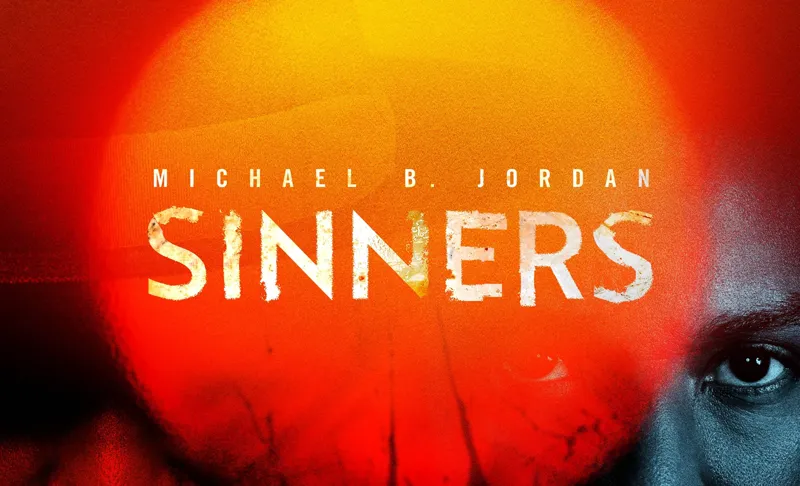
Ryan Cooglers latest film, Sinners (you can read my initial reaction, here) is currently dominating the box office. It is both a stirring work of storytelling on screen, and a rousing crowd pleaser. Coogler has been done a dizzying number of interviews in the run up to the release. Listen to two or three, and it becomes incredibly clear why Sinners is the film it is, why it’s reaching audiences in such a profound way, and that he couldn’t have made it the film it is without the other artists who came together to create it.
There’s a scene in the film, where Delroy Lindo, playing a blues musician named Memphis Slim begins to recount an experience in his life, to two other characters. As he’s doing so, there are groans in between the lines, growls almost, and as he comes to end of what he’s saying, they become a kind of humming. Lindo so deftly understands his character, and this moment, they don’t feel initially like a blues man performing a number. The humming, very obviously, comes from the power, the weight, the pain of the memory. It is too much. Too big for words. It’s not even that they are his way of expressing that to the other characters. It’s just the only way he has to expel, to cope, to deal with the immensity, the power of this experience and its memory. It’s recognizable. We’ve all seen it in others. Many of us have had the experience of trying to tell someone else a story about our lives, an experience, that’s just too big. We sigh. We stomp our feet. We spread our arms or wrap them around ourselves. In this scene that humming evolves, before the audience eyes, into the hum and beat of the blues. It’s a short, simple moment, and it tells the audience something about the blues, music, this character, and the film more broadly, that no amount of traditional dialog could.
In the first screening the cast had for the film, that scene wasn’t in it. It had been cut. Lindo apparently went to Coogler, to tell him why it should be in the film, why it was important to the broader film. Coogler apparently agreed, and not only is it in the theatrical version, it’s a scene audiences are referring to regularly on social media. Memphis Slim’s humming, the thing which has made such an impact on audiences, the reason the film communicates the enormity of this memory for the character, wasn’t in the script.
A scene like this will never come from something crapped out with generative AI. Someone who hasn’t dedicated the time, who hasn’t made the mistakes along the way, who hasn’t loved the art they’re imitating enough to have put in all the moment to moment decisions that lead to that scene being on screen, is never going to know that. They’re not going to learn it by typing prompts into a machine that feels nothing, knows nothing, about being human either.
I fear these tech CEOs and the boosters of AI, because they don’t understand or care that we create for a reason, and we have attached economics to it, but we created long before commercial was part of the picture of human life. We may not be able understand it, we may not be able to completely explain it, but we do it because we’re human, and it serves so many things for us, it’s too big to explain.
What I fear, and there’s good reason to when we look at the way commerce has already shaped our relationship to the arts, is that the commercial industries of the arts will turn to generative AI, simply because it seems on the surface to be financially inexpensive, in comparison with paying artists. The deal Ryan Coogler struck with Warner Bros to make Sinners includes a provision where the rights to the film, ownership of it, reverts back to him in twenty-five years. Despite other filmmakers having made similar deals, there’s been a lot of talk about how this will “effect the industry.” For those who don’t know, the standard agreement for artists and the corporate entities who finance and/or distribute their work, involves paying them up front, and royalties over time. Artists get paid a percentage of the sales, throughout the period the work is still being distributed. Generative AI removes all of this. It means not paying artists.
Additionally, you can see in the history of the arts, the industries around them, that availability influences the audience. What I fear, is a further expansion of an already sizable audience that can’t recognize the difference between, and isn’t even willing to engage with the arts, because what they know is product or as is unfortunately becoming the common parlance, content. Netflix, for example, has been telling it’s creators to have characters announce what they’re doing, so that people who are looking at their phones will be able to keep up with what’s happening. The impetus isn’t to make the work compelling enough, good enough really, to keep the viewer interested enough not to look at their phone while they’re watching. Generative AI is just going to make attitudes like this not just more common, but commonplace in all mediums.
What I fear, is that in a world increasingly defined by disinformation and misinformation, we will have one less place to turn to that can help us understand and see truths about ourselves individually and collectively. We will have one less place to help us understand who we are, the world we live in, how to navigate it as best we can, and why any of that is important. What we will be left with, should we be completely overcome with content making machines in the form of generative AI and the commercial instincts which are claiming it a boon, is that we will have only religion, politicians and news personalities/outlets to do so. The actual understanding of how and why to make art, the need for it, will be lost. That may seem hyperbolic. It may seem alarmist. What I say to people who would accuse me of these is, “Is it worth the risk to lose what art is and does for us, and are you sure you understand what that risk actually is?”
What I’m sure of, is that the tech CEOs and AI boosters, including those in the White House, Congress and the like, is that they do not understand it, and they do not care to, and that, is the thing which terrifies me in a way only art can really express.