





Cortisol slows post-workout recovery
For centuries, both athletes and bodybuilders have known that their ability to recover from workouts is negatively affected by their stress levels and the quality of their sleep. Yet, there is only a limited amount of scientific literature devoted to this question. Fortunately, we can establish the underlying mechanism and this allows a more detailed examination of the topic.
.
#1. Higher stress levels reduce the rate of post-workout recovery and post-injury recovery
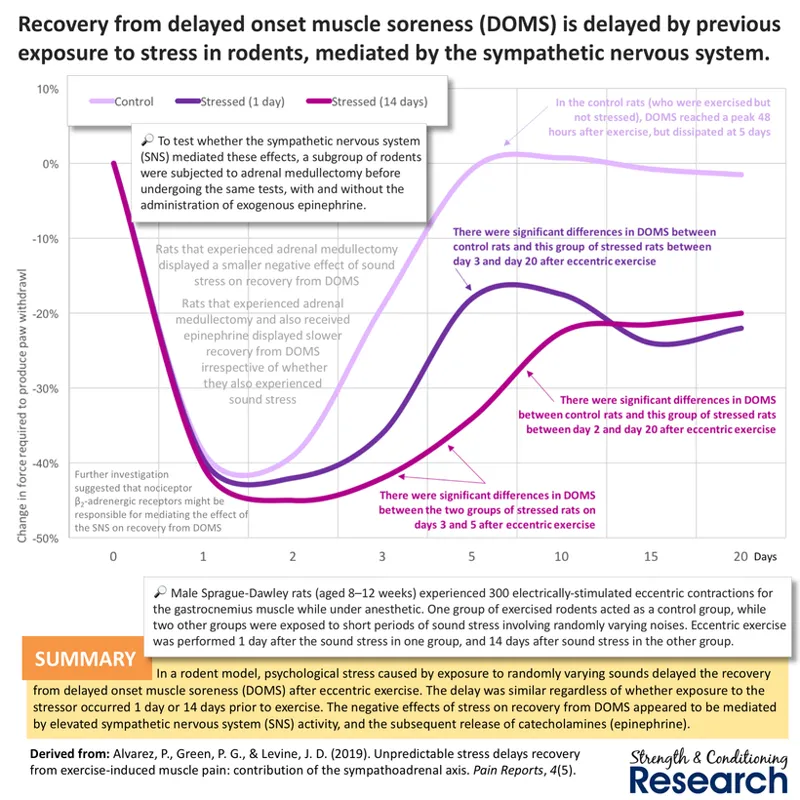
Animal models have found that a higher level of psychological stress impairs post-exercise recovery from delayed onset muscle soreness (DOMS, in line with our expectations.
.
Similarly, higher stress levels in humans reduce the rate of wound healing across different types of injury and in a large number of investigations, as reported in this meta-analysis.
.
#2. Insufficient sleep reduces the rate of post-workout recovery
As with other psychological stressors, animal models have found that sustained periods of sleep deprivation impair post-exercise recovery, in line with our expectations.
.
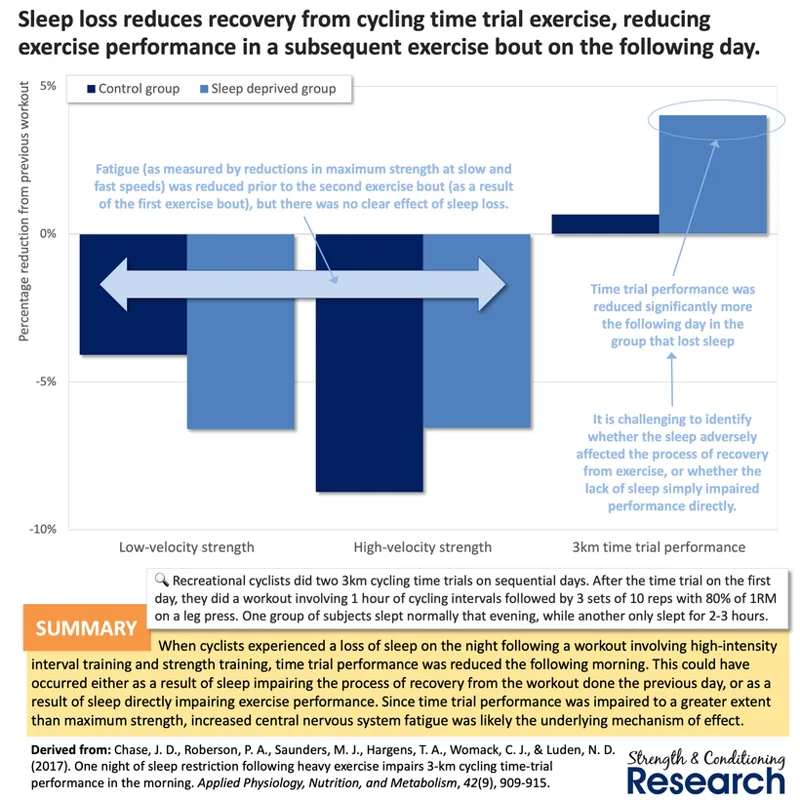
Similarly, insufficient sleep in humans (in the form of sleep restriction) reduces the ability to recover from exercise in time for a subsequent bout of exercise the following day.
.
#3. Higher glucocorticoid levels reduce the rate of post-workout muscle damage repair
It is well documented that psychological stress and sleep deprivation cause an elevation in endogenous glucocorticoids like cortisol. Similarly, it is well documented that exogenous glucocorticoids slow down the post-workout inflammatory response that causes secondary muscle damage and repair, delaying and prolonging the process of recovery after either a bout of exercise or an injury.
.
Additionally, glucocorticoids suppress the rate of muscle protein synthesis inside muscle fibers by blunting signaling in the mTOR pathway, which is known to be involved in both muscle hypertrophy and muscle damage repair processes.
.
Conclusions
For centuries, both athletes and bodybuilders have known that their ability to recover from workouts is negatively affected by their stress levels and the duration and quality of their sleep. While there is only a limited amount of scientific literature devoted to these topics, there are animal models showing [1] a reduced rate of post-exercise recovery after exposure to psychological stressors, and [2] a reduced rate of post-injury recovery after sleep deprivation. Similarly, there are investigations in humans showing [1] a reduced rate of post-injury recovery after exposure to psychological stressors, and [2] a reduced rate of post-exercise recovery after sleep restriction. It is well-documented that both psychological stress and insufficient sleep produce elevations in endogenous glucocorticoids (like cortisol). Research into exogenous glucocorticoids has shown that they [1] suppress the post-workout inflammatory response that causes secondary muscle damage and repair, both delaying and prolonging the process of recovery after either a bout of exercise or an injury, and [2] suppress rates of muscle protein synthesis by blunting signaling in the mTOR pathway, which is a key element in the process of muscle damage repair. Therefore, it seems likely that the negative impact of psychological stressors and insufficient sleep on our ability to recover quickly after strength training workouts is mediated by glucocorticoids.