





Cortisol causes muscle loss
High levels of exogenous or endogenous glucocorticoids (including cortisol) cause atrophy. This observation is often ignored by hypertrophy researchers who have only just managed to free themselves from the incorrect belief that post-exercise hormones can affect muscle growth. Yet, the endogenous glucocortoid levels that are generated by severe environmental or physiological stressors are much higher than those created by exercise and consequently create quite different effects.
.
#1. What effect does glucocorticoids have on oxidative stress?
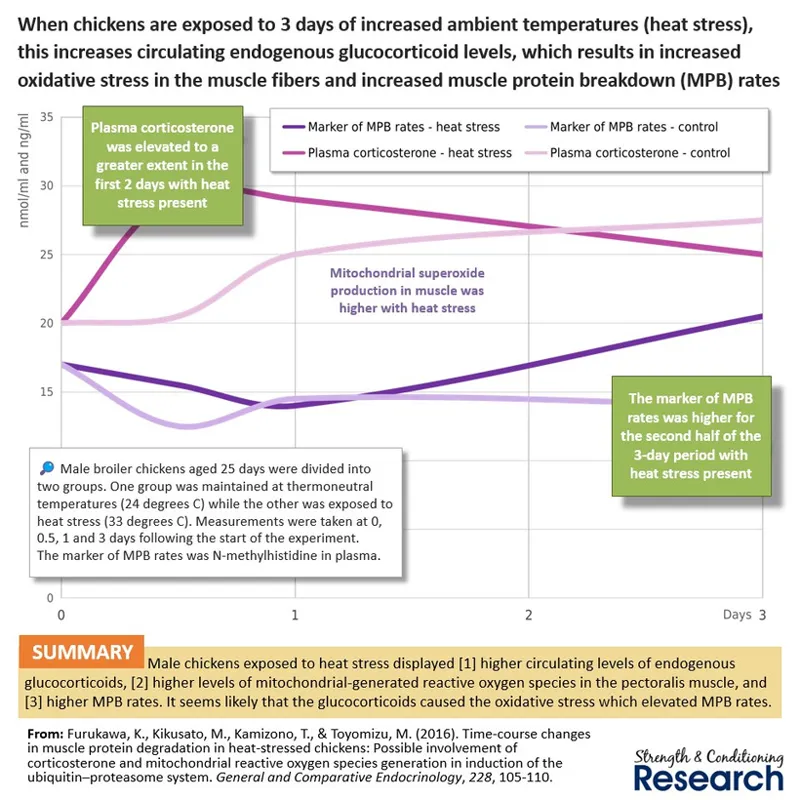
Glucocorticoids promote oxidative stress directly through a number of mechanisms inside muscle fibers, starting with their detection by glucocorticoid receptors. This then leads to the creation of free oxygen radicals (also called reactive oxygen species).
.
#2. What effect does glucocorticoids have on muscle protein breakdown?
By causing oxidative stress through several pathways (including by their effects on the cell mitochondria), glucocorticoids increase muscle protein breakdown (MPB) rates. This is why glucocorticoids are widely-designated as catabolic, since the elevated MPB rates actively degrade the insides of muscle fibers.
.
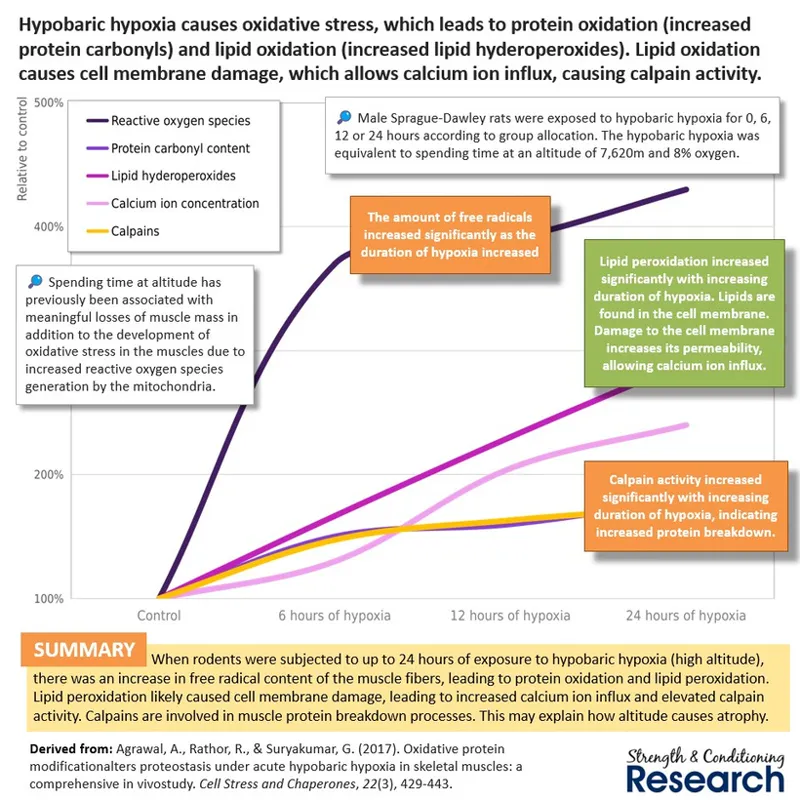
Note that the effects of oxidative stress on proteolysis is not unique to glucocorticoids. Any time oxidative stress is generated, there is an accompanying elevation in proteolytic activity in multiple pathways, including calpains. For example, systemic hypoxia (as occurs at altitude) is well-known for causing muscle atrophy by elevated oxidative stress leading to increased proteolytic activity and an elevation in MPB rates.
.
#3. What effect does glucocorticoids have on muscle protein synthesis?
By causing oxidative stress, glucocorticoids can decrease muscle protein synthesis (MPS) rates by blocking translation initiation (the step between the end of the mTOR signaling pathway and the start of the MPS rate elevation). This does not mean that MPS rates are always low when glucorticoids are present, but MPS rates will be lower than they would be otherwise if the glucorticoids were entirely absent.
.
Oxidative stress is known to cause endoplasmic reticulum stress that blocks the mTOR signaling pathway from causing translation initiation through the unfolded protein response. This has been observed when workouts are performed too soon after preceding workouts and muscle damage (and therefore oxidative stress from the inflammatory response) is still present when the next exercise bout starts.
.
#4. What effect do glucocorticoids have on atrophy?
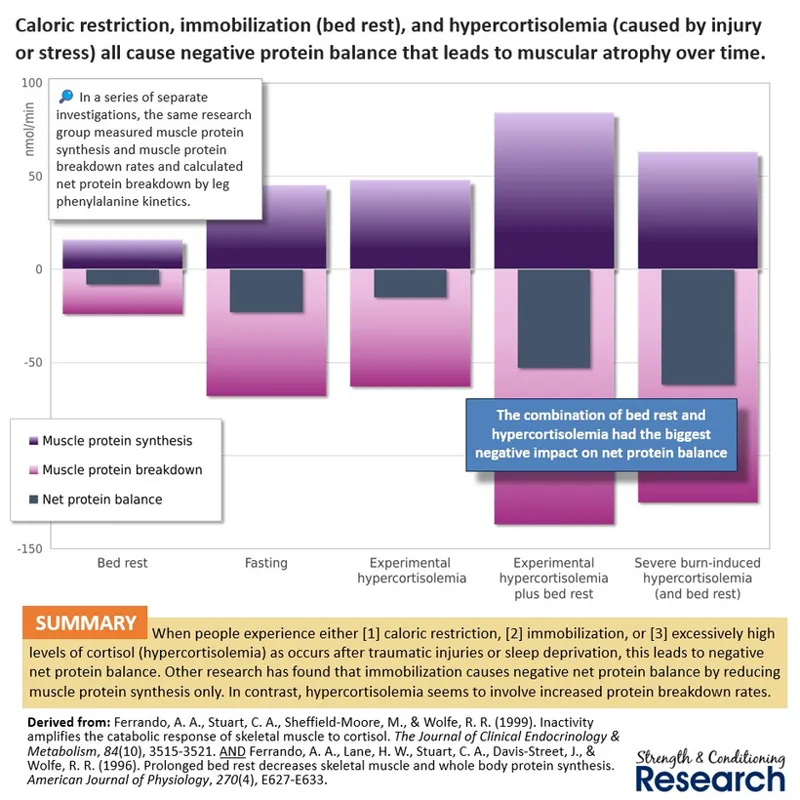
By promoting an increase in MPB rates (as well as by suppressing MPS rates), glucocorticoids shift net protein balance towards an increasingly negative state with the result that muscle fiber atrophy occurs. One of the best proofs that endogenous glucocorticoids are capable of a large atrophy effect independently of physical activity levels is that the hypercortisolemia state induced by traumatic injury (which also involves bed rest) leads to much greater muscle loss than bed rest alone.
.
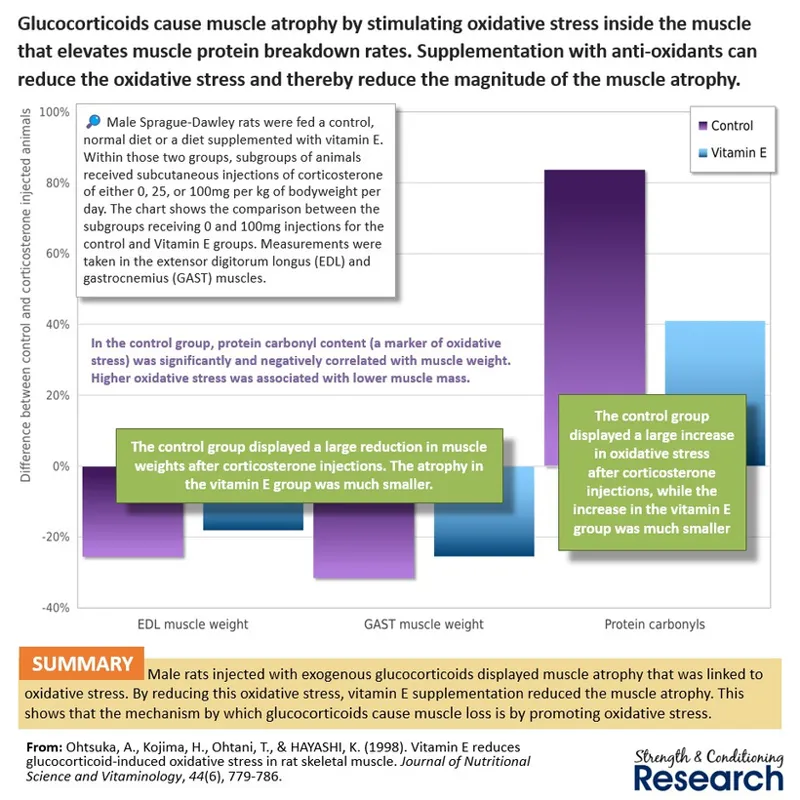
Several studies have connected these factors together, showing that experimentally manipulating oxidative stress at the same time as glucocorticoids demonstrates that the oxidative stress is responsible for the muscle atrophy that occurs.
.
Once again, note that the effect of oxidative stress on muscle atrophy is not unique to glucocorticoids. Any time oxidative stress is generated, there is an accompanying increase in MPB rates that can lead to muscle atrophy (depending on the size of the accompanying changes in MPS rates). Systemic hypoxia (as occurs at altitude) is famous for causing muscle atrophy by means of elevated oxidative stress leading to increased MPB rates.
.
Conclusions
High levels of exogenous or endogenous glucocorticoids (including cortisol) cause atrophy. Indeed, both exogenous glucocorticoid administration and the hypercortisolemia caused by sleep deprivation and traumatic injury are known to cause rapid muscle loss. So how does this atrophy happen? Well, glucocorticoids are known to have several related effects inside muscle fibers, which provide an explanatory framework, Firstly, glucocorticoids directly stimulate the overproduction of oxidative stress through several cellular mechanisms starting from their detection by glucocorticoid receptors. Oxidative stress involves the production of reactive oxygen species (ROS) that attack proteins, lipids, and organelles inside the muscle fiber. Secondly, the oxidative stress causes an increase in muscle protein breakdown (MPB) rates by the activation of proteolytic signaling pathways. It seems that MPB rates are elevated specifically in order to remove parts of the fiber damaged by the oxidative stress. Thirdly, the increased MPB rates cause muscle atrophy because there is no accompanying increase in muscle protein synthesis rates. Indeed, the link between glucocorticoids, oxidative stress, elevated MPB rates, and atrophy can be demonstrated by the fact that antioxidant supplementation can prevent muscle atrophy in experimental animal models involving excessive glucocorticoid production or exogenous glucocorticoid administration.
Comments (1)
would an overnight 30% to 40% caloric deficit cause atrophy?