

How does immobilization cause atrophy?
How does immobilization cause atrophy? Does it involve an actively catabolic process that removes proteins from muscle fibers? Or does it involve simply the absence of the background hypertrophy stimulus that occurs during the activities of daily life?
.
#1. How do we know HOW immobilization causes atrophy? (part one)
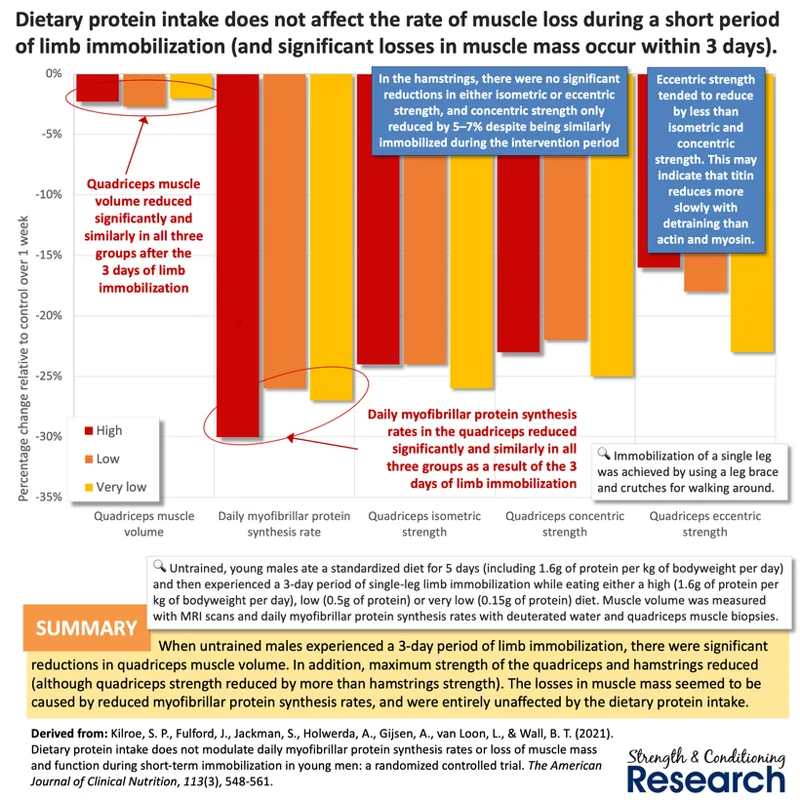
We know that immobilization causes atrophy by reducing the stimulus that causes hypertrophy because it causes a reduction in the rate of myofibrillar protein synthesis (MYOPS).
.
In contrast, an extended period of immobilization does not cause any increase in the rate of muscle protein breakdown (MPB). Therefore, atrophy is caused by means of a reduction in the activity of anabolic processes rather than by means of an increase in the activity of catabolic processes.
.
#2. How do we know HOW immobilization causes atrophy? (part two)
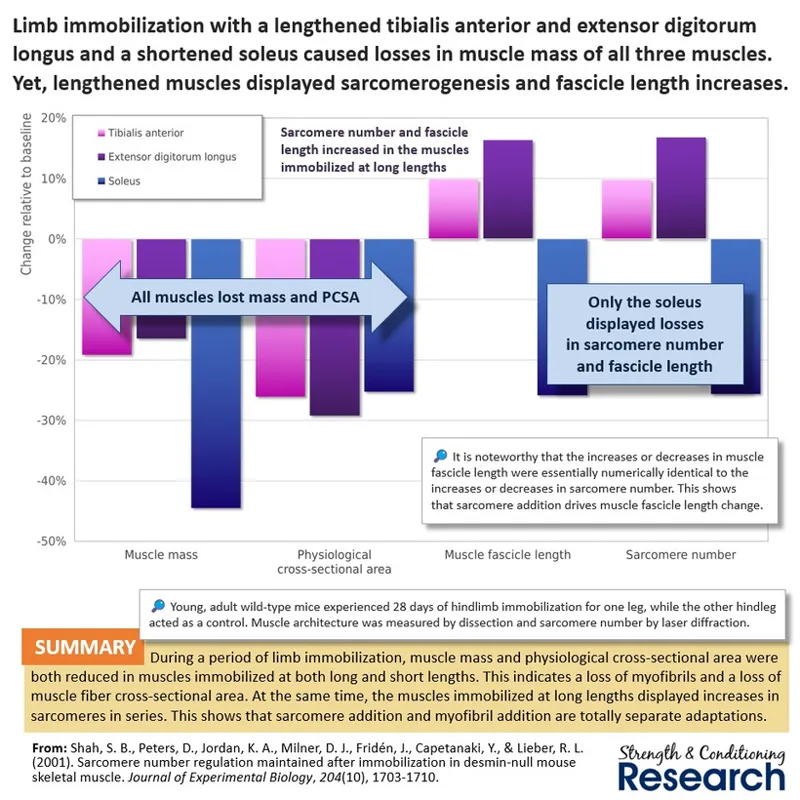
Additionally, we know that immobilization causes atrophy by removing the stimulus that causes growth because we can stimulate the addition of sarcomeres even during immobilization, while myofibrils are being lost. Since active mechanical tension stimulates myofibrillar addition and passive mechanical tension stimulates sarcomere addition, one adaptation can be dissipating while the other is being generated. Even so, this could not happen if there was a catabolic effect produced by an inflammatory process.
.
Conclusions
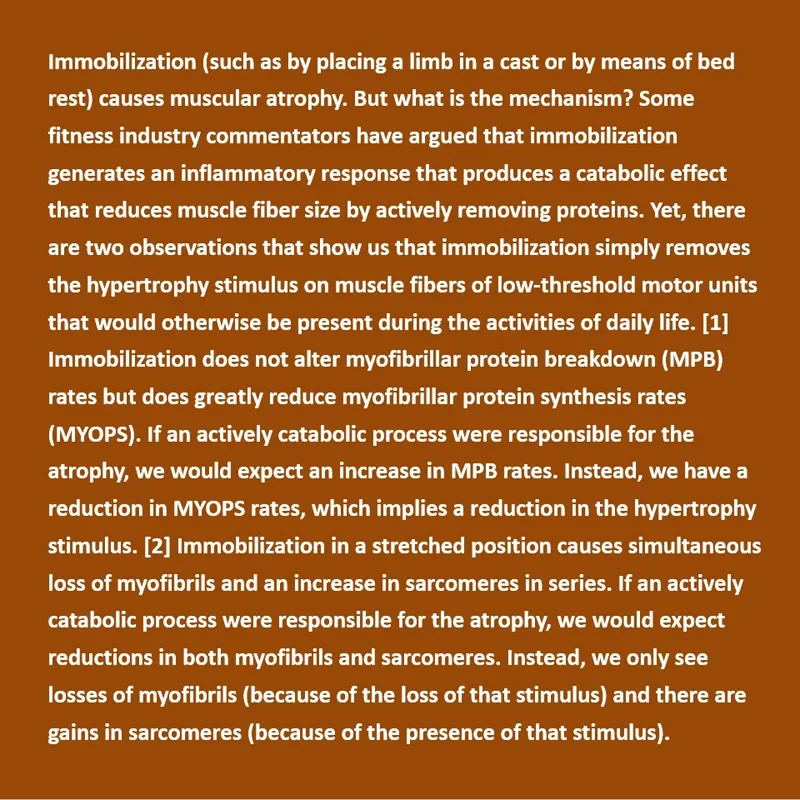
Immobilization (such as by placing a limb in a cast or by means of bed rest) causes muscular atrophy. But what is the mechanism? Some fitness industry commentators have argued that immobilization generates an inflammatory response that produces a catabolic effect that reduces muscle fiber size by actively removing proteins. Yet, there are two observations that show us that immobilization simply removes the hypertrophy stimulus on muscle fibers of low-threshold motor units that would otherwise be present during the activities of daily life. [1] Immobilization does not alter myofibrillar protein breakdown (MPB) rates but does greatly reduce myofibrillar protein synthesis rates (MYOPS). If an actively catabolic process were responsible for the atrophy, we would expect an increase in MPB rates. Instead, we have a reduction in MYOPS rates, which implies a reduction in the hypertrophy stimulus. [2] Immobilization in a stretched position causes simultaneous loss of myofibrils and an increase in sarcomeres in series. If an actively catabolic process were responsible for the atrophy, we would expect reductions in both myofibrils and sarcomeres. Instead, we only see losses of myofibrils (because of the loss of that stimulus) and there are gains in sarcomeres (because of the presence of that stimulus).