


Slow twitch muscle fiber growth
Some researchers and fitness industry influencers argue that we must train in a certain way in order to maximize the hypertrophy of slow twitch muscle fibers. Is there any truth in this?
.
#1. Light load strength training
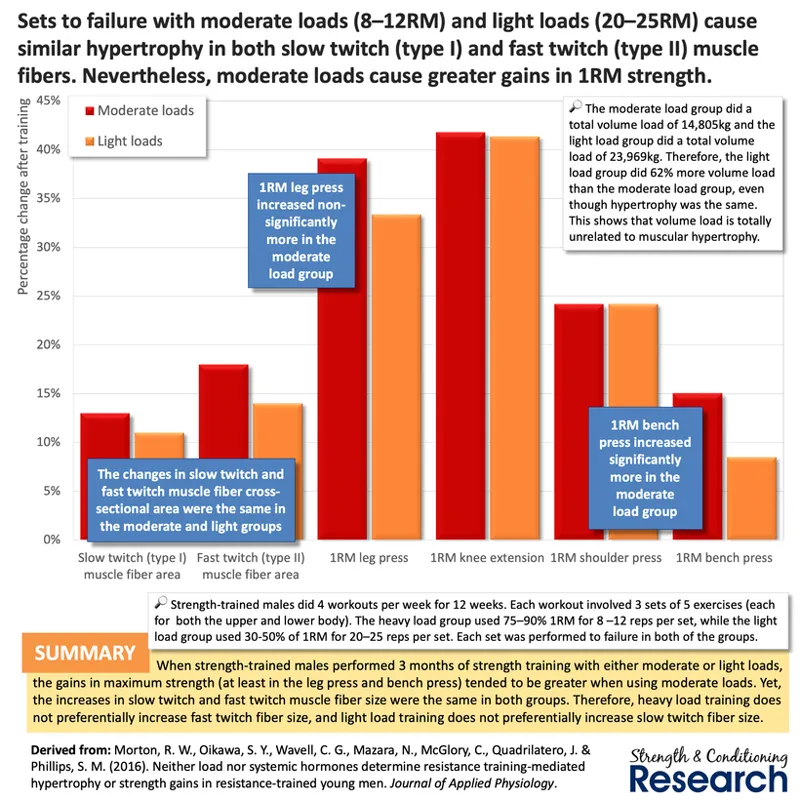
We cannot target the slow twitch muscle fibers of a muscle differently from the fast twitch muscle fibers by doing light load strength training. Both moderate loads and light loads cause exactly the same relative growth in the slow twitch muscle fibers of a muscle.
.
Similarly, we cannot cause muscles that are predominantly slow twitch in nature to grow more by training them with lighter loads. Nor can we cause muscles that are predominantly fast twitch in nature to grow more by training them with heavier loads.
.
#2. Strength training with blood flow restriction
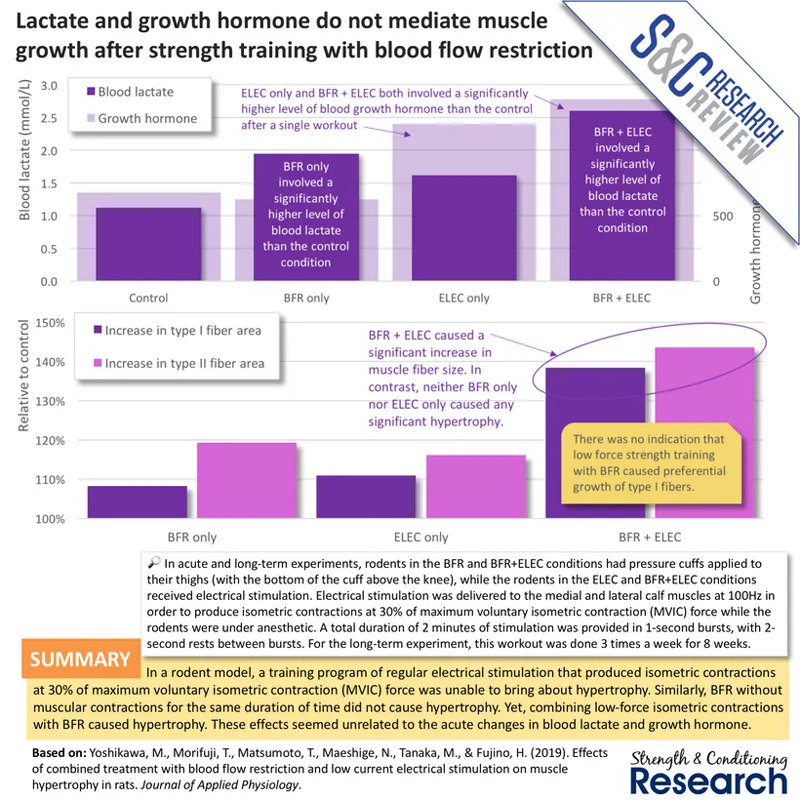
Although there are some studies that have reported preferential growth in the slow twitch muscle fibers of a muscle when applying blood flow restriction, they are balanced out by other research that has shown either no effect or the opposite effect. For example, this animal model study found more fast twitch fiber growth than slow twitch muscle fiber growth after training with blood flow restriction.
.
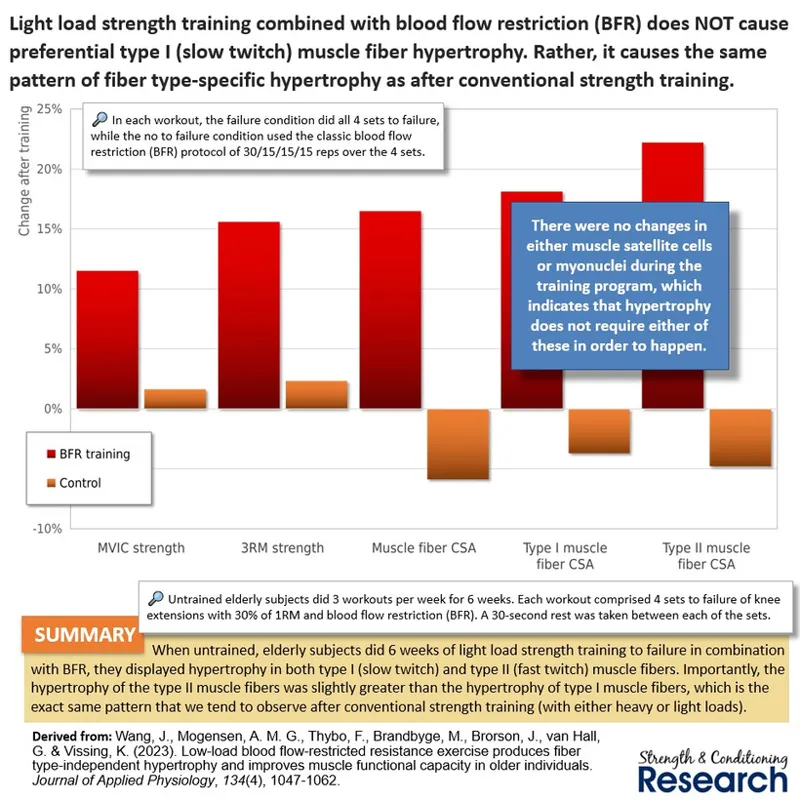
Similarly, this human blood flow restriction training study also reported more fast twitch fiber growth than slow twitch muscle fiber growth (which is the normal pattern after strength training).
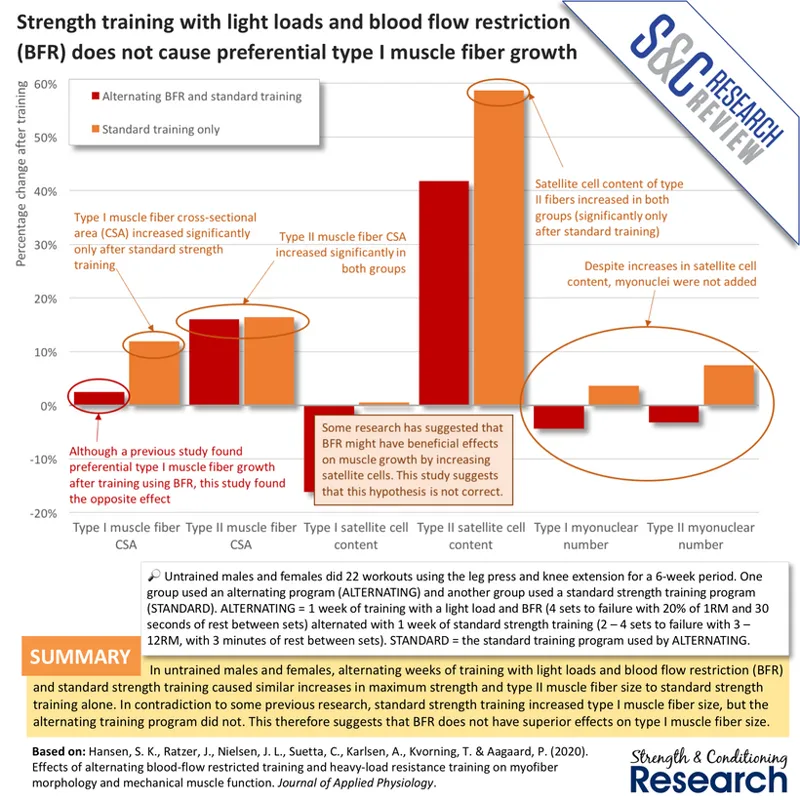
And this human strength training study even reported greater fast twitch muscle fiber growth relative to slow twitch muscle fiber growth when using blood flow restriction.
.
#3. Slow lowering phases during strength training
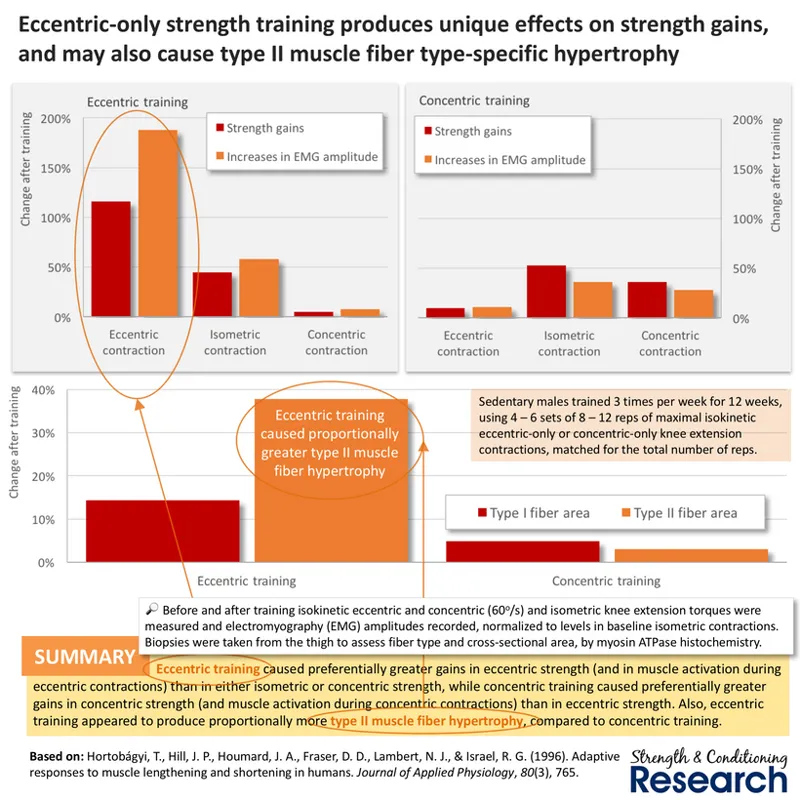
Eccentric training with maximal efforts tends to cause larger increases in fast twitch muscle fiber size than conventional strength training or concentric training with maximal efforts. This is most likely due to the greater responsiveness to passive mechanical tension of fast twitch muscle fibers.
.
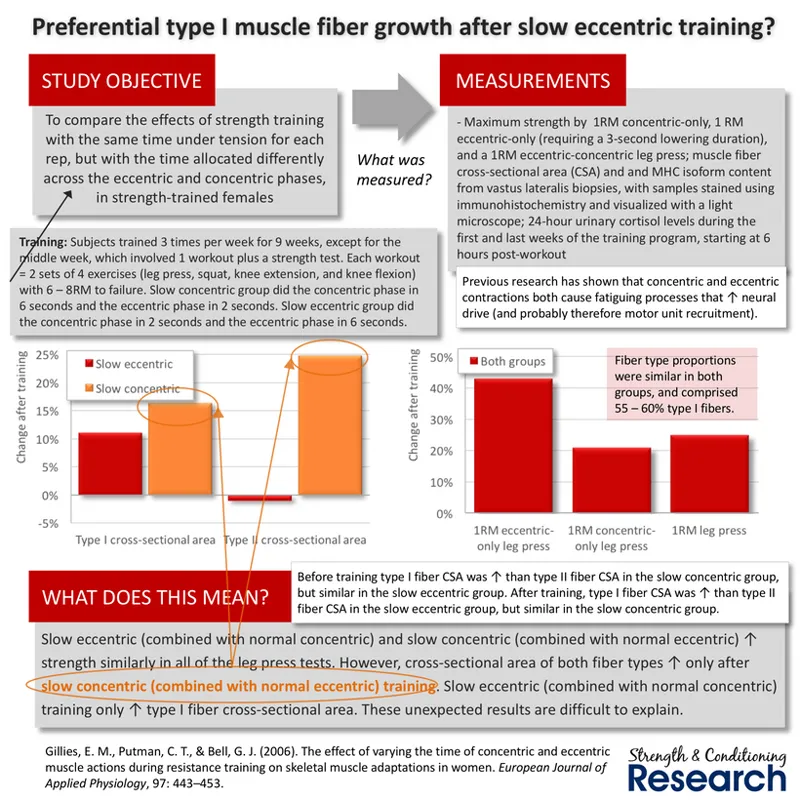
In contrast, there is greater growth among the slow twitch muscle fibers after incorporating slow lowering phases during conventional strength training. Slow lowering phases provide more passive mechanical tension but only to the (slow twitch) muscle fibers in the bottom half of the high-threshold motor unit pool, so it makes sense that there should be more slow twitch muscle fiber growth after training in this way.
.
Conclusions
Some researchers have suggested that we should train in a different way to maximize the hypertrophy of slow twitch muscle fibers. Common suggestions include using light load sets or training with blood flow restriction (BFR). Yet, the literature is now relatively clear that training with the same number of sets to failure of either light or moderate loads produces almost exactly the same hypertrophy in slow twitch muscle fibers (and also in fast twitch muscle fibers). And, while some studies have indicated that strength training with BFR may cause preferential hypertrophy in slow twitch muscle fibers, other studies (in both animals and humans) have reported contradictory results. Moreover, the application of BFR accelerates the development of metabolite-related fatigue (and may also increase it relative to calcium ion-related fatigue), such that task failure occurs sooner than would normally occur during light load strength training. In this way, it makes lighter loads behave far more like heavier loads (which also reach task failure earlier and with more metabolite-related fatigue relative to calcium ion-related fatigue). Therefore, we would not expect light load strength training with BFR to increase slow twitch fiber muscle growth relative to light load strength training without BFR. interestingly, slow lowering phases during normal strength training do seem to cause preferential slow twitch muscle fiber growth, likely because this training method applies a larger dosage of passive mechanical tension but only to the (slow twitch) muscle fibers located at the bottom of the high-threshold motor unit pool.
Comments (1)
Sixth infographic - In the study «Adaptive responses to muscle lengthening and shortening in humans» (1996), what is the mechanism that relates the «passive mechanical tension of fast twitch muscle fibers» with «larger increases in fast twitch muscle fiber size»?