



Radio War Nerd #300 — The US Civil War, Part 3: First Battle of Bull Run
Recorded: October 18, 2021
The War Nerd returns to his Civil War series with the first major battle of the war: The First Battle of Bull Run — a military disaster for the Union, thanks to the treasonous efforts of so many northern elites, from President James Buchanan on down the ranks.
Maps & Images
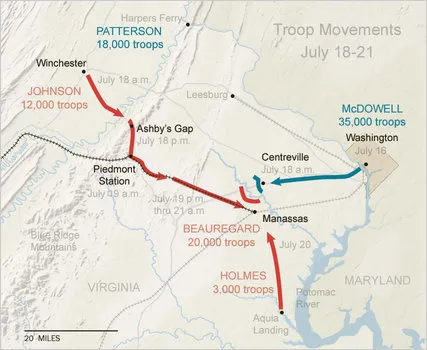
*Map of Battle of Bull Run
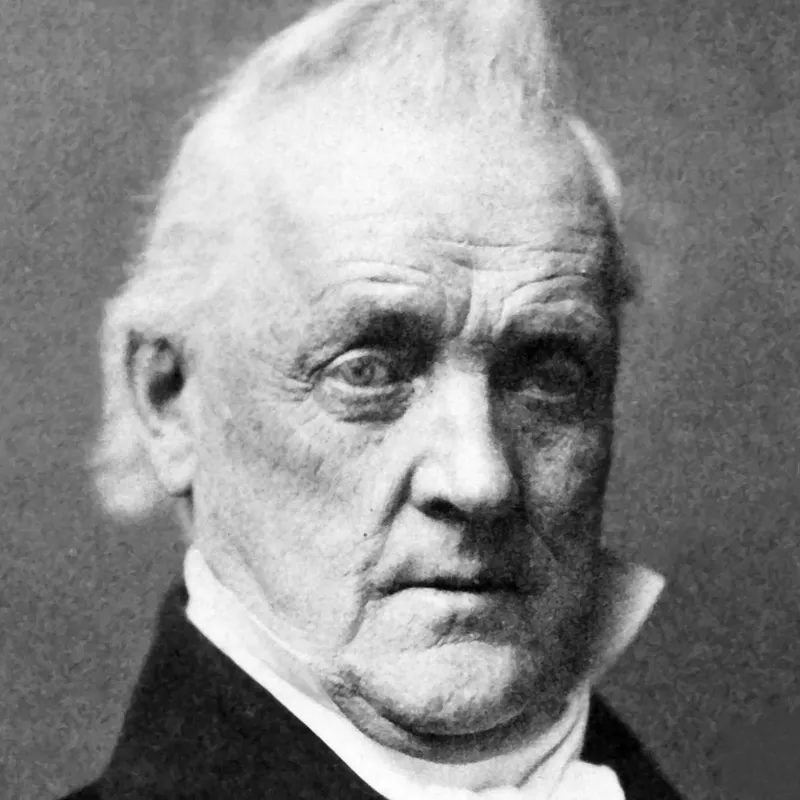
*President James Buchanan
*General Winfield Scott
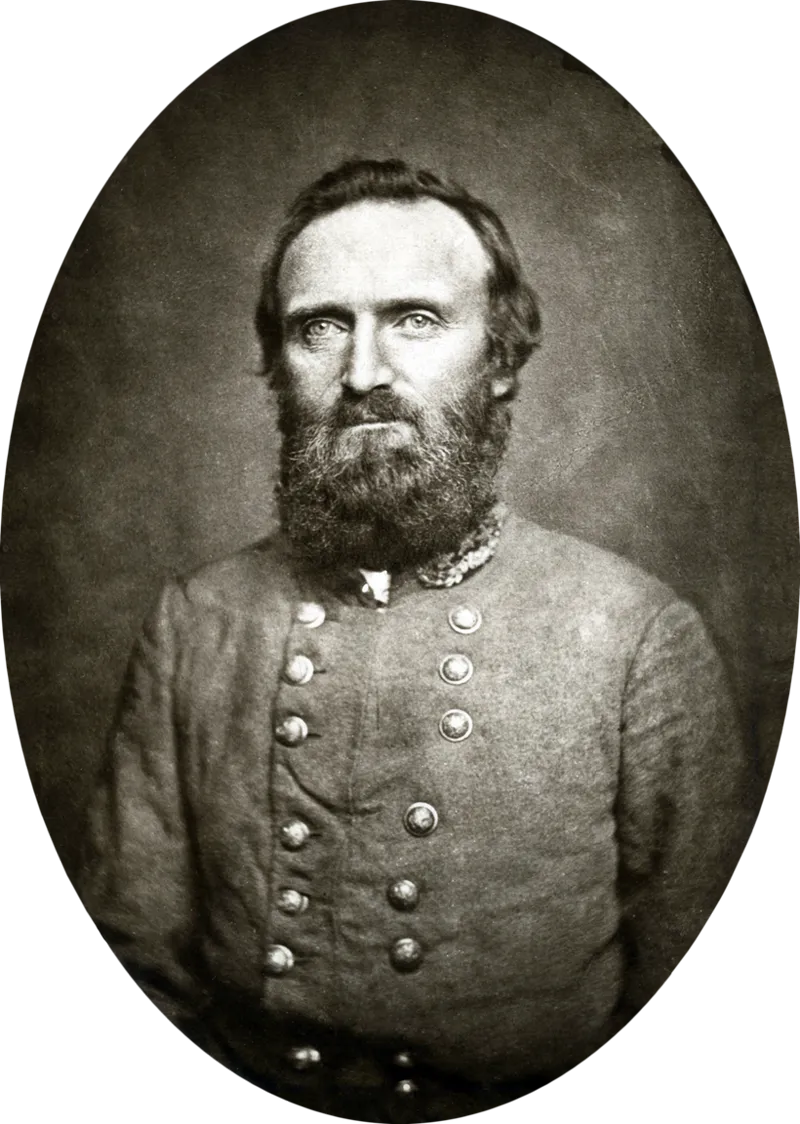
*Stonewall Jackson
Check out the RWN Civil War Series:
-EP 295: Part 1: Count Adam Gurowski
-EP 297: Part 2: Bleeding Kansas
Buy John Dolan's book "The War Nerd Iliad" and his audiobook "Pleasant Hell".
Check out the Radio War Nerd Merch store here!
Total time: 1:29:03

Comments (32)
Listening for second time; exclusively and consecutively. A tour de force John! I am one of those former liberals (pacifists) who could never drum up any interest previously in Civil War.
I went to a small liberal arts college in Tennessee and worked in the library archives one summer. One of the big collections in the archives that didn't mean anything to me at the time was the... Shelby Foote collection. I never really explored it, but I believe that I sat a few feet away from most of Foote's original writings/notes for months. No one at the library ever said anything about Foote's confederate sympathies or really anything negative at all. I suppose that shouldn't surprise me though. I am still on good terms with the staff there and can get access to the collection if that could be of any use to anyone.
Near the end of the episode, what was the quote by Mark Twain about southerners? I didn't understand it.
Great Episode. John could write a book about the whole war and it would hopefully set some things right.
Listening to the ACW episodes with another Gettysburg native, loving series so far!
Great episode. Thanks for sharing. Totally right about Foote and those guys, but I wonder what you think about McPherson. Felt like Battle Cry of Freedom was very good for a mainstream book that tried to take on the whole war. I think it’s also the main reference point now for a new generation the way Foote and Burns used to be, but that could just be me in my own bubble. Also seems like in mainstream history these days, you have this very big kind of Neo-Whig movement with like Doris Kearns Goodwin and obviously Chernow. They write books like they’re explicitly doing it to get on Obama’s reading list, which is frustrating and useless in their own ways, but at least not neoconfederate.
I could listen to John speak on the Amerikan Civil War all day, such a font of knowledge. Fuck Shelby Foote.
Y'all were talking about doing an extended profile on McClellan and I hope you do. Particularly intrigued by Mark's comment that he is a modern analogue in so many ways.
This series is fantastic
Great episodes! Hopefully John doesn’t hate me for saying it, but since he mentioned it this episode, all I could think of during the first episode was the revisionist history of Stalin in the lead up to WWII. Of course that went a way that I don’t think anyone expected or intended, but perhaps the military part of the purge at least had some merits, especially if there were still a lot of Whites in the group.
just wanted to say I've been following you guys output since the Iraq War and it has all been fantastic, love it. I can personally attest your coverage of MENA conflict is the best I know of, keep it up
Wonderful episode, John and Mark. Made me angry in all the right spots. Embarrassed me too because I used to teach US history at the UIllinois (2003-2012). As a TA and lecturer, I was implicitly taught to avoid ACW battle history because that wasn’t what good social and cultural historians did. That left the field to neo-confederates and enthusiasts. Part of me longs to get back in the classroom to right that neglect. But too much time has passed. BTW, AK, German immigrants flocked to militias thru the 1860’s, inspired by the ‘48 revolution and nativist violence in the US.
Right, and the german militias fought well on their home turf and in federal service when properly supplied and officered as part of a larger unit. But I still dont see how the laudable actions of St. Louis militia literally defending their homes are easily translatable to all the arsenals across the south as suggested.
It's great to see a proper unironic pro-union take on the civil war.
I used to follow the blog "Language Log" and remembered being so fascinated by this entry (and also the comments) about the German immigrant contribution to the Union cause, that I saved the link. (The comments are worth a look, as well). I am so delighted that The War Nerd began with serious consideration of this issue. https://languagelog.ldc.upenn.edu/nll/?p=3051#more-3051
I have to take issue with the idea that calling up Republican militias to reinforce federal arsenals in the South was at all feasible. For one, militias in the US had been extremely unreliable. Famously, in the War of 1812, NY militias who had been clamoring to conquer Canada before the war got cold feet when told they actually had to cross the St. Lawrence and do their own bleeding for the prize. They actually voted and refused to leave New York soil, which suddenly they insisted they had only risen to defend. In fact, Winfield Scott, who had gotten badly shot leading US regulars ordered to advance unsupported by that militia, had fought for the intervening 45 years to modernize and professionalize the army as much as possible. But he lost the argument to Jackson, the great champion of decentralized militias precisely to prevent the type of overweening central authority that John and Mark are pining for in this retelling. The idea that those unreliable, vocalist militias - and it'd have to have been militias, because the US govt. didn't have the resources, officers, or equipment to kit them out, support them, or lead them - could have been shipped to Pickens, Moultrie, Norfolk et. al., let alone arsenals in Texas or deeper across the Gulf Coast, deep in "enemy" territory with no supply lines, and before northern pride got pricked with actual conflict, is not supported by any period evidence that I've seen. Moreover, Norfolk itself fell to ruse, not assault. The Union garrison was in the process of destroying the base precisely to prevent it falling into enemy hands when a local confederate civilian who happened to be a railroad exec ran a single train loudly up to the city with whistles blowing and as much noise as possible, then sneaking it back up the rails in the other direction quietly, and repeating the show all over again. He then waltzed up to the garrison commander and claimed that the town was swarming with Confederate soldiers, and constant reinforcements were coming all the time - why, sir, can't you hear the trains coming in at every hour of the day and night? It's a trick as old as Sima Yi's "Empty Fort" and it does tend to work as often as not. The garrison commander could have had as many green militiamen as you like and he still would have surrendered because he got bluffed. Also, another cool anecdote: Garibaldi was actually offered a Major General's commission as commander of Union armies (unclear when the offer was made, though it stood as of 1862), but Lincoln balked at his proposed solution - raise giant masses of irregular cavalry and sweep across the landscape, burning any areas of the South that resisted to a cinder - and Garibaldi's requirement that the war's objective be changed to the elimination of slavery.
I hope you make an exception to the biography rule to dive into the life of General George Henry Thomas, who absolutely deserves a deep dive as a Virginian who was loyal to the Union and a victorious Union General.
Thanks for this series/episode. I never really knew much beyond a few books in school and Ken Burns about the ACW to be honest, and certainly you've opened my eyes to how much weirdly pro-Confederate sympathy has influenced US historiography. Come to that, can you recommend a ACW historian who writes in French or German (I read both), or at any rate is not American and doesn't have that bias? Just curious.
Good question. Doesn't directly address your request for Fr and Ger sources but I will say that reading the (translated) article from the 'Great Soviet Encyclopedia' on 'American Civil War' years back was very interesting for me.
Great episode. I wasn't aware of the German influence.
Loving this series. Midwestern German oaf Matt Christman would be a perfect guest for the civil war nerd series.
It's frighteningly easy to see how we're still plagued by an inept liberal elite that does everything in its power to appease the right wing in this country, even as that right wing becomes more fanatical, and the voting base of the liberals more demanding in their cries for justice (medicare for all, universal pre-K, etc etc). You can see it in statements like Pelosi's when she said American "needs a strong Republican party." Truly nothing new under the sun
Yeah, it's almost as if bourgeois states need a vanguardist faction and a consensus-legitimizing faction. Sort of how a car needs a gas pedal and a brake pedal. One pedal doesn't "appease" the other, and you can't reasonably expect the pedals to be merged into one big happy pedal. You can't just tear out one either, for if you do, the car can't achieve its purpose.
I didn't "appreciate how deeply insane the northern elite was" until listening to your civil war series. Their decisions seemed strange and out of touch, but I suppose even that sort of behavior didn't stand out as that abnormal to me given our current leaders and their seemingly inexplicable decisions.
Their decisions seem rational when you realize how much money northern industrialists were making off of cotton production. One question I have is; Was there much recognition in new England at the time that abolition would impact the price of cotton and therefore impact the profits of rich industialists? The British parliament considered intervening on the side of the south, but then decided it would be easier to just force Indian famers to grow more cotton. https://www.jstor.org/stable/2954674 But I don't think new England's producers had such an outlet. I was at the Tropen Museum (Museum of the Tropics) in Amsterdam a couple years ago and they had a display on growing tobacco in Indonesia. The display explained how the Dutch developed the coolie system in Indonesia to first grow tobacco in the 1860's. No mention was made of WHY the Dutch became interested in growing tobacco in Indonesia only in the 1860's, and not before. But it's obviously the same reason the British expanded cotton production in India in the same period.
This series is one of your best. When it is over release it as an audio book.
I just wanna know how the war ends
bruce willis is dead. rosebud is the sled. snape kills dumbledore
I came out to my parents as trans at a picnic area in the battlefield area.
🤘❤️
I read a fantastic article in a book by John McPhee, the book was called Uncommon Carriers, the piece Tight-Assed River, about US river barge shipping. It's really fascinating. There some type of stuff, basically any mining ore or refined product, that as much as possible you want to ship by barge, or by rail as a last resort. Inland river shipping is never gonna die as long as americans are pulling stuff out of the ground. I don't really know how I can link it, it's been published in the New Yorker, but it's only in their archives? https://www.newyorker.com/magazine/2004/11/15/tight-assed-river http://www.risingpress.org/cnu/tight.pdf
The cheapness and effectiveness of riverine shipping is a big part of Peter Zeihan's shtick too. Entertaining geopolitical analyst, though of course anything a consultant like that says has to be taken with a boulder of salt.