

















New Portal Lab version: torus, Klein bottle, monoportal, triple portal.
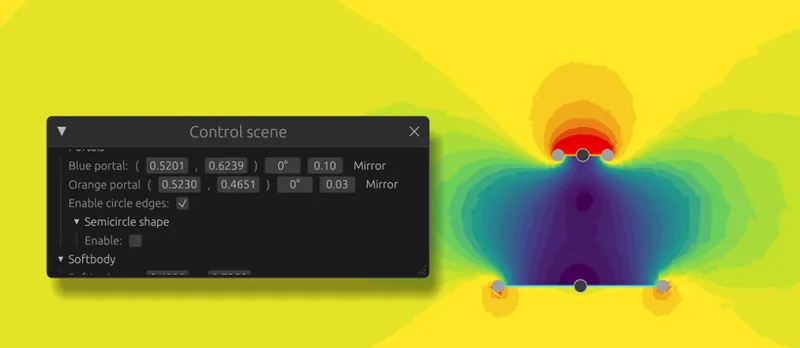
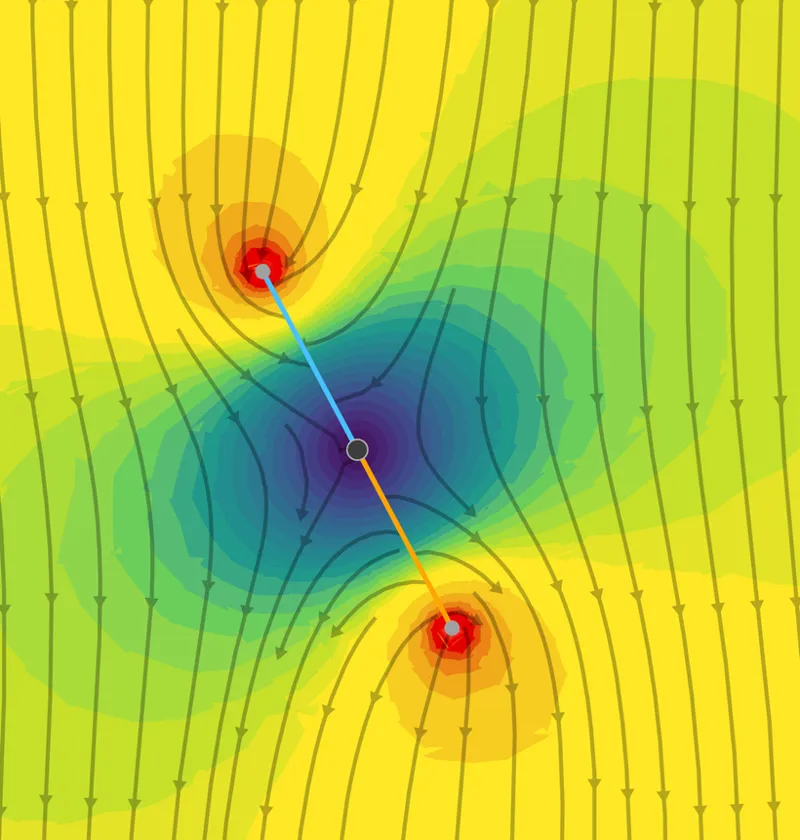
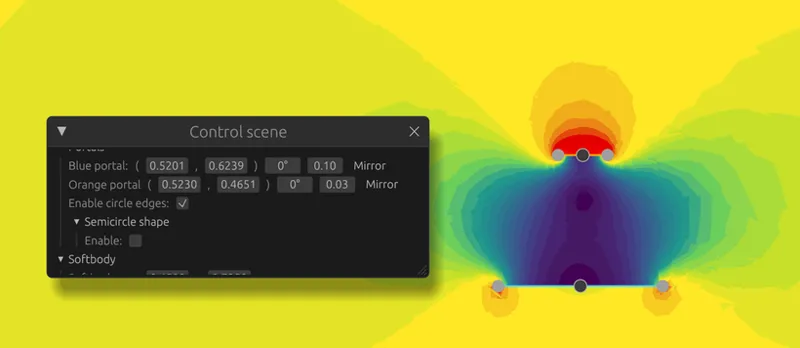
I'm working on a new video that will continue exploring gravity with portals. For now, I've implemented a pretty complex feature in the program that lets me specify how to reglue nodes on portals when portals touch at their edges! It looks like this:
This allowed me to create a lot of new scenes - you can find them here: Load → To play with → {Triple portal, Monoportal, Torus / Klein bottle}.
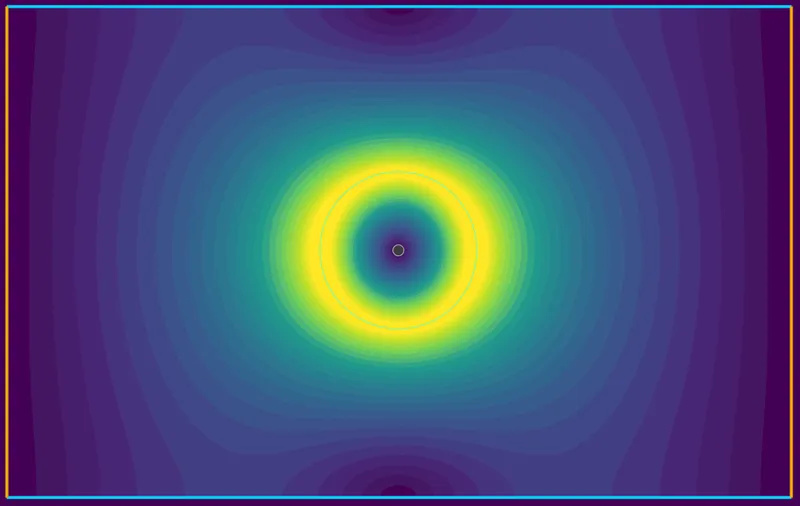
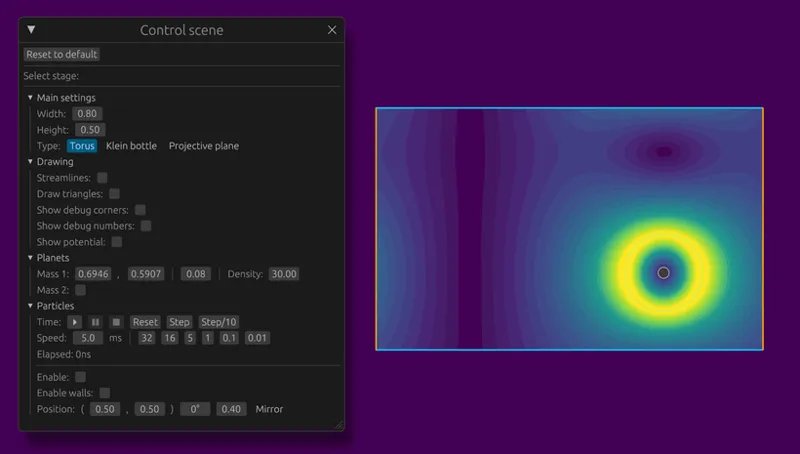
Let's start with the Torus scene.
Here you can see that space is connected like a torus:
So, if we move the body around, the gravity wouldn't change at all - only the image's position will change:
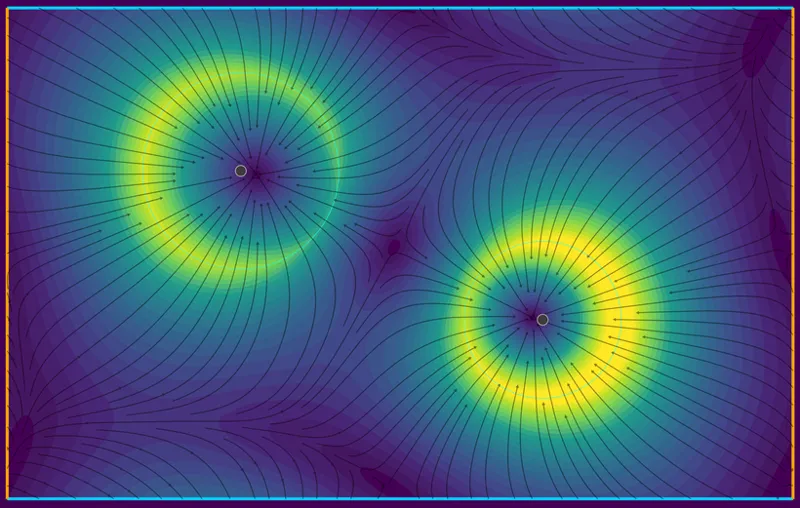
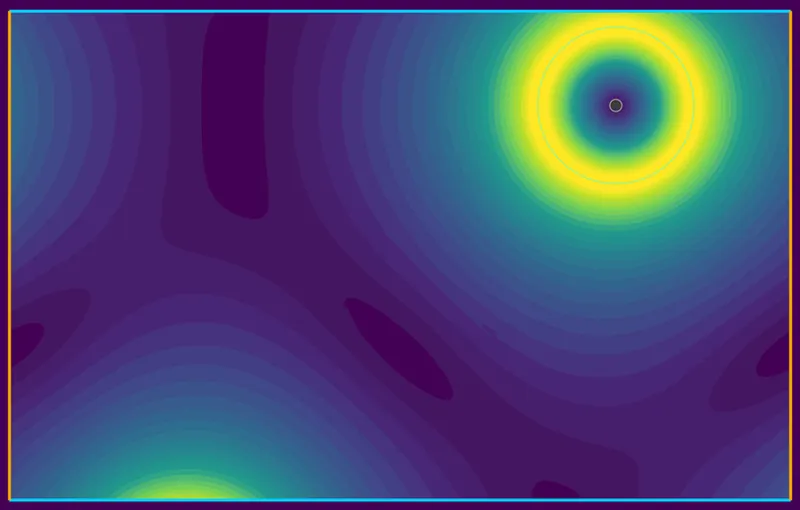
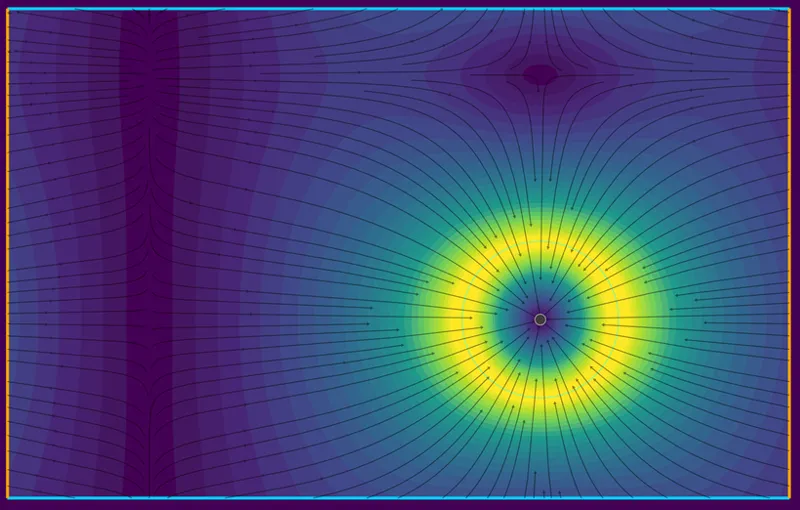
The body interacts with itself gravitationally and creates “Lagrange points” with itself, because space is connected in such a looped way. This is how it looks when we visualize the streamlines:
For this to work and converge, I have to add a uniform negative mass density everywhere, so that the total mass in this space is equal to zero. This is a standard technique in looped spaces like this.
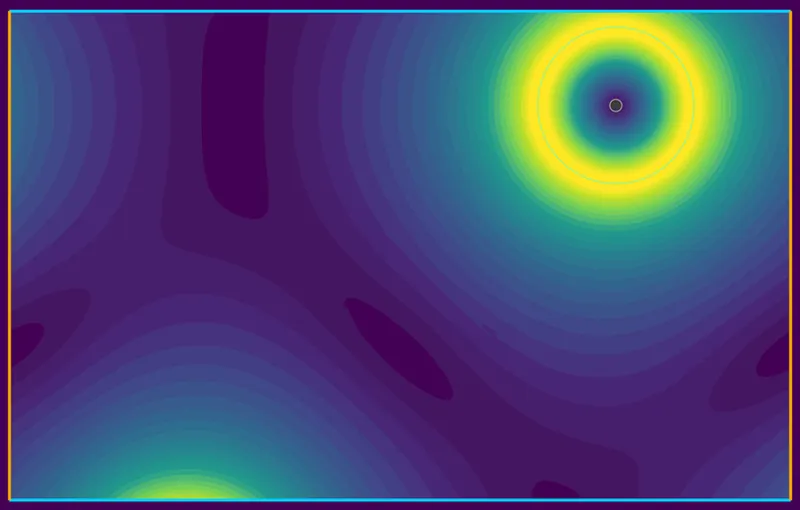
It looks even more interesting with two bodies:
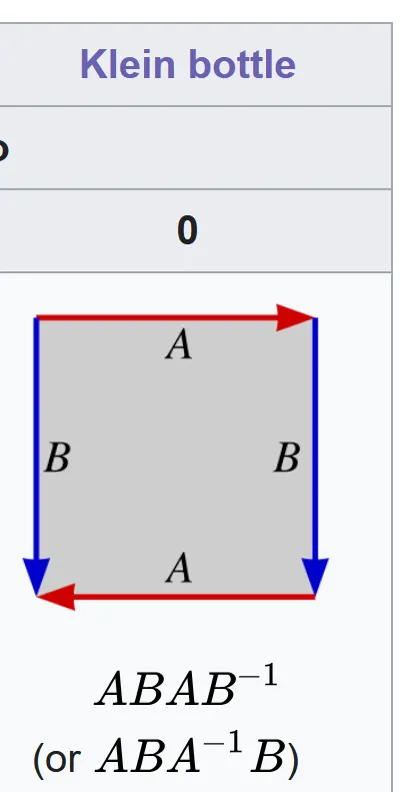
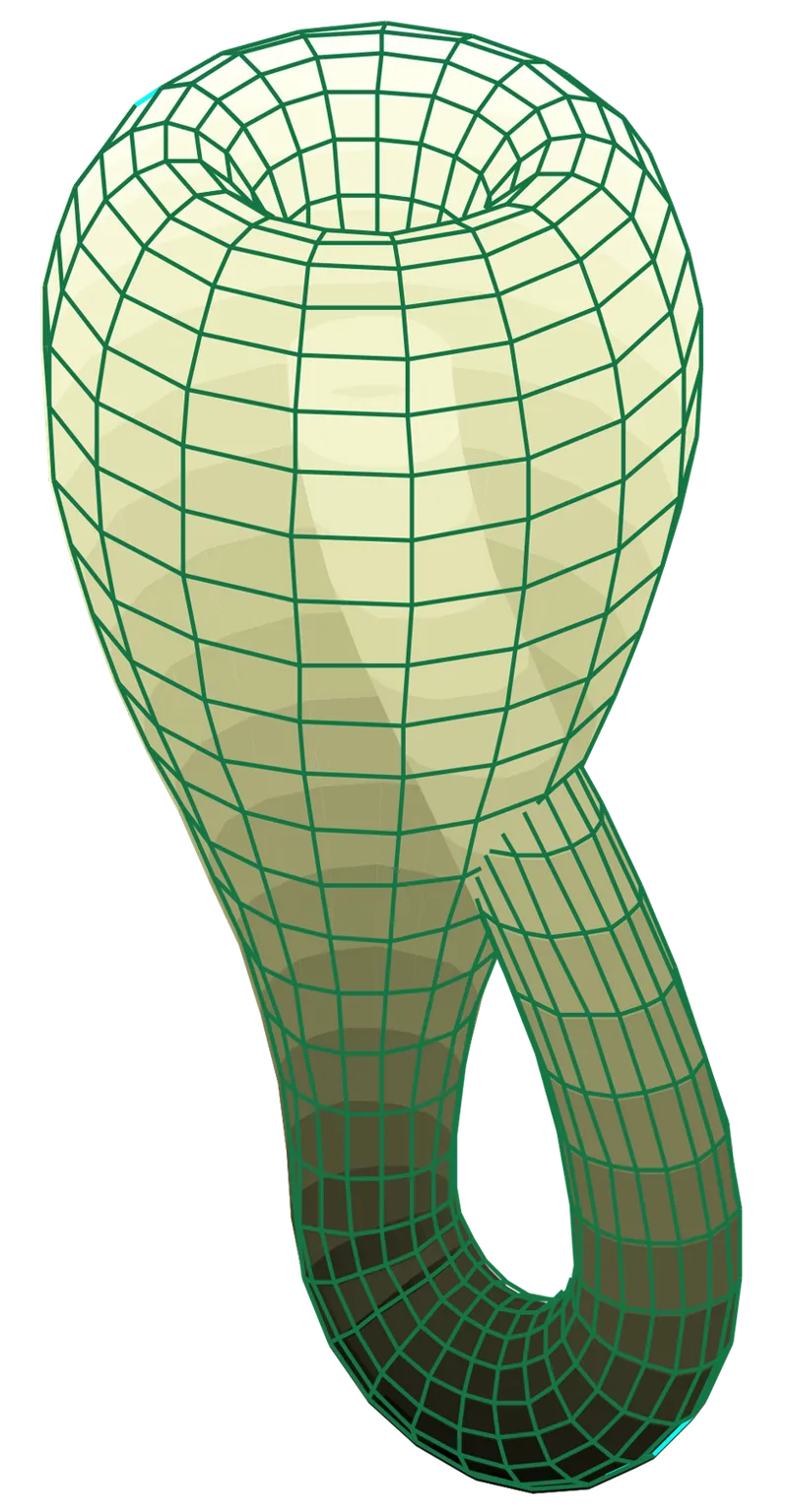
The next interesting space is the Klein bottle:
Its main difference from the torus is that its upper edge mirrors when teleporting to the lower edge:
A torus feels the same in all directions, but this feels uniform in the vertical direction and different in the horizontal direction. I recommend you play with it yourself to see how it feels.
The next thing is the projective plane:
It's mirrored in both directions. But unlike the torus and Klein bottle, it's not flat everywhere: it has two cone points with only a 180-degree angle around them. Opposite corners represent a single point. This is how it looks:
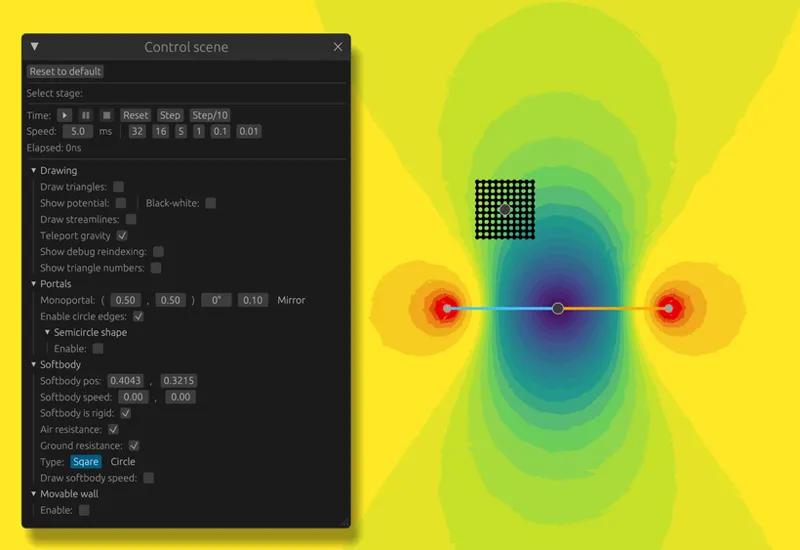
Now, meet the monoportal:
And here's how the potential looks with it:
A monoportal has a 180-degree cone point at its center, and that's where it creates an unstable "Lagrange point."
Interestingly, the gravity of the monoportal looks the same at any rotation angle:
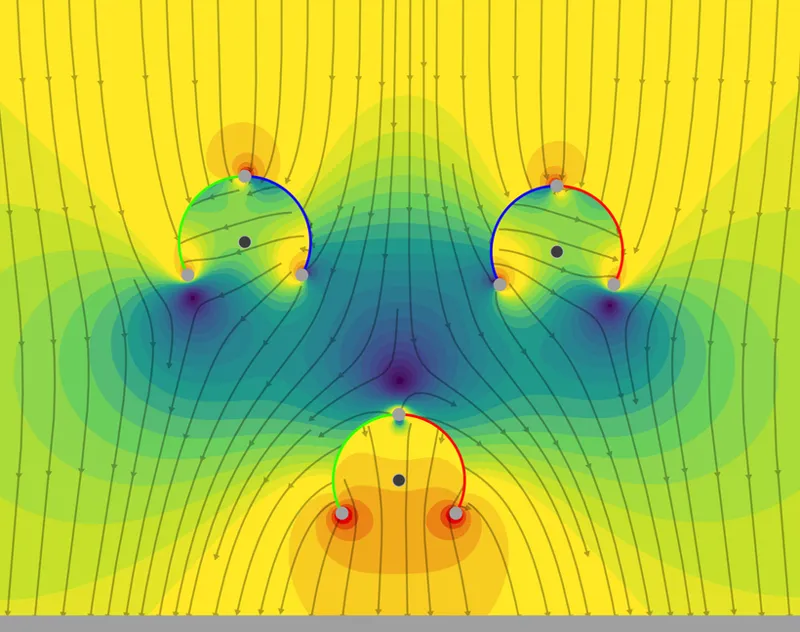
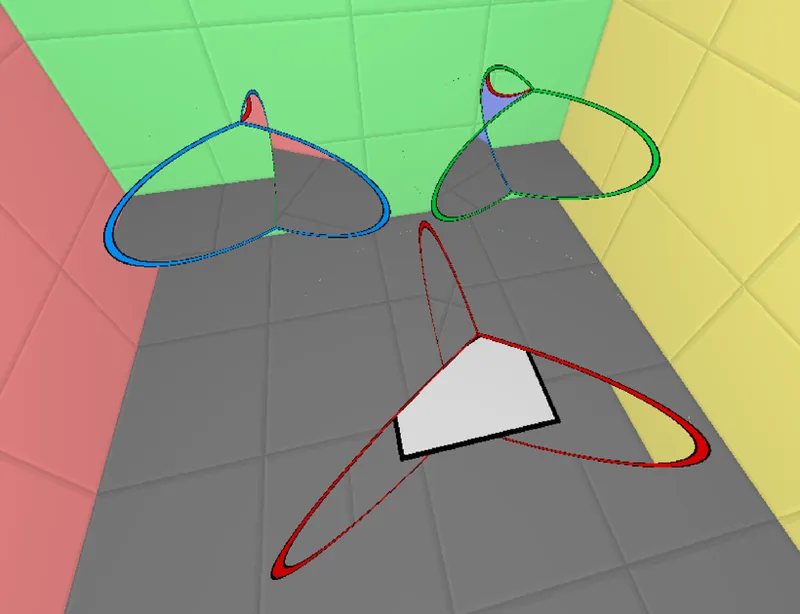
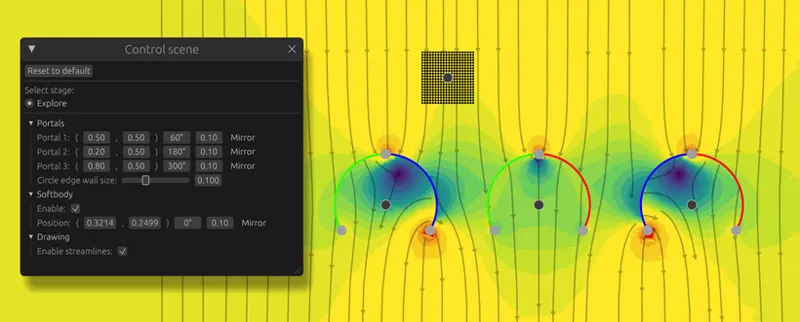
And next, the triple portal:
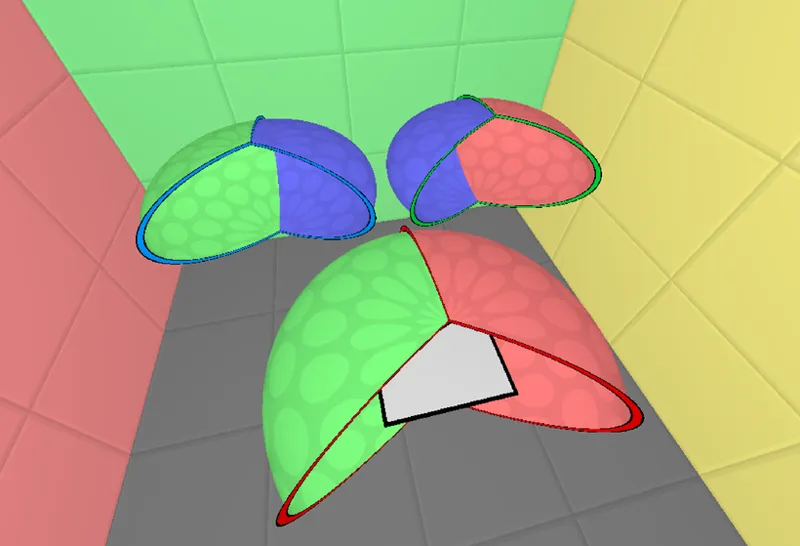
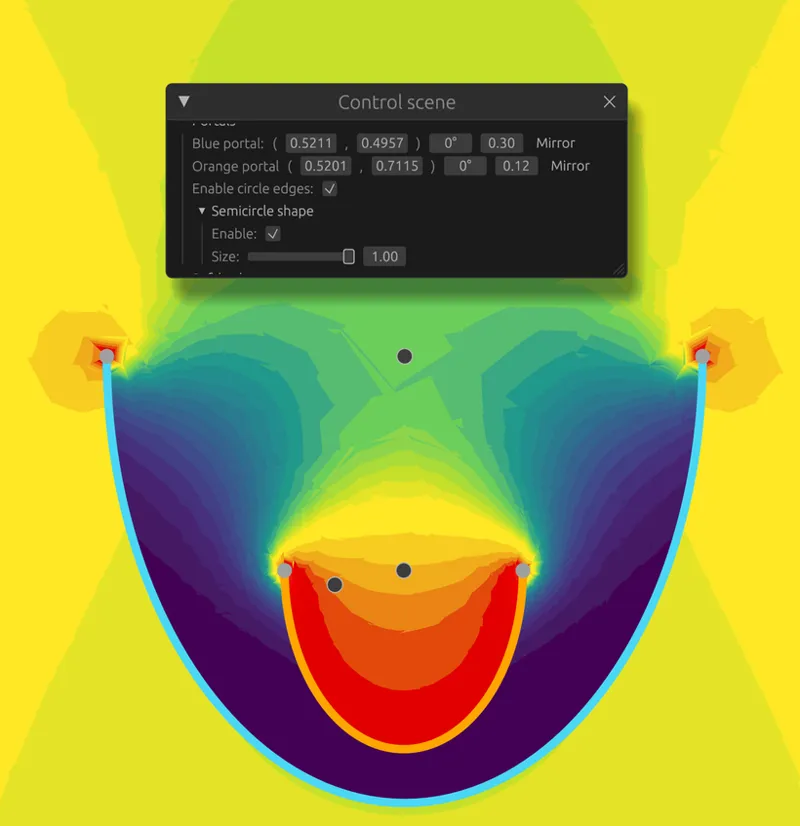
You may not recognize its shape. That's because I used a more convenient way of representing the triple portal:
It's more convenient to implement in FEM, and it also lets you put them inside each other:
I've added interactive controls for each scene, and I highly encourage you to play with them!
I also promised to show you how gravity looks in the pocket dimension, with portal-in-portal setups and with scaling portals.
You can already test all of this in the "Up and down portals" scene:
Portal in a portal:
Scaling portals:
Gravity inside the pocket dimension:
I have plans to visualize gravity in the pocket dimension using negative portals, but that's very hard to program, and right now I have no idea how I'm going to do it.
Also, for now, the soft body doesn't work correctly with scaling portals (I'm working on that, too).
And the soft body doesn't work in the torus scene - only particles do.
As always, below are the binaries for Portal Lab. If the app doesn't work, try running it with --multisampling 0.
Comments (3)
Very interesting renders. Is it possible to stretch simulation data onto the surface of real objects ? I mean, is it possible to put a "gravity map" on a torus/Klein bottle ? (In the future, can the collision of the soft body with itself be added, it's just that the monoportals are based on the fact that the body collides with itself and prevents cutting itself) Ps: I understand how clumsy this text is, I'm not very good with English.
I think I can program klein bottle and torus visualization for the FEM triangles, that would look awesome. Softbody collision with itself is planned, just not for the next video.
this is amazing