


Stop Guessing on Character Likeness! ComfyUI Face Analyzer Batch Workflow!
YouTube: https://youtu.be/qTNPQPOFjok
Hey everyone!
Stumbled across this really cool tool developed by Matteo, the original creator of IPAdapter which was popular back in the AUTO1111 days.
GitHub Repo: GitHub - cubiq/ComfyUI_FaceAnalysis: Extension for ComfyUI to evaluate the similarity between two faces · GitHub
Matteo and his team created a pack of nodes for ComfyUI called the Face Analysis nodes. The main goal of this node pack is to mathematically measure the likeness of a subject between two images.
This is a truly phenomenal tool and very smart approach to the "character likeness" problem. Often times, when it comes to AI influencers, we take the following routes:
LoRa training for a particular model (needs a synthetic dataset of your character)
Face swapping on to real images
Using models like Nano Banana to replicate image likeness
All three methods face the same problem - it's tough to determine if your character's likeness accurately matches the "ground truth" image you are using to develop your character. Here is an example:
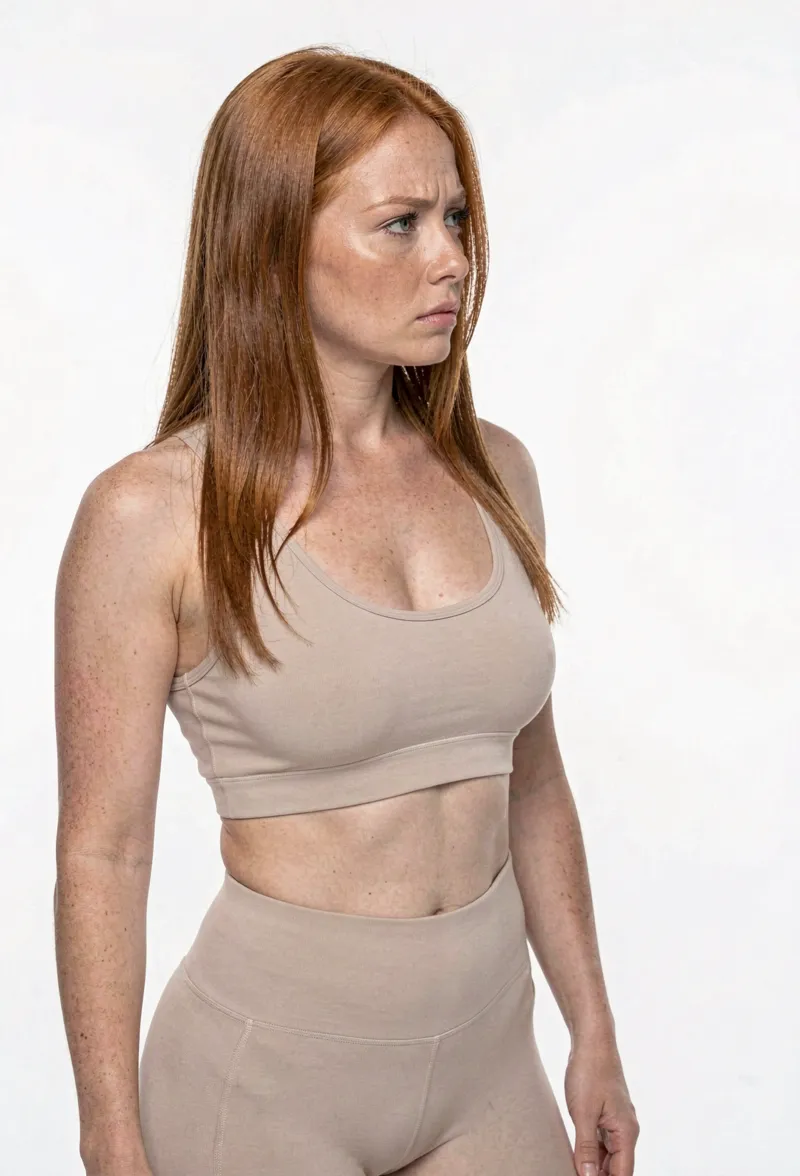
We use the following image as our ground truth and, using Nano Banana, create a new image of our character:
In my mind and eye, I see a resemblance between the two characters and likely would include this image in my LoRa dataset as a side profile, but the mathematical analysis paints a different approach.
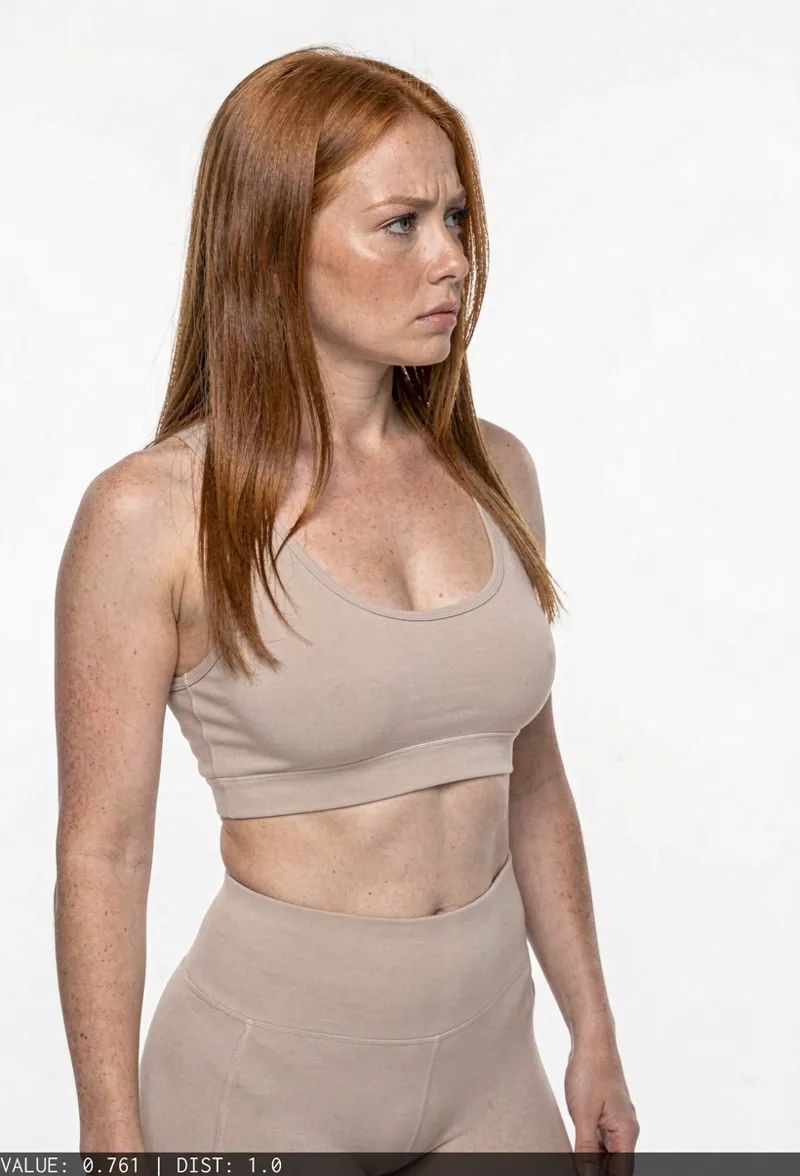
Comparing these images using the workflow attached provides us the following data:
Using cosine based comparison suggests that, mathematically, it's unlikely that the two women are the same. Now, you might disagree, a part of me does as well, but our human opinion and disagreement doesn't matter, especially when talking about LoRa training.
Our goal for creating LoRa datasets is to give the model everything it needs to accurately understand a person's face and form, and the mathematical similarity between images makes a difference in that.
And THIS is the beauty in this approach, it can mathematically identify what the eye can't see. LoRa training works on the basis of math, not our subjective opinions. This workflow takes the subjectivity out of LoRa dataset creation, and is also a great tool post LoRa training, or for those creating AI influencer images using the Nano Banana/Klein approach.
Beyond that, this workflow is great for processing images in batch, which works really well with our previous QWEN LoRa dataset creation workflows, and future workflows we've been developing over the last few weeks - stay tuned paid members!
What to know for this workflow:
We use the cosine method rather than euclidean, as cosine compares the faces between the images independent of lighting or environment conditions.
"DIST" values <1 mean that the model is confident the person is the same. Values equal to or greater than 1 should not be used.
Generally, DIST values between .3 and .68 are the best likeness representations of your ground truth.
Generally, when VALUE and DIST are closest to 0 are the best representations of your character.
As always, let me know if there are any questions or thoughts!
Original Video: https://www.youtube.com/watch?v=IDDcOt0FyZE
Comments (1)
Is it possible to use it with 48GB of RAM?