

ISAF 2009-2013 - ACO Building - ISR ROZ (12/x)
The Intelligence, Surveillance, and Reconnaissance (ISR) mission stands as a cornerstone of modern air power, and it was particularly true in a theater as complex and vast as Afghanistan. While everyone focus on fighter and bomber jets, the persistent eyes in the sky provided by ISR assets are what enabled the entire joint force to operate as efficiently and as safely as possible. In this ongoing effort to depict a realistic Airspace Control Order (ACO) for the DCS World Afghanistan theater, understanding the integration of ISR Restricted Operations Zones (ROZ) is the next necessary step.
I. Definitions
At the strategic and operational levels, Joint ISR (JISR) serves as the umbrella term for the coordinated collection and processing of information. Within this generic concept, we can distinguish between several key activities:
Intelligence: it's the product resulting from the collection, processing, integration, evaluation, analysis, and interpretation of available information. It is the transformation of raw data into actionable information for the commander.
Surveillance: it involves the systematic observation of the activities and resources of an adversary, and it is characterized by its persistence and a long time window.
Reconnaissance: it's a mission undertaken to obtain information about the activities and resources of an adversary, that typically implies a specific objective within a defined, often short, time window.
Note: the broader term ISTAR (Intelligence, Surveillance, Target Acquisition, and Reconnaissance) directly links the "intelligence" and "targeting" processes within the "Target Acquisition" phase, .
In Afghanistan, the lack of a traditional front line meant that every aircraft with a sensor became a potential collection asset. This led to the widespread use of two more specific concepts:
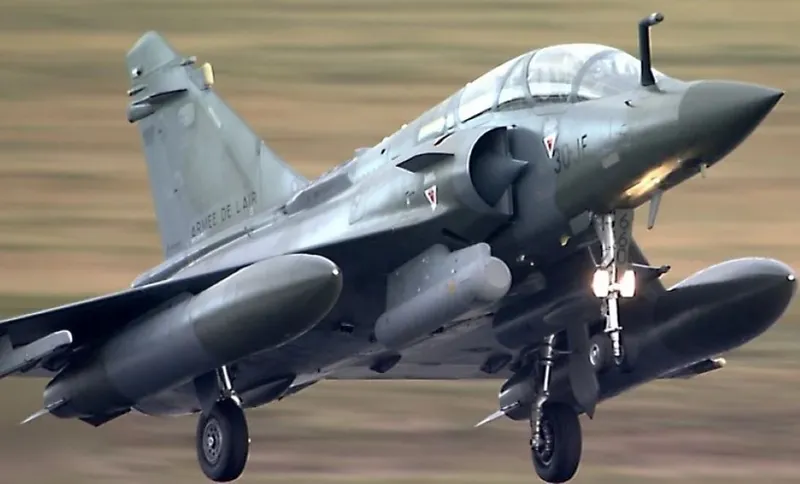
Non-traditional ISR (NTISR): this concept refers to the employment of sensors on platforms not specifically designated as primary ISR assets, such as a fighter aircraft utilizing a targeting pod, to fulfill collection requirements. In the Afghan theater, it was a common tasking for fighters: for instance, a flight of F-16s returning from a Close Air Support mission may be directed by TAC C2 to "recce" a specific segment of the Ring Road, providing real-time situational awareness as a secondary mission.
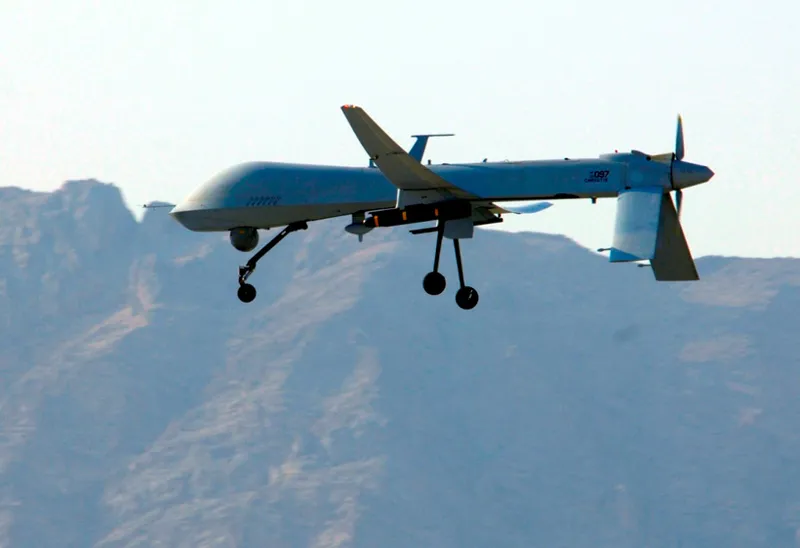
Armed Reconnaissance (Armed Recce): this mission is conducted with the primary purpose of locating and, if needed, attacking targets within assigned general areas or along communication routes. While fast jets were historically the sole practitioners of this role, the evolution of weaponized UAVs like the MQ-9 Reaper has transformed these unmanned systems into premier armed recce platforms, capable of providing hours of persistent surveillance followed by immediate lethal engagement when required.
II. Design of Permanent ISR ROZ
In order to manage these diverse assets within the Afghan airspace, permanent ROZs have been established. These are volumes of airspace reserved for specific activities, requiring, when active, other traffic to remain clear or coordinate entry with the controlling agency (TAC C2 in general).
II.1 - Location
These zones were strategically positioned over critical areas of interest. In the Afghanistan theater, this included international borders to monitor infiltration routes from neighboring states and the "Ring Road," which served as the country's primary logistical artery. Additionally, major operational areas like the Helmand Valley necessitate persistent coverage. While these permanent zones provide a baseline, the Airspace Control Authority (ACA) can establish ad hoc ROZs or use the CGRS "killbox" system to support specific, short-term operations.
II.2 - Vertical Deconfliction
Standard altitude blocks for these ROZs need to be carefully thought to avoid interference with other air users, in particular with CAS assets requiring freedom of maneuver in order to support ongoing ground operations.
We can for example set up a floor around 2,500' AGL: it provides a buffer for low-level helicopter traffic and keeps ISR assets above the most effective range of small arms fire. A ceiling at 9,500' AGL leaves the airspace above available for Close Air Support (CAS) stacks and transit. In Afghanistan, loitering over the same area during prolonged periods of time was only allowed above 10,000' AGL in order to avoid MANPADS threat.
Setting up a maximum Altitude at 14,000' MSL would enable to remain below the transition altitude, and avoids the complexities of flying in flight levels within a non-radar environment. As noted previously, pilots must remain constantly aware of the extreme terrain variations across Afghanistan, which can significantly reduce the actual AGL buffer when flying in flight levels.
II.3 - Dimensions and Maneuverability
A standard width of 10 nautical miles will be used for these ROZs. It provides ample room for low-speed UAVs to loiter and conduct "orbits" or "wheels". Crucially, it also allows a fast jet conducting NTISR to perform a standard U-turn within the lateral limits of the ROZ without infringing on adjacent airspace.
III. Operational Use
as all of the airspace on the theater, the ISR ROZ were coordinated by the relevant TAC C2 agency. Named waypoints were established along the ROZ to facilitate clear communication. A controller could direct an asset to "monitor between Harley 2 and Harley 3," or a pilot can report "suspicious activity near waypoint Dyna 4."
Primary activities within these zones focus on identifying indicators of insurgent activity:
unexplained road blocks or sudden traffic jams on major routes;
stopped friendly convoys or crowds gathering in unusual locations;
suspicious activity consistent with IED placement (eg. earth-moving);
fires or smoke plumes that may indicate a recent engagement;
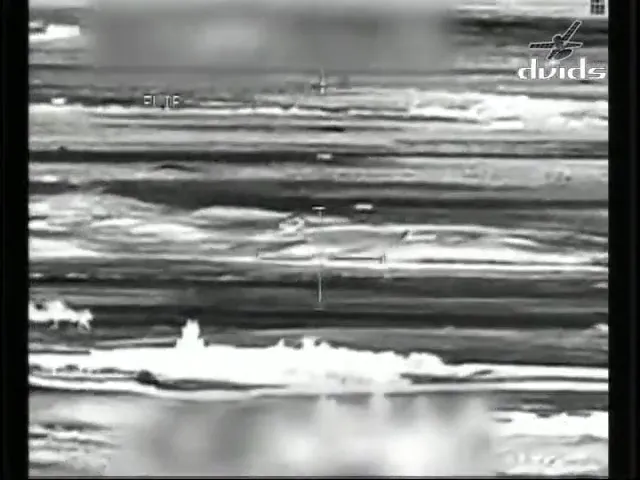
high-speed vehicle movement in rural areas, or vehicles traveling in a "daisy chain";
lack of civilian presence (e.g., empty marketplaces) in a normally busy area;
etc...
Note that while the primary mission is intelligence collection, the ISR assets can also provide a "Show of Presence" to deter enemy activity. If the ROZ is active in the ACO, TAC C2 may even direct a "Show of Force" to disrupt enemy operations without the need for detailed JTAC coordination, provided it remains within the ROZ boundaries.
Conclusion
Even if in general fighter jets we use in DCS are not primarily tasked in ISR missions, knowing and being prepared to use these ISR ROZ is another nice addition to recreate a realistic environment, given the importance of intelligence collection in any conflict, and in counter insurgency in particular.
In a next post, we will discuss the various intelligence reports that can be used in flight in order to pass information as quickly and efficiently as possible. Theater SPINS generally define a standardized In-Flight Report format, and sometimes a Counter-IED (CIED) report. Both of them are useful additions to the (already packed) kneeboards that can support your mission planning and execution. In the mean time, you will find attached the two pages that summarize the proposed ISR ROZ for the Afghan theater.