






Visiting Afghanistan with DCS (1/3)
For once, we'll leave the tactical side, and we'll take the time to make a short tour of prominent Afghanistan places that we can actually find in DCS.
I'll start here with some of the unique objects that have been modeled, and that we can admire from our virtual cockpits.
I. Kabul
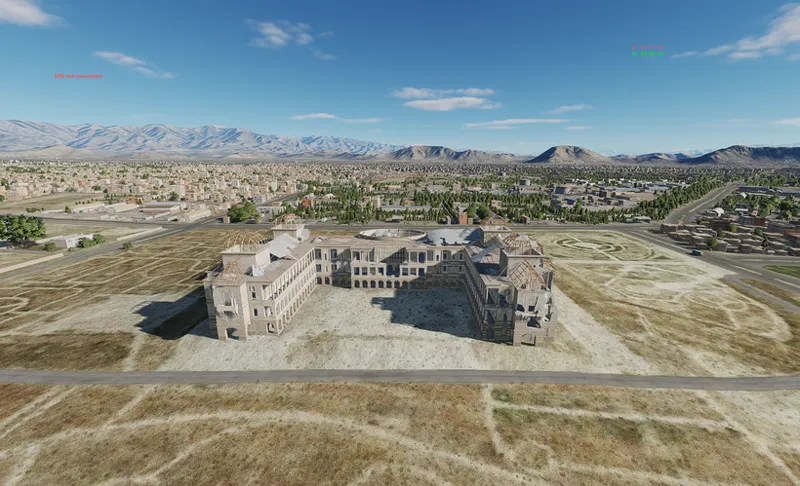
I.1 - Darul Aman Palace (Kabul)
Located on the southwestern edge of the city, this neoclassical palace is perhaps the best symbol of Afghanistan’s 20th-century history. Built in the 1920s by King Amanullah Khan, it was intended to be the centerpiece of a modern capital. During the civil war in the 1990s, it was reduced to a hollowed-out shell, serving as a grim visual reminder of the country’s fragility. For DCS pilots, the "ruble" state represented in DCS reflects the condition of the palace before its 2016 restoration.
I.2 - National Parliament Building
In the context of the OEF/ISAF era, the transition of the Afghan government's infrastructure was a key indicator of international involvement. The National Parliament building represented in DCS is located next to the Darul Aman Palace. This brand new building was a gift from the government of India, inaugurated in 2015 as a symbol of the strategic partnership between the two nations and a commitment to the democratic process in Afghanistan. It was the target of several high-profile insurgent attacks, most notably in 2015.
Note: for purists, the chronological markers within the DCS Kabul environment allow for a very specific window of operational dating. The National Parliament building completion and subsequent inauguration in late 2015 served as a transition point for the district. Almost immediately following the opening of the new parliament, the massive restoration project for the Darul Aman Palace in early 2016 began, in order to coincide with the centenary of Afghan independence. Because the DCS map features the completed parliament alongside the Darul Aman Palace still in its iconic "rubble" state, the virtual environment effectively can only display the 2015–2016 time frame!
I.3 - Shah-Do Shamshira Mosque
Known as the "Mosque of the King of Two Swords," this two-story structure features an unusual "Afghan Baroque" architectural style. It sits right against the Kabul River. It was fully renovated in 2021, and it has now regained its bright yellow colors.
I.4 - Eidgah or Id Gah Mosque
This is the second-largest mosque in Kabul and the site where Afghanistan’s independence was officially announced in 1919. It is a massive structure that serves as a primary gathering point during religious or national holidays.
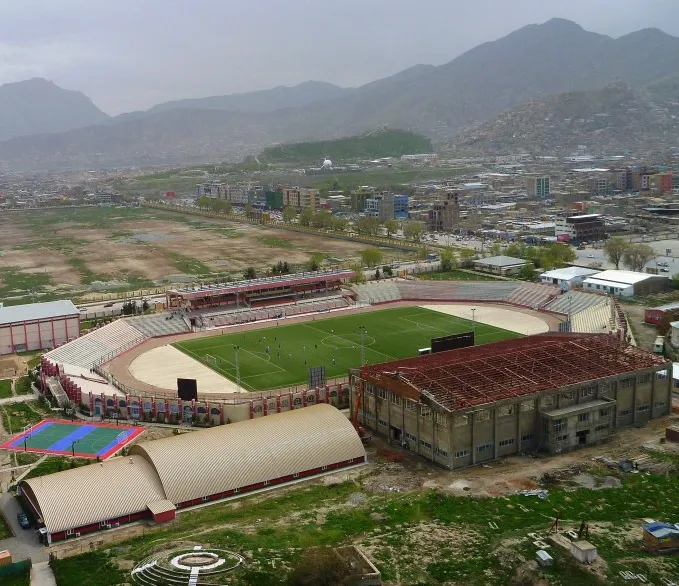
I.5 - Kabul Football Stadium (Ghazi Stadium)
The Kabul Stadium is located across Eidgah Mosque. While technically a sports venue, the Ghazi Stadium carries a heavy psychological weight. Under the Taliban regime in the late 1990s, it was notorious as a site for public executions and amputations. This tradition resumed recently with the return of the Taliban to power. In 2011, the full refurbishment of the stadium became a symbol of the "New Afghanistan."
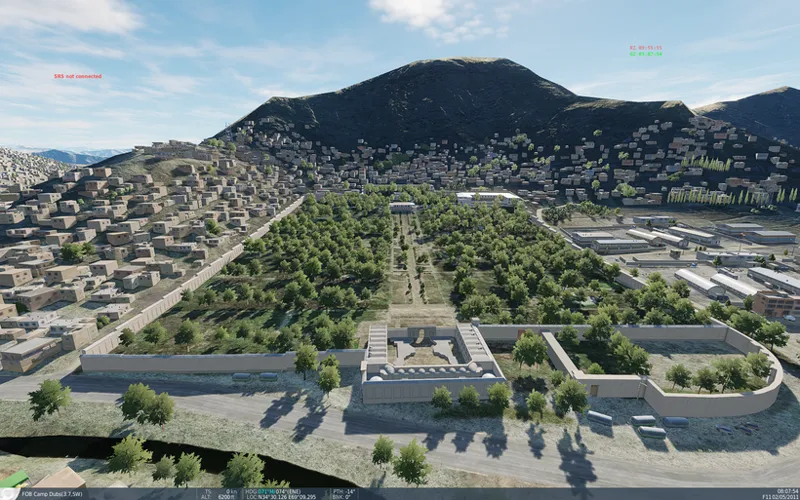
I.6 - Gardens of Babur
These gardens, originally designed as a caravanserai, are the final resting place of the first Mughal emperor, Babur. Situated on the slopes of the Sher Darwaza mountain, the terraced gardens were heavily damaged during the civil war in the 90s but restored early in the ISAF mission.
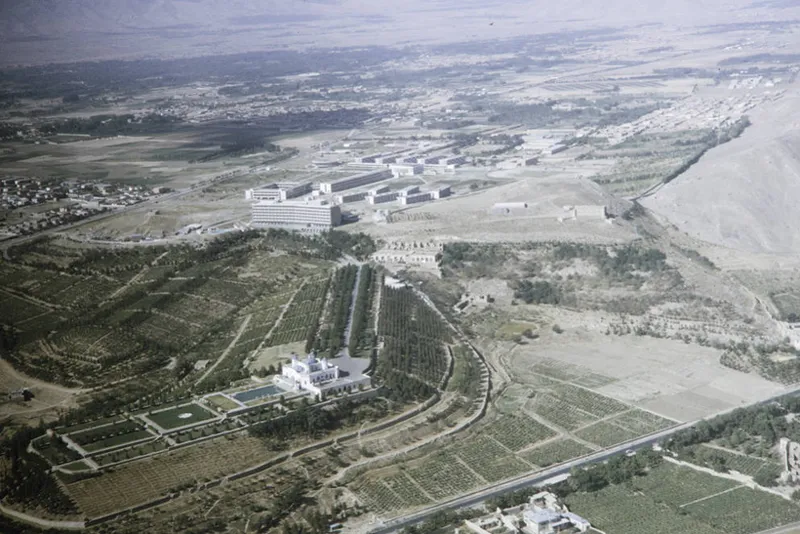
I.7 - Bagh-e-Bala Palace (High Garden Palace)
This remarkable building is located on a hilltop in the northwestern part of Kabul. Built in the late 19th century by Amir Abdur Rahman Khan as a summer residence, its elevated position and distinct white architecture make it an unmistakable visual reference. During the OEF/ISAF era, it served as a high-end restaurant and a frequent venue for international delegations and cultural events. A large international hotel complex was located at the bottom of the hill.
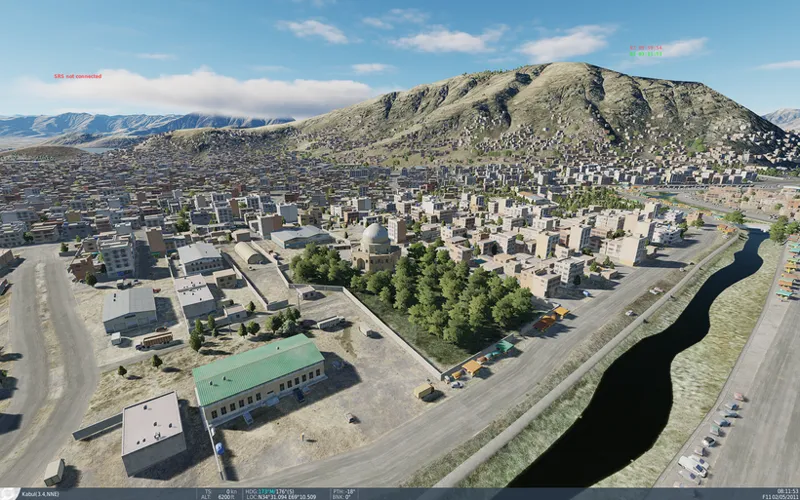
I.8 - Mausoleum of Timur Shah Duranni
Timur Shah, the son of Ahmad Shah Durrani, is the monarch responsible for shifting the Afghan capital from Kandahar to Kabul in 1776. His octagonal mausoleum stands as one of the few surviving significant structures from the Durrani period in the capital. Located near the banks of the Kabul River, it sits in a heavily congested urban sector, close to Shah-Do Shamshira Mosque.
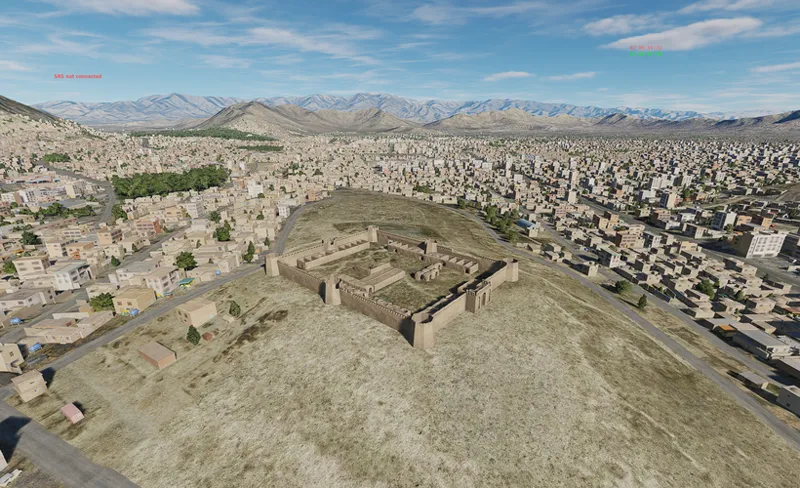
I.9 - Square Fortress at Tepe Shahrara
Located in the northwestern part of Kabul, Shahrara Hill is a site of significant historical and military transition. Originally home to a 17th-century Mughal garden and later a 19th-century citadel, the hill has long served as a dominant piece of "key terrain" within the city limits. The yard of the fortress and its surrounding are still littered with rusty soviet armored vehicles.
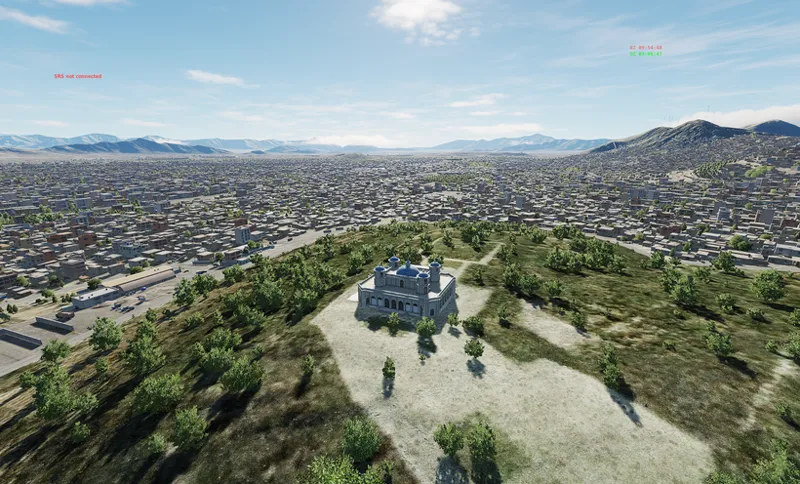
I.10 - Maranjan Hill and the Mausoleum of King Nadir Shah
Dominating the eastern skyline of Kabul, Maranjan Hill (Tepe Maranjan) dominates the eastern side of Kabul. At its summit lies the imposing, blue-domed Mausoleum of King Nadir Shah. During the OEF/ISAF era, the hill's elevation made it "key terrain": it was heavily utilized as a primary observation post for security forces monitoring the approach corridors into the capital.
I.11 - Azizi Plaza
Representing the "New Kabul" that emerged during the international presence, Azizi Plaza is a prominent high-rise development in the heart of the city's commercial district. The building was developed by Mirwais Azizi, widely regarded as the wealthiest billionaire in Afghanistan and the head of Azizi Bank.
I.12 - TV Hill (Koh-e Asamai)
The Koh-e Asamai ridge, universally known to coalition aircrews as "TV Hill," is the most dominant topographical feature of the Kabul skyline. Rising sharply between the old city and the newer districts, the ridge is crowned with a dense forest of radio, television, and military communication antennas that provide the backbone for the region's signal architecture. During the OEF/ISAF era, its summit was yet another strategic high-ground position for security forces to maintain line-of-sight surveillance over the urban center below.
I.13 - Sardar Mohammad Daoud Khan Hospital
Also known as the National Military Hospital, this is the premier military medical facility in Afghanistan, located in the Wazir Akbar Khan district of Kabul. During the OEF/ISAF mission, it served as the primary destination for wounded Afghan National Security Forces (ANSF) and was a frequent site for coordination between coalition medical advisors and local counterparts. Operationally, its proximity to the "Green Zone" and the presence of dedicated landing zones made it a constant waypoint for rotary-wing assets. It represents a critical piece of infrastructure for the state’s internal security apparatus and was the site of significant high-profile security incidents that required immediate air support and surveillance.
I.14 - Sheikh Zayed National Hospital
Located in the Afshar area near the western foothills of the Kabul basin, this facility stands as a prominent example of international development aid, having been largely funded by the United Arab Emirates.
I.15 - Missing Buildings...
To wrap up our reconnaissance of the Kabul sector, we have two high-value cultural assets that seem to have vanished... They appear as unique object in DCS folders, but they can't be found where they belong IRL.
I.15.1 - National Museum of Afghanistan
Last Seen: Ideally located across from the Darul Aman Palace, housing five millennia of Afghan history.
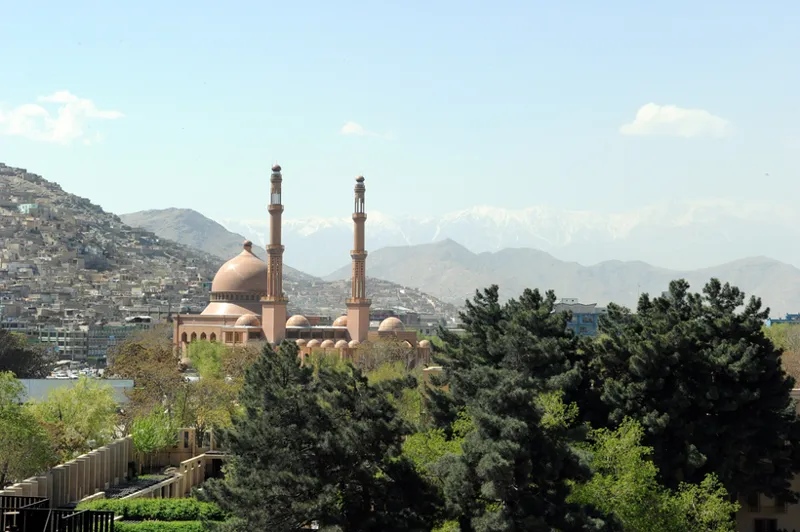
I.15.2 - Abdul Rahman Khan Mosque
Large, majestic, this mosque features 14 domes and two towering minarets capable of holding 10,000 worshippers.
In a following part, we will expand our tour to the western and southern sectors, focusing on Herat and Kandahar. We will also look try to get a look at more generic natural features, like peaks, lakes, and valleys.