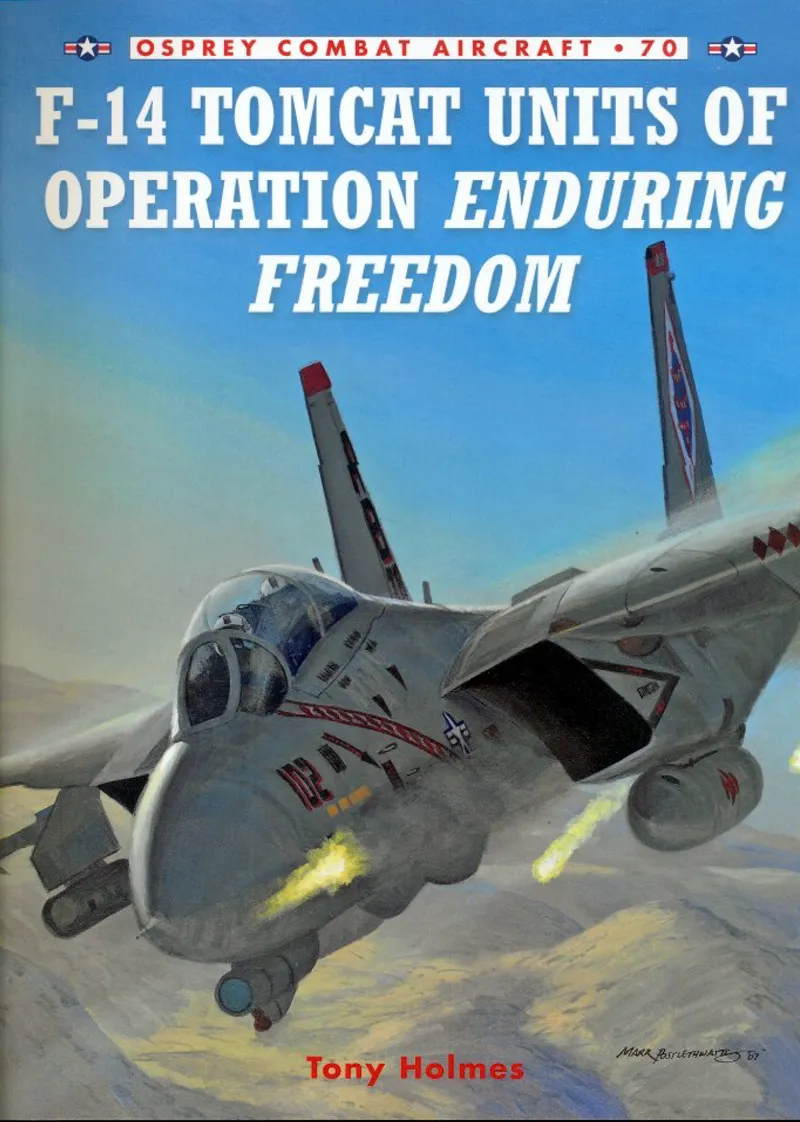
We can note that a direct link is made to Holmes' previous work, "US Navy Tomcat units of Operation Iraqi Freedom." By positioning this book as a follow-on volume, he creates a comparative narrative, allowing us to trace the Tomcat's operational employment across two distinct theaters of the Global War on Terror. This connection emphasizes the adaptability and enduring relevance of the aircraft in different combat environments.
The book is structured chronologically, beginning with the events leading up to the conflict and the immediate aftermath of the 9/11 attacks, and progresses through the key phases of Operation Enduring Freedom. It covers the Tomcat's transition into a primary strike role, highlighting specific missions, tactical deployments, and the experiences of the pilots and RIOs who flew the aircraft. The narrative includes the initial operations, the intense ground war, the significant Operation Anaconda, and the eventual drawdown of the Tomcat's involvement in the region.As usual with the Osprey books, we have supplementary materials, including color plates.
Contents of "F-14 Tomcat Units of Operation Enduring Freedom".
1. Build up to war
The first chapter is primarily focused on the immediate reactions of US Navy carrier groups to the September 11th terrorist attacks. We have an account of the abrupt disruption of routine operations after the crews of aircraft carriers like the USS Enterprise (CVN-65) witnessed the unfolding tragedy.
That first part is primarily based on the personal experiences of the aviators, using firsthand accounts to convey the initial shock and rapid shift in focus from a scheduled deployments to potential combat operations. For instance, Commander Chip King of VF-213's landing immediately after the first attack and Commander Brian Gawne of VF-41's recollection of the events highlight the sudden transition from routine duties to a state of high alert.
A key event detailed is the USS Enterprise's swift turnaround and redeployment towards the Arabian Sea, demonstrating the Navy's capacity to quickly alter its operational posture. The chapter also touches on the immediate operational adjustments, such as the establishment of alert fighters and the integration of new intelligence, undertaken in anticipation of military action.
8 Tomcats were fitted with the TARPS recce pod, and were sent over Afghanistan before the beginning of the offensive operations in order to gather intelligence.
2. OEF Begins
The second chapter details the initial combat operations in Afghanistan. It describes the repositioning of carrier groups and the early missions flown by F-14 Tomcats and other US Navy aircraft after October 7th 2001.
CVN-70's waist catapult during the night of 7 October 2001.
The chapter tells us about the first strikes against Taliban and al-Qaeda forces, with a particular emphasis on the challenges of operating in a mountainous and landlocked country. It also highlights the importance of intelligence gathering (the Tomcat made recce flights everyday) and the coordination of air support with ground forces.
Specific missions and targets are discussed, providing a sense of the operational tempo and the types of engagements the aircrews faced. There are also discussions about the evolving tactics and the increasing reliance on precision-guided munitions.
Example of pre-strike and post-strike imagery.
3. Ground War
In the third chapter, we have a more particular focus on the Tomcat's role in supporting ground forces during. It details how the aircraft provided crucial close air support (CAS) and tactical reconnaissance for troops engaged in combat with the Taliban and al-Qaeda. Specific engagements and operations are described, and we have multiple example of the Tomcat's effectiveness in delivering precision-guided munitions.
There are also discussions about evolving tactics and the increasing reliance on advanced technology to enhance the Tomcat's capabilities. This includes the use of targeting pods, such as the LANTIRN (Low Altitude Navigation and Targeting Infrared for Night), and improved communication systems (like Secure Voice with the KY-58).
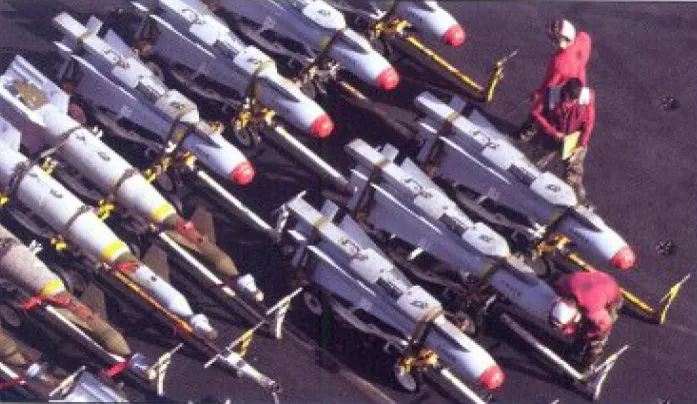
GBU-12 and AGM-65E (LASER) Maverick on the carrier's deck. We learn that the Tomcats were buddy-lasing for the Hornets, and that they liked the maneuverability of the Maverick that enabled them to switch target during the weapon's flight.
4. Operation Anaconda
As its title implies, this chapter details the F-14's involvement during Operation Anaconda, one of the most significant and intense battles of the early war in Afghanistan. It was a complex operation aimed at eliminating a concentration of Taliban and al-Qaeda fighters in the Shah-i-Khot Valley. We have here a depiction of the challenging terrain, the fierce resistance from enemy forces, and the critical role of air power in supporting coalition troops on the ground.
The Tomcats were heavily involved in providing close air support, reconnaissance, and strike capabilities during all the length of the operation. The crew faced intense combat situations, requiring precision and coordination to effectively engage enemy positions while avoiding friendly fire. We have in the end some lessons learned from Operation Anaconda,like the importance of intelligence gathering, the difficulty of joint operations, or the need for specific tactics in mountainous environment.
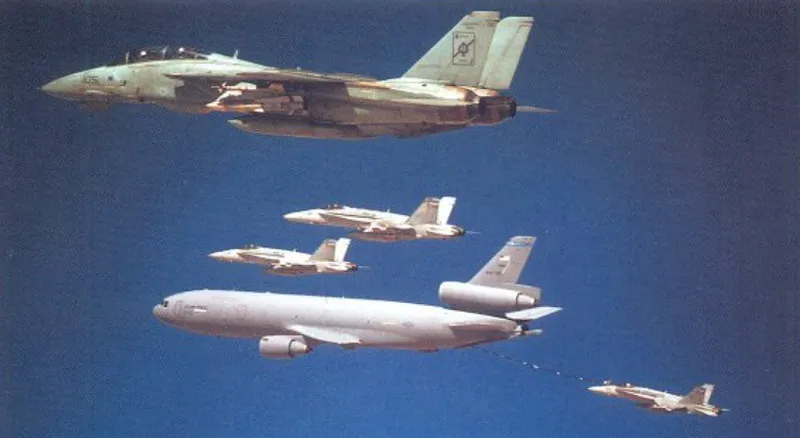
Due to the distance to the Indian Ocean, several air-to-air refueling were needed for every combat sortie over Afghanistan - here behind a KC-10.
5. Tomcat Finale
The last chapter addresses the last days of the F-14 Tomcat's involvement in Operation Enduring Freedom. We learn that as the conflict in Afghanistan evolved, the role of the F-14 began to shift, with other aircraft increasingly taking on the strike and close air support missions. This chapter describes the gradual drawdown of the Tomcat's presence in the theater.
Despite the Tomcat's eventual departure from OEF (last flight on the theater on 14 November 2003), this whole chapter emphasizes its significant contributions to the operation and it reiterates the aircraft's effectiveness in precision strike, reconnaissance, and close air support.
159 continuous days at sea for CVN-71 during OEF (17/09/2001-24/02/2002).
Appendices
As usual with the Osprey books, we have section with color plates. They show us specific paint schemes and squadron markings, especially interesting for livery artists!
One of the 9 pages of aircraft profiles and details!
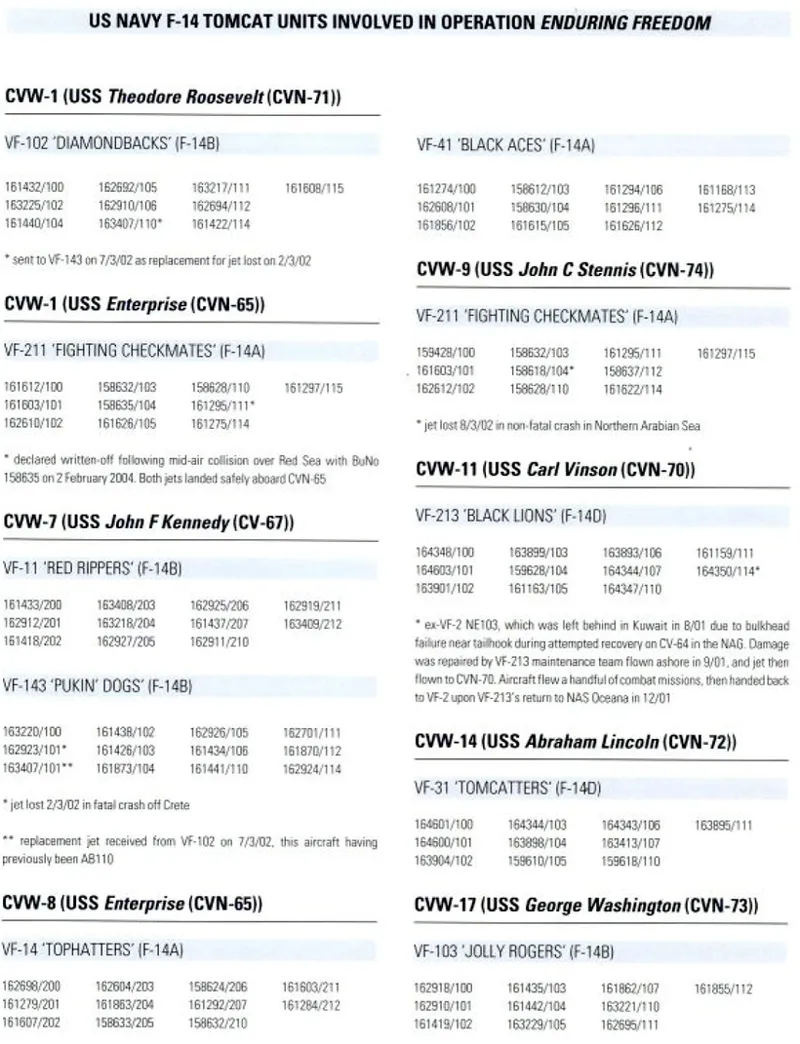
We also have a list of all Tomcat units deployed during OEF.
List of all the Tomcat units engaged during OEF.
We can without a doubt say that, as for all the books from this series, "F-14 Tomcat Units of Operation Enduring Freedom" is an essential read for anyone interested by naval aviation and the history of the Global War on Terror. For mission designers to virtual crew members of Heatblur's F-14, it provides invaluable first-hand accounts and operational context, offering a deeper understanding of the aircraft's capabilities.