The HH-60G Pave Hawk is a helicopter deeply tied to the legacy of Combat Search and Rescue (CSAR) missions. Among its distinctive features is the mustache sometimes painted on its nose, a symbol that represent the aircraft's history, its callsign “Pedro,” and the bravery of the crews who fly it. This tradition, rooted in the Vietnam War and evolving through decades of conflicts, was kept alive in Afghanistan.
The Origins of the Callsign “Pedro”
The world’s first helicopter rescue in combat occurred in April 1944, when a YR-4 helicopter, piloted by Lt. Carter Harman, retrieved three wounded soldiers and a pilot from behind Japanese lines in Burma. This event foreshadowed the critical role helicopters would play in military rescue missions.
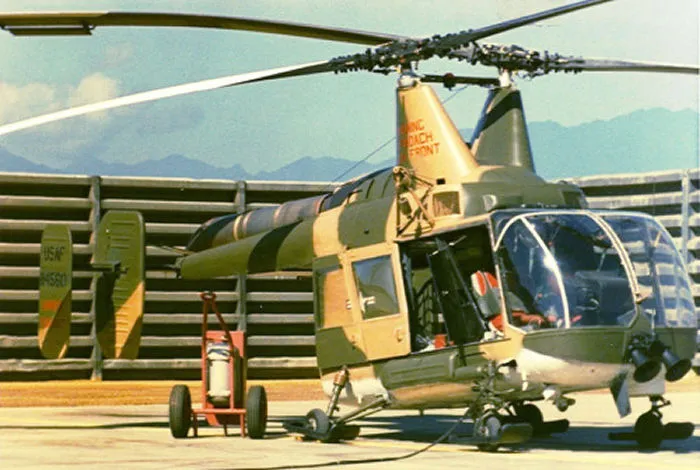
By the Korean War, helicopters like the Bell H-13 and Sikorsky H-19 were performing rescues in combat zones, although their limited range and capabilities meant they were used primarily for medical evacuation. Rescuing downed airmen remained a high priority, and the HH-43 Huskie became the backbone of U.S. Air Force combat rescue operations during the Vietnam War. Known by its callsign "Pedro," the HH-43 operated without weapons or armor, yet its crews performed more rescues than any other helicopter of the conflict, saving 43% of the 2,039 airmen rescued by U.S. forces between 1966 and 1970.
The “Pedro” callsign originated during Vietnam as a tribute to these HH-43 helicopters and their crews. Known for their reliability and versatility, these helicopters were affectionately nicknamed “Pedro” after a Disney cartoon airplane featured in the 1942 film Saludos Amigos.
HH-43 Huskie during Vietnam War.
Over time, it became synonymous with the CSAR mission, honoring the determination and courage required to operate in hostile environments. When the HH-43 was retired, the name “Pedro” was carried forward by newer aircraft, including the HH-3 Jolly Green Giant, HH-53 Super Jolly Green, and eventually the HH-60G Pave Hawk.
"Pedro" patch worn by HH-60G crews.
The Mustache Tradition
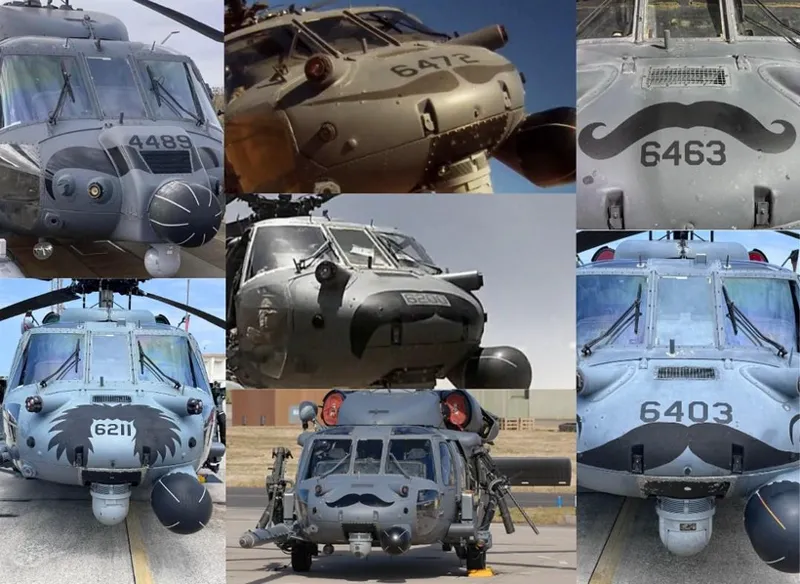
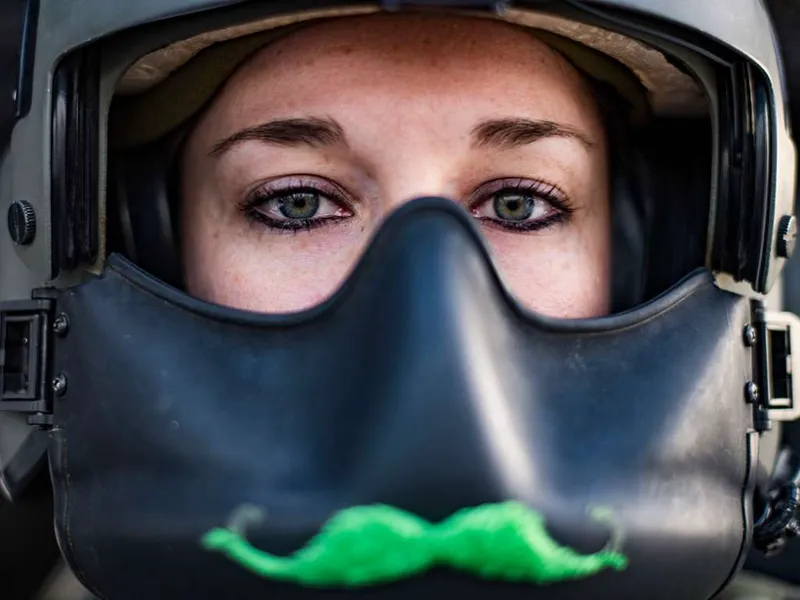
The mustache painted on HH-60G Pave Hawks is a direct nod to their Pedro heritage. Initially introduced in Vietnam, the mustache began as a lighthearted addition to the aircraft, embodying the spirit of camaraderie among rescue crews. By the time the Pave Hawk entered service, the mustache had become a proud symbol of the CSAR community, representing their shared history and mission. Helicopter's mustache was often unique, reflecting the personality of its crew and unit.
Example of the various mustaches on HH-60G.
The Mustache in Afghanistan
The HH-60G and its mustache tradition took on special significance in Afghanistan, where the aircraft supported Operations Enduring Freedom, Freedom’s Sentinel, and Resolute Support. Pedro crews operated from key bases like Kandahar Airfield and Bagram Airfield, performing both CSAR and CASEVAC (casualty evacuation) missions under extreme conditions.
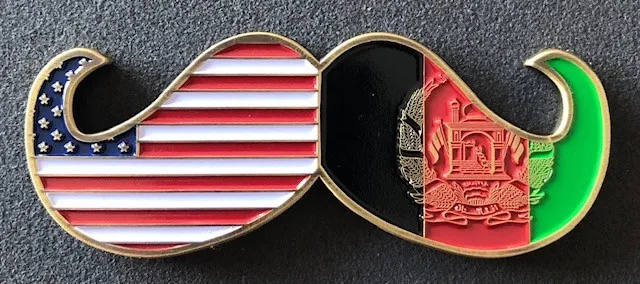
Mustache "coin" with the US and Afghan flag. Same coin with the "Pedro" reference, celebrating the participation in OFS and ORS.
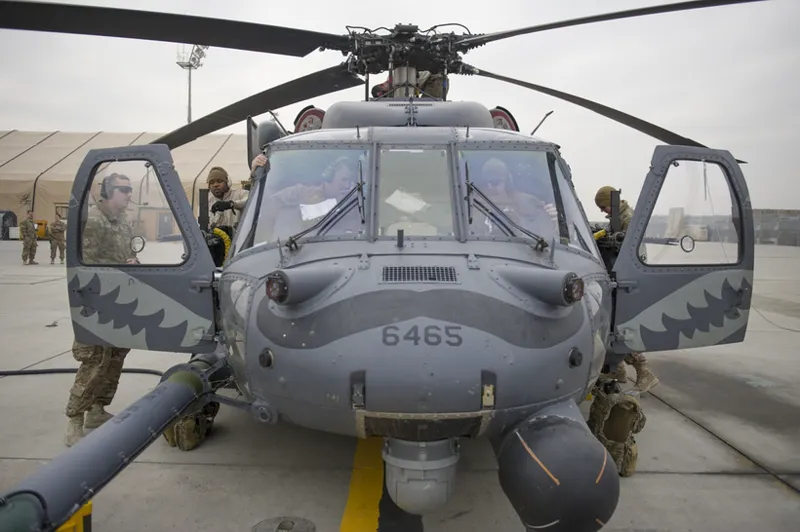
The missions were as diverse as they were dangerous. Pedro crews extracted personnel from contested areas, stabilized casualties under fire, and transported them to Role 3 hospitals within the “golden hour,” maximizing their chances of survival. Guardian Angel teams, composed of PJs and combat rescue officers, worked alongside aircrews, providing advanced medical care and executing extractions under fire.
HH-60G in Bagram.
The Mustache in aeronautical "fan art"
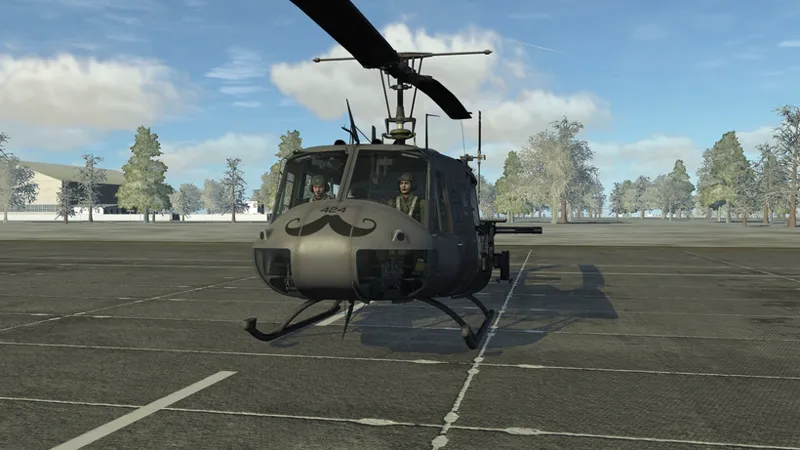
First of all, we must obviously take a look at DCS World. If no reference to the "mustache" was found in the UH-60 skin catalogue, I was nevertheless able to find a beautiful skin for the UH-1H by AlexBeck18.
UH-1H "Mustache" skin for DCS World.
We must also have a look at model kit creators, and there are plenty of examples of beautiful builds, like this one by Pete Fleischmann!
Finally, for those with a childlike spirit, we can refer to this Lego-type model by Brickmania.
Brickmania's HH-60G with its beautiful Mustache.
I hope you've enjoyed this light-hearted article, and that you're more familiar with those dedicated to the CSAR mission within the USAF!