
The Language of Fashion: B Part 3 Blog Post
For your weekly dose of vintage fashion nerdiness, we continue with our blog series, The Language of Fashion.
Today we continue with B. In our last post, we covered basané through belly shirt, which brings us to...
BELTS
belt. Strap or band encircling waist, usually fastened by buckle, clasp, button, etc. Belts are usually named for the manner in which they are worn- as in, cross-belt, shoulder-belt, etc.; or for the purpose for which they were used -such as army-belt, cartridge-belt, etc.
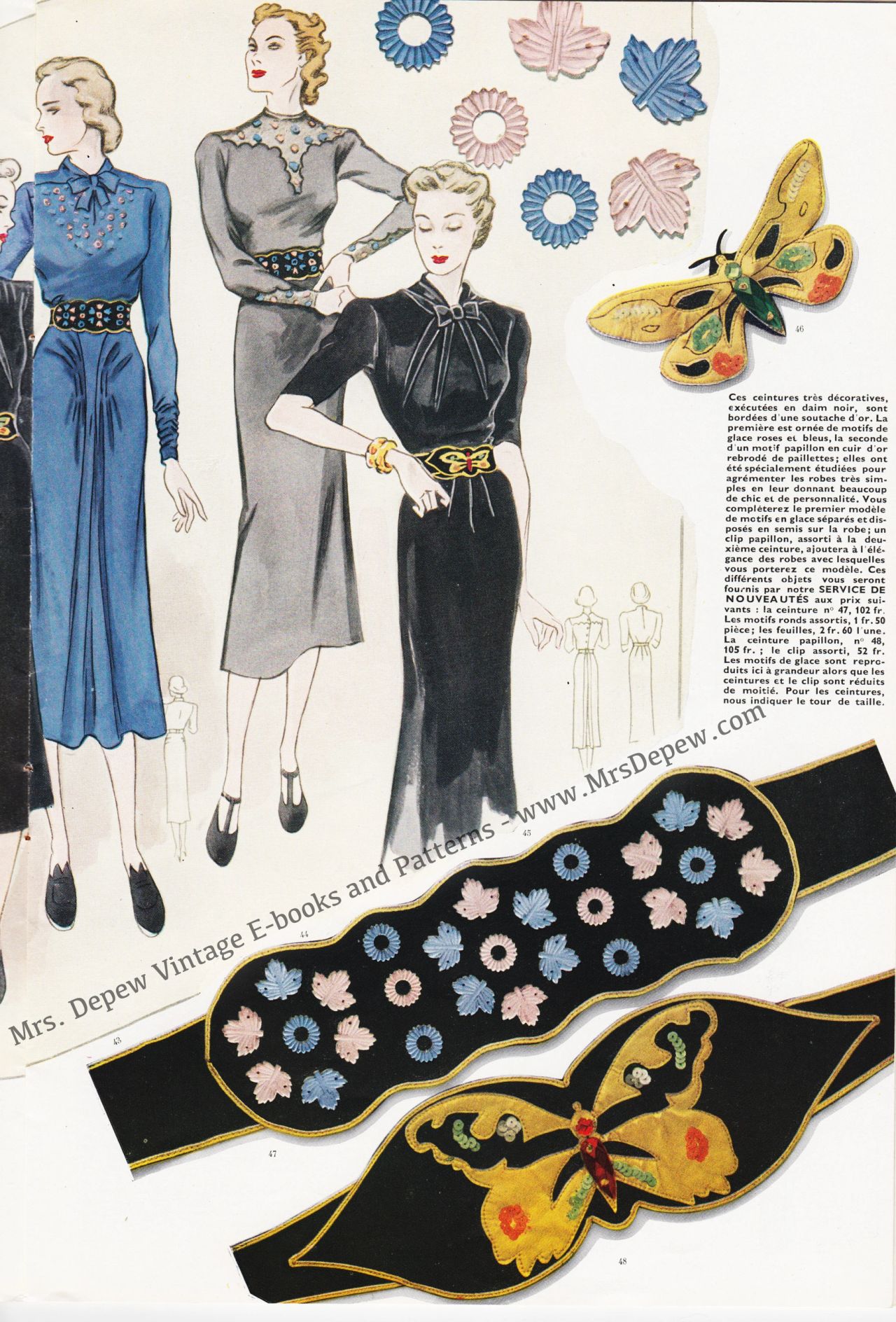
garter belt. A band, usually of elastic, that goes around the waist and has supporters attached.
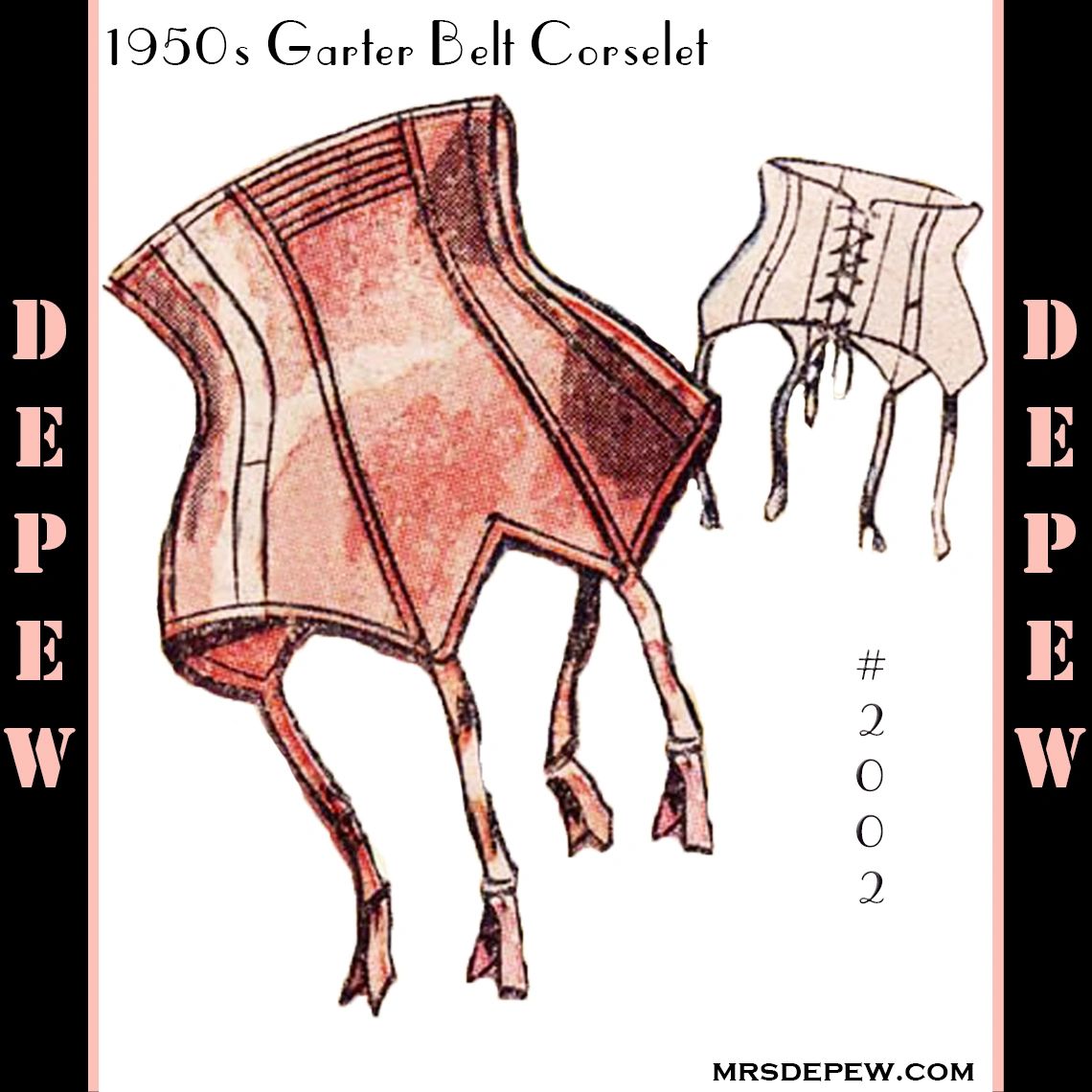
marguerite belt. Waistband or belt with plastron at front, often laced, and tabs at back. Popular in 19th century.
Sam Browne belt Broad leather band worn around waist, with light strap over right shoulder. Named for British army officer.
sanitary belt. A belt, usually of elastic, that has tabs to which a sanitary napkin may be attached.
suspender belt. Belt combined with shoulder straps or braces.
waist belt. Belt worn around waistline, especially as distinguished from military belt worn over one shoulder.
wampum belt. Belt made of wampum or colorful shell beads. Worn by North American Indigenous Peoples.
zonar belt. Belt formerly worn by Jews and Christians of the Levant, as a mark distinguishing them from Muslims.
zoster belt. Belt or girdle worn in ancient Greece, especially by men.
belt buckle. Fastening of a belt.
belting. 1. Material used for making belts. 2. Belts, collectively. 3. Short for belting ribbon.
belting ribbon. Stiff grosgrain ribbon.
Bemberg. Trade name for a brand of rayon yarn. Also applied to fabrics made from this yarn and garments made from the fabric.
bench-made. Applied to shoes made at shoemaker's bench. Shoes made entirely by hand are now comparatively rare.
bend. Right or left half of the butt, or hide covering an animal's hindquarters.
bengal. One of the various fabrics made in Bengal, India; an especially, thin silk and hair fabric, and striped muslin-like fabric.
bengaline. Corded fabric, similar to poplin but heavier, with warp threads, usually of silk, completely covering crosswise ribs of worsted, cotton, rayon, or silk. Used for coats, suits, dresses, and trimming.
Bengal stripe. Gingham-like cloth woven with colored stripes. So-called because originally from Bengal, India, the name refers only to the pattern.
benjamin. A close-fitting overcoat.
benjy. 1. Straw hat. 2. British slang term for a waistcoat.
benn. Scottish term for colored silk sash.
benny. Short for benjamin, an overcoat.
berdash or burdash.Type of sash or neckcloth. Worn by men in about 1700.

beret. 1. Round, soft cap; as, basque beret. 2. Adaptation of Basque beret shape in hats.
beretta. Medium-large draped beret.
berger. A curl of hair at the nape of the neck, hanging to the shoulder. Fashionable in the late 17th and 18th centuries.
beribboned. Decorated with ribbons.
Berlin canvas. Coarse square-meshed fabric.
Berlin wool. Fine worsted yarn.
Berlin work. Allover embroidery done in Berlin wool.
Bermuda fagoting. Fagoting on the wrong side of the fabric.
berrettino. A Cardinal's skull cap.
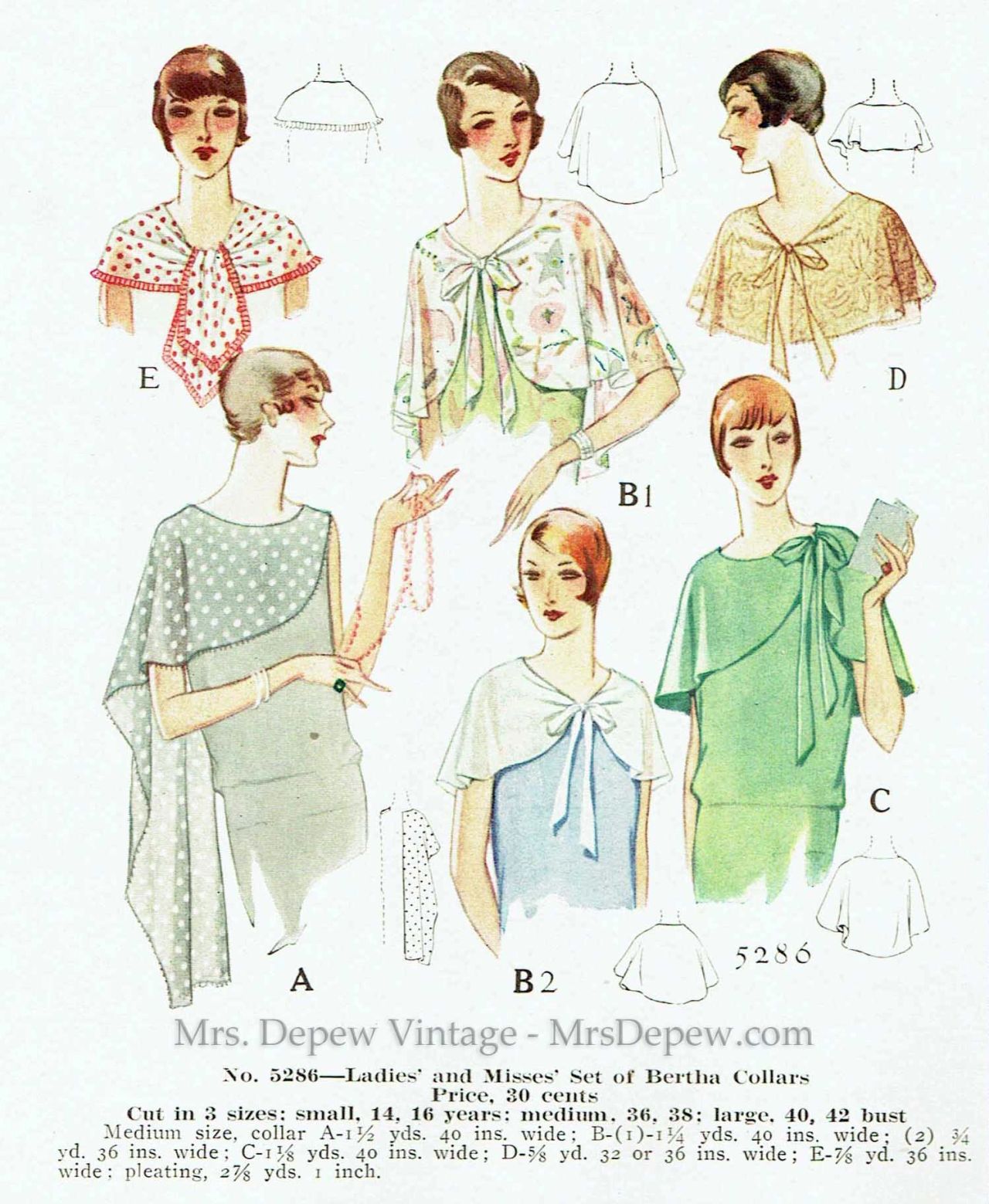
bertha. A collar made of lace or another thin or sheer fabric. It is generally flat and round, and covers the low neckline of a dress, accentuating a woman's shoulders. It was particularly popular in the nineteenth century, but bertha-like garments were also worn in the seventeenth century. They again came into Vogue in the mid to late-1920s and are still being worn over wedding gowns and other garments today.
The word was first written down in English in 1856. According to the Shorter Oxford Dictionary, the word is an anglicized version of the French word berthe, which is a deep falling collar attached to the top of a low-necked dress.
beryl. A natural mineral substance found in hexagonal prisms; usually green or bluish-green, but also white, pink, yellow. Used as a precious stone; varieties include aquamarine, emerald, and morganite.
bespangle. To decorate with spangles or other glittering ornaments. Similar to bejewel.
Bessarabian lamb. Coarser-haired, cross-bred. See type of Persian lamb.
Bethlehem headdress. Red cap shaped like a cut-off cone, decorated with coins and often with embroidery; worn with a white veil attached at the back and a metal chain hanging loosely under the chin. Worn by women of Bethlehem, Palestine, for many centuries. Adapted in modern women's hats.
between needle. Short sewing needle, often used for hand quilting.
bezel. Face or upper faceted part of a cut stone.
bezetta or bezette. Linen rags saturated with coloring material and used for dyeing. From Italian word pezetta, meaning piece of cloth dyed red.
bias. The line taken, in folding or cutting material, diagonally across the warp and woof threads. -true bias. In fabric, a diagonal line running at an angle of 45 degrees to the selvage. Undergarments are sometimes cut on true bias to prevent sagging, twisting, riding up, and to ensure better wear. Binding cut on true bias is easy to apply, especially on curved edges.
bias binding. a strip of narrow bias-cut cloth with the edges folded in and pressed for ease in applying.
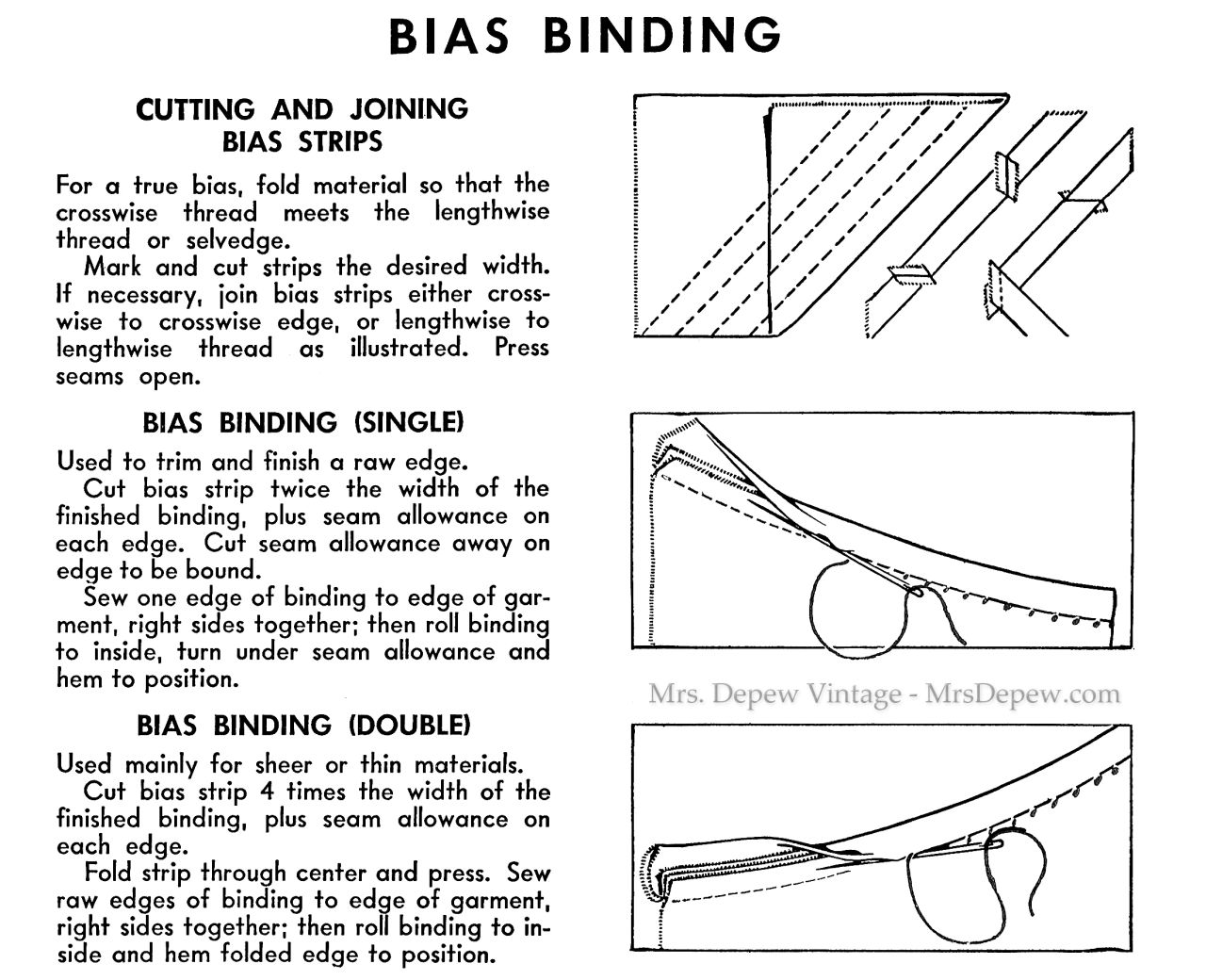
bias slip. Slip cut on the bias of the fabric.
bib. 1. Small collar. 2. Piece of cloth worn by children over the front of the bodice as protection when eating. 3. Part of apron above the waist.
bib and tucker. Colloquial term for clothes, attire. One's best bib and tucker means one's best clothing. Originally, refered to garments worn by women.
bibelot. Trinket or small decorative article.
bicorn or bicorne. Two-cornered hat.
bicycle bal. Sports shoe laced far down toward the toe. Originally designed for bicycling.
Biedermeier. German style of furniture of the period 1815-48, comparable to the Empire style in France, but less ornate. Applied in fashion to dress styles worn during the Biedermeier period.
bietle. Deerskin jacket worn by American Indian women.
bifurcated. Divided into two branches; forked. A term applied to divided skirts.
biggin. Close-fitting cap, sometimes of mesh.
biggonet. Cap or biggin.
bijou. Jewel or trinket, especially of delicate or elegant workmanship.
bijouterie. Jewelry or trinkets, collectively.
biliment. Ornament or decorative part of a woman's dress; especially headdress or its jeweled ornament. Sometimes gold lace ornamented with jewels worn in the 16th century.
billycock or billicock. A round-crowned hat.
binary color. Secondary color.
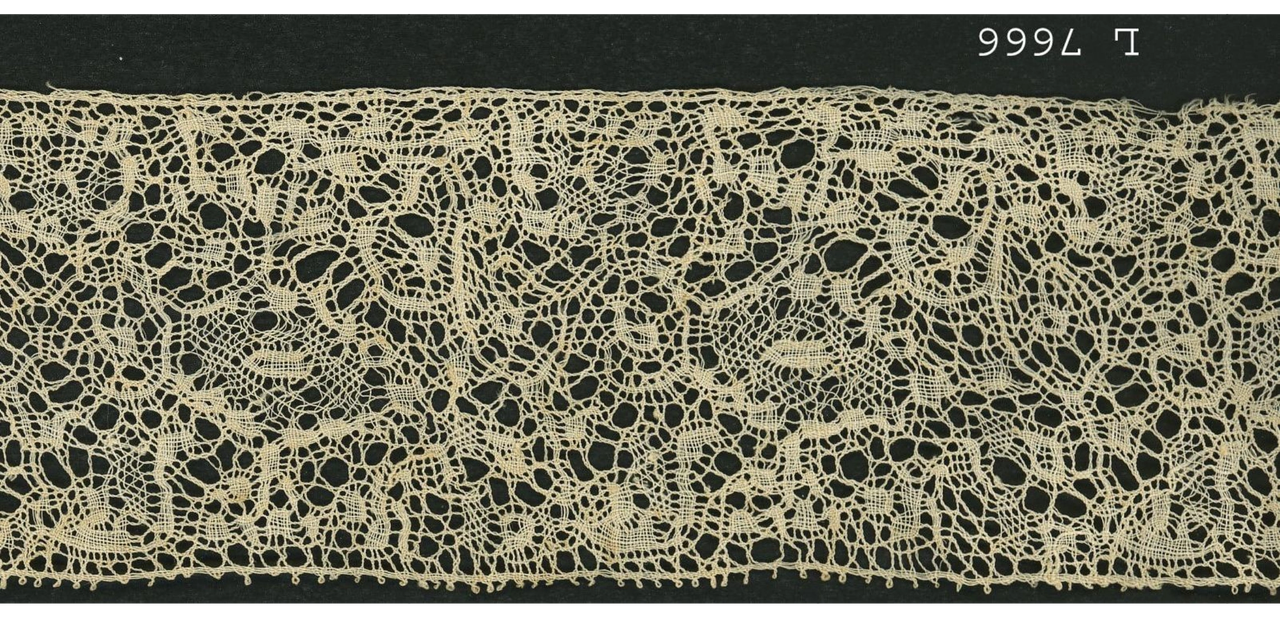
Binche lace. A type of bobbin lace that originated in the town of Binche, Belgium. It is continuous, meaning it is made all at once and in one piece. It is generally made in strips 2 inches (5 cm) wide. Though typically it has no cordonnet outlining the design against the ground, occasional pieces are made with a very fine one, about the same thickness as the thread used in the pattern. The pattern in Binche lace is very detailed, with animal scenes and figures. Binche lace is sometimes known as "Fairy lace".
bind. To enclose an edge in a bias binding or band, for decoration, extra strength, or protection. One might also bind their chest in order to smooth or suppress the bust line.
binder. 1. Sewing-machine attachment for applying bias binding to the fabric edge. 2. Anything which binds, as a band, cord, fillet.