

Blog post, The Language of Fashion: A Part 2
Hello my dears! For your weekly dose of vintage fashion nerdiness, we continue with our new blog series, The Language of Fashion.
...we continue with A leaving off from our previous post!
( Find the full post here: https://mrsdepew.com/f/the-language-of-fashion-a-part-2 )
alacha. Light weight fabric of silk or cotton originating in Asia.
alamode. Thin, lightweight, glossy silk fabric. Formerly used for making scarfs, hoods, etc.
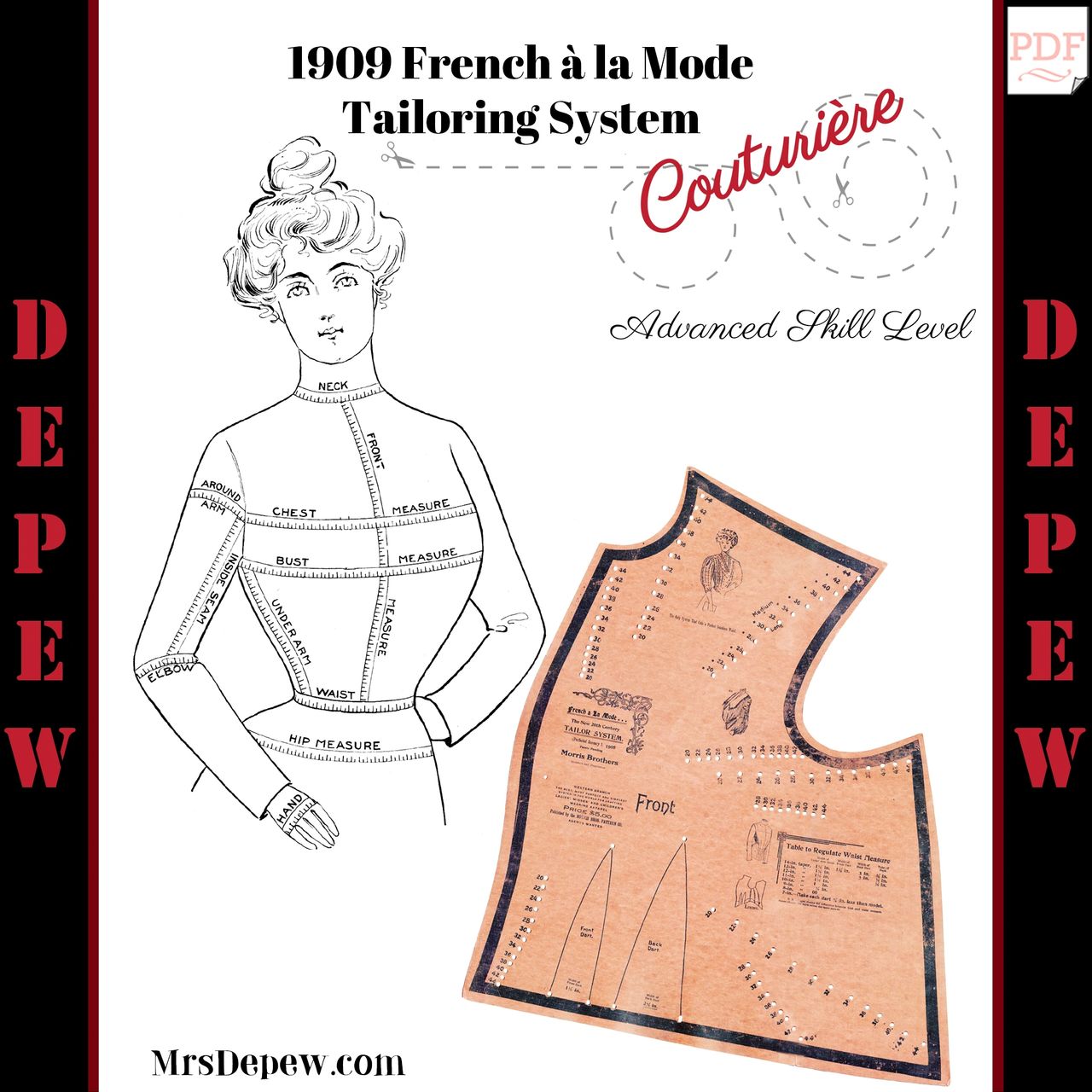
à la mode. A French phrase meaning in fashion or according to the fashion.
alaska. 1. Overshoe. 2. Yarn made of cotton and wool.
Alaska sable. Incorrect term for skunk fur. No longer legal in advertising.
Alaska sealskin. Fur of Alaska seals. Usually dyed brown or black.
alb or alba. Long white vestment with long close sleeves, and girdle. Worn by clergy, usually over cassock and amice. The name was derived from the Latin tunica alba, meaning white tunic. It was a secular garment worn before the 9th century.
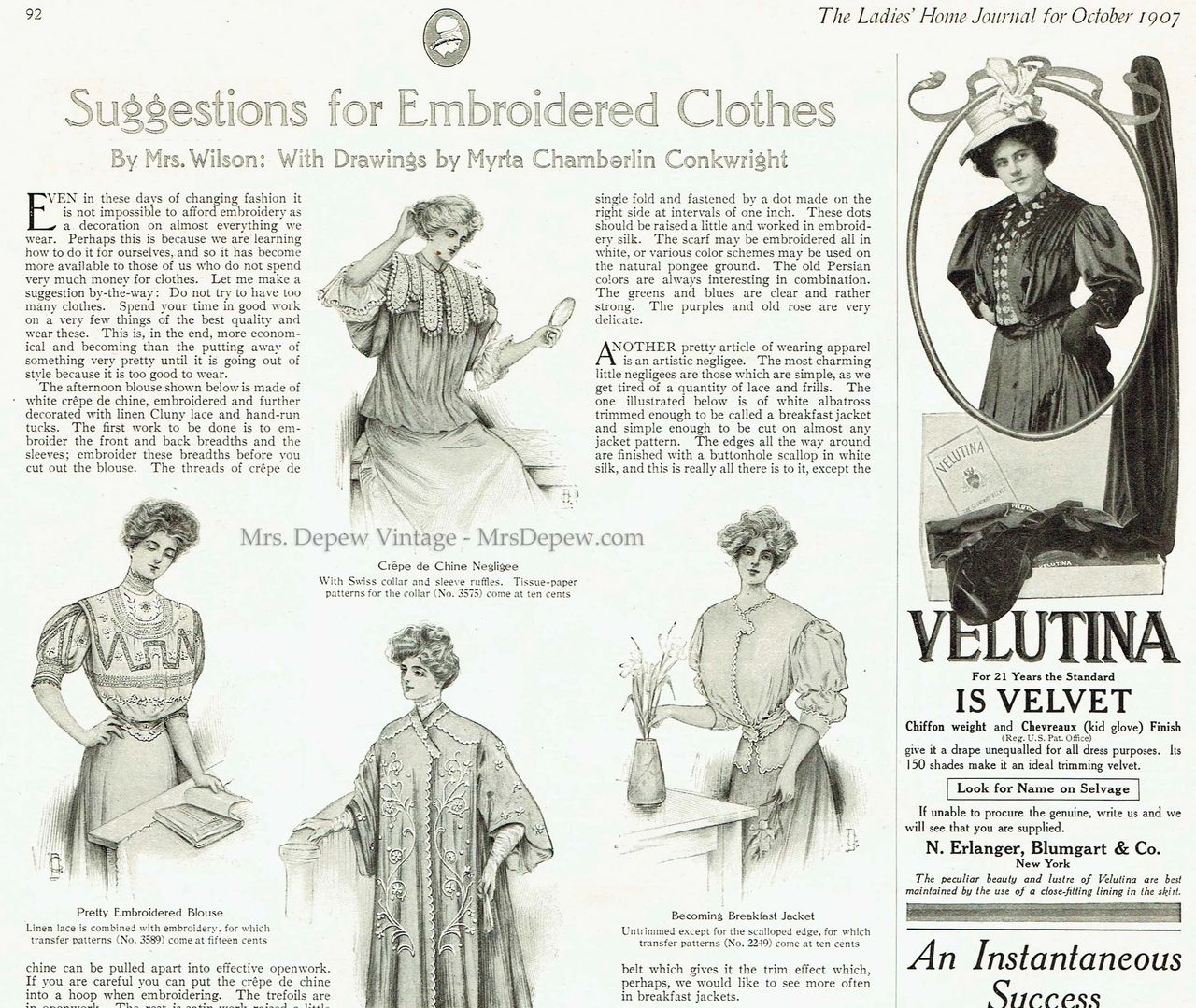
albatross. Soft, light-weight, woolen material with a slightly creped surface, similar to bunting. In plain or fancy weave, usually in light colors. Named for the bird because the fabric resembles its downy breast. Used for negligees, dresses, warm nightgowns, and infants' wear.
Albert crepe. Silk and cotton crepe.
Alençon lace. Needle-point lace with solid design on a net ground.
alepine. The French word for bombazine.
alesan. Light, creamy brown color sometimes called "cafe au lait".
Algerian stripe. Cream-colored fabric with alternate stripes of rough knotted cotton and of silk, woven in imitation of "Moorish cloth".
Alice blue. Medium-light blue, having a very slight greenish cast. The favorite color of Alice Roosevelt (Longworth), worn by her when in the White House.
alliance. The French word for a wedding ring.
alligator. The skin of the water reptile.
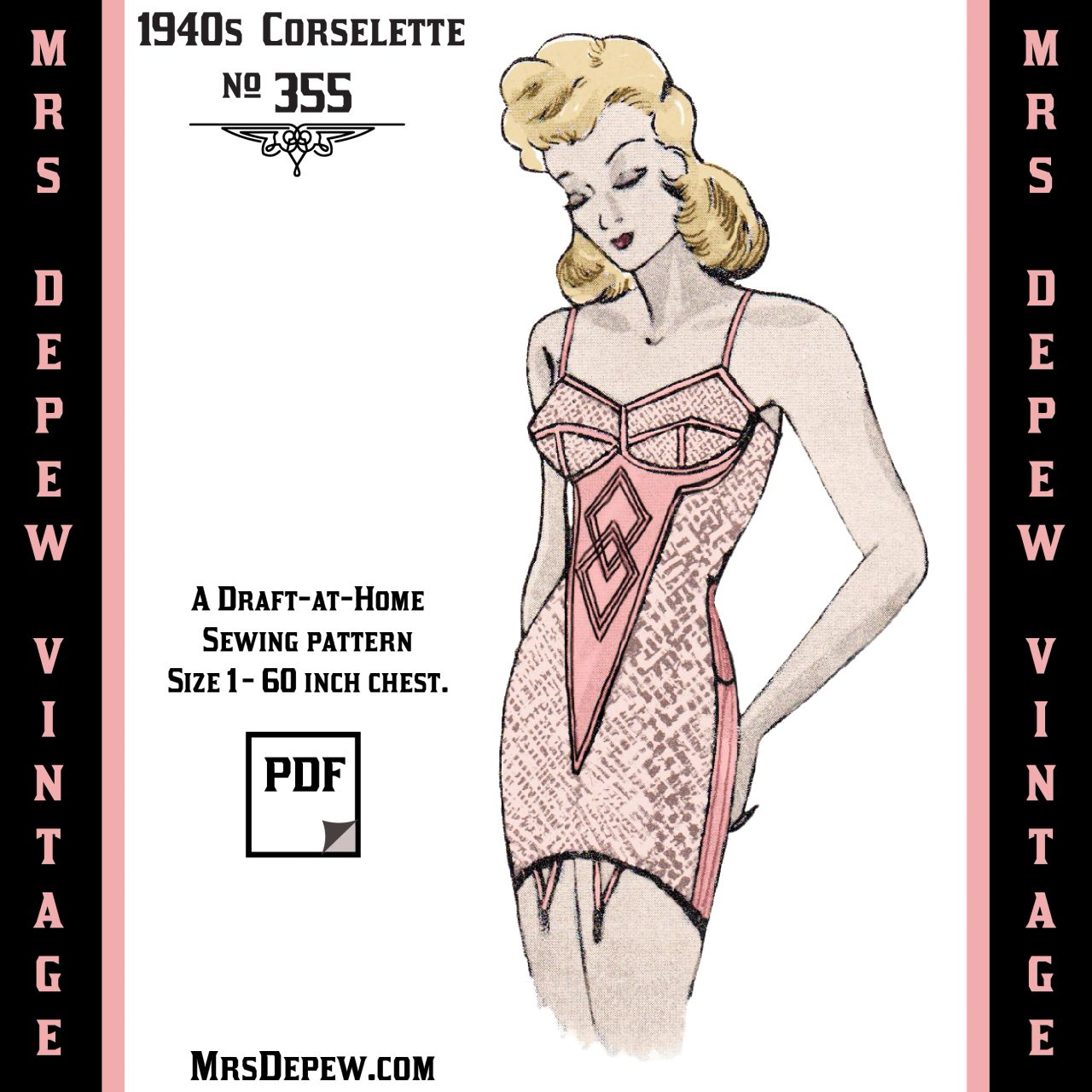
all-in-one. Foundation garment or corselet consisting of girdle and brassiere, made with or without a pantie.
allongé. French word meaning lengthened, elongated, outstretched.
allover. Covering the entire surface; also, fabric that is completely covered with a design, such as lace.
alma. Silk dress fabric in diagonal twill weave. Usually made in black for mourning purposes.
almuce. Medieval hood like a cowl.
alnage. Formerly the English measurement of cloth by the "ell", or 45 inches.
aloe fiber. The soft hemp-like fiber of fleshy-leaved century or similar plant. Used for cloth, lace, embroidery, etc. Also called bowstring hemp. 2. aloe lace. Fragile lace made of aloe fibers.
aloe thread embroidery. Embroidery of aloe fibers.
alpaca. 1. Hair of the Peruvian alpaca. 2. Smooth, thin, wiry fabric having cotton warp and alpaca or other worsted fillings. Similar to and sometimes called mohair and brilliantine. Used for linings, men's and women's summer suits. 3. Fabric, usually of cotton and rayon, so called because of wiriness.
alpargata. A coarse, low-priced Spanish shoe.
alpine hat. Soft felt hat.
amaranth. A shade of purple is tinged with red, so called because like one shade of flower of the same name.
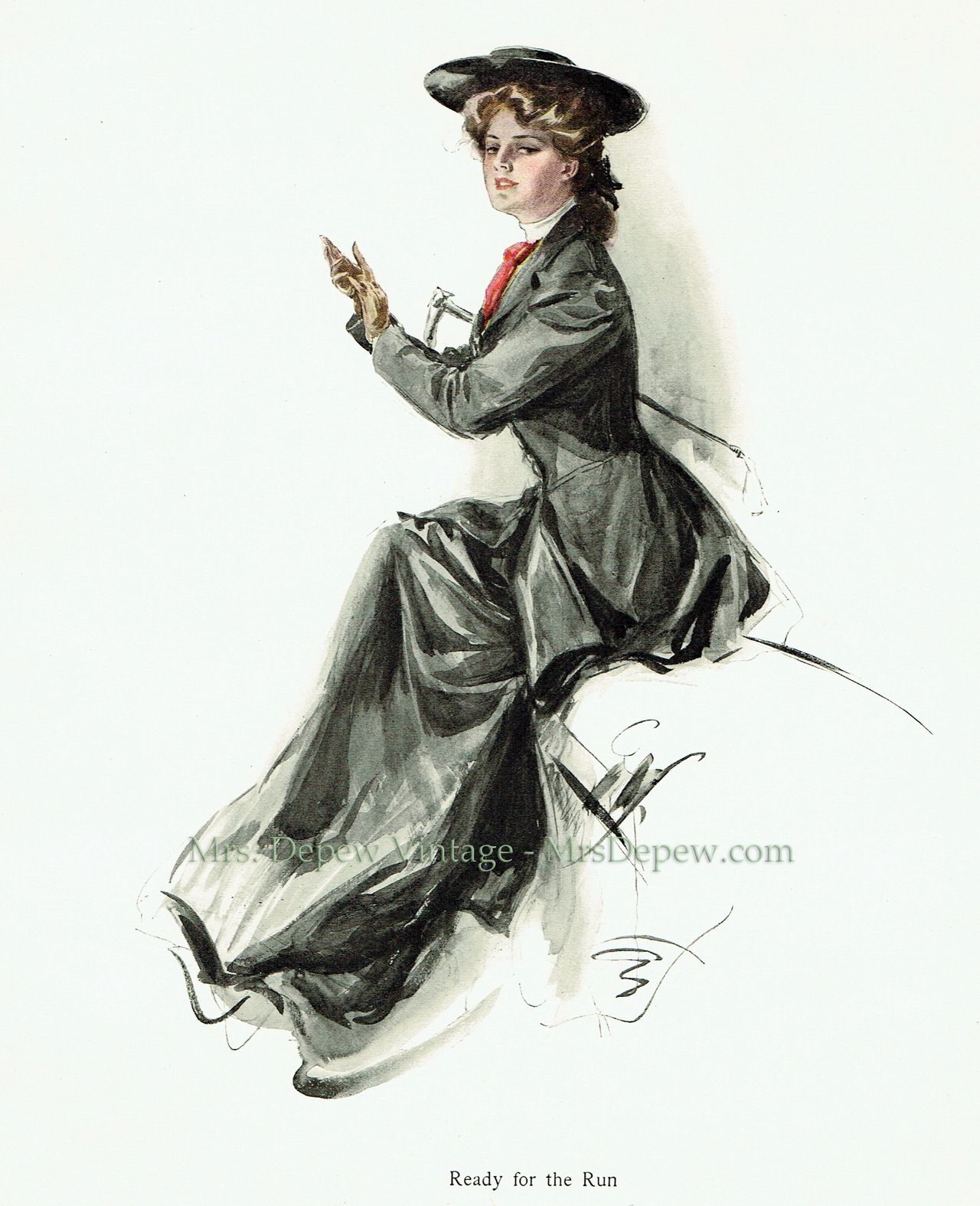
amazone or habit d'amazone. A French term meaning riding habit.
amber. 1. Hard, translucent substance, found in the soil. Cloudy amber is yellowish in color; clear amber is a sparkling brown. Used for beads, ornaments, accessories, etc. 2. Yellowish or brown color of amber.
ambergris. A waxy substance of white, grayish, yellow, black, or variegated color, found floating in the ocean in certain tropical regions, or obtained from its source, the sperm whale. Used in the manufacture of perfume and formerly also in cooking.
amener des modes. French expression which means to bring in fashions.
American badger. Coarse, long-haired, creamy white fur with black band just below tip. Used for trimmings.
American Broadtail. Trade name for processed baby lamb.
American cloth. In British usage, sturdy enameled cloth-oilcloth, for example. Used in the household; also, for traveling cases, toilet accessories, etc.
American mink. Brown, durable fur of American wild or ranch-bred mink.
American opossum. Long-haired, fairly durable, gray fur of American opossum.
American sable. Baum marten. Silky, brown, fairly durable fur.
amethyst 1. A clear purple or bluish-violet stone used in jewelry. 2. Violet shade, having more red than blue.
amice. 1. Rectangular piece of linen worn by clergy as Mass vestment, originally over the head, now about the shoulders. 2. Furred hood.
amictus. Toga or any cloak-like outer garment. Worn by ancient Romans.
Amish costume. Plain habit worn by the Amish women of the Mennonites. Consists of a plain gathered skirt, basque, and bonnet, usually in plain black and without ornament. All Amish garments are tied on, with no modern fasteners of any kind being used.
amulet. Object, usually small piece of stone, bone, metal, etc., worn by the superstitious as protection against evil or bad luck. Common in earlier days; still worn as ornament in some parts of U.S.
anadem. Garland; chaplet; wreath; fillet. Worn on the head as an ornament.
anaglyph. Ornament in low relief, such as a cameo. Opposite of INTAGLIO.
anamite. The natural, unbleached, neutral color of twine.
angel skin. Dull, waxy, smooth, gardenia-like finish given to certain fabrics such as crepe, lace, or satin. Also called peau d'ange.
angel sleeve. Long, loose, flowing sleeve.
angelus cap. Type of peasant handkerchief cap.
Angleterre edge or edging. Needle-point edging on braid or cord, made with one line of
loops. (Angleterre is French for England).
Anglo-Saxon embroidery. Ancient outline embroidery.
Angora. 1. Wool of the Angora goat. 2. Fine, soft, fuzzy fabric made of Angora wool.
aniline or anilin. Colorless oily compound, used as the base of coal-tar dyes.
ankle boot. Boot of ankle height.
ankle length. Length of dress or other garment reaching to the anklebone.
anklet. 1. Ornament worn around the ankle. 2. Short hose reaching to the ankle.
Anne Boleyn costume. Costume of 16th century as worn by Anne Boleyn, one of the wives of Henry VIII. Sometimes seen in fancy dress party costumes of the 1920s-1950s.
annulet. Small ring, especially as used in decoration.
antelope. 1. Soft leather made from antelope skins. 2. Shorthaired coat of small brown African deer.
antelope-finish suede. Sueded leather resembling antelope.
anti-crease. The chemical process of finishing fabric to prevent wrinkling.
antimacassar. Covering or tidy, used to protect the back, arms, and headrests of sofas, chairs, etc. Originally, to prevent soiling by Macassar hair oil, which was much used during the 19th century.
antique. 1. Of another age; applied to any garment or accessory made in ancient style; as, antique jewelry. 2. Used derisively of a garment that is old-fashioned, antiquated, or out of style. 3, Applied to silk woven, printed, or watered with an indistinct design.
antique lace. Darned bobbin lace.
Antwerp pot lace. Rare bobbin lace with pot of flowers in design.
apparel. Clothing of all sorts; also to clothe or attire. Term applied to the apparel industry, which makes ready-to-wear.
appenzell. Type of drawn-work embroidery.
appliqué. Decoration laid on and applied to another surface, as a band or separate design of petals, leaves, figures, etc. Used on lace, fabric, and leather. French word meaning applied or put on.
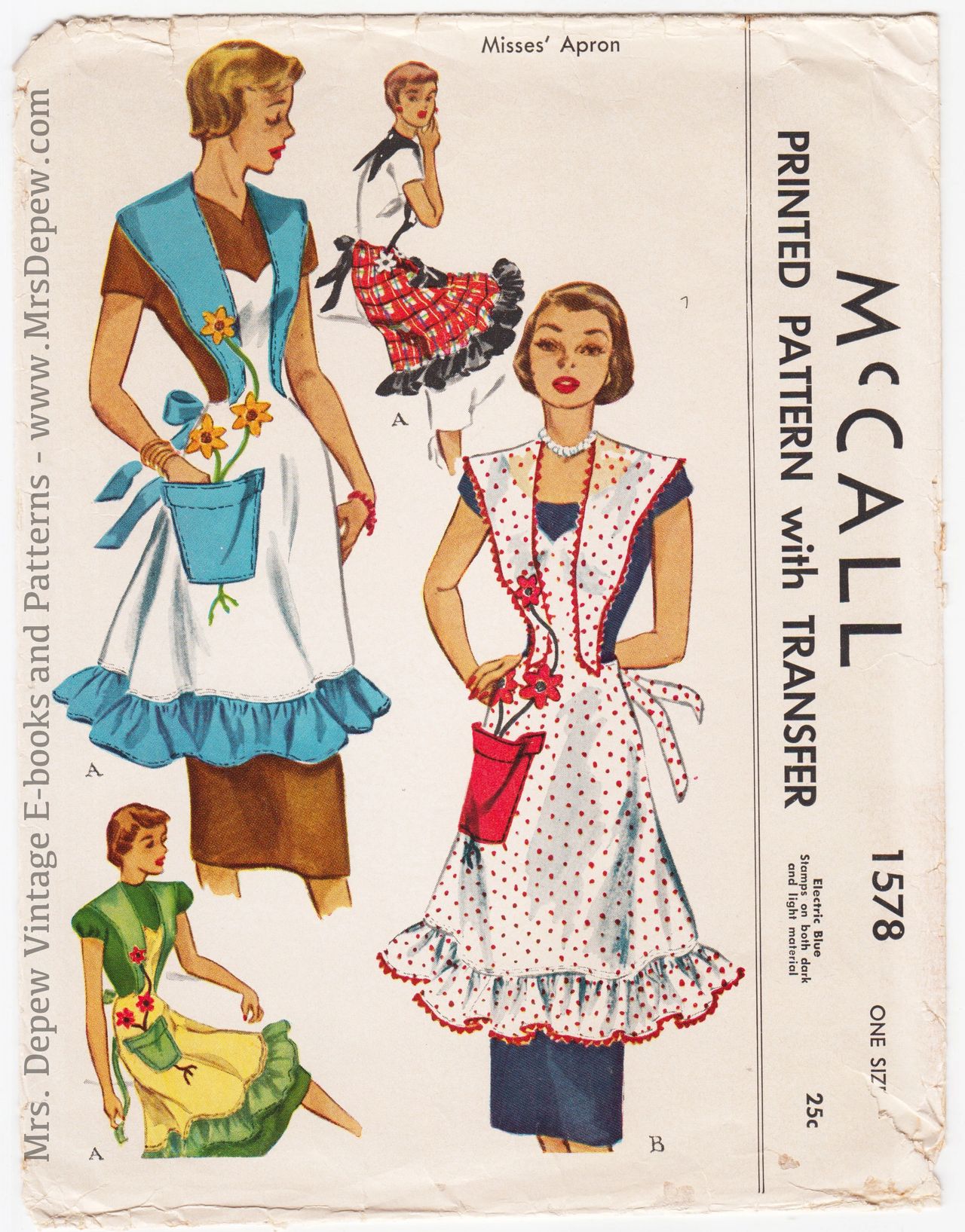
appliqué embroidery. Motif or design applied by means of stitches; usually fabric [applied, to fabric.
appliqué-stitch. Any stitch used in applying pieces to a background.
apricot . Color between red-orange and yellow-orange, like that of ripe apricot fruit.
apron. 1. Article of dress worn over clothing to protect or adorn it. Extends from the waistline or shoulders, and is usually tied on by strings. Made of fabric, leather, or other material. Late in 16th century, became an article of full dress; in colonial times, made of fine lace, worn with formal costumes; late in 18th century, worn almost floor length. 2. Part of shoe upper covering instep.
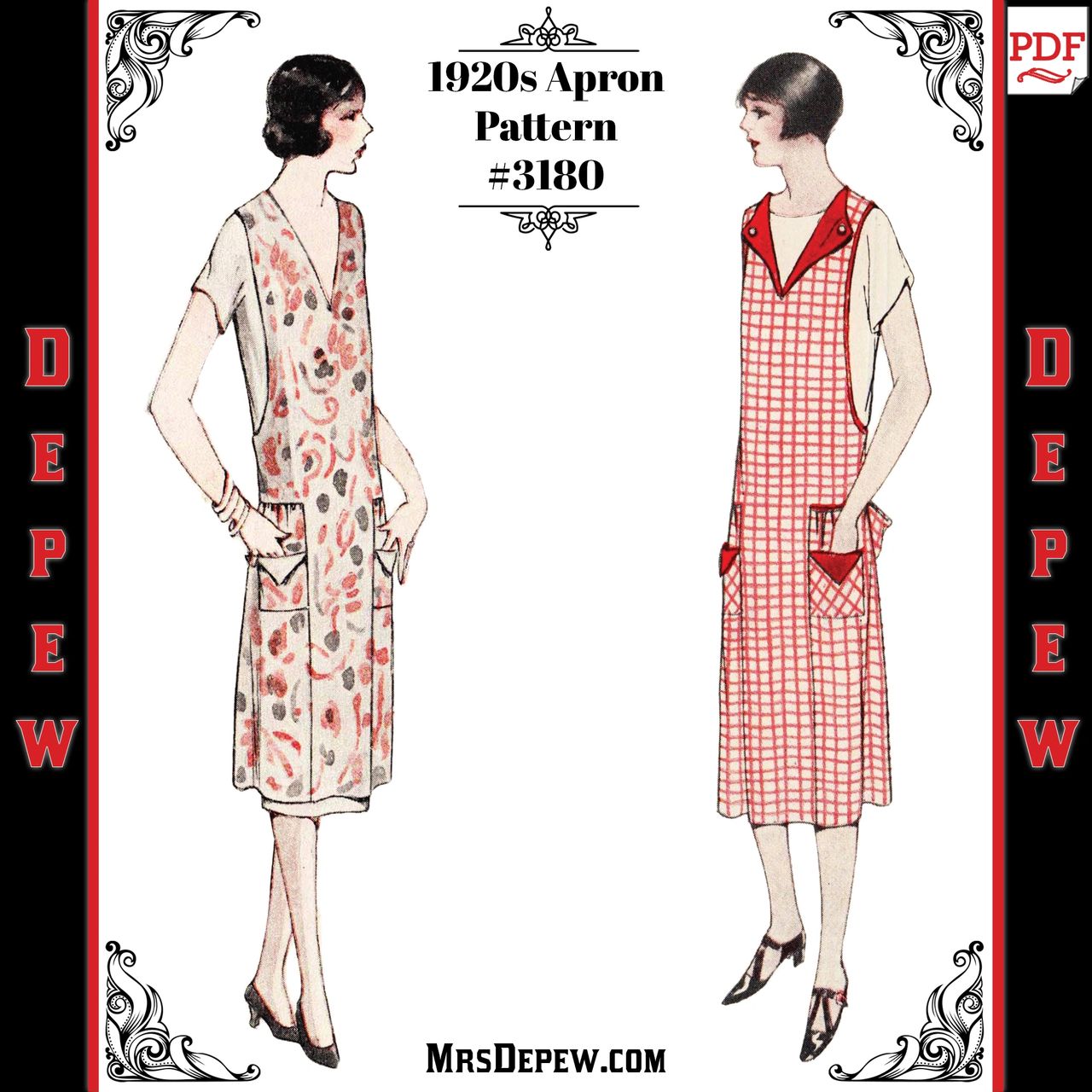
apron check. Gingham with even checks, popular for aprons. See GINGHAMS.
apron dress. A dress having an apron-like skirt, tied at the waist and open in back.
apron tunic. Long or short open ornamental tunic worn apron-fashion.
aquamarine. 1. Variety of beryl used as a semiprecious stone. Comes in blue, blue-green,
or green color. 2. Clear, light, green-blue color.
arabesque. Intricate design showing flowers, foliage, figures, etc., composed of interlaced lines in scroll effect. Usually made with cords, stitchery, or applied and outlined pieces.
Arabian. Having the characteristic features of what was formerly labeled as "Arabian dress", general type of romanticized and costume notion which consists of loose, wide trousers, covered by ankle-length robe; loose, coat-like outer garment; square mantle; rich, colorful fabrics, and embroidery; slippers or sandals; kerchief headdress for men; veil for women. Typically associated with Arabian Nights and later, Disney's Alladin film.
Arabian embroidery. An elaborate form of embroidery typically attributed to Asia and the Middle East.
Arabian lace. A coarse, dark needle-point lace.
araneum. Same as ANTIQUE LACE.
arc. Any part of the line that is used in forming a circle.
arctic. A high, waterproof overshoe.
arctic fox. Fur of arctic fox, either white or blue.
arctic wolf. Coarse, durable fur of white wolf.
ardoisé. A French word meaning slate-colored.
argent. The French word for silver.
Argentan lace. Alençon type of lace, bold in design.
argentine. A substance of silvery luster made from fish scales. Used in making imitation pearls.
argentine cloth. Glazed tarlatan or open-weave cheesecloth, glazed to make
it dust-proof.
arisard. Tunic-like garment girdled at the waistline. Formerly and traditionally worn by women in Scotland.
arm band. Band of cloth worn around the arm; especially, a band worn on sleeve for mourning or identification purposes.
Armenian lace. Narrow, scalloped, knotted, needle-made lace.
armet. Hinged helmet snugly shaped to the head, closing neatly over chin and neck.
armhole. Hole in garment for the arm; line on which set-in sleeve is sewn to garment; measurement where arm joins body.
armil. Older term for bracelet.
armilausa. Medieval cloak.
armlet. 1. Ornamental band worn on upper arm; distinguished from bracelet worn on lower arm. 2. Small, short sleeve.
armor. Covering for the body, usually formerly metal (later Kevlar) used as protection in battle.
armozeen or armozine. Heavy plain corded silk fabric. Used in the 16th century and following for dresses and waistcoats; now used chiefly for scholastic and clerical robes. Also spelled armazine, amazeen.
armscye. Opening for a sleeve; a less commonly-used term for armhole.
armure. 1. Stiff, rich-looking dress material woven plain, striped, ribbed, or with a small fancy design, sometimes in two colors. Made of silk, wool, cotton, rayon, or combinations of fibers. Used for linings, skirts, suits. From French armour, meaning armor; so called because pattern suggested chain armor. 2. Drapery fabric in Jacquard weave with raised satin figure on rep or twill ground. Made of silk, cotton, wool, rayon, or mixture.
arras'. 1. Tapestry in-woven with figures and scenes, needle- or loom-made. So called because first made at Arras, France. 2. Type of bobbin lace.
arrasene embroidery. Type of chenille embroidery.
array. To clothe or dress, especially in asymmetric impressive attire; to adorn.
arrowhead. Satin-stitch made with twist to form arrows as stays on tailored garments at the joining of coat collars and lapels; at corners of pockets and pocket laps; at ends of seams, tucks, plaits, and machine stitching.
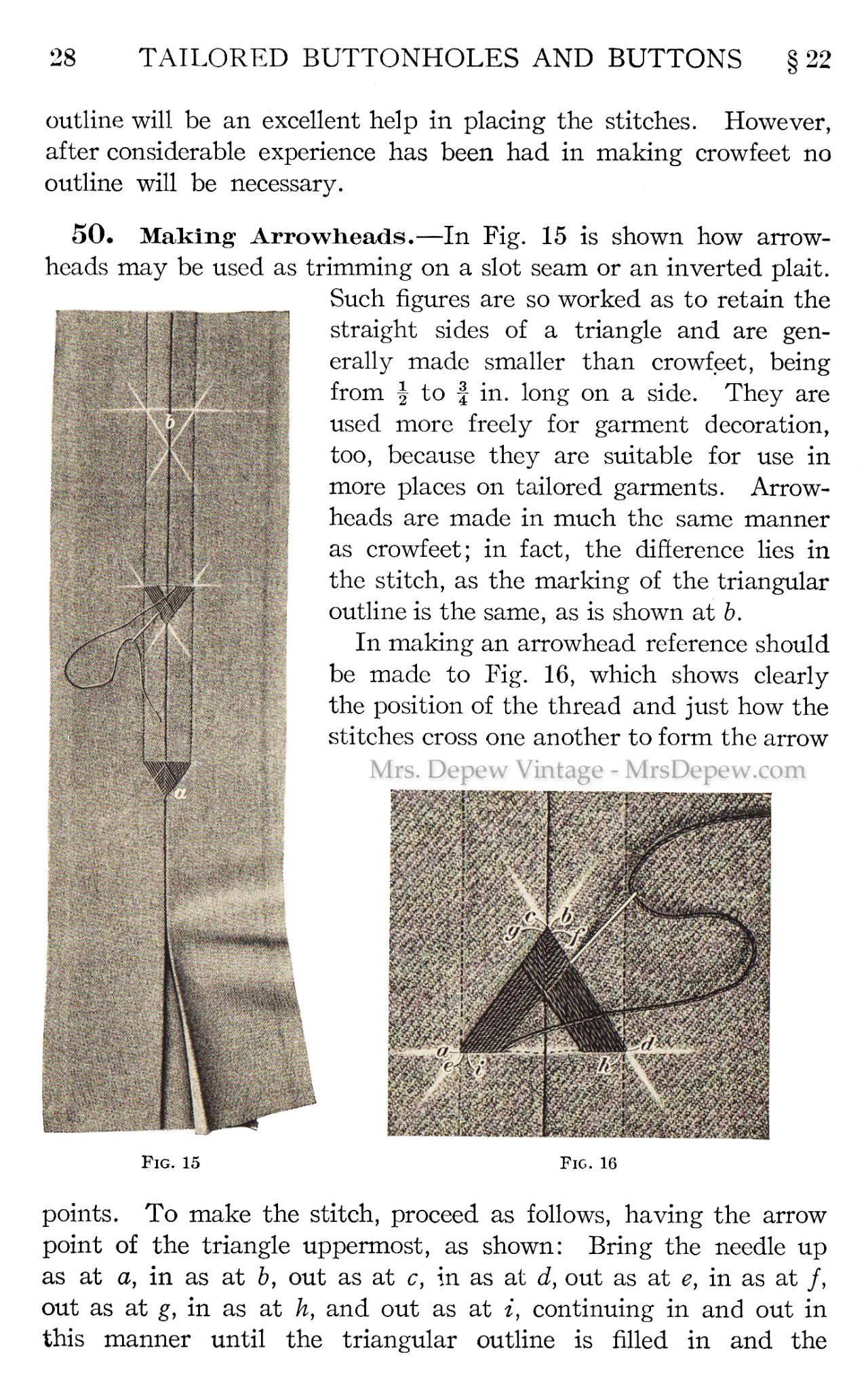
arrowhead-stitch. Series of stitches resembling arrowheads.
artificial leather. Cotton cloth, treated to imitate leather. Currently called Vegan Leather.
artificial silk. Imitation of silk, made synthetically. Illegal to sell such an imitation in U.S. under name artificial silk.
art linen. Various plain-woven linens or linen imitations used chiefly for embroidery.
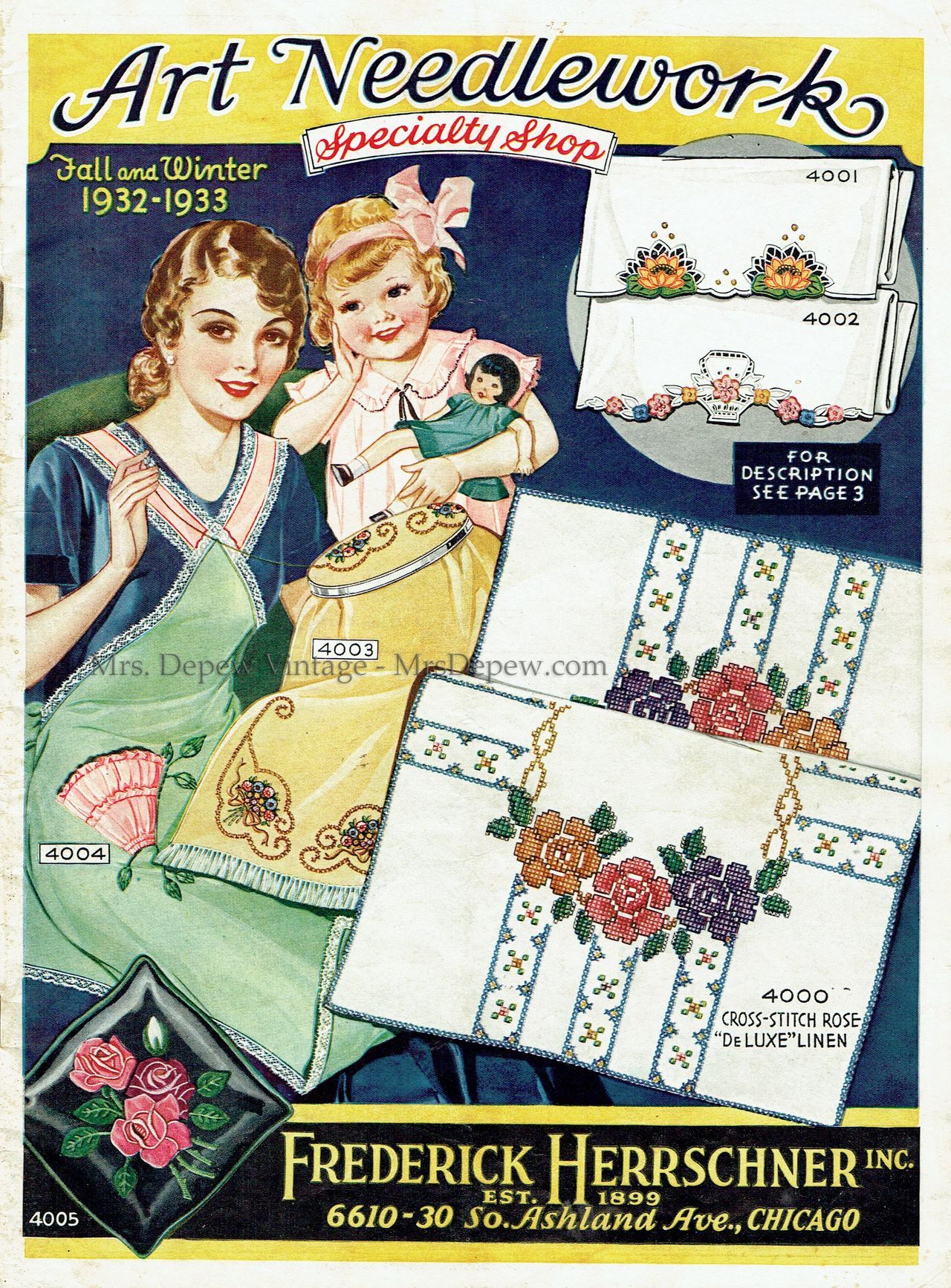
art needlework. 1. Materials for needlework, such as stamped goods, designs, linens, threads, etc. 2. Store department selling supplies for all types of needlework.
artois. Long, loose cloak.
art silk. Type of finely woven silk on which one paints or embroiders.
art ticking. Same as regular ticking, but with a printed design.
ascot. 1. Broad neck scarf, usually double. Tied so that ends come horizontally on each side of the knot, then cross diagonally. Worn by men and fastened with scarf-pin. 2. Double scarf that is informally looped under the chin. Worn by men and women. Named for Ascot Heath, in England, the scene of horse races frequented by fashionable English people.
Assisi embroidery. Type of cross-stitch embroidery.
assure. French word meaning woof or texture.
astrakhan or astrachan. 1. Heavy fabric knitted or woven with a deep-pile surface of curled
loops to resemble caracul fur. 2. Name formerly used for caracul fur.
asymmetric or asymmetrical. One-sided, not symmetrical or balanced; often, down much
more on one side than the other.
atelier. Large dressmaking establishment, particularly one of the famous French dressmakers. French word meaning workroom or studio.
atours. French word meaning dress, apparel, ornaments, etc., worn by women.
atrous. A color referring to Jet Black.
attaché case. Briefcase or traveling case, sometimes fitted with writing or toilet accessories.
Carried by attaches.
attachments. Sewing-machine appliances for hemming, tucking, quilting, pinking, binding, braiding, etc. Some are called by the trade name, Fashion Aids.
attar. Perfume obtained by distilling flower petals, chiefly rose.
attifet. French word meaning: 1. Ornament for head. 2. Small 16th century bonnet having point over forehead.
attire. Complete costume or clothing. especially rich, ornamental dress; also, to dress in such clothing.
auburn. Dark copper brown shade with golden cast; generally used to describe hair color.
Aubuason-stitch. Vertical canvas stitch; same as REP-STITCH.
au fait. French phrase meaning expert, skilled, thoroughly conversant. Literally, to the fact or act. Sometimes incorrectly used for "comme il faut", meaning proper, in good form.
au fond. French phrase meaning fundamentally, essentially; literally, at the bottom.
august. To turn brown or tan, make sunburned.
au naturel. French phrase meaning in or according to a natural manner or condition; also,
in the nude.
aune. Old French measure of 45 inches. Used for fabric.
aureate. 1. Golden or yellow-gold in color. 2. Of or like gold in resplendence.
auricomoua. Golden-haired; used of anything making the hair golden in color.
aurulent. Golden in color.
Australian opossum. Fairly long, durable fur of the phalanger, shading from light brown underfur to silvery gray on top.
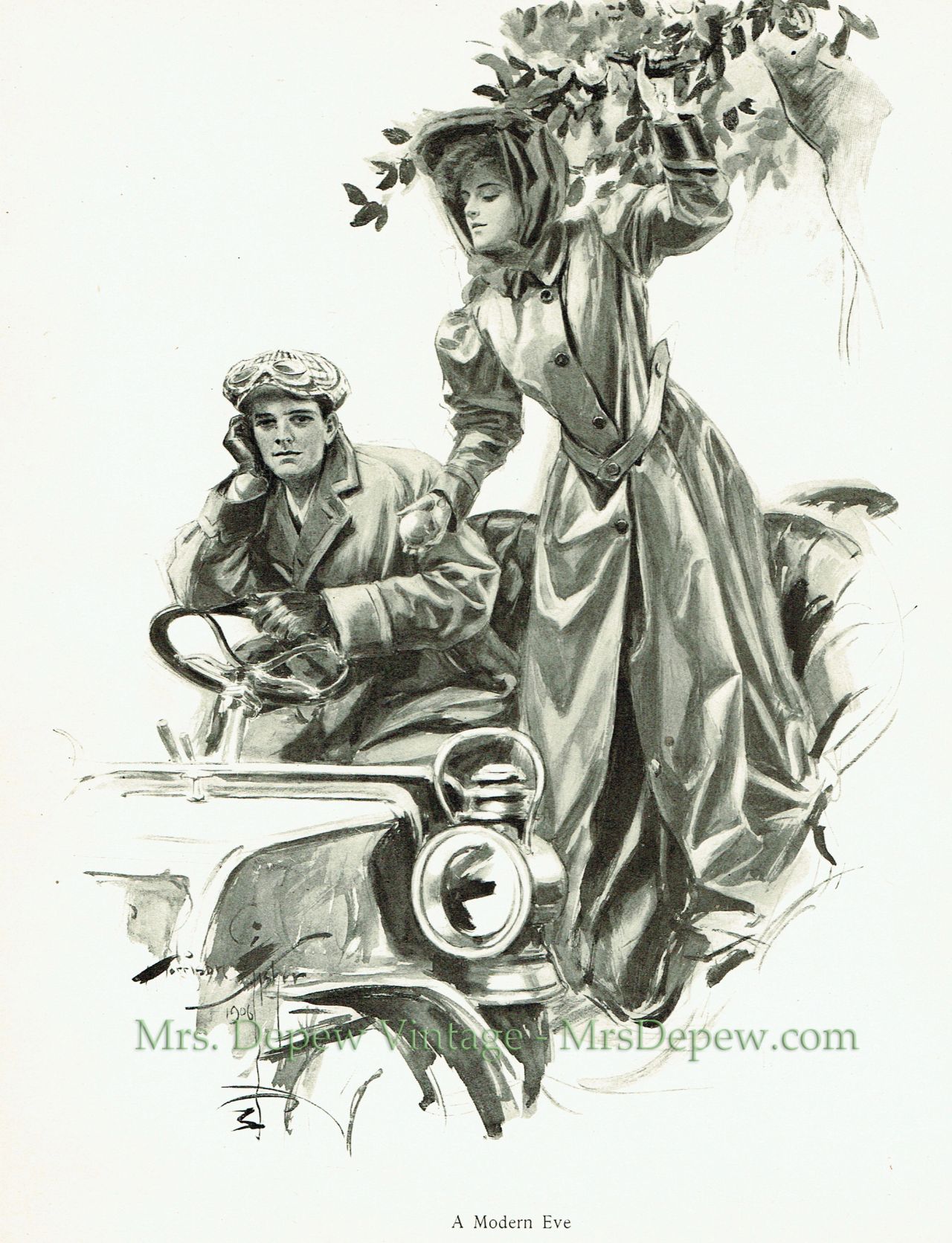
automobile veil. The large protective veil that was formerly worn by women when motoring.
Ave Maria lace. Narrow DIEPPE POINT LACE.
awning cloth or stripe. Heavy cotton fabric in plain or twill weave, often woven with yam-dyed stripes. Used for awnings, lawn umbrellas, etc.
Ayreshire embroidery. Small-patterned eyelet type of embroidery. Same as MADEIRA.
azure. An indeterminate shade of blue, variously applied to color of clear deep-blue sky, of lapis lazuli, etc.; also a synonym for blue.
Sources:
The Language of Fashion by Mary Brooks Picken, 1939.
Textile Research Center - Leiden.
The Harrison Fisher Book, 1907. Charles Scribner and Sons.
Tailored Buttons and Buttonholes - Woman's Institute of Domestic Arts and Sciences.
Encyclopédie des Ouvrages de Dames by Thérèse de Dillmont.