





Glove Making: The New Home Craft of 1938 with McCall 373
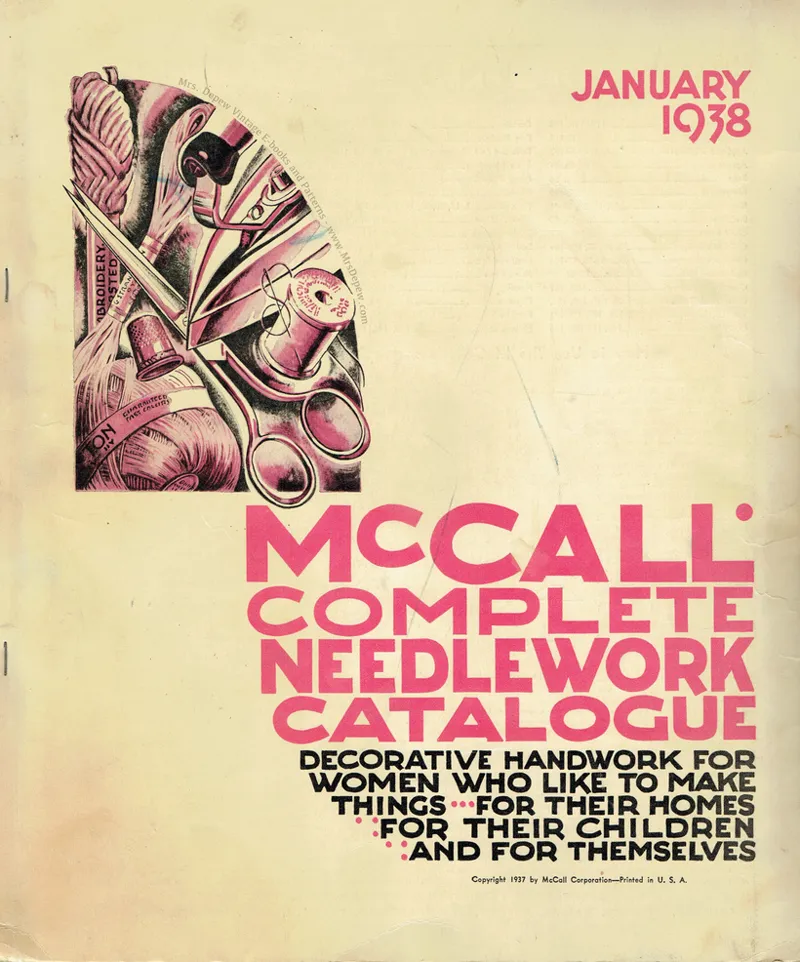
I have had this vintage McCall Kaumagraph pattern in my collection for over a decade. I recently discovered it in my January 1938 McCall Complete Needlework Catalog and realized it was far more interesting than I had originally thought.
It's not very often that I see a full page of a McCall catalog from this era dedicated to a single sewing pattern, but that's just what they did for McCall 373.
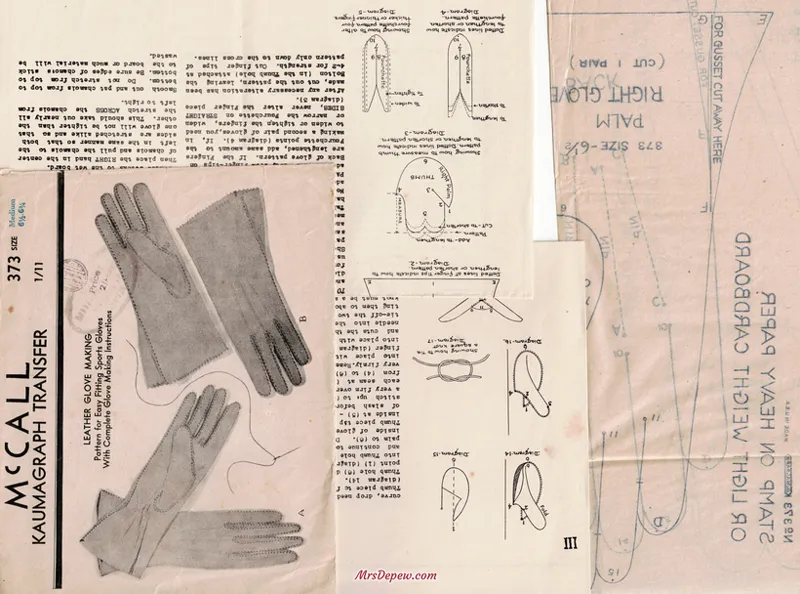
The article is quite extensive for a catalog, and so are the really detailed instruction sheets inside the pattern.
So why is the McCall envelope illustration in black and white? This means the pattern came from either the U.K., Australia, or New Zealand. Note the faint price stamp on the front, which I think is referring to pence rather than cents.
And like all really cool vintage patterns, it also includes a neat piece of the original owner's style inside in the form of a very prettily cut out magazine photograph of a glove.
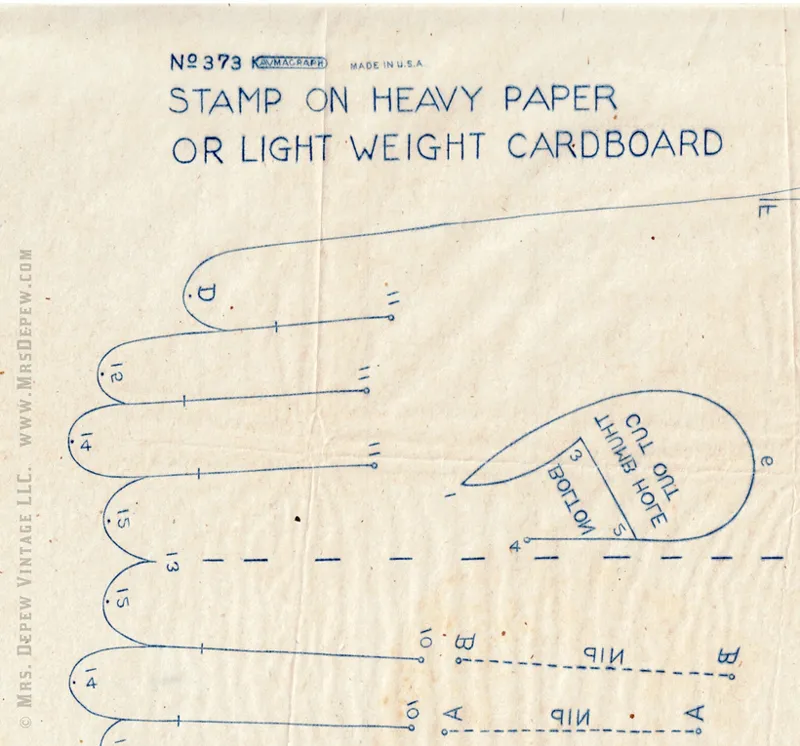
As you can see from the scan above, the design is meant to be ironed onto lightweight cardboard or oak-tag type paper to make a reusable, sturdy leather glove pattern. The pattern even includes two separate sizes in the transfer sheet.
I don't often bring it up, but I was born with some rather onerous eye problems and the fine print can really present some problems for me. So for both our sakes, I blew the catalog page up and transcribed it so that we can all better read it together.
Enjoy!
Glove-Making—the New Home Craft
TIME was when we never thought it possible that glove-making could ever be done by any but professionals. Those were the days before the American woman went in whole-heartedly for sports. But now that driving, golfing, walking and other outdoor activities are part and parcel of our lives, glove-making at home has come to be a craft in itself. All over the country women are being taught in small groups to make their own gloves—the hand sewed kind that is so fashionable. Besides finding it a great aid economically, they are quite enthusiastic about this new and interesting handicraft. To have as many hand-sewed gloves as one likes at small expense, is certainly something to be considered.
"Your gloves can look as professional as these. McCall glove pattern No. 373 tells all the secrets of home glove-making."
In order to give our McCall readers an opportunity to learn this new craft, we are issuing this new and very interesting pattern (No. 373, price 35 cents) with full directions and a clear, detailed set of picture instructions by which you can turn out the good-looking gloves you see on this page. The expense is very small—you can make a pair of practical chamois gloves for half a dollar, more or less!
We are recommending that you make your first pair of gloves of chamois because it is very inexpensive, and easily obtainable at drug stores, general stores, chain stores or in the hardware departments of large shops. Select smooth medium weight skins, avoiding the unusually heavy and thick ones.
For your gloves to be successful, the leather must be stretched thoroughly according to instructions in the pattern.
"Stretching the leather is a most important preliminary of successful glove-making. As simple as it looks, is the marking of the leather with a sharp pencil before you cut it."
The process of cutting out the glove by a firm pattern of thin cardboard, made by stamping the transfer pattern on it, you'll see illustrated above. The stitching is all done by hand in stab stitch, taking short even stitches close to the edge. Your pattern tells every detail about this and setting in the fourchettes and thumb.
Just as soon as you have made two or three pairs of chamois gloves and feel sufficiently experienced in handling leather, you may want to make other gloves in more expensive skins, such as doeskin, suede, etc. Information as to where you may obtain an excellent quality of doeskin and suede in various colors, is printed in the pattern.
McCall glove pattern No. 373, for easy fitting sports gloves, in sizes small (6 and 6¼), medium (6½ and 6¾), large (7 and 7¼). Blue transfer. Pattern, 35 cents."
For those of you who might be interested in trying out a pattern like this but prefer not to use animal skins, you may wish to experiment with other fabrics.
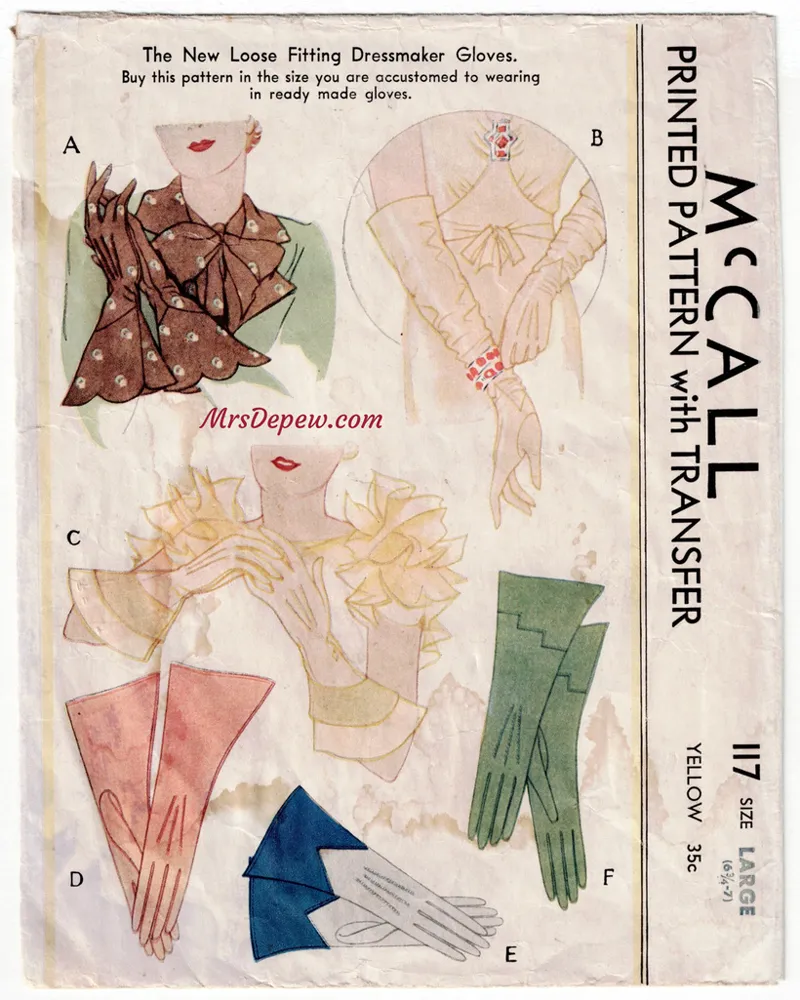
McCall 117 Dressmaker Gloves from a few years earlier includes some great recommendations for fabrics from which one may make gloves.
"Materials for Dressmakers Gloves should be firmly woven and of good quality. Materials which fray or ravel easily are not suitable. The following fabrics are recommended for these gloves; gingham, jersey, organdy, percale, silk crepe, taffeta, pique, linen, cotton metalassé, cotton broadcloth, and lightweight wool crepe."
Interested in trying your hand (giggle-snort) at glove making?
You can find all of our glove sewing patterns here.
Happy sewing!
Comments (6)
Love it! :)
How interesting!
Gloves are on the list!
Oooh, there’s a list?
Well that was fascinating!
I’m so glad! It was a fun rabbit hole for me.