
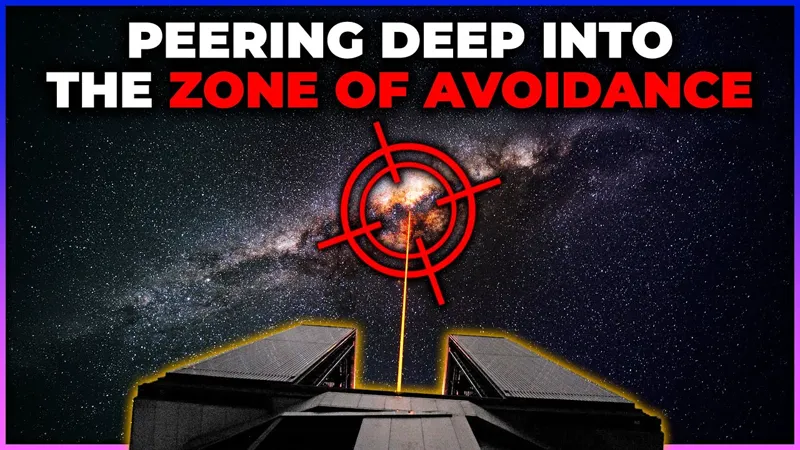

[Interview+] Unveiling The Most Obscured Part of Our Galaxy
For a long time the central part of our galaxy was mostly hidden from us because of all the dust. It was even called the Zone of Avoidance. But with better telescopes and modern techniques we can peer inside and reveal what's hiding. Even build 3D-maps of the region.
🟣 Guest: Dr Cara Battersby https://battersby.physics.uconn.edu/
Watch the video here (with no ads) or on YouTube: https://youtu.be/BpaEskYuBk0
Comments (10)
I'm impressed, Cara. Your professionalism, poise, and delivery is just wonderful to watch. Thanks so much, Dennis G.
I thought the Milkyway and Andromeda are NOT going to collide? When was this interview recorded?
One new study and some headlines does not the consensus overturn.
Great interview again, very interesting to listen to Dr Battersby explain the centre of our galaxy. I read somewhere recently that some scientists now think Andromeda and the Milky Way probably wont collide. Thank you Fraser for providing these great interviews for us.
Well, I have to ask… So now that telescopes can finally peer through the zone of avoidance, how does the great attractor look like?!?
It's a bunch of galaxies :)
I loved seeing the look of relief on her face when she understood that she wouldn’t have to explain interferometry. Fraser, I hope you got a good feeling being able to make the statement to her to not worry, that your audience is familiar with interferometry! Great interview about amazing subjects!
How does gravity fit in this galactic centre? ..
Awesome video! Dr. Battersby is great at explaining things, and of course Fraser you are fantastic at asking questions. Very much enjoyed that. Thank you.
With a Milky Way / Andromeda 'collision', even if stars wouldn't collide would the orbits of objects in places like the Solar System potentially be disrupted? Also, if two supermassive (or stellar mass) black holes merged, would there be some distance where the shaking effect of the resulting gravitational waves would be dangerous beyond just being near the gravity wells?