









Coin-Op Collection Presents: DECO-8 (The Real Ghostbusters / Meikyuu Hunter G)
Today's release for the Analogue Pocket and MiSTerFPGA platforms covers the third and fourth entries on Data East's DECO-8 platform. The Real Ghostbusters and its Japan-only counterpart Meikyuu Hunter G are multidirectional run-and-guns built on Data East's 8-bit custom chipset, the same hardware family behind:
Last Mission (1986)
Shackled / Breywood (1986)
Gondomania / Makyou Senshi (1987)
Garyo Retsuden (1987)
The Real Ghostbusters (1987)
Meikyuu Hunter G (1987)
Captain Silver (1987)
Psycho-Nics Oscar (1987)
Super Real Darwin (1987)
Cobra Command (1988)
Released in 1987, The Real Ghostbusters is the only licensed property in the DECO-8 library. Data East did not hold the Ghostbusters license in Japan, so the game was reworked and released there as Meikyuu Hunter G, a substantially different title built on the same hardware.
This post covers a technical overview of The Real Ghostbusters and Meikyuu Hunter G on DECO-8 along with updates on the DECO-8 project.
Licensing:
This beta release is distributed through the Coin-Op Collection licensing portal, the same dashboard used for MiSTerFPGA and Pocket registrations. Patrons who have already registered a device and generated a key for this cycle are covered.
New patrons, or anyone setting up a device for the first time, can find step-by-step instructions and the FAQ on the Help page. If the core is run on a device that is not registered to a valid member, a QR code pointing to the Help page will appear on screen.
Overview:
The Real Ghostbusters and Meikyuu Hunter G run on the same DECO-8 hardware (PCB DE-0273), driven by a Motorola MC6809E at 3 MHz, with an Intel 8751 microcontroller at 8 MHz handling coin input and protection. A 6502-class sound CPU at 1.5 MHz manages the audio system, a DECO 222 on The Real Ghostbusters, handled by the x6502 implementation, and a stock R65C02 on Meikyuu Hunter G, handled by the x65c02 implementation.
The sound CPU drives a YM2203 (OPN) at 1.5 MHz, handled by the new x2203 implementation, alongside a YM3812 (OPL2) at 3 MHz, handled by the new x3812 implementation, covering FM, PSG, and additional FM synthesis. Audio output is mono.
The video system outputs 256x240 at approximately 57.444 Hz in a horizontal orientation. Graphics are rendered by three custom ICs: the BAC06 tilemap generator handles a 16x16 4bpp tile layer, the DRL40 handles 16x16 and 16x32 4bpp sprites, and the RM-C3 provides resistor-weighted palette conversion. A fixed 8x8 3bpp character layer sits on top for HUD elements. The palette holds 1024 entries across characters, sprites, and tiles. The hardware also carries the VSC30 video sync controller and the HMC20 horizontal master controller.
Development Challenges:
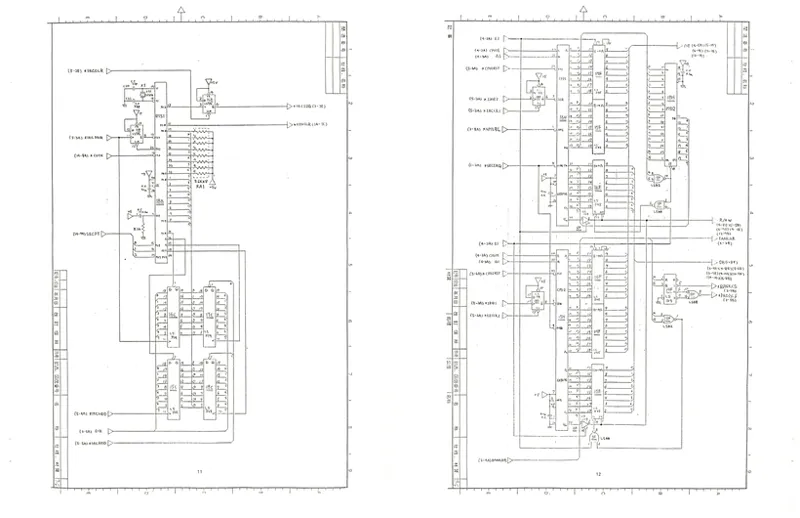
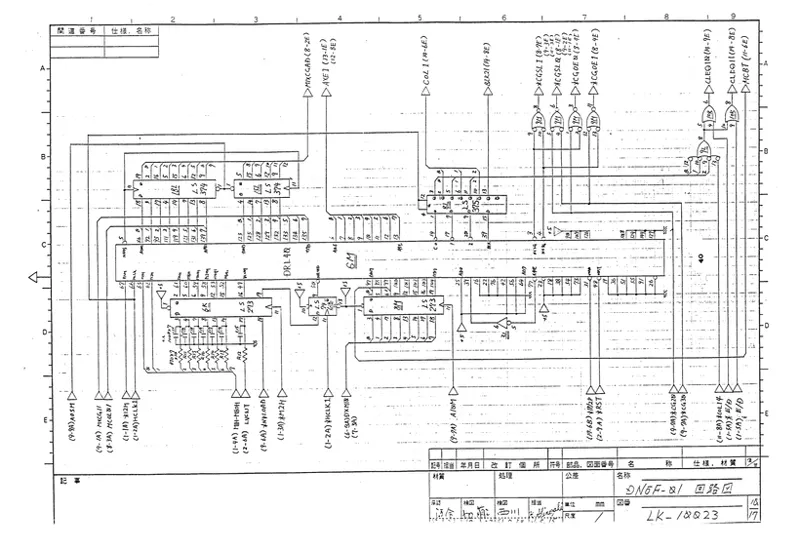
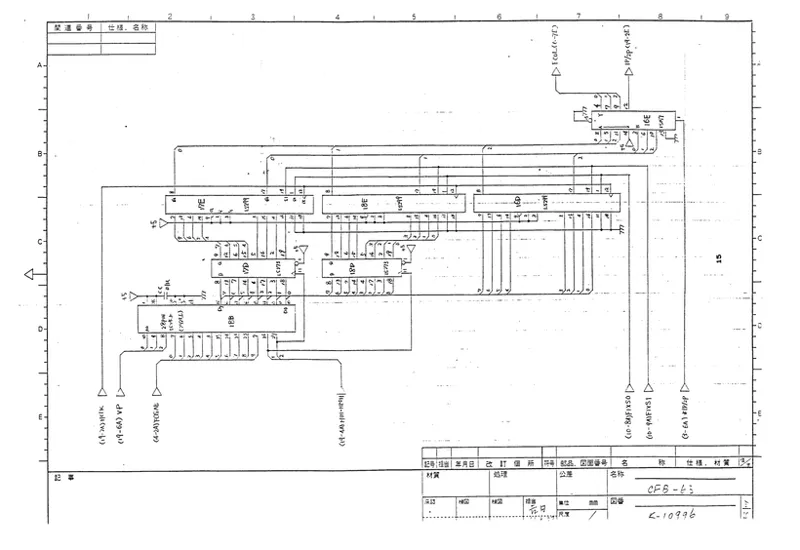
The Real Ghostbusters shares the DECO-8 chipset with the prior releases, but three pieces of the hardware had no existing implementation and had to be built from the ground up for this core. There are no Ghostbusters schematics in circulation, so the work was cross-referenced against the Last Mission and Gondomania service manuals and the PCB, both of which carry the same parts on documented boards.
Intel 8751 microcontroller: The 8751 drives coin handling and the game's protection routines, exchanging command and response data with the main CPU. Every protected DECO-8 title depends on it, and it had been the blocking item for the rest of the platform. It is implemented by x8751, a cycle-accurate Verilog build of the Intel 8751 EPROM microcontroller, written new for this release.
At its core is x8051, a new MCS-51 CPU core covering the full instruction set, all 111 instructions across nine addressing modes, the Boolean processor for single-bit operations, two 16-bit timer/counters, a full-duplex serial port, and a five-source, two-level interrupt controller, with machine-cycle timing matched to the MCS-51 family manual. The MCU interface, including the interrupt path through the 74LS194 shift chain, was traced from the Last Mission schematics.
Writing a new MCS-51 core was the largest single piece of work in this release. Once DECO-8 development is complete, x8751 will join the Coin-Op Collection Development-Modules repository on GitHub, published under CC BY-NC 4.0.
DRL40 sprite generator: The Real Ghostbusters draws its sprites on the DRL40, a Data East custom this hardware uses in place of the MXC06 carried by Psycho-Nics Oscar and Cobra-Command. The DRL40 was implemented new for this core; it handles 16x16 and 16x32 4bpp sprites pulled from a DMA-buffered list. The chip is documented on the Gondomania sub board, which shares the same sprite hardware, and its behavior was traced from those sheets and verified against a Ghostbusters PCB.
TTL character layer: The fixed 8x8 character plane that carries the HUD is not driven by a custom chip. It is built entirely from discrete TTL logic and carries its own tile-word format, separate from the tile layer the BAC06 generates. Supporting it meant standing up a new graphics block for the core, reading the character ROM and compositing the HUD on top of the sprite and tile layers. The layer was reconstructed from the Gondomania character-generation sheets.
The BAC06 tilemap generator and RM-C3 palette decoder carry over unchanged from the previous DECO-8 releases. Across the core, behavior was checked against an original Ghostbusters PCB.
Core Options:
The MiSTer core includes video settings for aspect ratio, vertical scaling and cropping, scandoubler effects, and H/V positioning and sync adjustments. The refresh rate toggle is disabled while the core is in development.
Audio settings provide separate OPN FM, OPN PSG, and OPL toggles, each with its own volume control. Arcade dip switches are directly accessible from the OSD. Game settings include per-player auto-fire with adjustable rates, per-player mapping options, and a synced mapping mode that mirrors Player 1's layout to the other players. The OSD adapts to the selected set, exposing Player 3's controls only on the three-player revisions of The Real Ghostbusters.
Cheats are accessible from the OSD. Stage select is new for this release and was written specifically for the cores rather than carried over from an existing database. It is available on both The Real Ghostbusters and Meikyuu Hunter G, across every variant, placing the player on any of the game's ten stages.
The other cheats available cover Infinite Time, per-player Infinite Lives, and Infinite Energy, with the three-player revisions of The Real Ghostbusters adding the additional Player 3 cheats. For an invincibility option, set the No. of Lives dip switch to its Infinite setting.
The Pocket core provides auto-fire with adjustable rates and a streamlined, single-player-focused cheat subset matching the MiSTer set. Arcade dip switches available on Pocket follow each board: The Real Ghostbusters exposes Attract Mode Sound, No. of Lives, Difficulty, Max Scene Time, Allow Continue, and Extend; Meikyuu Hunter G exposes Demo Sounds, No. of Lives, Difficulty, Energy Bonus, and Allow Continue.
History, Gameplay, and Regional Information:
The Real Ghostbusters is based on the animated television series of the same name and was designed as a Ghostbusters title from the start. It was designed and programmed by Ogoshi, a Data East staffer, as a Ghostbusters product for overseas markets, with planning input from Yūji Gondo and Akira Sakuma. Licensing kept the game from being sold under the Ghostbusters name in Japan, so it was reworked for a domestic release under a different title. The account comes from Sakuma, a former Data East programmer, who relayed it from Yūji Gondo.
Players take control of a member of the Ghostbusters team and work through ten levels viewed from an angled overhead perspective. An 8-way joystick handles movement, with one button for the standard shot and a second for the proton beam. Shooting a monster destroys it, but trapping its soul with the proton beam is worth bonus points. Hidden throughout the levels are weapon upgrades and Slimer, who trails the player and takes out enemies that get too close. Each level runs against a time limit and ends in a boss encounter.
The Real Ghostbusters was released in two cabinet configurations, a two-player version and a three-player version, and the core covers all four US revisions. The two-player line runs from revision 1 to revision 2. Revision 2 promoted the proton beam to the primary weapon, leaving the standard gun as the out-of-energy fallback, and added dedicated start buttons, where revision 1 used the gun as the primary weapon and started play on any button press. The three-player line keeps that earlier two-player control scheme and runs from revision 2 to a later revision. The later revision is the most current three-player set and corrects the severe slowdown the revision 2 board showed with three players active; it is the set the core is optimized around.
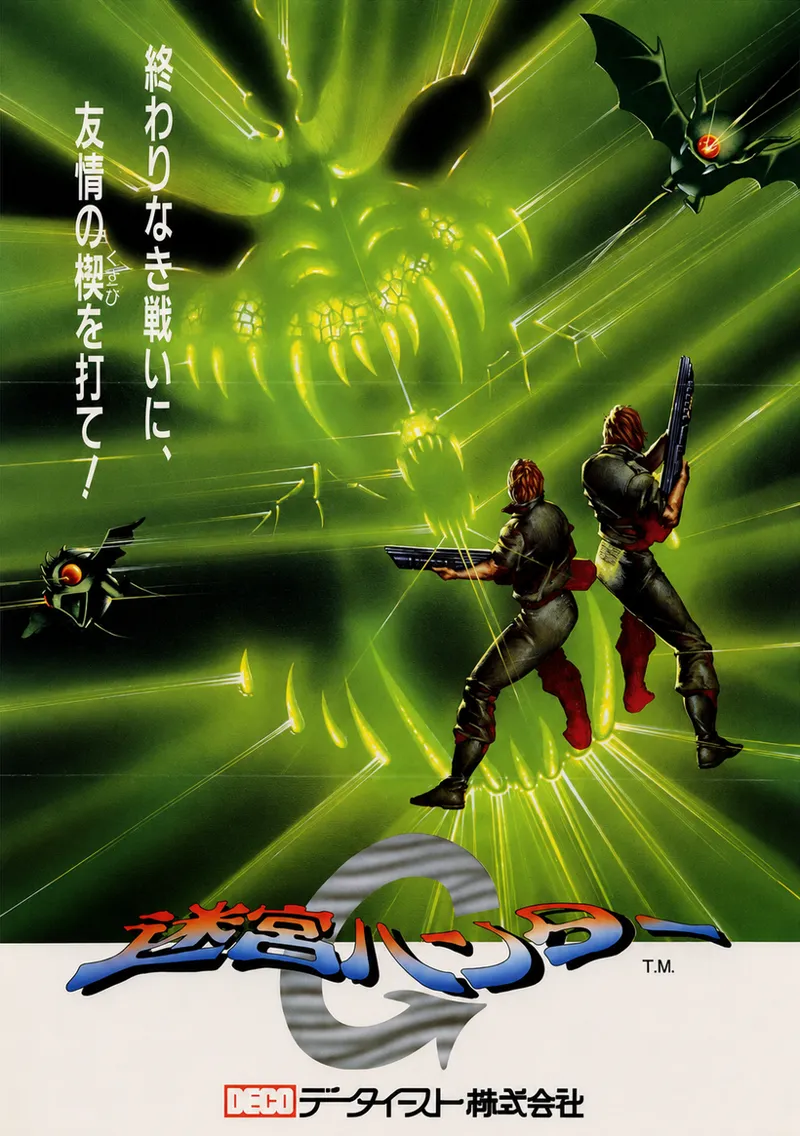
In Japan, where Data East did not hold the license, the game was reworked and released as Meikyuu Hunter G, or "Labyrinth Hunter G," in May 1987, ahead of the overseas Ghostbusters release. Gondo, who devised the Japanese title, has explained that the G was taken from the word Ghost, not, as is often claimed, from his own name. The Japanese version is a substantially different game: eight levels instead of ten, redrawn enemies and level layouts, a reduced weapon set, two-player support in place of three, and Ray Parker Jr.'s theme song removed.
Updates:
With the i8751 microcontroller, DRL40 sprite generator, and MSM5205 ADPCM voice synthesizer in place, the next several days will bring Last Mission, Shackled / Breywood, Garyo Retsuden, and Captain Silver to the Patron Beta tier. These join Psycho-Nics Oscar and Cobra Command, which are now both publicly available and on updaters. Gondomania and Super Real Darwin round out the DECO-8 family and will follow once their remaining work is completed.
Disclaimer: All product names, trademarks, and registered trademarks mentioned are the property of their respective owners. "Analogue", "Analogue Pocket", "MiSTer", "MiSTerFPGA", "OpenFPGA", "Data East", "Motorola", "Rockwell", "MOS Technology", "Yamaha", "Intel", "Ghostbusters", "Columbia Pictures", "Ray Parker Jr.", and all derivative works are trademarks, registered trademarks, or copyrighted materials of their respective holders. Use of these names does not imply endorsement or association with this post. All rights reserved to their respective owners. This post is for educational and research purposes only.
Comments (3)
How do you play this game? I download mra and Rbf file the game runs but it says I need a key code to play it
Kinda feel like I am going crazy. I have definitely seen other DECO-8 titles appear via update all, but not Ghostbusters/Meikyu Hunter. Did this get held back for some reason?
Good Job 💪