

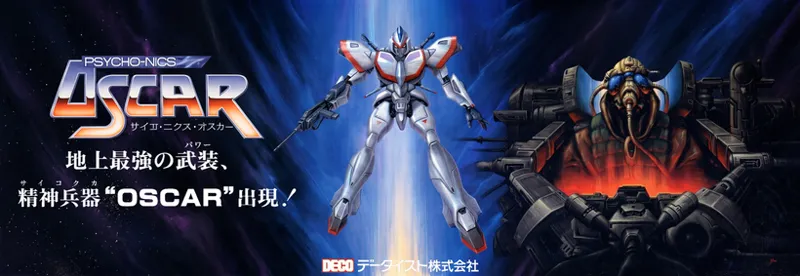


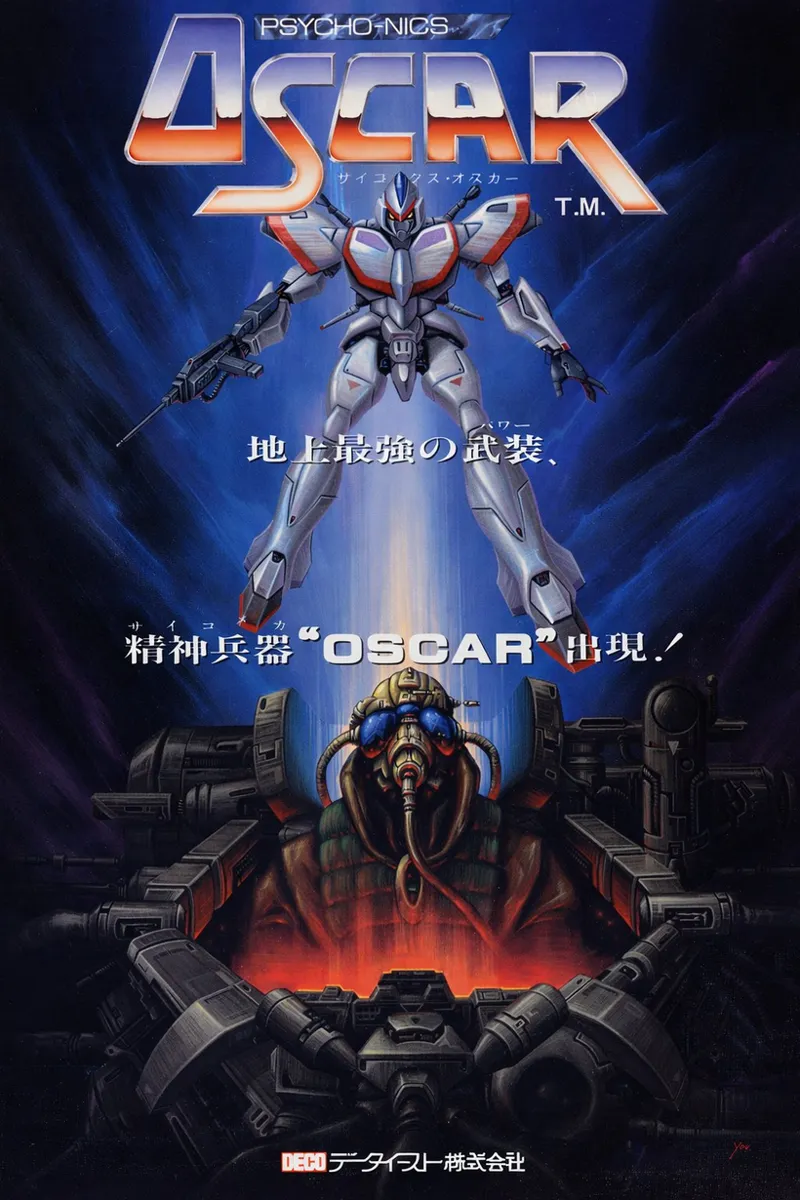



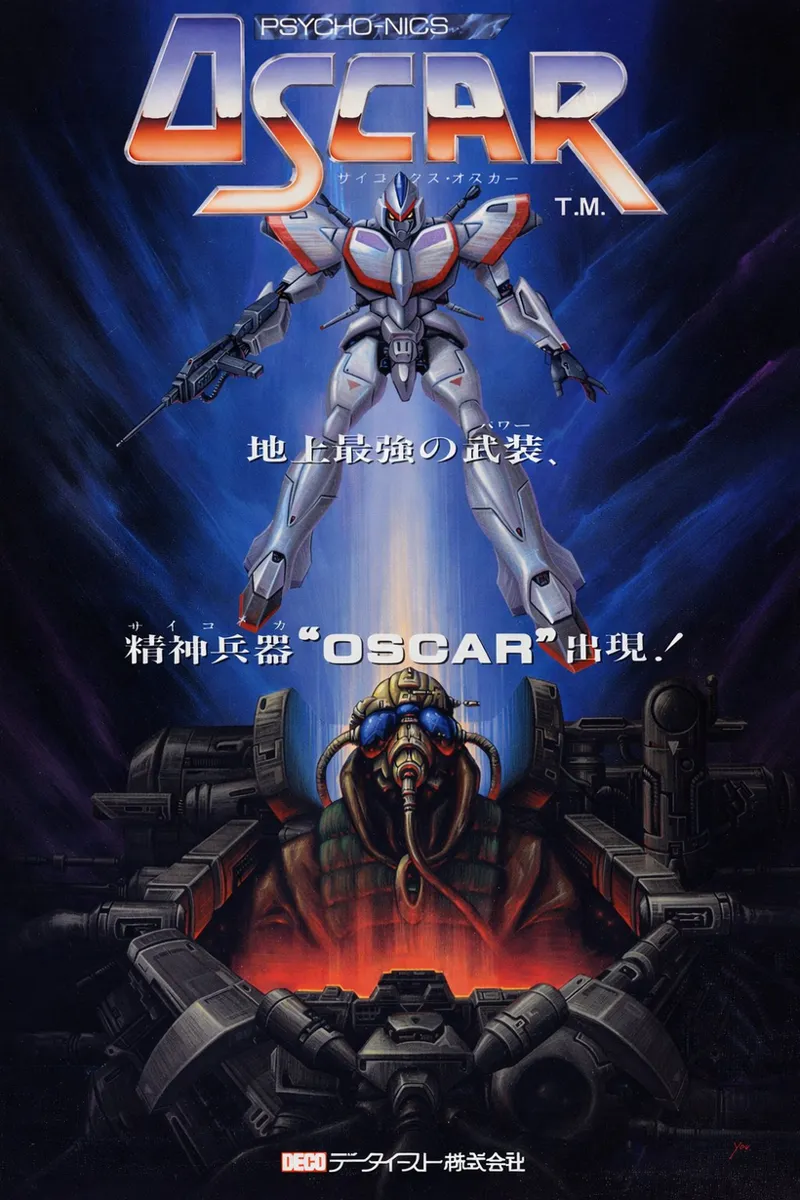


Coin-Op Collection Presents: DECO-8 (Psycho-Nics Oscar)
Today's release for the Analogue Pocket and MiSTerFPGA platforms covers the first entry in Data East's DECO-8 platform. Psycho-Nics Oscar is a side-scrolling run-and-gun built on Data East's 8-bit custom chipset, the same hardware family behind:
Last Mission (1986)
Shackled / Breywood (1986)
Gondomania / Makyou Senshi (1987)
Garyo Retsuden (1987)
The Real Ghostbusters (1987)
Meikyuu Hunter G (1987)
Captain Silver (1987)
Psycho-Nics Oscar (1987)
Super Real Darwin (1987)
Cobra Command (1988)
Released in August 1987 in Japan and February 1988 in North America, Psycho-Nics Oscar ranked as the 5th most successful table arcade unit in Japan for October 1987, outperforming Double Dragon.
This post covers a technical overview of the DECO-8 hardware as implemented in Psycho-Nics Oscar along with updates on the DECO-8 and DECO-16 projects.
Overview:
Psycho-Nics Oscar runs on the DECO-8 hardware (PCB DE-0301), driven by a pair of Motorola MC6809E processors at 1.5 MHz. The main CPU handles game logic and I/O while the sub CPU operates as a co-processor, with the two communicating through shared RAM and cross-IRQ signaling. A DECO 222 encrypted sound CPU at 1.5 MHz manages the audio system, which pairs a YM2203 for FM and PSG output with a YM3526 (OPL) for additional FM synthesis. Audio output is mono.
The video system outputs 256x240 at approximately 57.444 Hz in a horizontal orientation. Graphics are rendered by three custom ICs: the BAC06 generates a scrolling 16x16 4bpp tile layer with priority grouping, the MXC06 handles 16x16 4bpp sprites with multi-width and multi-height support, and the RM-C3 provides resistor-weighted palette conversion. A fixed 8x8 3bpp character layer sits on top for HUD elements. The palette holds 1024 entries across sprites, characters, and tiles.
Development Challenges:
The BAC06 tilemap generator, MXC06 sprite engine, and RM-C3 palette decoder were developed from the Psycho-Nics Oscar schematics and verified against my Cobra Command PCB. The BAC06 supports configurable tilemap shapes (64x16, 32x32, 16x64), per-tile priority grouping for sprite interleaving, and horizontal and vertical scroll. The MXC06 handles multi-width and multi-height sprites with DMA-buffered rendering. Both are parameterized to support additional DECO-8 titles.
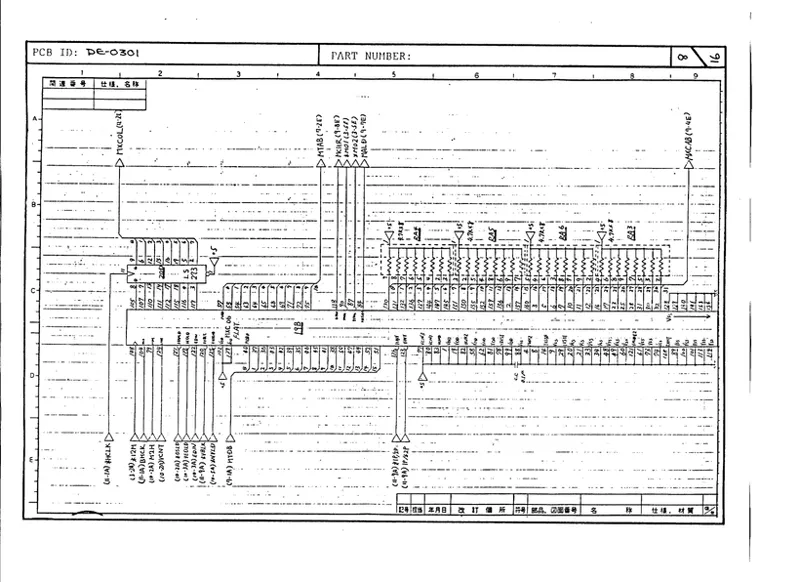
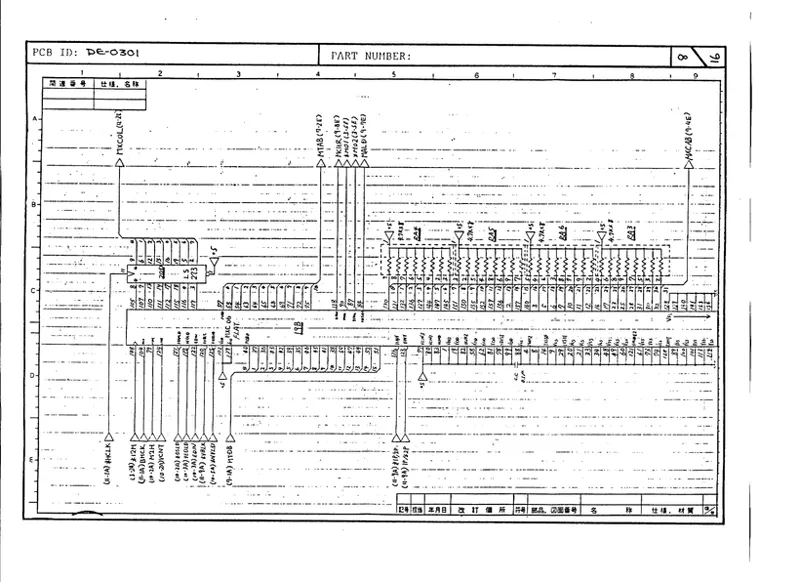
The dual MC6809E architecture requires precise cross-IRQ timing between the main and sub CPUs. Both processors share two RAM regions and communicate through four IRQ control registers decoded by an LS139. One CPU asserts the other's interrupt by writing to a set register, and the receiving CPU clears it by writing to the corresponding clear register. If this handshake falls out of sync, the co-processor stalls and the game locks up. Below is an excerpt from the schematic that documents the cross-IRQ:
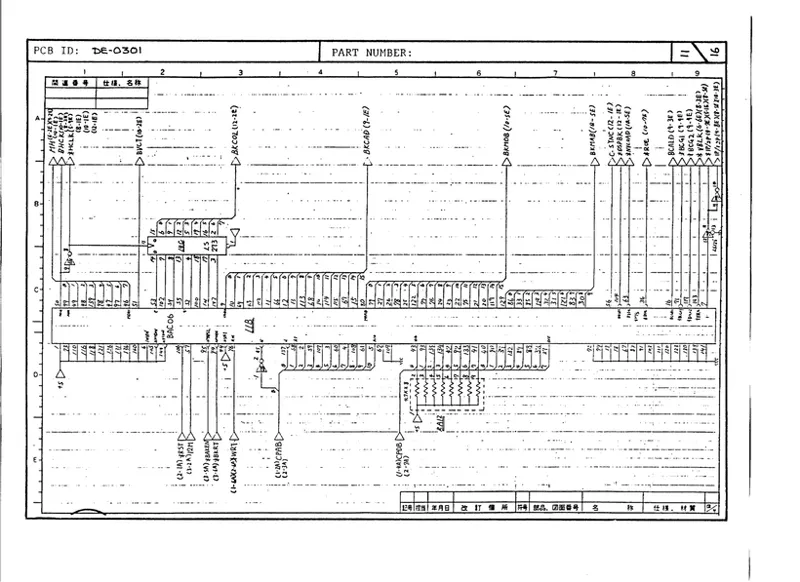
The DECO 222 sound CPU is an encrypted 6502 marked C10707-1 on the PCB. It swaps bits 5 and 6 on the data bus during opcode fetch while leaving data reads unmodified. To support this, my reworked T65 core was extended with a DECO 222 mode that intercepts the data bus during instruction fetch cycles. When the core's SYNC signal is asserted, indicating an opcode read, the bit swap is applied before the instruction enters the decoder. Normal data reads pass through untouched. This is the same T65 core with the NMI fixes and HuC6280 additions covered in previous posts. Below is the section of the schematic that covers DECO 22 and sub-CPU:
Core Options:
The MiSTer core includes video settings for aspect ratio, vertical scaling and cropping, scandoubler effects, and H/V positioning and sync adjustments. The refresh rate toggle is disabled while the core is in development.
Audio settings provide separate FM, PSG, and OPL toggle and volume control. Arcade dip switches are directly accessible from the OSD. Game settings include per-player auto-fire with adjustable rates and cheats accessible from the OSD. Cheats include weapon selection for both explosive and ballistic types, and a stage select that I developed using ROM interception.
The existing MAME cheat database only provides RAM write cheats for this game. The stage select works by patching a JSR in the init routine to a trampoline in unused ROM space, which writes the target level and stage values after the original initialization completes. This required reverse-engineering the init flow for all four ROM variants.
The Pocket core provides auto-fire with per-button targeting and adjustable rates. Cheats and dip switches are configurable through the interact menu.
History, Gameplay, and Regional Information:
Psycho-Nics Oscar was designed by Akira Sakuma as his first project as lead planner at Data East. In a 2013 interview, Sakuma described spending considerable time thinking about how a robot would operate, wanting to push the mech-suit concept further but running out of development time. He later left Data East in July 1988 for TAD Corporation, where he worked on Toki.
Players pilot a weaponized mecha called Oscar through eight stages set in the invaded Ordio City. The controls use an 8-way joystick with three buttons for shoot, jump, and power-up select. The game combines a lives system with an energy meter and a per-stage time limit. Pressing down during a jump cancels it mid-air, a distinctive mechanic known among Japanese players as the "Oscar Jump."
The power-up system follows a Gradius-style gauge. Collecting capsules from defeated enemies advances a cursor along a meter, and pressing the power-up button activates the highlighted enhancement. The gauge progresses through Jump boost, Grenade, Missile, P.C.U. (three rotating attack drones), Gun upgrade, Armor, and Rapid Fire. Players lose all enhancements when hit, reverting to the default state.
Eight stages move through forests, deserts, rocky terrain, waterside environments, caves, vertical descents, and a final fortress. Each ends with a boss encounter, and the eighth stage features a boss rush before the final confrontation. The game restarts the final stage on death rather than using checkpoints.
The soundtrack was composed by members of Gamadelic, Data East's in-house sound team, featuring Azusa Hara, Hiroaki Yoshida, Hitomi Komatsu, and Tatsuya Kiuchi. An album was published in 1988 by G.M.O. Records in Japan.
The North American release was marketed as simply "Oscar," dropping "Psycho-Nics" from the title. Four ROM variants exist: World, US, Japan Revision 1, and Japan Revision 2. Specific gameplay differences between regions are not well documented, though ROM differences exist across all versions.
Updates:
A poll is live to determine which DECO-16 title to focus on next. Vapor Trail, Crude Buster, Dark Seal, Funky Jet, and Diet Go Go are all candidates. Cast your vote if you haven't already!
Development on the DECO-8 platform continues alongside the DECO-16 library. Schematics for Last Mission and Cobra Command are in hand, and both are planned as future entries.
I've updated yesterday's release of Tumble Pop with CRT timing adjustments and Y/C composite output support for MiSTerFPGA. H-Sync and V-Sync start positions have been refined, and the H/V positioning controls are now properly mapped. The Pocket library image has also been updated.
The MiSTerFPGA and Analogue Pocket updaters will need time to sync. Files are available from the repositories or directly from this post. More releases coming this week!
Disclaimer: All product names, trademarks, and registered trademarks mentioned are the property of their respective owners. "Analogue", "Analogue Pocket", "MiSTer", "MiSTerFPGA", "OpenFPGA", "Data East", "Motorola", "MOS Technology", and "Yamaha" and all derivative works are trademarks, registered trademarks, or copyrighted materials of their respective holders. Use of these names does not imply endorsement or association with this post. All rights reserved to their respective owners. This post is for educational and research purposes only.
Comments (11)
Should these updates come down when I run update_all... I have run it several times, and none of these cores appear.
Yes. They work with the updaters.
Thanks Coin-op team! Never even knew about this game and it is quite a surprise at how fun it is. Hope the team enjoys creating the cores as much as I love playing them!
Excellent work!!! 😎👍
Great work!
Thanks fellas, much appreciated. The detailed write up is impressive.
More Data East goodness, thank you! I forgot just how good the music is in this title.
But this one is One Rain of core!!!!In other regions I see a big drought!!!!Keep it up guys, you're making us happy!!! Long live Coin Op!!!! You are the best! 💪💪💪
Many thanks. Nice interesting technical write-up as well!!
The times I played this game, I have the feeling of playing Karnov 2: Karnov in space. Its a good feeling but it is so similar in some instances. Again, thank you team for the week you are giving us!
Thank you Atrac17 🙂↔️ and Pramod 💯💯