


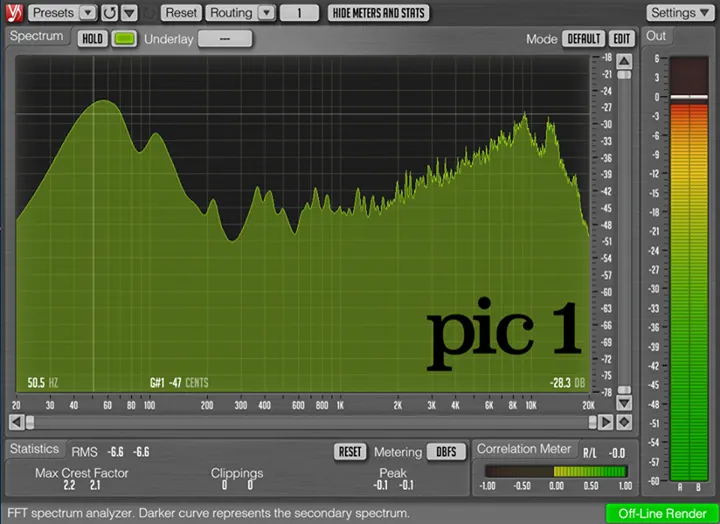
Get your sub bass right! (tech house, DNB etc) [mixing video]
Get your sub bass right!
In this 15-min video tutorial, I will show you how I correct the bass of a song I’m stem mastering.
I’m also showing why its bass is lacking and how to fix it.
📝 BTW I have tackled this earlier in text format HERE and HERE and HERE 📝
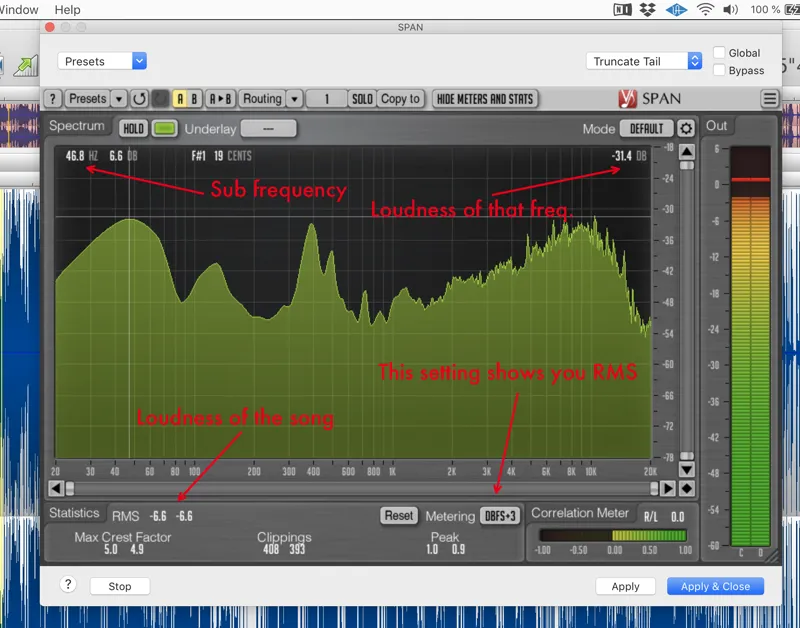
I will show you easy-to-follow numerical figures which you can follow when working on your song to get the sub of your song right in terms of level AND frequencies – even if your speakers aren’t great for producing subs.
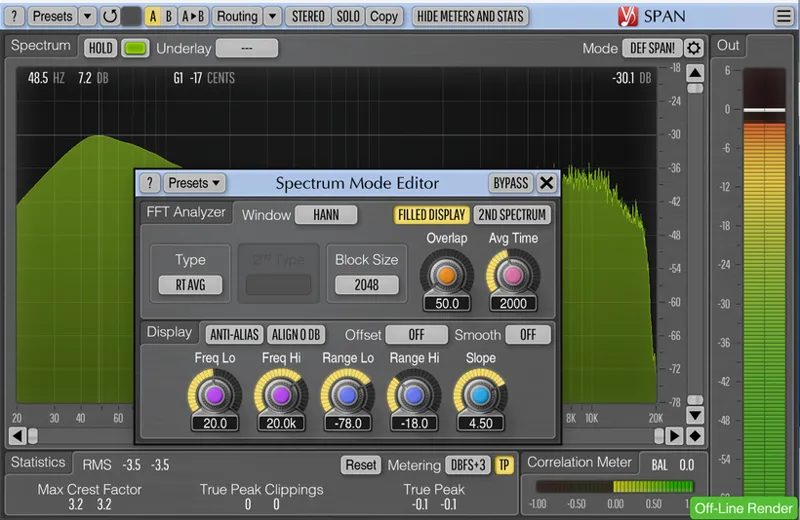
I will also say a few words about using my favorite analyzer and how to set its slope and why it matters.
Above you're seeing the settings on my SPAN that I've always used to get a similar slope.
You get to access these by hitting the wheel on top right next to where it says DEFAULT.
This should help you get your sub bass in your songs to the ballpark.
BTW!
There is also a new Mixing Collection (playlist) in the works (you can click on that already and check it out!) I will make a song and dance about it once it's all sorted…there's almost 50 posts in that collection now!

Comments (16)
This changed my game up! The second harmonic has been clouding my mix and I haven't had enough lower sub information in my mixes. Thank you!
Right on :) The balance between those two is critical!
It would be really helpful if besides the -30dB reference (for mastered reference tracks) we would have another reference for mixing the track at -12dB for example. Thanks and keep doing what you're doing, you're answering questions that have been bothering me for ages :)
Glad to help! I’d say if you level a reference song down to that -12 or such, you can compare. Because I’m comparing to louder stuff. But you can of course compare to less loud – only gotta level them down. Cool? :)
FANU - possible idea for another similar video I'd love to see ~ This video but the reverse so the highend / levels / top elements (hats/claps/rides/toploops) - I typically use your mixes/masters as references tracks so I think it would be great for everyone to hear your insights for the other end of the specturm.
Ah right! Good topic! I’ll admit one thing though: I don’t really look at top end at all: I mostly listen :) I often use this steep high shelf quite high (maybe 6K and up) to dig up this contemporary sheen and just set it where it feels right so I literally don’t really know how to meter it. Sometimes I may look at it if I’m second guessing the brightness especially with tired ears but I don’t really meter it against numbers in the same way; this is why it’s hard to teach. I’ve been using the 4X analyser recently too and tried to learn how things look there too.
Fanu - any difference in DBFS & DBFS +3 for metering? noticed you're in +3 4.50 slope should be default aswell within span so hopefully we shouldnt need to touch
Somehow it has to be set to +3 for RMS to read right. I know it's odd! These days I watch RMS a bit less than LUFS with masters, but I used to read RMS a lot.
Spot on tutorial for sub bass!
This video is very helpful! I have always known the importance of sub bass, however you sharing the fine tuning of it, is really amazing!
So good! Really helpful man. Love your tutorials :)
LATER EDIT: I've added a pic of the settings on my SPAN that I've always used to get a similar slope. You get to access these by hitting the wheel on top right next to where it says DEFAULT.
Hello, I know this dealt more with subs in the electronic music realm; however, would you give the same advice to subs in hip,hop production?
When talking about subs, yes, it hits in a very similar spot in trap and modern hip hop. However, in old skool boom bap, the bass varies more, and there may not necessarily be sub bass per se – this varies a lot. A lot of the old stuff has the bass kind of thinner and actually sitting above the kick, while in modern subby styles, the bass often sits below the kick a bit.
So, to check my understanding, during the mixing stage I need to apply the kind of mastering type processing needed to make it as loud as a commercial reference, in order to check these rules? Even if I don't plan to master it myself.
Not necessarily (I mean it's enough that you get the frequencies and loudness right) BUT when I've been teaching this, I often get the follow-up question, "But what if my song isn't as loud as my references?" so I just wanted to mention the loudness pushing factor. If your song is quiet and the refs are loud, looking/comparing may feel a bit off and your song will feel less powerful even if it's right (psychoacoustics), and for referencing to be something you can trust, having the same exact levels will help so much. One can of course take the reference master levels down but then my -30 level comparison tip (which is easy to remember) wouldnt apply per se: one will have to check whatever the sub level is after taking the ref level down and shoot for that level. Basically I'm just trying to keep it simple (I know how much people will cling to a number, so I didnt want to complicate and apply any further rules such as "If you take the master level down to level X, then the bass level has to be level Y" because I've been asked "Well what level should I take the ref master level down to?" and it may just get unnecessarily complicated there if I show many different numbers). Hope that makes sense!