


Q&A 35: writing techniques (for multiple formats)
Kate Beaton would like to know:
"I remember a conversation with a mutual friend about writing for online page updates vs a published book. If you are making updates page by page online, each one has to end in a satisfying way, maybe its own joke, while also servicing the larger plot. People come for the one page update, looking to be satisfied. But, traditional publishers found that disjointed, when reading the entire thing in a book. That each page has its own full stop, if you will. How do you manage these two things? Some of your work is online only, some printed only, and some straddle both."
I self-published seven Scary Go Round print collections, and they all had this problem. Following the success of Giant Days I had multiple offers to republish all that SGR work, and I turned them down. I couldn't promote the work with confidence, because it was missing something vital that makes a book a book, a sense of transition from scene to scene and page to page.
When I started Bad Machinery in 2009, my plan was that this series would be “book books” not “comic strip collection as ersatz book”. I wanted to have them published by a proper publisher who would get them into bookshops. I think I managed to do this with the writing (vs my freewheeling earlier work), but the landscape format I had chosen made it almost impossible visually. I had tied myself into two newspaper strips stacked on top of one another, page after page. A silly mis-step, but I was firing out pages at such a rate, in abject fear of losing my audience, that there was no room to re-think the presentation of that series without, effectively, starting again. Every time Oni Press (its eventual publisher) collected a story, I’d knock out a dozen or so extra pages to smooth out scene transitions and make things a bit livelier to look at.
At the same time, I started to intersperse my long Bad Machinery stories with what I called “minis”, where I could develop a more robust sequential approach. Giant Days was the first of these, and I also did Murder She Writes, a standalone Lottie story that proved very popular. Each one opened out the rhythms of my comics while still being presented daily. There were defined multi-page scenes, and I worked on my weak composition skills. I worked out how to get in and out of things, and put the heaviest comic beat in the middle or at the start of the page. The final beat only had to have the rhythm of the end of a single page, without necessarily being the biggest splash. As long as there was a strong moment on the page somewhere, and the final panel wasn’t just a sadface character crying a single tear, that was fine. Though I'm sure I've done that once or twice.
The final meaningful minis I did in that spell were the Expecting To Fly two-parter, done as a dry run for submitting 22-page Giant Days scripts to Boom. I didn’t want to write differently for them, but I wanted to nail down what I had been working on for four years in these shorter books. I tried to think about page spreads and composition and acts and scenes and everything else in a “professional” way. I made the story slightly glummer than usual so I wouldn’t be able to jab a joke at the end of every page, but they still all worked when I ran them singly on the website.
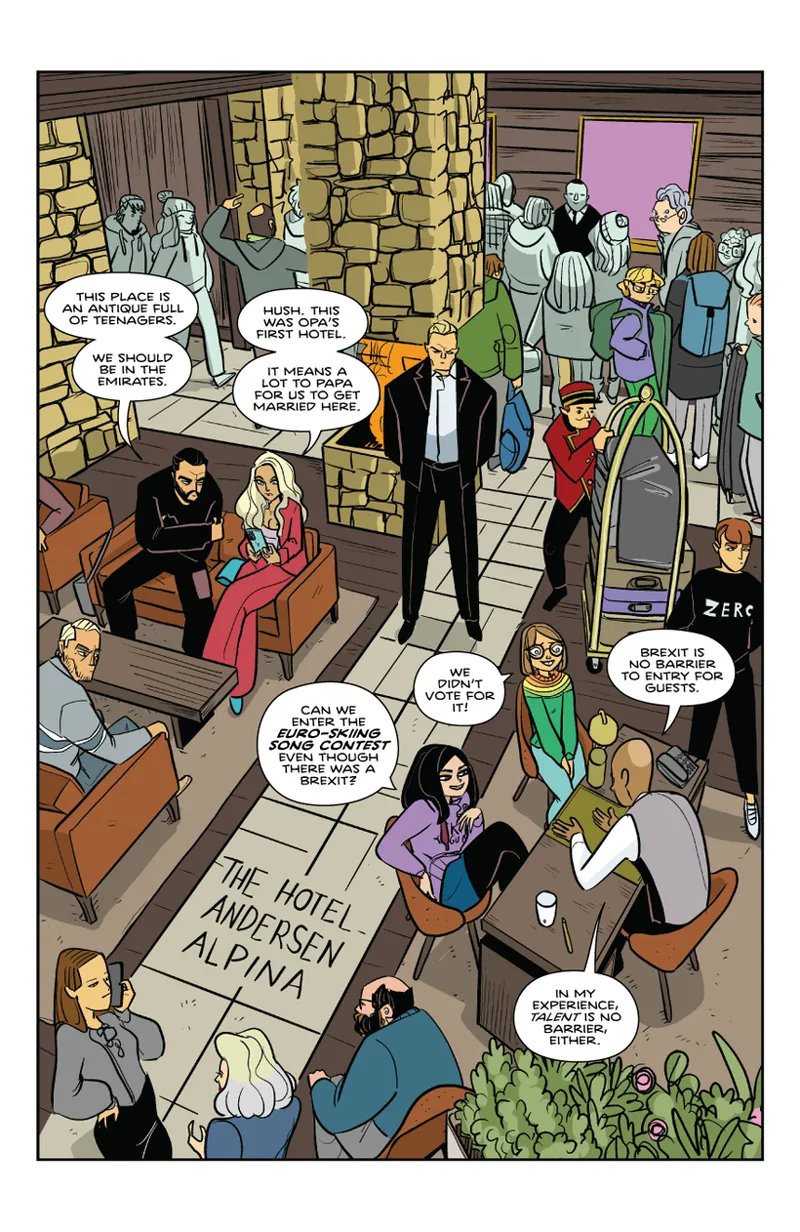
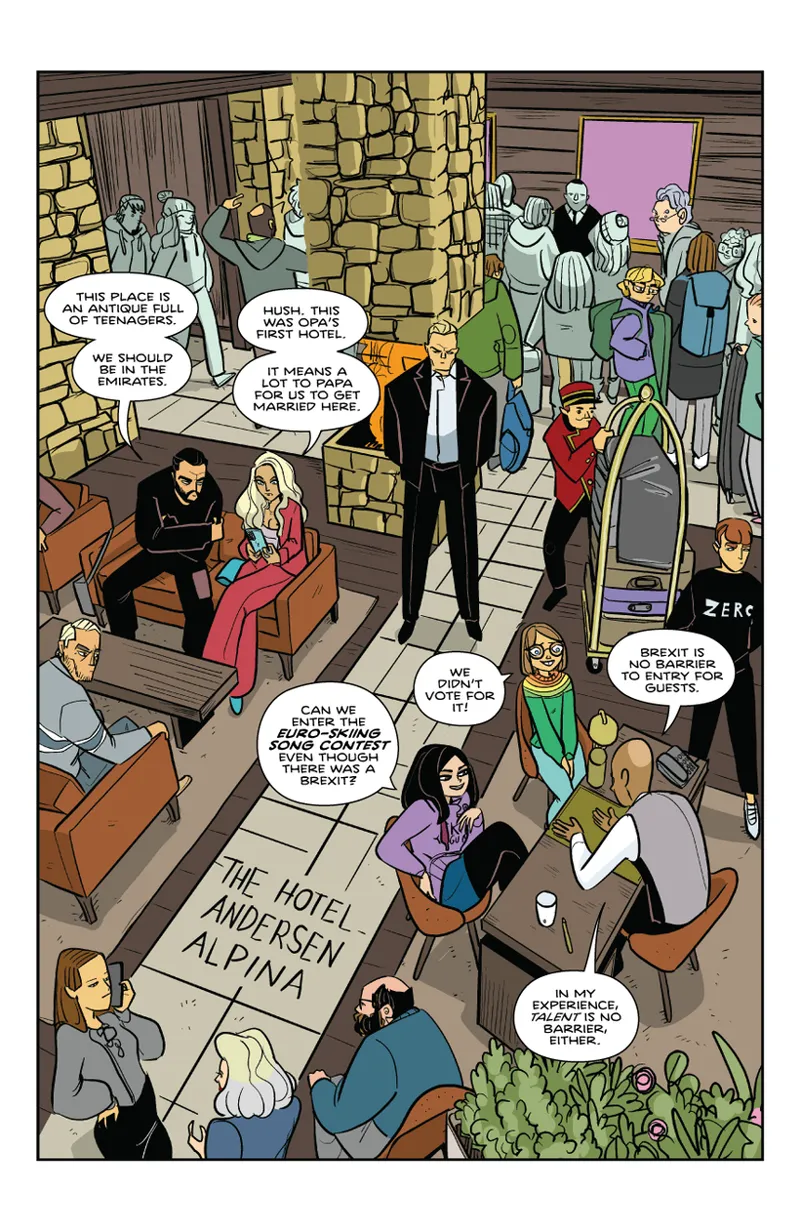
My method now to present in the multiple ways Kate describes is to work backwards. I make the story work, with thought towards pacing, then I rough the pages beforehand as I write, so I have a good sense of what the finished thing will look like page-to-page (trying to vary panel layouts, compositions and counts), and I write in the knowledge that each page might be someone’s first page. Now, it’s part of a longer story, but I always want there to be something to grab hold of – even if it’s a splash page. I want to engage the reader.
Sometimes I'll have a little spell of making comic strips, non-pages, single units, that don't follow this pattern. It's fun to take an easier route, and I am better at it now than I ever was way back when. But it's been a few years since my last run of those on the website, because I knew they couldn't be collected in a satisfying way to me. Even if I don't print things, it's nice to know that I could, down the line. Now I design all my pages with bleeds that will accommodate a US-format comic book and an international A5 size, in case I want to self-publish. So if I want to make an "easy" comic, a fun one, it will be drawn in a sketchbook and most of the time no one but me will ever see it unless they're at my house and leaf through.
These days, the singly published webcomic page is no longer the most important thing to me; the collected chapters I put up as PDFs here are what I think of as the basic unit of my comics. But only a minority consume them that way. And it’s exhausting trying to make every page sing like a bird, two different songs at once. The two approaches are sometimes at odds. But I hope the results are worth it.
Comments (12)
So fun to see this great meeting of the webcomics minds.
Where are the promised diagrams
I knew I forgot something :C
This is so interesting! I know you struggle with/agonise over this stuff sometimes but as a reader all that is totally invisible. It all looks brilliant to me, and I love both the episodic original read and then the full read when I go back to look at the whole story. And the printed stuff always looks wonderful. I am like a baby bird for webcomics, beak open, apparently starving for text 'n' pictures. (As a writer of novels, the idea of having to plan a story visually absolutely does my head in.)
Respect to you, John, for doing something difficult (comics) and making it harder (simultaneously serving different audiences/formats). My brain hurts trying to end a scene on a page turn and you are doing pirouettes!
It’s a really delicate balance, being able to have a flowing narrative that also satisfies as a daily read. I think John’s skill in that has grown exponentially.
My two Patreons together again!!
I generally read all the comics day-by-day on the website, and then often go back to read the collected versions in a single go (except Savage Sword of Susan, about which I was much too excited to wait fir the dailies). For the most part, they all seem to do a good job of singing both songs at once.
I think striking that balance is really interesting to see. Giant Days, while being released as whole chapters, still carries some of this energy with how the majority of pages do end with some kind of payoff. Personally I think it would be really nice to have SGR reprinted to make the physical version more accessible, but I understand if there’s hesitation. I’d have to go back through, but I don’t remember there being any real issues with reading it cohesively (or as a binge) rather than one at a time, even if the strip was written in that format.
I paid for/downloaded the PDF collections, and it's very apparent what he's talking about, that these were more loosely connected dailies than stories that flowed more naturally. And there are great daily strips that do that, like Bloom County and Peanuts, so it's not inherently a BAD thing. In SGR's case, it feels like they "should" be a story, so it feels more jarring than those daily strips do.
I feel like publishing a question (and answering) from Kate Beaton is the ultimate humblebrag. AND WHY WOULDN'T YOU BRAG ABOUT THAT?
I saw the notification and said corrrrr