




The Importance of Taking Care of Your Communities: The Alt-Weekly, Issue No. 12, Friday, January 23, 2026
Notes, News, and Nerdiness from JKLA World HQ
It's hard to avoid the reality that something fundamental has shifted.
What many of us once felt as a looming threat now feels unmistakably present. It’s no longer at the doorstep, but inside the house. If this feels new to some, it’s worth saying that for immigrants, people of color, queer people, Indigenous communities, low-income folks, the unhoused, people living with mental disabilities, and others who have lived with state-sanctioned exclusion and hostility for their entire lives, this is not a sudden rupture. What feels newly shocking to some has always been there for others. Only now it's being openly named, legitimized, and aimed more broadly by those in power.
Like a lot of people, I’ve been sitting with a deep sense of powerlessness and dread. Uncertainty about my children's present and future. Fear for my friends, my various communities, and the future of the country and the world.
I’ve found myself questioning the value of my own work. Helping people cook dinner, or pointing them toward a great slice of pizza feels so trivial when the stakes seem so enormous.
But this instinct to dismiss everyday care as meaningless is exactly what oppressive systems rely on.
Food, after all, has always been political. Who gets to eat well, whose food is valued, whose labor is protected, whose culture is celebrated, and whose is erased or appropriated. These are not politically neutral questions. Food reflects borders, migration, exploitation, resilience, and survival. Recent cuts to SNAP benefits and other federal food assistance programs have made it painfully clear that even in the richest country on earth, access to food—the simple and essential act of feeding ourselves and our families—cannot be taken for granted. The everyday act of cooking and eating is inseparable from history, power, and identity, whether we choose to acknowledge it or not.
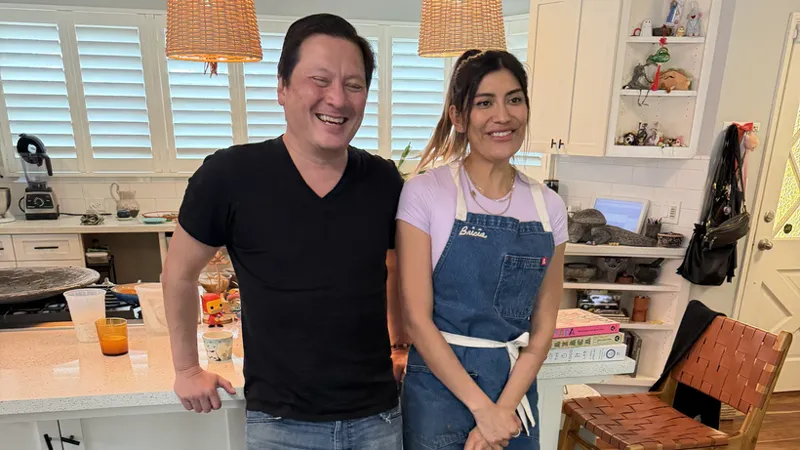
This past weekend, I spent a morning in Pasadena at the home of my friend Bricia Lopez, the chef and co-owner of Guelaguetza. As we stood in her kitchen making memelas, she talked about growing up as a young Indigenous girl in Oaxaca, surrounded by the kind of extreme class and wealth disparities that now feel increasingly familiar here. She moved to the U.S. with her parents and siblings at age ten, equally enthralled by the novelty of having hot running water at the turn of a tap and a Big Mac whenever she wanted. But over decades of building a restaurant and a community in LA, she’s told me that she's learned something simple:
The most effective thing she can do is take care of her people.
Advocate for her employees, celebrate and share her culture, build and protect her community and, most importantly, to take pride in who she is and where she comes from, never allowing anyone to diminish that. It's the lesson that she most hopes her young children will carry with them as they grow up, no matter how the world changes around them.
That conversation has stuck with me. Of course it's important to amplify voices online and to confront lies with truth. It's important that those with platforms, access, or power, use them responsibly and intentionally.
But for many of us, the most meaningful resistance is local, relational, and human. Showing up for friends and family, supporting small businesses, checking in on the people around us, being visibly proud of who we are and who our neighbors are, taking care of the people who depend on us.
Building real communities isn't trivial. The everyday food of the United States, from the meals we cook, to the restaurants we love, is overwhelmingly immigrant food. Simply recognizing that, celebrating it, and protecting the communities that make it possible is not nothing. These are practical expressions of love and solidarity.
So while it’s important to stay informed and speak clearly about what’s happening, I've found it far more effective for myself (and my mental health) to try to step away from the endless churn of online outrage and invest time and energy where it can do the most good: in our neighborhoods, workplaces, local governments, kitchens, and friendships. No single act of care is too small.
Care, joy, and community spreads, and those are the foundations of real resistance.
Take care of yourselves and your communities. I fear it's going to get worse before it gets better, but that makes showing up every day all the more necessary.
How You Can Help
If you’re looking for places to put care into action locally, here are a few organizations doing real, on-the-ground work across Washington:
Immigrant & Civil Rights
Northwest Immigrant Rights Project (NWIRP): Provides direct legal services, advocacy, and community education for immigrants and refugees across Washington State.
Washington Immigrant Solidarity Network (WAISN): A statewide coalition building power through mutual aid, rapid response, and community-led organizing.
ACLU of Washington: Defends civil liberties and civil rights at the state and local level.
Food Access & Economic Justice
Farestart Seattle: A Seattle social enterprise nonprofit that uses food and job training to disrupt poverty and nourish community, offering pathways to employment, career training programs, and community meals while strengthening food security and opportunity locally.
Food Lifeline: The largest hunger-relief organization in Western Washington, supporting food banks and meal programs across the region.
Solid Ground: Works on food access, housing stability, and economic justice through direct services and policy advocacy.
Real Change: A Seattle-based organization focused on ending homelessness through journalism, direct support, and systemic change.
Community & Cultural Organizations
El Centro de la Raza: A historic Seattle organization providing social services, cultural programming, and political advocacy for Latino/a communities and beyond.
King County Equity Now: A Black-led coalition working to dismantle systemic racism and build community-controlled solutions.
WA Whistles: A community-organizing project spreading simple whistle kits throughout Washington as an instant alert system to warn neighborhoods about Immigration and Customs Enforcement (ICE) activity and help keep vulnerable community members safe.
Seattle Indivisible – A volunteer-run grassroots organization focused on educating, organizing, and mobilizing people in the Seattle area to participate in civic action, hold elected officials accountable, and build collective power. You'll find resources for deployment and training here.
Whether it’s donating, volunteering, attending a community meeting, supporting a small business, or simply learning more about the people doing this work, every act matters.
What I’m Cooking:
Better Baked Ziti is an update on my classic recipe from my first cookbook, The Wok, featuring better-tested instructions and a brand new marinara sauce. The key is to soak your pasta instead of par-boiling. This makes the whole process easier and the end results better.
Royal Korean Rice Cakes (Gungjung Tteokbokki) are the version of stir-fried Korean rice cakes that came before the modern chili-stewed version. It's a simple stir-fry with sliced beef, mushrooms, vegetables, and rice cakes, seasoned with soy and finished with pine nuts. A real crowd pleaser.
What I’m Eating:
You can find a running list of over 100 of my favorite spots in Seattle over on my Apple Maps Let’s Eat guide.
Wok week II
In case you missed it, I dropped a big collection of wok recipes in the last edition of the Alt-Weekly. But before we get into part two, let’s talk about some of the basics behind wok cooking. What is the importance of the wok? In this article, I get it all out on the page—and let’s just say, there’s a reason this tool has been my number one kitchen companion. In this video, I walk you through how to season a wok. And in this post, I bring you along as I cook three dishes in a row (quickly and efficiently!) using a wok.
This past weekend, Lena and I made another quick trip to Los Angeles to meet up with the designers and engineers at Our Place and discuss feedback we've been getting about my new super-nitrided carbon steel wok, as well as to go deeper into a few more upcoming collaborations we have in the works. You can read more about my new wok here, and if it feels like the right tool for you, you can order it (as well as my pistachio-colored Wonder Oven Pro and brused-finish titanium NoCo pans) from Our Place.
Now, let’s dive back in:
Stir-fried beef and snap peas is comforting and simple. It’s a great first step into the world of wok cooking.
Speaking of beef, did you know you should wash meat before stir-frying? This allows any marinade to penetrate deeper and it loosens up the texture of the muscles so the final product is more tender.
Mushu pork brings me right back to my childhood, as does my mom’s mapo tofu.
Any chicken adobo recipe that starts with approximately 20 garlic cloves is one that I want a part of.
This Chinese-American sweet and sour chicken has two not-so-secret ingredients: pineapple juice and ketchup.
Inside or outside of a wok, noodles are always a good idea. Try making these scallion oil noodles, this vegetable lo mein, or this Cantonese-style chow mein.
This fried rice features blistered green beans that are fried in a wok until smoky and charred.
Glossy, shiny greens: This approach would work with most other leafy greens, but man is it good with gai lan (also known as Chinese broccoli).
And yes, even romaine lettuce has its place in wok cooking!
Omelette and pancakes can also be made in the wok. But this crispy Thai omelette (Khai Jiaow) and Korean kimchi pancake (Kimchijeon) don’t necessarily have to be eaten for breakfast.
These Whampoa-style scrambled eggs feature layers of softly set curds. The key? Never actually scrambling them.
While woks work great for Asian cuisine (obviously), you’re allowed to play with other flavor profiles too. This recipe with chorizo, fresh corn, shishitos was a product of a fridge full of various odds and ends and it works just as well.
And if you’re feeling truly experimental, try stir-frying day-old pasta. The exterior of the noodles dries off so you get some nice crispy bits but without the sticking.
Want more? The playlist, The Wok: Recipes and Techniques, on my YouTube channel has these recipes and more!
As alway, thank you.
Thank you again for joining me as a Frienji of Kenji here on Patreon. I want my content here to serve you and your needs in the kitchen. Comment down below what recipes, techniques, or topics you’d like to see me cover!
Comments (5)
Thank you for supporting the community and local nonprofits, including Food Lifeline. We’re working hard to make sure everyone in Western Washington has what they need. It helps to see the food community rallying together to take care of each other!
Also, there are so many people in this movement that it’s literally true that no act is too small. I live in Minneapolis. And I was at an organizing meeting last week. I came home to a zip bag in my mailbox that contained a “know your rights” flyer (in all four common and targeted languages here) and two whistles. A grandmother and her grandson delivered them to everyone in our small neighborhood. Five dollars seems insignificant but ten thousand people are giving that. It wasn’t just “thousands” of people marching last Friday at -20F. It was 100,000 people, one by one. One small act of walking downtown. All together. That’s what makes the difference. And if we don’t care for each other when our systems are failing, we can’t do just that one small thing.
Much love to you and your community, KD. Thanks for standing in strength and moving with care.
You are right Help where you are
"No single act of care is too small." Thank you Kenji, I appreciate that you've always been forthcoming about your values. It means a lot when folks with a platform use it to spread kindness, because we certainly need a lot more of it right now.