



Recipe: Basic No-Knead Neapolitan Pizza Dough
This pizza dough uses the basic no-knead method, which allows yeast and time to take the place of traditional kneading. By combining the basic ingredients in a bowl, covering it, and letting the dough rest to rise overnight, enzymes break down flour proteins, allowing a network of gluten to form more easily. Meanwhile, yeast, digesting carbohydrates and producing bubbles of carbon dioxide gas work as an army of miniature kneaders, kneading that bread with the gassy by-products of their digestion.
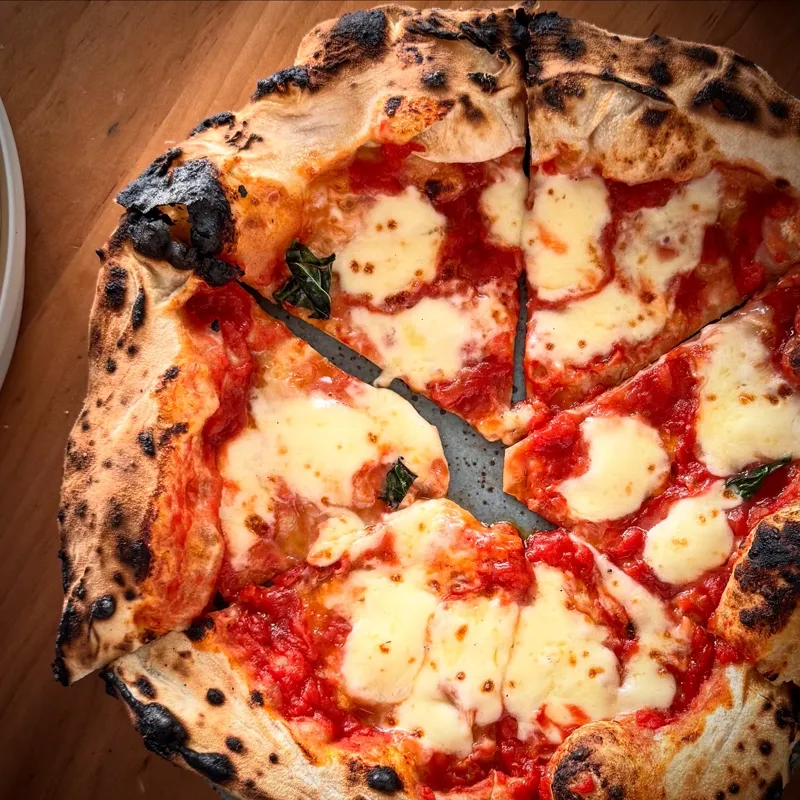
Once the dough has risen overnight, it can be portioned, shaped, and allowed to proof before stretching, topping, and baking. I recommend using a very hot pizza, like the Ooni Koda 2 Pro 18”.
Every recipe I publish here is personally tested, tasted, and approved.
What I like about this recipe:
Using the no-knead method makes dough-making an easy, hands-off affair.
An overnight fermentation gives the dough plenty of structure and flavor.
Yield: Makes enough dough for four 10- to 12-inch pizzas
Active Time: 5 minutes
Total Time: 12-18 hours
Notes: Use a scale to make this dough (volume measurements are not accurate for measuring flour). Bread flour will create a chewier, stronger crust than all-purpose flour. For a crust that has a sharper contrast between dark and light spots, use an Italian 00 flour, such as Caputo. You can add a cold fermentation period to improve the flavor of this dough by letting it rest in the fridge for up to 3 days between steps 1 and 2. The dough can be portioned and shaped straight from the fridge.
Ingredients
600g bread or all-purpose flour (see note)
12g salt
3g instant yeast
400g lukewarm water
a few drops of lemon juice or vinegar
Steps
1. In a bowl, combine the flour, salt, yeast, and lemon juice and stir with your hands to roughly mix. Add the water and mix until no dry flour remains. Cover the bowl with a second, slightly smaller overturned bowl, or use plastic wrap. Set aside at room temperature for at least 8 hours and up to 16. If desired, cold ferment in the refrigerator for up to three days (see note).
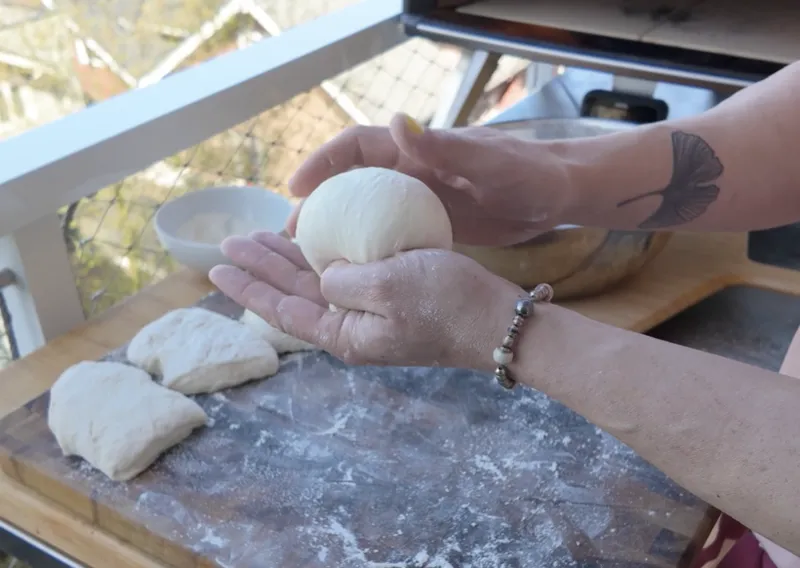
2. Dust the dough and a work surface with flour, then turn it out. Divide the dough into four even pieces. Form each one into a ball, stretching the dough over itself to form a “skin” that meets in a single point at the bottom of the dough in a sort of bellybutton. The goal is to keep the surface of the dough smooth and taught.
3. Cover and allow the dough balls to proof until roughly doubled in size, about 2 hours. The dough is now ready to stretch, top, and bake.
Comments (29)
Can I divide into portions for a 48 hour cold ferment or should I cold ferment in bulk.
Would anyone know if this dough can be frozen for future use? If so at what stage would I freeze it ? after portioning but before rising?
I've frozen it after an overnight, room-temperature ferment, and then divided it into portions, wrapped tightly in plastic wrap and frozen. I honestly don't remember if I rolled it into a ball first or not, but I don't think I did. Results were pretty good!
Mine seems very loose. I used 00 Flour but besides that followed the recipe exactly, what other factors could cause this?
Mine was too but I rested it for a day in the fridge and it seemed to come together more. I’ve just portioned and shaped, so I can’t promise it worked, but a day ago I didn’t think I’d be able to even cut it at all.
Ok this may sound stupid...but What time of day should I start this to have the next evening?
Given that the recipe is percentages based off of the amount of flour used, I'm assuming it's okay to half everything if you only want two pizzas?
Baker's percentage here is .5% or 3 g active dry yeast for 600g of flour. Older recipe on SE has it as 3%, or 9g per 600g, and calls for instant. Curious about why the change- looking forward to making this recipe this weekend!
After trying two other recipes without much luck, this one finally gave me a delicious pizza—thank you so much! Just curious: is this the highest hydration you'd recommend? Do you think the dough would still come together well at 70% hydration?
If you can handle 70% it would work just fine. Just requires a bit more work.
Have been waiting for this recipe since you announced partnership with Ooni. Made the dough last night then cooked tonight in my Ooni Koda - Holy cow!! THE best! Also such an easy recipe - ironically after much anticipation I forgot to read the step to proof dough for two hours after shaping. I did proof in my toaster after preheating on lowest setting (then turned off) for like 30 minutes. Worked like magic. Thanks Kenji.
On this page instant yeast is listed. In the video it’s active dry yeast. Does it matter which?
I don't think so
If we just have a normal oven, would you just recommend baking at the hottest setting? Or will it just not turn out as good
Yes, preheat to the hottest setting and let it preheat for a while... like an hour, so it's really good and hot. The other thing is you'll probably want to add more water to the dough (I would say about 70% hydration, so about 420 g of water for 600 g of flour) because it will be in the oven longer than the pizza oven and will dry out more. Adding water to the dough will help with that. Baking Steel has some good recipes and methods for cooking pizza in your home oven. They recommend using the broiler for part of the time (although I don't remember how long or when, so check them out!). Good luck!!
How would you adapt this for a sourdough levain?
I would recommend checking out the Sourdough Pizza Dough recipe on NYT Cooking and sort of combining the two. Here, just add about 90 grams of bubbly starter to the water; I think you can keep everything else the same (would recommend keeping the instant yeast to achieve proper spring).
" You can add a cold fermentation period to improve the flavor of this dough by letting it rest in the fridge for up to 3 days between steps 2 and 3. The dough can be portioned and shaped straight from the fridge." Wait. Step 2 is the portioning into 4 balls. So don't portion into 4 balls if you're going to cold ferment it?
In his older dough recipe, he says to divide before the cold ferment, then shape and rise after removing from the refrigerator. "Turn dough out onto lightly floured surface and divide into four even balls. Place each in a covered quart-sized deli container or in a zipper-lock freezer bag. Place in refrigerator and allow to rise at least 2 more days, and up to 4. Remove from refrigerator, shape into balls, and allow to rest at room temperature for at least 2 hours before baking.
The timing couldn't be more perfect. I just got a pizza oven and am using it for the 2nd time this weekend. I wanted a no knead dough for it. I used Serious Eats recipe for my first go and it reminded me I am just not a fan of getting out the food processor for yeast doughs.
What is the effect of using 00 pizza flour vs. AP or bread flour?
Most Double O flowers will not brown as much as a typical American AP or bread flour. This leads to a bigger contrast between the pale parts of the pizza and the dark leopard spots.
I'm sure you've done a comparison, how do you feel this compares in terms of outcome to a more traditional method of kneading and doing a slow rise?
What is the function of the vinegar/lemon juice? I've seen recipes that include citric acid to prevent oxidation with very long fermentation times. Also, how might one adapt this to sourdough? Thanks!
It increases gluten formation. Even a single drop will make a big difference.
How hot should we be aiming for the Ooni to be?
900
So what do we do with the lemon juice? :)
I'd assume it goes mixed with the water