









Rebuilding Titanic: Part 2 - Two Beginnings
By Kyle Hudak
Sketching Decks
From the age of 6, Matt DeWinkeleer has been obsessed with Titanic. Originally manifesting as forcing friends and family to attend Titanic attractions, locations, and exhibitions with him, his obsession turned to model kits. Titanic model kits have never been particularly detailed (if you wanted detail and accuracy, you needed scratch-built modifications and expensive photo-etch), and there’s also the little problem of size and the fact that they didn’t show you what was inside the ship. There had to be a better option.
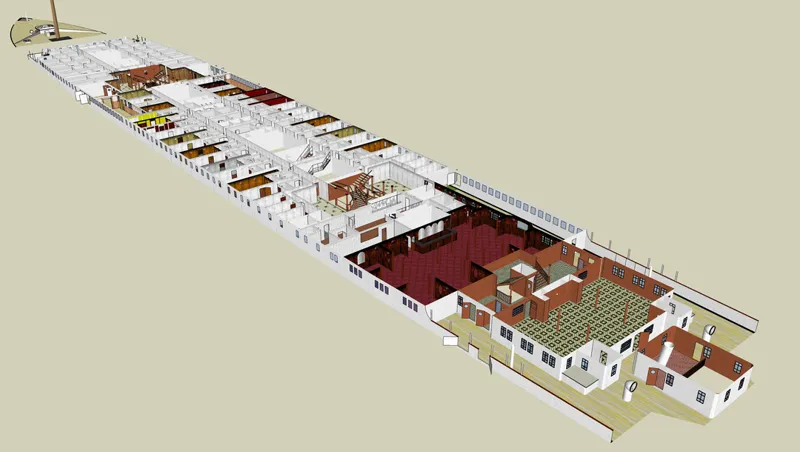
After high school, Matt would go on to earn degrees in film and business, but it was early on in all of that when he decided to start experimenting with 3D modeling. And so, in 2006, Matt installed Google SketchUp with the goal of digitally recreating Titanic as a walkable model. The entire ship, top to bottom, bow to stern.
This was not initially as gargantuan an effort as Titanic: Honor and Glory, with the models being extremely simple. This would be no easy task as he was fairly new to this and reference material was pretty low in supply for the average Titanorak on the internet. It was still going to be two more years before Titanic: The Ship Magnificent would be published. About the best Matt had to work with were some G/A plans, a few books, low-resolution photos found online, and a copy of James Cameron’s Titanic Explorer.
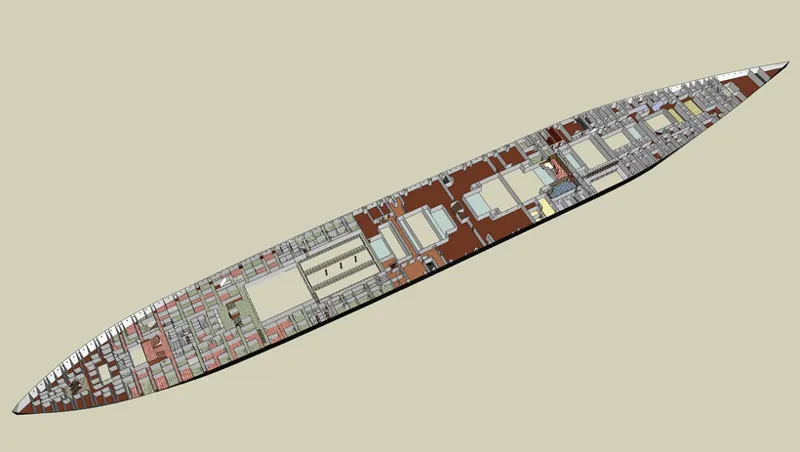
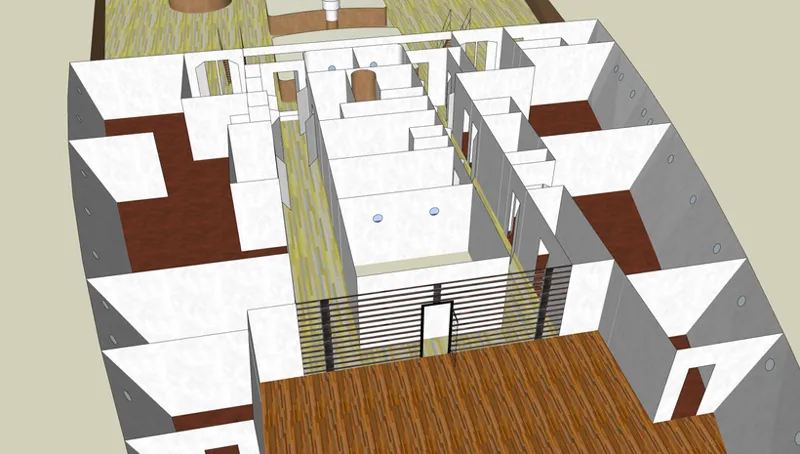
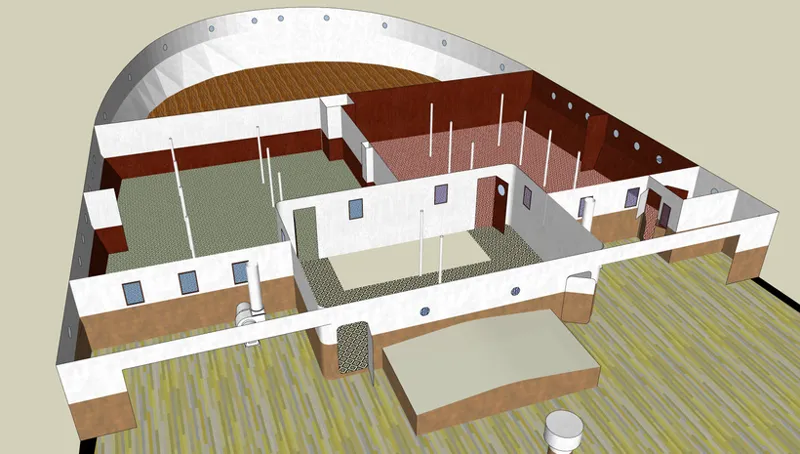
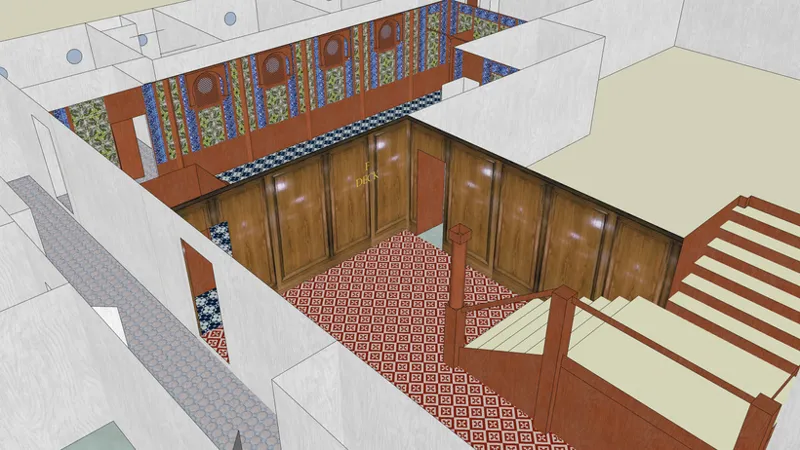
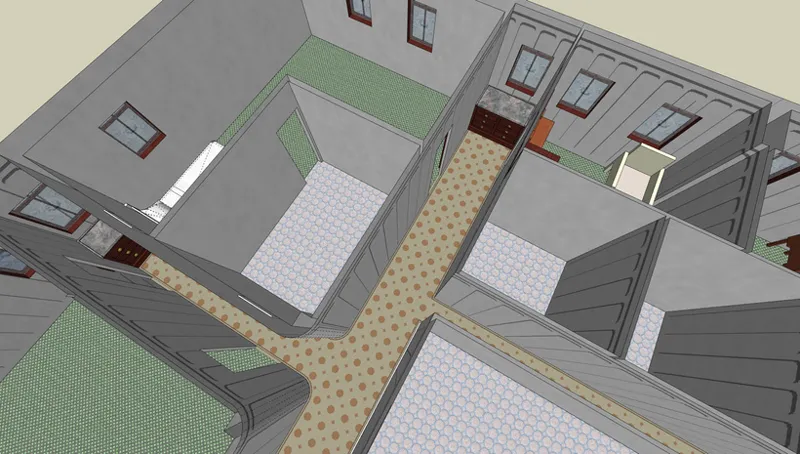
Matt’s earliest models through 2007 were extremely simple deck layouts with crude walls and doors, textured in part with screenshots from James Cameron’s Titanic Explorer. There was very little in the way of real detail at this point. The goal was less "world's most detailed model" and more a way to visualize General Arrangement plans and the deck layouts. Almost nothing had actual depth, and there were innumerable errors.
Work on these deck models continued well into 2008 with almost every deck represented in this simple way. Matt also started making some exterior models as his skills grew, with a focus on various individual objects such as windows and cranes.
Needs More Detail
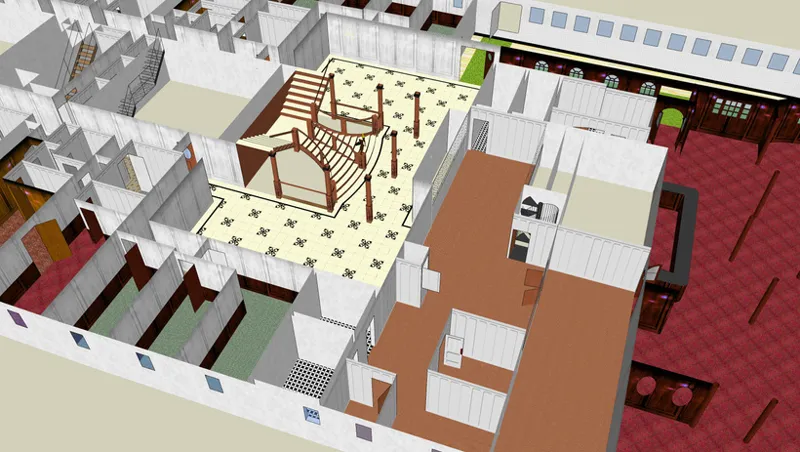
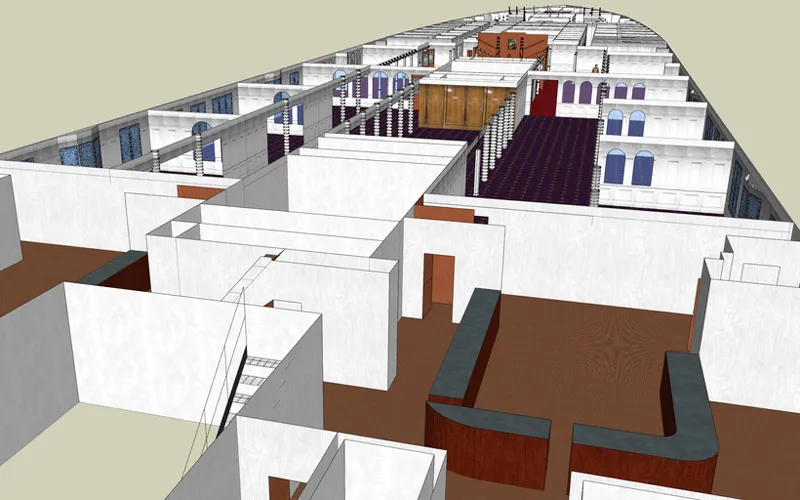
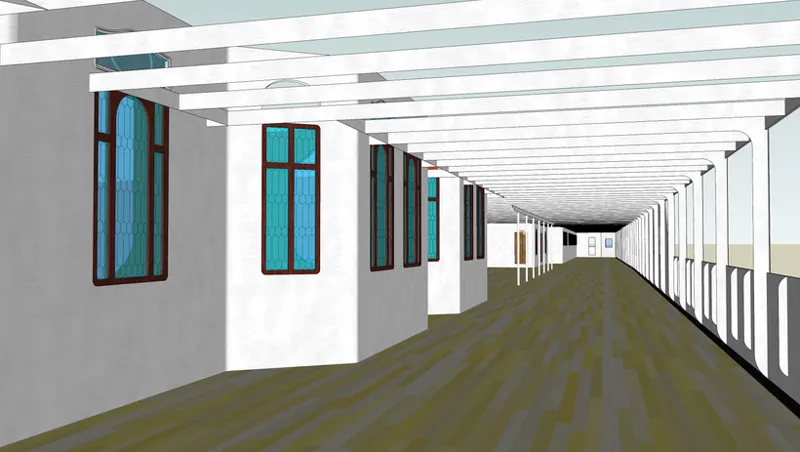
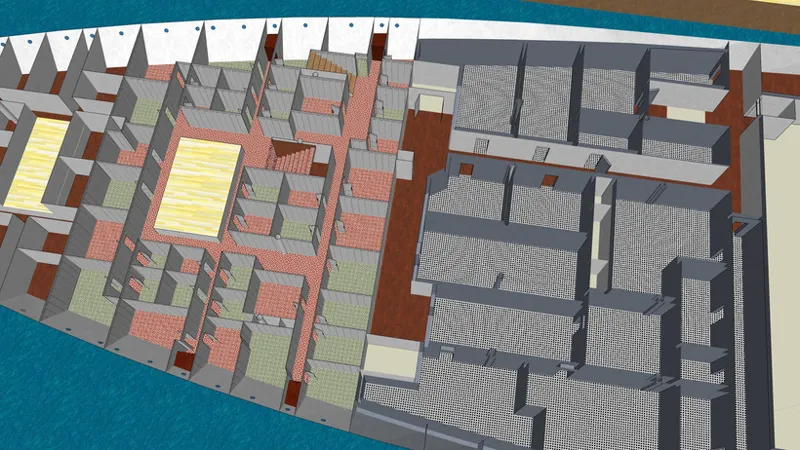
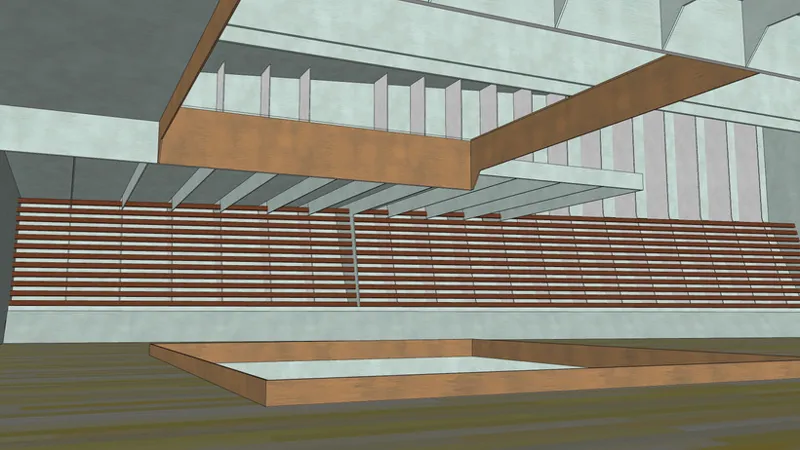
By the end of 2008, Matt had transitioned to making more detailed interior models. Some of the earliest included cabins on A Deck and cargo holds, though both were still extremely crude by today’s standards. By this time Matt would have had some more references along with a copy of Titanic: The Ship Magnificent, so that also allowed him to start adding more detail.
Matt had also made somewhat more detailed versions of the Grand Staircase and other areas by early 2009. Since this was not being done for any particular project and nothing was going into a game engine, there wasn't a whole lot to do with the models, and so Matt uploaded them to the SketchUp Warehouse where anybody could download them.
Playing with Glue
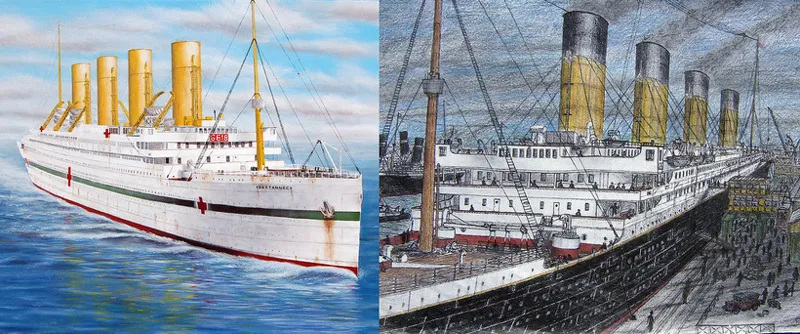
Like Matt, I had been mysteriously obsessed with Titanic from an early age. I think it started when I was living in Arizona and glimpsed bits of marketing for Cameron’s film. It would be a couple of years before I’d actually see it, but that big pointy bow on cardboard cutouts and posters stood out to me. Over time I would grow more curious about Titanic, checking out books from libraries and drawing or painting pictures of the ship, usually instead of doing school work. Occasionally I would hijack time on school computers to make digital Titanic drawings. Imagine my happiness when I finally got my own PC!
By the 2000s, I had begun several attempts to scratch-build large scale models of Titanic, including a bow wreck model complete with a gutted Grand Staircase. I used paper, cardboard, foam board, balsa wood, and a lot of hot glue. There was a huge model made of poster-board and construction paper. There was an attempt at a hull made of balsa wood. There was another attempt made from paper. At a later point I even tried to build a foam-board model of the Queen Mary 2. Towards the end of 2008, I had built my last model kit (as of 2024).
Of all of those models, I never fully finished any of them. I just never had the space or everything that was needed. To this day I have an unfinished 10-foot foam-board Titanic hull in my storage room, a giant hulk of nonsense I’ll never finish and which I'm currently debating whether to scrap or give to someone else. Physical models had simply proven too expensive, too difficult, often too big or too small, or too tedious to make. I could only do so much with such models. Even 2D art started getting boring.
Something Something Right Ahead
It was in June of 2008 when, fresh out of high school with nothing to do, I decided to tinker with 3D modeling. I settled on Autodesk Maya as its interface seemed much easier for me to use, though it would take a long time to learn even basic functions, let alone how to make a good model. My earliest models were not Titanic. Instead they were random shapes and simple objects that I rendered with different materials. It wasn’t until a bit later that I attempted slightly more complex objects and other models with textures made from household objects that I had taken photos of.
After my initial attempts at digital modeling, I gave up for a few months. But something would happen in early 2009 that caused me to try again. I wanted some new way to see Titanic that wasn’t the same old models or the same old games and, much like Matt a couple of years before me, I felt I had to do it myself. For both of us (and consequently others), this would prove to be a life-altering decision.
Continue to Part 3: https://www.patreon.com/posts/98589899

Comments (9)
hello i think we should add of the hmhs britannic of hospital ship from sister ship
Late comment, but you’re not a true Titanic fan until you’ve tried rebuilding her at least once.
i cant belive i survived titanic
What a journey you and Matt have been on!!!
Amazing works everyone!
It's really refreshing to see how you two have evolved over the years as well as seeing how much effort you put on your passion as time goes on. Thank you for putting this together, Kyle.
That Britannic painting is beautiful!
I do love this series.
I really enjoy being able to peek behind the curtain. What an effort. Thanks for putting this together.