



May 2024 Recap
Hi folks, Kyle here. It's been a month since Titanic Month ended and our last big update on here, so let's do some catching-up...
TITANIC ARCHIVE
In my previous updates, I talked about building a reference archive and scanning photos in our collection. This archive is an internal thing for the team and volunteers, not for the public, as permissions and copyrights vary wildly across the material.
The archive is still coming along. We suffered a setback a while ago after the online version of the archive just sort of vanished. We're not sure why, though luckily it hadn't gotten very far at that point. We moved to another service and have been slowly building it up again. I also finished scanning all those photos, though the work didn't stop there.
Since then, I've been building a "research" archive, distinct from the "reference" archive in that this one is all the base material that the reference archive may pull from. In order to build up the latter, we needed to build up the former. I've spent the last few months working on this, going through tens of thousands of files and sorting them by class, room/space type, and so on. Given how disorganized our references have been for the last decade, this is sorely needed.
That research archive is finally done aside from the nitty gritty stuff, and I've now made it available for some of our other researchers to take over and further organize as needed. Meanwhile, Matt is continuing to build up the other Reference Archive.
PROJECT 401 - MIRA
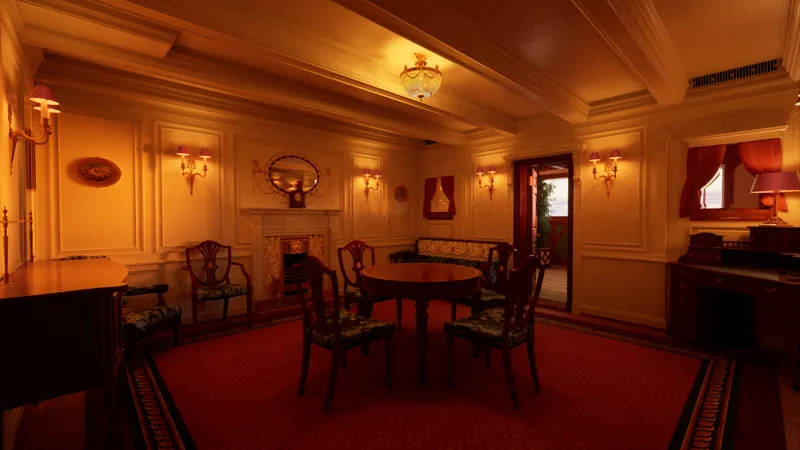
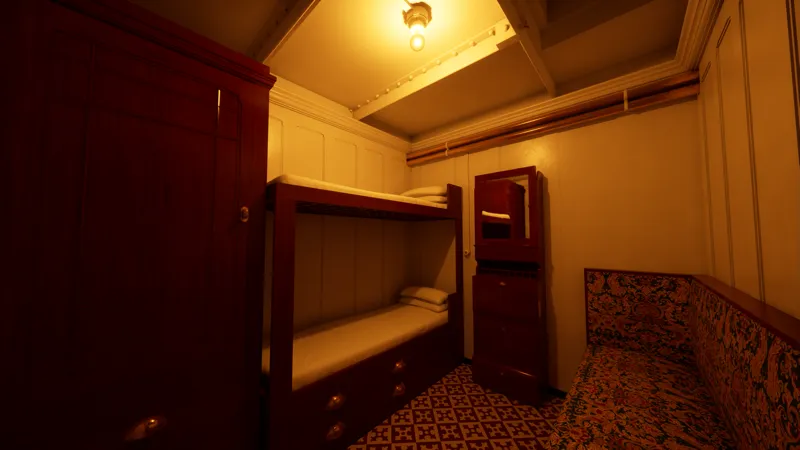
Work has been ongoing for Project 401 and MIRA, largely being done by Derek. This is where I'll actually leave it up to Derek to post his own update talking more in-depth about his work so far and maybe show off a few things. (I'll include a couple of teasers anyway!)
MODELING - VOLUNTEERS
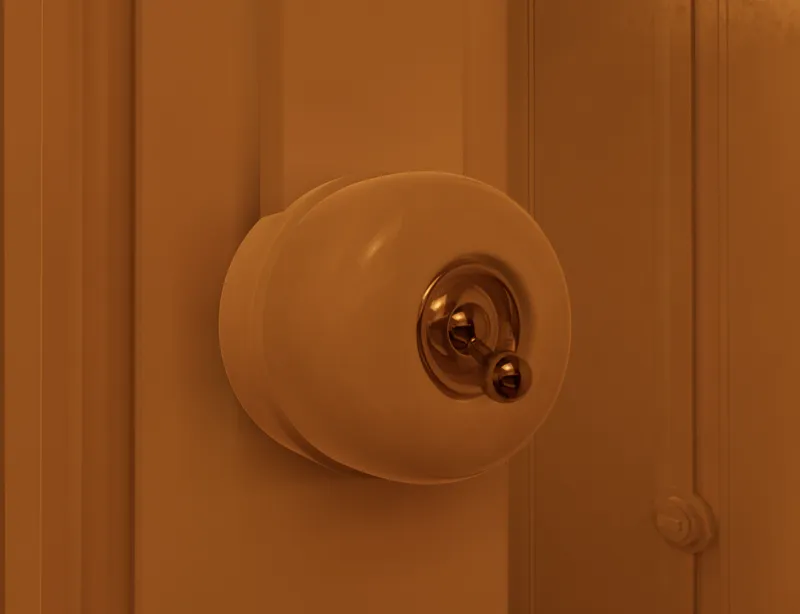
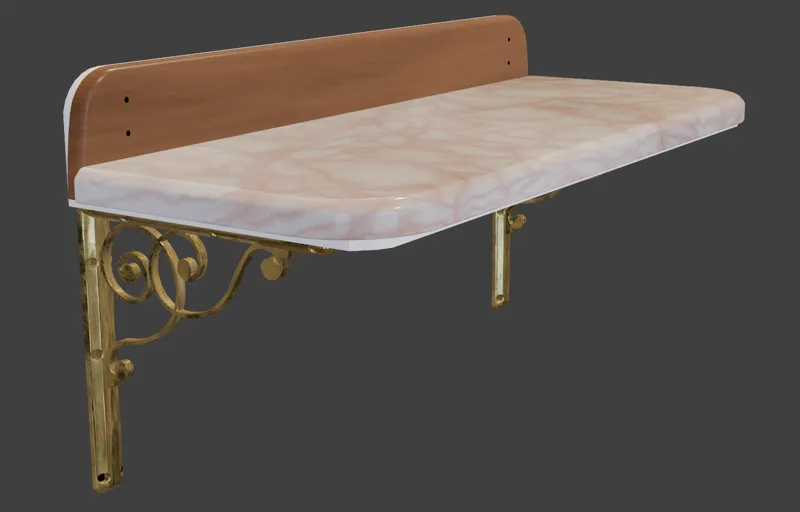
We've still been looking at bringing on more volunteers, but the process of doing that and getting them going will be slow until the reference archive is at a ready enough state. That said, we've already had a few volunteers continuing to work on various objects - mostly small things that are all over the ship. I'll throw some images of some of these things in the above slideshow, but here's one notable object - a heater switch:
As you can see, the new model is a HUGE improvement over... let's call it the old model. The improvement stems partly from the bonkers polygon counts we can have now, and partly from new and improved research. A decade ago (probably when the old version was made), we felt extremely limited by the tech of the time, and the reference photos we had were simply of abysmal resolutions (something I touch on in my Rebuilding Titanic posts).
It's fun to look into these smaller fittings and see what we can do with them. It's easy to overlook them in photos, and then you actually look into them and find out fun little tidbits, like how they worked:
Sufficed to say, we can't wait to have these things "hooked up" to heaters for the player to switch on and off as much as they want.
WHAT ABOUT THE STEEL?
Naturally, I was not really able to work on the structural model while organizing the archive (I know, what a shock). When something grabs my attention, it takes all of it, which can be great sometimes and not great other times. Sadly, nobody else really had the time to do that organization work the way it needed to be done and in short order, so it fell on me as some of these things tend to do. It was also definitely a bit of a snowball, but one that was desperately needed for this project, and one I had tried and failed to do in previous years.
That said, the Research Archive being finished on my end means I'm free to get back to the REALLY important stuff, while the rest of the team now has a nice new archive to work from. Once I get back into swing of things, I hope to have more fun stuff to show off.
I'm sure there's stuff I'm missing or should mention, but I'll leave it at that for now and let Derek post something Soon. ™©®
Comments (14)
so the 'on' 'off' must be printed all the way around on the disc unusual design EDIT, just saw Joe Stupars answer which i can't find in the thread, but it was in my link
If you took the cover off you would see a disc with 2 off positions and 2 on positions, the two on positions across from each other, and the two off positions across from each other. This disc is 'keyed' to another disc that has a brass bar and contacts and bridges the terminals when it's in the on position. I forgot to mention that as you are turning the knob, you're sort of winding a spring so you feel a tension, and then all of a sudden it snaps and makes or breaks the circuit. These kind of switches were pretty common in the early 20th century, I'm familiar with them from use in electric railway equipment. I have some pictures of them in electrical cabinets.
The comparison with the old and new are insane. I'm still to see the new E deck staircase as well as Scotland Road.
re the switchj, how come it goes round and round rather than backwards and forwards. as in right to turn on, left to turn off as the the text is very close together. jsut looks a bit odd to me, though the model is nicely done
Its a rotary switch, which works more like the power knob on a lamp rather than a typical light switch.
Looks amazing . Is any of this available to demo in VR yet?
Hey. So is that means that we can use light switches and buttons and such?
Not in P401, as it uses baked lighting, but you will be able to in THG!
I love that animation.
Thanks! 😁 (I’m the volunteer that modeled that switch. lol)
I wonder if they will included the sign for the boat deck 1st class entrance which is clearly visible in a photo from Ballards Titanic wreck book, as well as the missing star pattern underneath the door domes in the Turkish baths which again are visable in wreck footage
Yes back to structural stuff can't wait. Bulkheads here we come!! 💪
Hope we get to explore the whole engine room.
Anything on a possible release date for Project 401?