Northern & Southern European Dyes Palette(s)
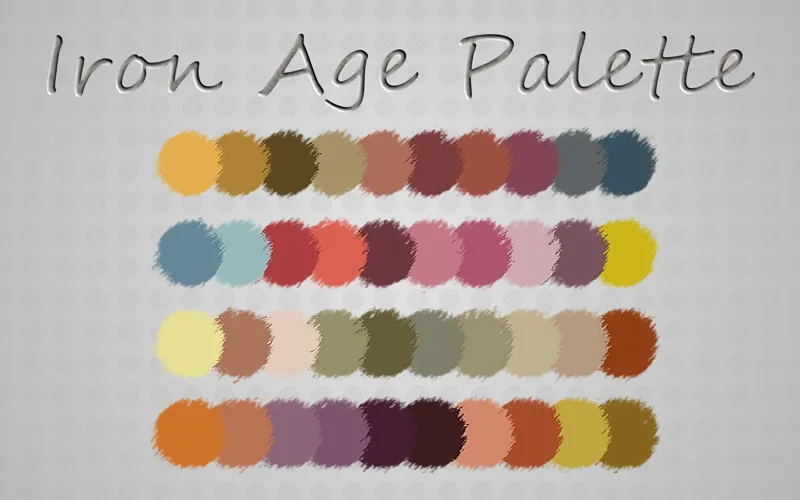
It's been almost exactly two years since I made my Iron Age Palette. To celebrate that anniversary... No, you know what, actually not, it's a total coincidence 😅 I was working on a new thing and started wondering about this and that; to not bore you with the details, let's just say that one thing let to another and of course I ended up revisiting the very basics. So here it is! Not one, but TWO new colour palettes for our oldtime-y sims. Based on the lives of my Britons at some point in 1st century CE, shortly before the Roman conquest.
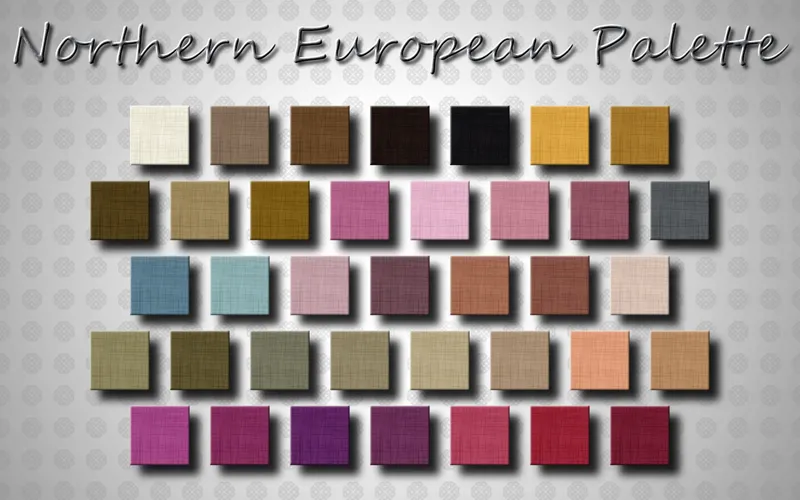
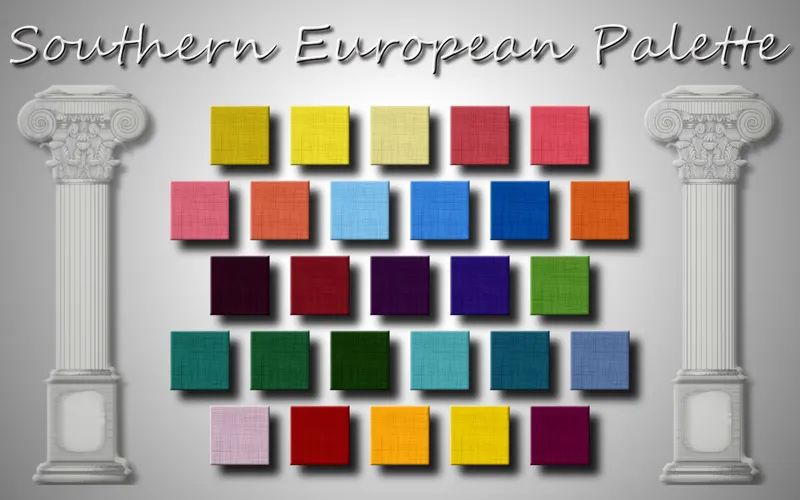
An important note: the southern palette is actually rather an add-on than a separate palette. As in, Romans would surely have access to the dyes from the northern palette as well. But as stated above, I made this whole thing from the viewpoint of a British Celt, hence we have two palettes: one with dyes which he could just obtain from native plants and the other with those he'd have to import. The southerners were more blessed in this aspect :]
You can download PDF files for both of those palettes and .txt files to be used in Paint.net (put them in Documents\paint.net User Files\Palettes). EDIT: the amazing @kyrassimhoard went ahead and made the .aco version of the palettes for all the Photoshop users! Thank you so much Kyra (also, special thanks to @aheathen-conceivably for double checking them for me 💗)
Apart from a bunch of visual changes (maybe the font will actually be readable this time? Gasp!), there's some new stuff in the palettes themselves (duh). Let's take a quick look, shall we?
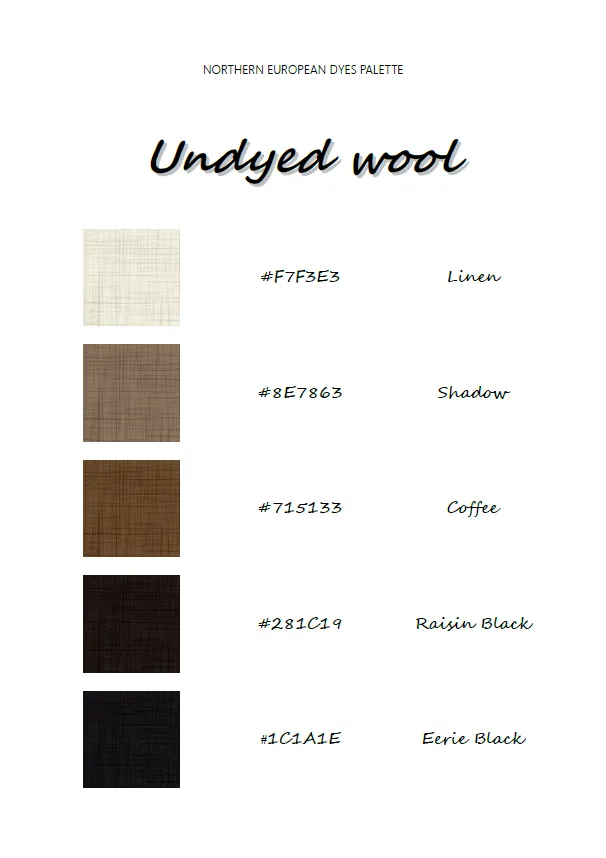
undyed wool - hard to call it a dye, lol, but ofc it had to be here. The so-called primitive sheep of the Brittonic era looked quite different from what we imagine when we think 'sheep', and they most certainly came not only in white, but also in many shades of brown or even black. Perfect for making a colourful garment even without any dyes;
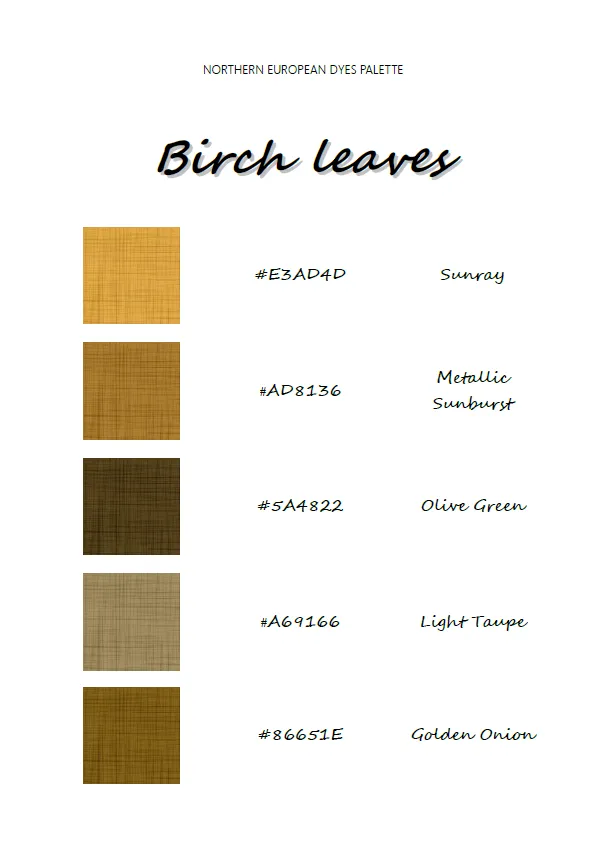
birch leaves - easy to obtain, easy to dye; almost no changes here, other than one added shade which used to be under 'mixed ingredients' before;
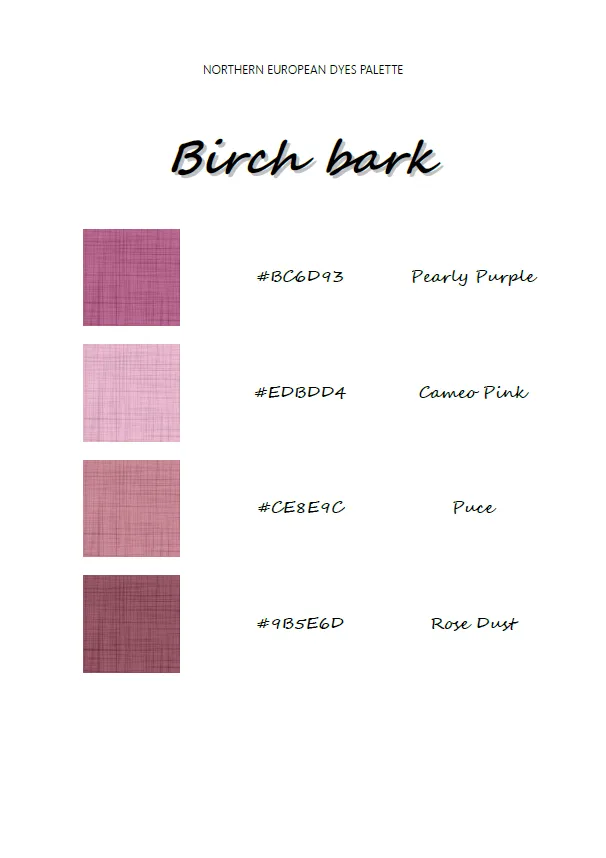
birch bark - OK, I don't remember where I took the old colours from, but I'm afraid I was being too optimistic. Birch bark gives rather pinkish than reddish shades; actually, it needs a looooooong soak and proper pH to turn anything but very bright, subtle pink. But it seems you can get them and they don't wash out that easily, so - there you go;
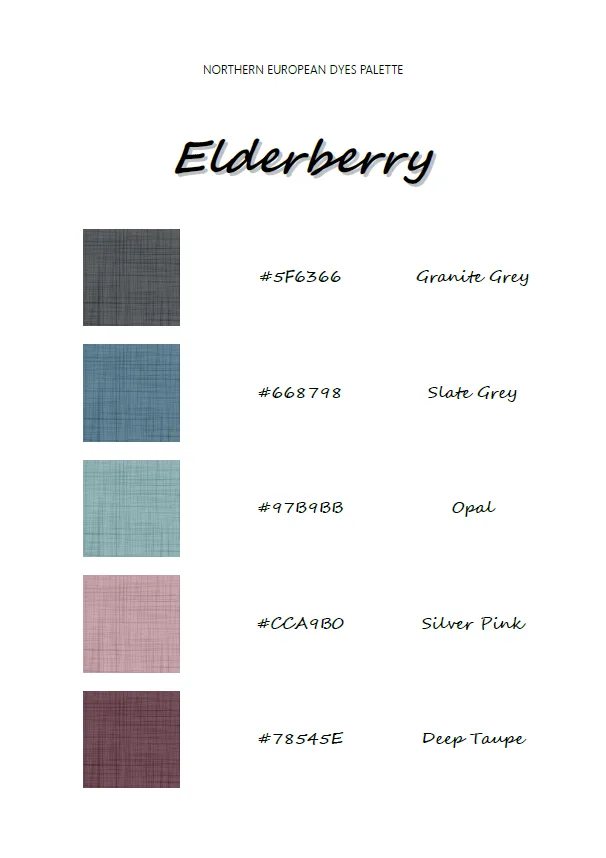
elderberry - here I was for sure being too optimistic, especially with that one pretty, saturated blue shade which got thrown away. From what I've read (and seen in photos...), elderberry is a very tricky dye, not particularly water- and lightfast. 'Not particularly' is mildly put - it just washes out in no time, leaving you either with a very pale or very greyish shade of the once vibrant colour. Adjusted accordingly (and they're still too pretty tbh);
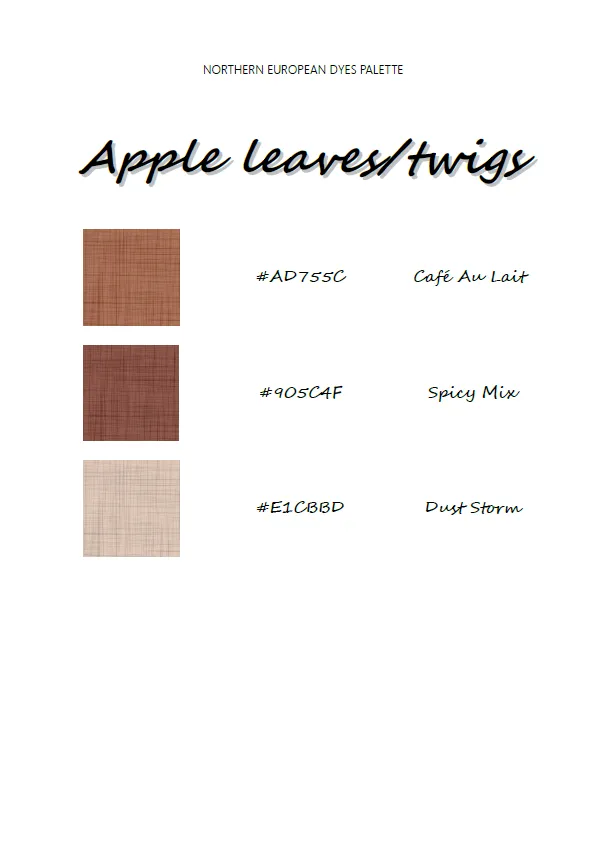
apple leaves/twigs - that's a bit of a tricky point, because the Internet claims it was only Romans who brought apples to Britain. But at the same time apple cider was Britain's national drink allegedly already during the Celtic times. Heck, Welsh mythical island of Avalon literally means 'isle of apples', and mythology tends to be... you know... old. Huh? After a bit of research on the topic I'm inclined to believe that what Romans really brought with them were big, sweet apples and their organised cultivation; but small, tart, 'untasty' varieties did exist in Britain even before, growing in the wild. Perfect for making cider - or dyes 😉;
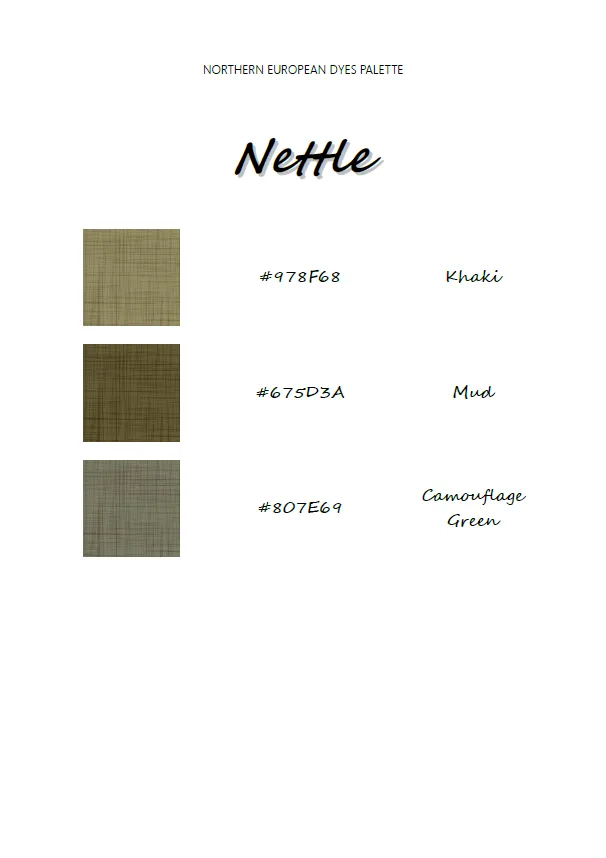
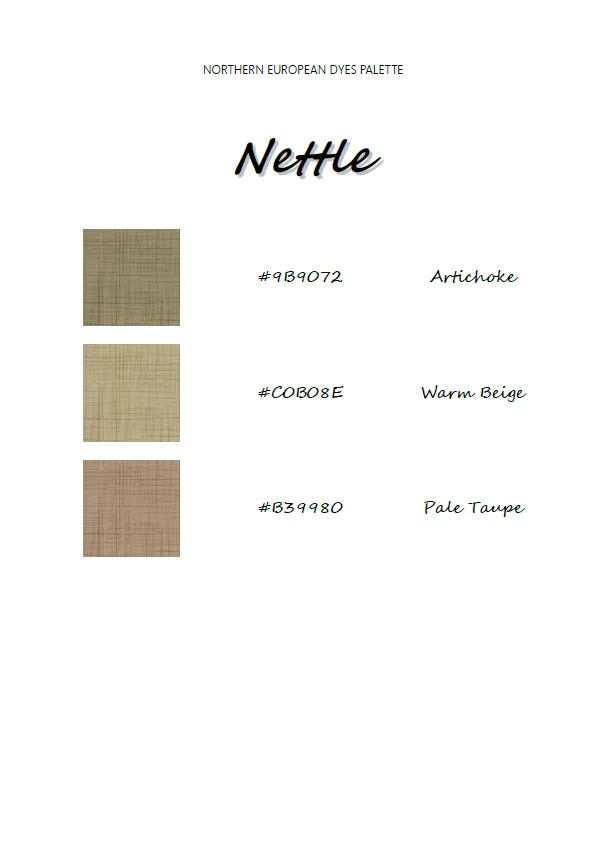
nettle - no changes here. Easy, cheap, grows everywhere, just that the colours are probably not something you'd wear to a party;
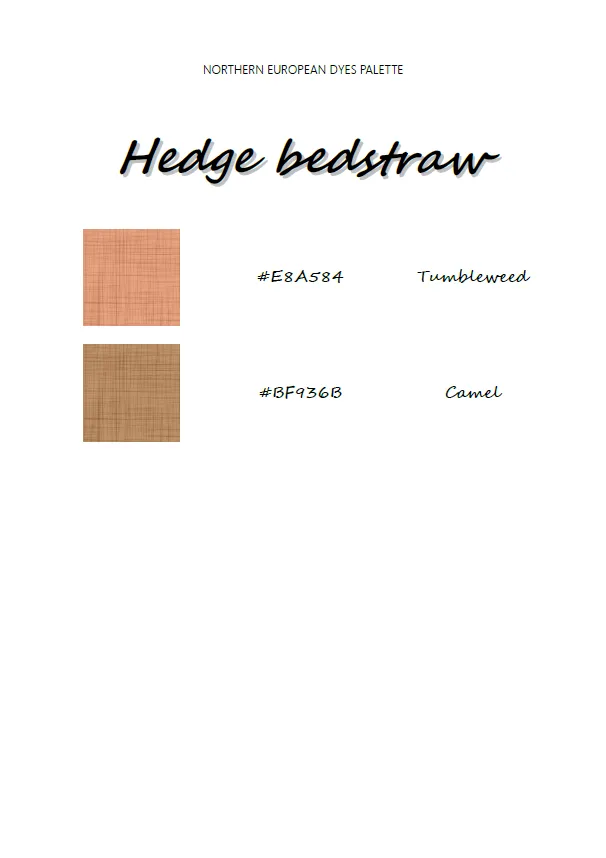
hedge bedstraw - seems it's growing everywhere in Britain, so it's plausible the ancients would've made use of it;
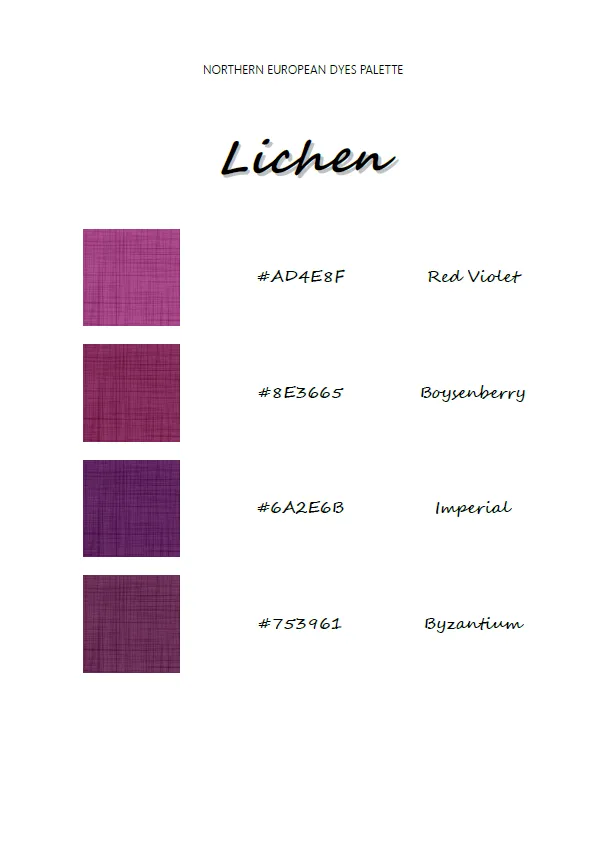
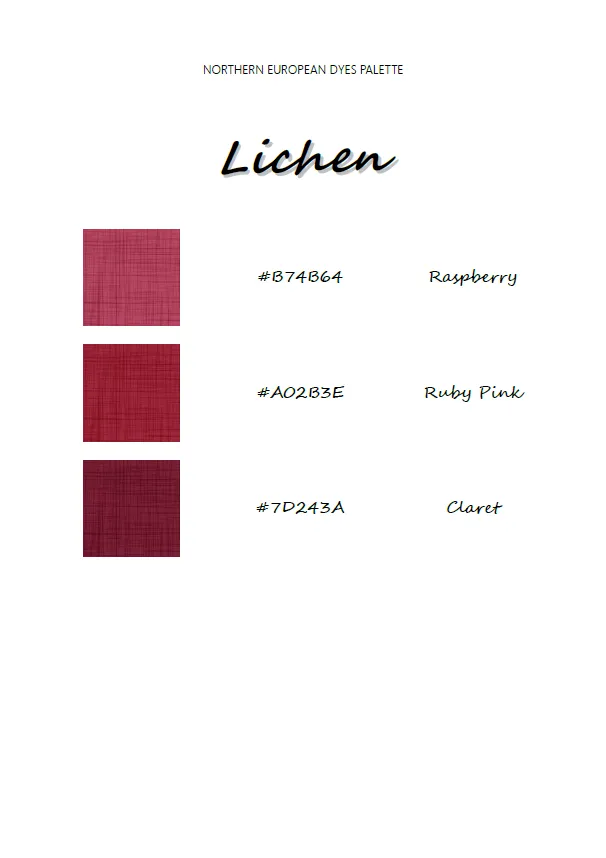
lichen - aaaaalriiight, now, that is a big discovery! Beautiful shades and absolutely possible to obtain from the varieties growing on the British Isles. One of the most crucial omissions from my old palette, here finally in its full glory.
That was it for the northern palette. And the southern? Glad you asked:
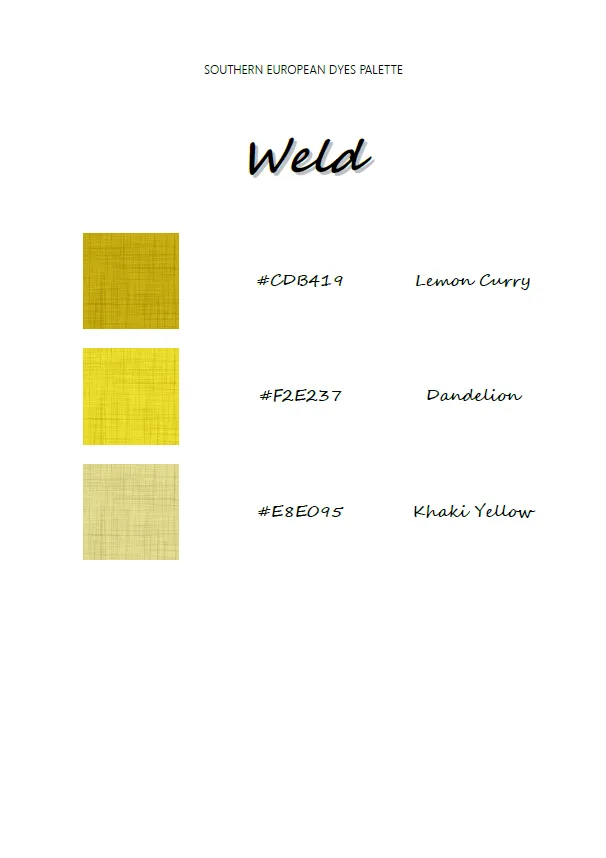
weld - previously called 'dyer's rocket', but no one in the whole wide natural dyeing Internet calls it that. Beautiful, vibrant, very steady yellow; won't give away even if you overdye it with indigo or woad. It's native to the Mediterranean and while it was cultivated in Britain in later centuries, I have no reason to believe that was also the case in 1 c. CE. I dub it imported;
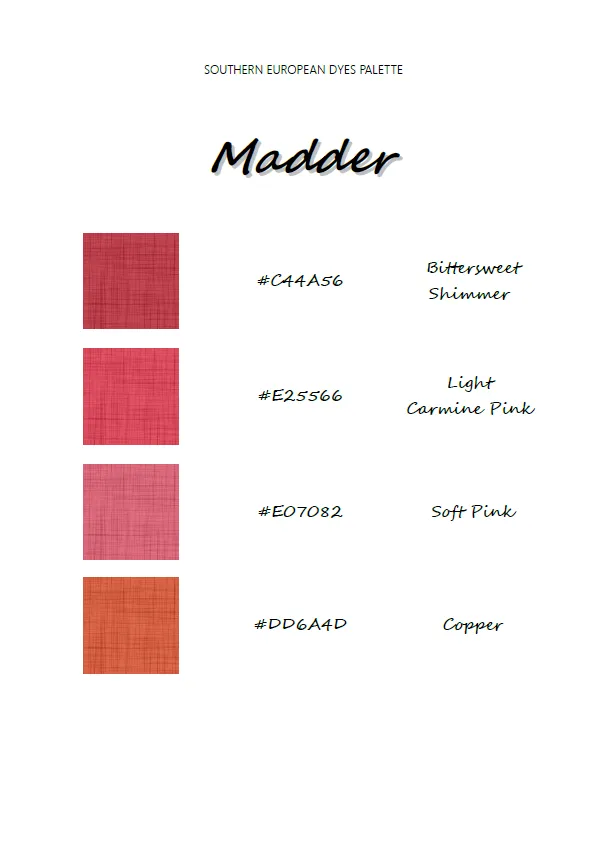
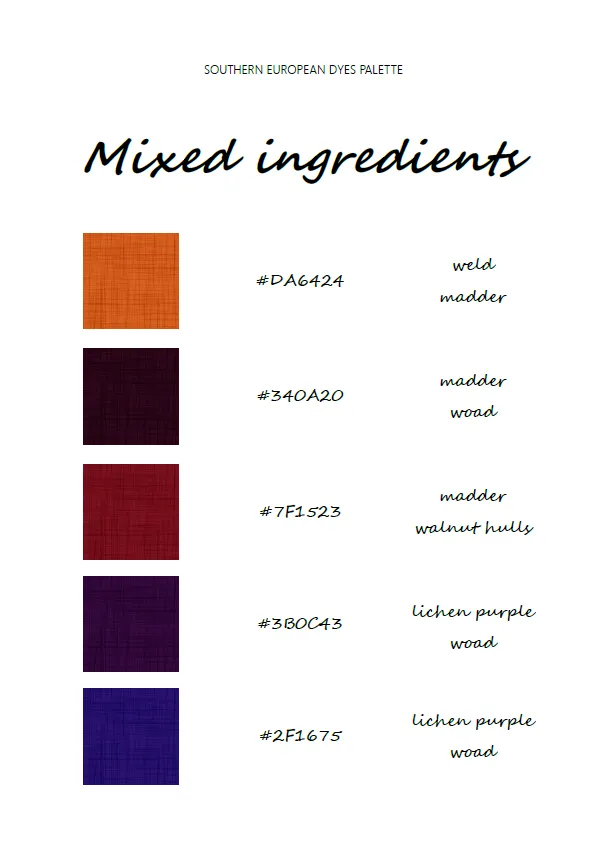
madder - I keep reading that it's giving saturated red shades, but I have yet to see anyone dye a skein of yarn deep red with madder only. All that keeps popping up in pictures are gentle, pinkish reds, so that's what I included in my palette too. The orange comes from changed pH of the water;
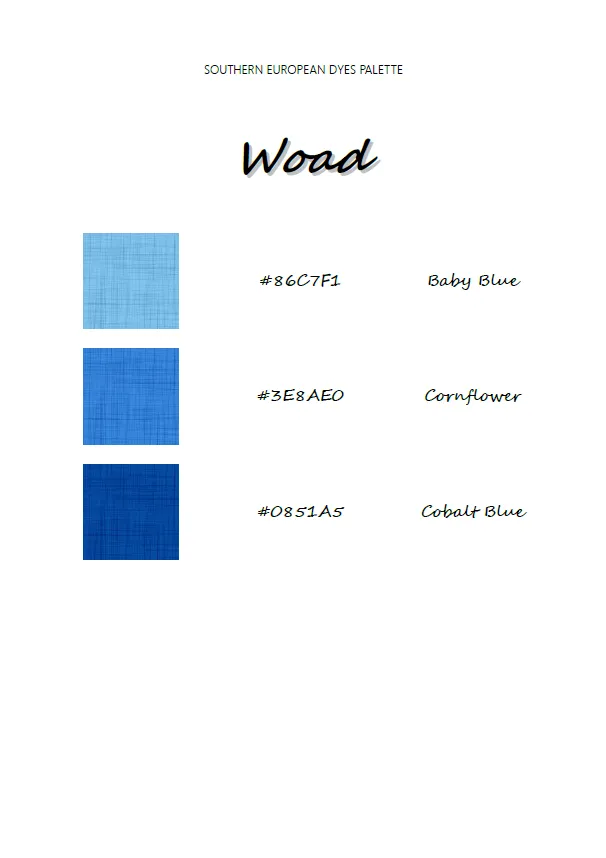
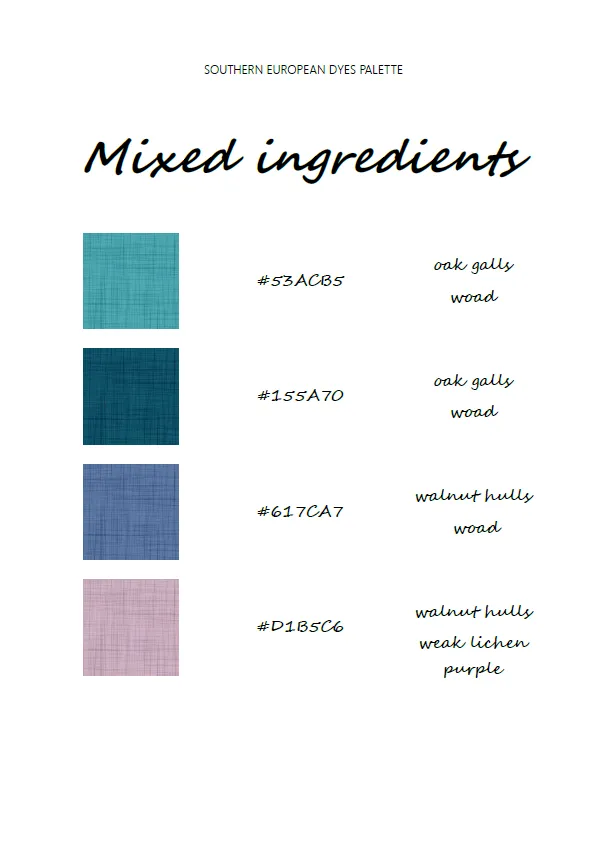
woad - OK, that's my most epic fail of all. To make a Celtic palette and not include woad?! Putting aside the whole matter of Britons possibly maybe but actually maybe not using it to paint their faces (a very controversial matter, let's not go there 😅), woad was the blue dye in those times. Indigo was far away and while it was being imported to Rome, afaik it was used mostly for painting, not cloth dyeing; and besides, as crazy as it may sound, woad seems to do the job better. Seriously. Higher water and light fastness. The question is, was it cultivated in Britain or imported? Just like weld, it's native to the Mediterraean. There is a British find of a bunch of woad seeds, from 1 c. BCE - but then again, it's just one find. So... Mostly imported but slowly being introduced to the Isles? Maybe?
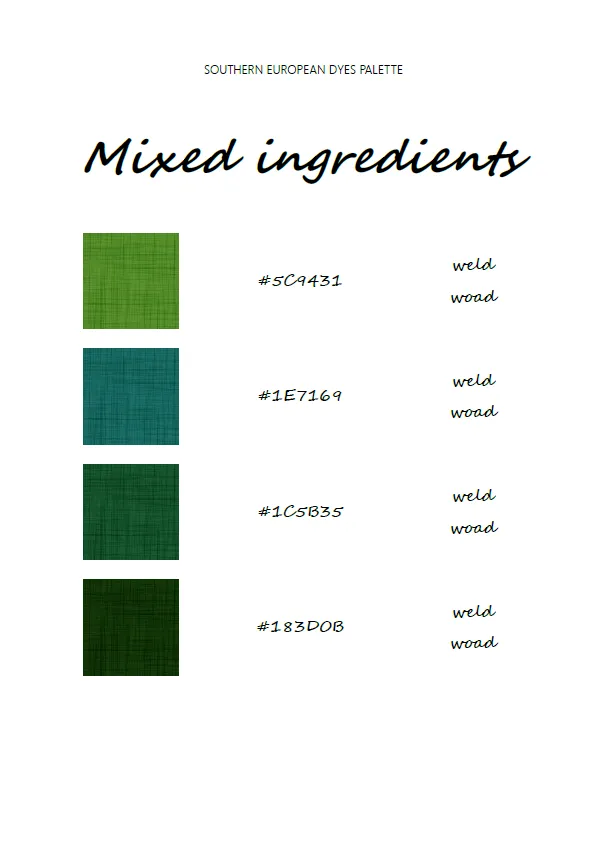
mixed ingredients - the ingredients specified in the PDFs are given in the order they're used - that makes a difference! My biggest discovery of this whole natural dyeing research is that, surprisingly, vibrant green is the absolutely most difficult colour to obtain. That dark green you see at the bottom - so-called Lincoln green - requires super high levels of both weld and woad, and you must put your yellow skein in the blue dye asap - if you're too slow, you get a lighter shade, e.g. like the one above it. The Hightowers surely knew how to show they're rich, huh...?
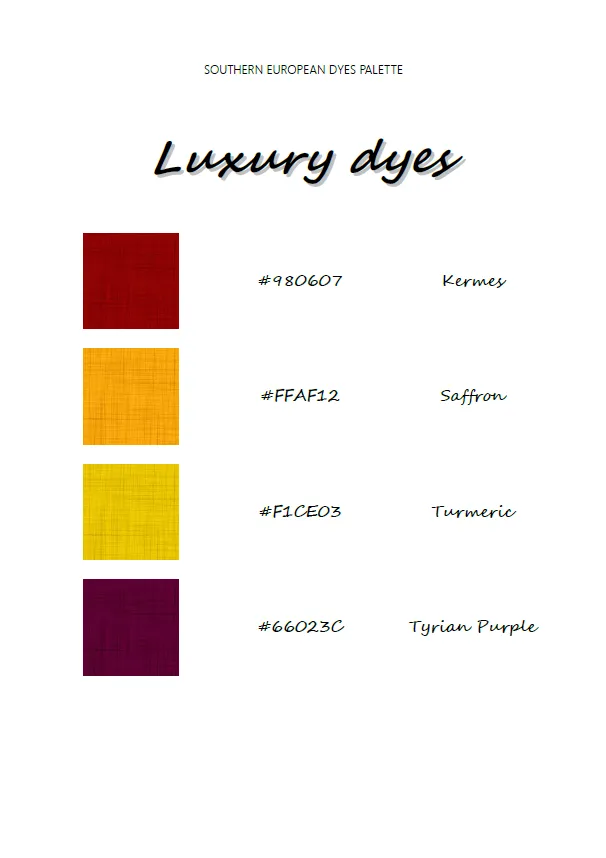
and last but not least, the luxury dyes! Some imported from far away (turmeric), some from nearby lands (Tyrian purple), some even grown locally (there were saffron plantations on Sicily. True story), but nevertheless, all super duper expensive. Tyrian purple was actually legally reserved for the emperor only - even if you could, by some miracle, afford it, you'd probably get arrested if you dared to dress in that particular shade of purple. Good that lichens could always come to the rescue!
Guess that's enough of behind-the-scenes trivia, isn't it? Props to you if you managed to get to this point, lol. Have fun with the palettes and happy recolouring!
***
Sources:
dzikiebarwy.com - in Polish, but the pictures should speak for themselves. Here you've got a post about dyeing with summer plants, including birch leaves, here - elderberry, here - apple leaves and twigs, here - nettle;
https://woolandpalette.com/blogs/news/making-vibrant-green-with-natural-dyes was my first step in finding out how to obtain a proper green shade with natural dyes;
wooltribulations.blogspot.com - dyeing with birch bark (here), another failed elderberry experiment (here) and overdyeing weld with woad for a deep Lincoln green shade (here);
www.jennydean.co.uk - an absolute godsend, especially two posts: 'Dyes of the Celts' (here) and 'Colours of the Romans' (here);
https://earlychurchhistory.org/fashion/colors-dyes-for-clothing-in-ancient-rome/ - on the posh dyes for the rich;
https://www.butserancientfarm.co.uk/gallery - except for the general vibe (*chef's kiss*), the 'animals and nature' section of the gallery has pictures of the 'primitive' sheep which they keep at the farm;
...and a bunch of others which I didn't save in my bookmarks 🙃