




The Horror Crowd Points the Way Toward a Future for Movie Theaters: Introduction
In 1980, I was three. I can remember my Dad and I pulling into the parking lot of the old Fox Theater (I think that was the name of it) in Patchogue, New York. It's one of those theaters that doesn't exist anymore. It was a big building, that housed two giant screens. Now, a building that size would be divided into six screens, but back then, it was more the norm, as multiplexes hadn't come along to lay waste to this model. As we pulled in though, I can vividly remember seeing the line for the box office going around to the back of the building. It was my first clue that lots of other people, including adults, were as excited to see The Empire Strikes Back as I was. It was my first clue that LOTS of people loved movies. My little brain nearly blew out of the top of my skull when Vader said, "No, I am your father." In the same year, we'd go to the same theater to see Raiders of the Lost Ark, an experience I credit with being the real root of my love of movies. I can remember being absolutely riveted, a little confused and in awe at the big finale. I didn't understand what was happening, but a ghost came out of a box, people's faces melted off, a bunch of people got electrocuted, and I was looking at it, like Indy just told Marion not to. Thank you Steven Spielberg and George Lucas for the alchemy that is Raiders. I have no idea why that burrowed into my psyche the way it did, but it did, and I'm so very glad of it.
I was five in 1982, when E.T. the Extra-Terrestrial hit theaters. Every adult in my life that could be cajoled into taking me to see it in theaters was so cajoled. I probably saw it six or seven times in theaters. My poor father took me at least twice, maybe more. I had the little stuffed animal. I even had the twelve inch vinyl LP of Michael Jackson reading some abridged version of the story. I can remember the cover, a very young Michael Jackson smiling at the camera, with around E.T, standing behind him, hands on his shoulders. I was consumed by a profound obsession with E.T. I give all of my adult family members credit for the depth of patience they had. I would have given a few fingers to be Elliot.
I had to be five or six at the time, I'm not completely sure, but I also have a series of memories of going to my mom's parents house, being there with a number of her younger brothers and sisters after having dinner, and being constantly shuffled out of the room as The Shining played on HBO. They took turns. My mom or a different aunt or uncle would find some excuse to take me into the kitchen when the really scary stuff came along. I had a vague idea they were trying to keep me from seeing certain parts of the movie, but I was a little kid, and easily bought with cookies and candy.
At ten, I went for a sleepover at an older cousin's house. I think he was twelve or so. He was absolutely intent, practically maniacal at the opportunity to show me John Carpenter's Halloween. Having secured permission from my parents, who assented because I'd already read half of the books Stephen King had put out, we gathered around what couldn't have been more than a fifteen inch cathode ray television, and spent ninety minutes being spell bound by the tale of Michael Meyers stalking Laurie Strode and her friends, while Donald Pleasance went around yelling about "THE EVIL!" to anyone who'd listen. My guts were full of butterflies and my brain was racing the entire time. I was a Stephen King fan up to that point. At that point, I became a horror fan. I wanted more.
Later that year, I was sitting in a theater on opening night for Halloween 4: The Return of Michael Meyers. I'd already begun hunting for copies of Fangoria magazine, any time I got within 200 yards of a book store. Halloween 4 is not what I'd call a good movie. It's decent, as sequels in that particular franchise go, but it will always have a special place in my heart as the first time I got to see Michael Meyers and Doctor Loomis on the big screen, in a theater full of people as excited as I was for these two iconic characters to be back. That's probably why the only Halloween film I haven't seen in theaters since was Halloween Kills, because it was released in the height of the COVID pandemic. Still, I subscribed to Peacock, Universal Studios dedicated streaming service, to be able to watch it opening night. The disappointment at what I got was real, but not surprising. I still went to see Halloween Ends in theaters. Being a horror fan is an act of optimism, much of the time.
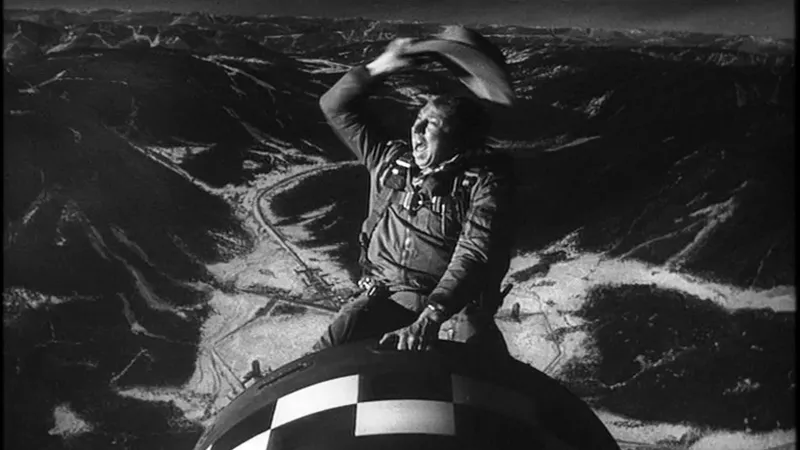
Not long after, having seen I'd developed a genuine interest in movies, somewhat beyond that of a kid obsessed with pop culture generally, my step father sat me down to watch a movie he'd been referring to with reverence and awe for years already. We sat in front of our nineteen or twenty inch TV in the living room, and my understanding of what film could be was changed by 2001: A Space Odyssey, followed not long after by Dr. Strangelove Or: How I Learned to Stop Worrying and Love the Bomb. Later that same year, I convinced my father to take me to see Full Metal Jacket, because this Kubrick guy seems to know what he was doing. I was unprepared, and enthralled. I'd never seen a war movie make war out to be as horrible as I assumed it had to be, considering the way people talked about Vietnam vets through all of my life.
At twelve or thirteen a few friends and I went on a quest to finally see The Texas Chain Saw Massacre. It was reputedly one of the most horrifying films of all time. It was supposed to be one of the bloodiest, most disturbing, disgusting things ever committed to film. Over three weekends, we attempted to rent it from every one of the local video stores. We succeeded in renting it, we never succeeded in watching it though.
There was a period of time where the people who owned the rights to the film didn't give a single rabbit's pellet worth of shit about the quality of what was being put out on video, and they licensed it to a number of distribution companies who had no greater interest in putting out VHS copies that were actually viewable. All three copies were so dark, that even trying to turn the brightness all the way up on the television meant you might be able to catch a bit of an outline of some figures moving on screen, but that was pretty much it. Even the scenes in the early part of the film, in the bright daylight, were almost impossible to make out. Thwarted, it would be a few years before someone decided to give the film a proper transfer (I believe it might have been an anniversary edition from Anchor Bay), and I'd get my hands on a version of The Texas Chain Saw Massacre I could actually see. It turned out to be as disturbing as it was sold, but for reasons wholly different than what its reputation suggested. Still, I have fond memories of that quest, rushing into a local video store, hoping it was available to rent, sitting in my friends tiny upstairs bedroom, where one wall was slanted by the roof so you couldn't stand up straight in one half of the room, with three of us crowded around what was probably a ten inch television, trying to get the fucking thing to show us what we were hearing, because what we were hearing sounded utterly terrifying.
In 1991, I was fourteen. Having been completely blown away by how flat out cool and really chilling James Cameron's The Terminator was when I'd seen it on VHS, one of my uncles took my younger cousin and myself to see Terminator 2 in theaters. I walked out dazed, having been completely taken in and overwhelmed by scope and story of the film, but also by the fact that as I watched it, I knew I was seeing the future of movies change. There was no going back from where digital effects would allow filmmakers to take audiences. Robert Patrick's liquid metal Terminator felt real.
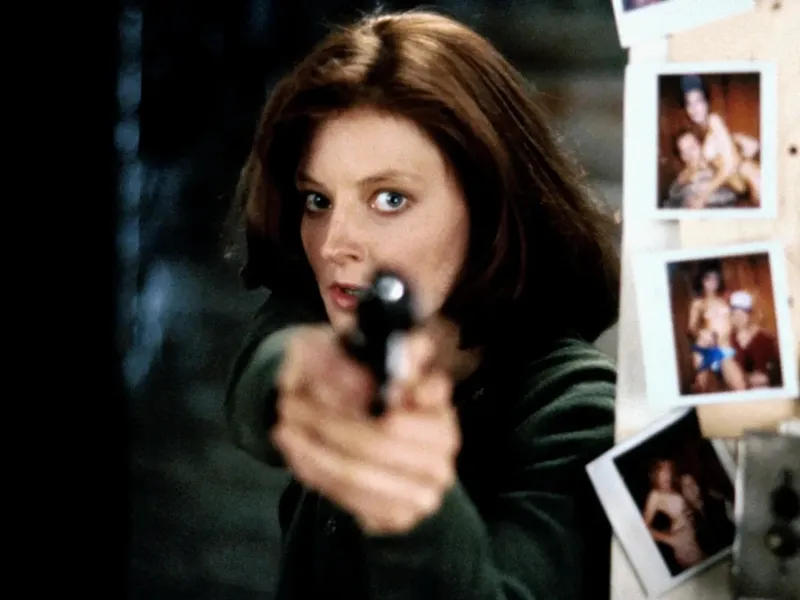
In that same year, my dad, my stepmom, my step sister and I all went to see Silence of the Lambs. My dad is not a horror person, in even the furthest stretch of the imagination. He does not enjoy being scared. He does not enjoy media that deals with the darkness of human beings. Nowadays, he's a big fan of the Hallmark Channel, because it's predictable, and it's not upsetting in any way. I will never, for all of my days, forget my father covering his eyes and turning his entire body in his seat, so no hint of what was happening on screen might slip through while Clarice was being stalked through that basement by Buffalo Bill. Folks, if you've never seen a film scare the wits out of your dad, I highly recommend it. It's one a wholly humanizing experience. It's a memory that is endearing and that I cherish, because of who my dad is.
At seventeen, a friend and I made our way to the local mall, The Galleria at Crystal Run, in order to get our chance to see a film kicking up a sensation across the country. I was unable to breathe as Vincent Vega plunged that syringe into Mia Wallace's chest and a heart stopping second later, when she bolted upright, I saw three sets of adults get up and walk out, I burst into laughter. It was both a sense of relief from the tension I'd just been sitting through, and a reaction to how ludicrous it would be to not be absolutely in love with how engrossing the story and performances were. The thought that someone would want to walk out of that theater was bottomlessly absurd in that moment. How could you want that experience to end?
In 1999, I was twenty-two years old. I had spent a number of months reading about and following news of this little film called The Blair Witch Project that was going to be premiering soon. I had seen the faux documentary that aired on what was then the Sci-Fi Channel, as well as the genius marketing campaign more broadly. "Is it real or isn't it?" It had already captured the cultural zeitgeist, before even premiering. It turned out some of my younger cousins were going to be in town on the weekend it was going into theaters nationwide.
It wasn't one of the best periods in my life, but that memory, of going to my grandmothers where they were all staying, sitting around talking about what we'd seen and knew or didn't know about the mystery of The Blair Witch Project, then sitting together in a packed theater being riveted and terrified for ninety minutes as the story of how three college students went missing in the woods of Maryland unfolded, and all being giddy with fright as I drove back to my grandmothers, is an unabashedly good memory. I'll always be glad we shared that experience. It was a great time at the movies, with people I love, in the middle of a pretty bad time.
In 2007, at thirty years old, I made arrangements to stay with a friend, and made the trek from Richmond Virginia, to Washington DC. Driving to D.C from Richmond should be a ninety minute drive, according to the distance. It's often not. I had to plan to have the day off, because it can take ninety minutes or it can take four hours, depending on your luck with traffic and construction. I was dead set on making the journey though, because I'd spent what felt like years reading about this little movie called Paranormal Activity that had made a huge splash on the festival circuit. Paramount, the studio who'd ended up winning the bidding war for the distribution rights, had been doing a slow, tiered release. Paranormal Activity would be getting to Richmond, but it might be a few more weeks or a month before it did, and I just couldn't wait. I called up my friend who'd recently moved to D.C, convinced him to go see this silly horror film he never would have chosen to see, and we went to a midnight screening of Paranormal Activity, just outside of Georgetown campus. The screening was jam packed full of college students. There wasn't an empty seat in the theater. To this day, it's one of the most fun experiences I've ever had in a movie theater.
People often compare horror films to roller coasters. They're usually referring to fact that we can feel some sense of fear and danger while being perfectly safe. What this misses is that in the best crowds, a crowd like this one, there's also a participatory aspect. Being in an absolutely packed theater, with everyone jumping simultaneously, screaming and yelling at Katie and Micah on the big screen, was a blast. It was the perfect crowd. They knew what they were there for, they gave themselves over to the experience one hundred percent, and Paranormal Activity delivered the goods.
That same year, I went to see There Will Be Blood, with the person I was dating at the time. It was a wholly different experience. I was seeing someone put to film so many of the things I have long felt about capitalism, religion, masculinity, and the toxic brew that comes from their combination and when they come into competition with one another. It wasn't a story I would have told, but it certainly was a story for me as an adult. It was also filmmaking of the highest technical quality. It recalled those childhood experiences of seeing 2001, Halloween, Full Metal Jacket and even E.T. It was a completely different film than any of those thematically and stylistically, but that sense of wondrous discovery, having found a thing that was for me. To this day, it's one of my favorite films, despite the reputation its gotten as being a favorite among a certain variety of toxic film bro. I don't love it because I identify with or idolize Daniel Plainview. I love it because it tells the unvarnished truth about men like Daniel Plainview, and I feel less alone with this cinematic proof that other people out there know this thing I suspected even when I was young.
In between all of those, I went to hundreds of movies, saw thousands more on VHS, DVD and then streaming as it became part of the landscape of movie culture, and a whole lot of them were absolutely forgettable experiences. I might remember the movies, to one degree or another, but the experience was forgettable. When they still existed, I ransacked the shelves of the local video stores, and then the lackluster selection at Blockbuster, and funneled as many movies, mostly horror, into my eyeballs as I could. In living rooms, basements, bedrooms across time and space, I watched movies.
I've had profound theater experiences since then too. Hereditary managed to be upsetting enough in a particular combination of ways, I actually had to keep looking out of the corner of my eye to the people I went to see it with, to see if they might also be on the verge of a panic attack. We also went to see Moonage Daydream together. That was an overwhelming experience of a completely different variety, and I'm glad we had it together. Recently, I saw Babylon, and was reminded of that sense of awe I've experienced occasionally, sitting in front of this big, sprawling epic about movies, and what becomes of decadence in times of repression.
The movie industry is currently in flux. As the streaming wars have heated up, the major studios (most of which are now owned by larger, multinational multi-media companies less interested in movie than they are "content" that will drive profit in other areas) are all trying to start their own services. Even before the streaming wars became a question of what streaming service will be here two months from now, television had clued into the idea that "prestige television." Loosely translated as long form storytelling with production value on par with a Hollywood movie, it presented something to audiences movies just can't do within the bounds of commercial exhibition. Telling a single ten, thirteen or twenty hours long story gives storytellers the opportunity to delve into characters and worlds in a way movies just doesn't allow. The advent and infection of social media acts as almost adjunct to the explosion in streaming, and has changed the business of film journalism. The way people interact with movies and movie culture has changed. Not only is the mystique of the "movie star" gone, but it's more and more a rare experience for a single film to dominate the culture of movies so thoroughly, it becomes a larger cultural phenomenon, like say, Silence of the Lambs or even Saving Private Ryan. Add to this a two year period of pandemic precautions which prevented people from gathering in crowds causing a few major theater chains to enter bankruptcy, and the future of theater going looks bleak. There are still big blockbuster films, but overall, the number of tickets sold in a given year has been dropping.
Its partially in response to this dwindling audience, and partially the drive to feed the other areas of their businesses, these giant multimedia conglomerates have been cranking out what's referred to as IP driven film. They're based on comic books or other characters and stories which already have a built in audience and/or name recognition. They're also the things which seem to be almost guaranteed to make a profit right now. Personally, I have no real beef with "superhero" or other IP driven stories as movies go generally, but the questions about how the business practices of the studios maniacal drive to see each one bring in a billion dollars are effecting the industry as a whole are a basis for real concern for anyone who happens to love that variety is one thing movies can deliver. These changes are also presenting threats to the professions that are responsible for things like production value. The movie industry needs carpenters that are experienced in the different demands of building a set, and people who know how to design one to a directors requirements. They need people who know how to make costumes, and to source clothing for costumes etc. Something like, "This fabric is going to appear the way you'd like it too, under the lights and on camera" is something a professional costume designer knows. The same goes for special effects, cinematographers, and dozens of other professions that have made the American film industry the standard in production value.
Add to this what (anecdotally, at least) seem to be changes in behavior in the casual theater going audiences that's causing even some of the more devout film obsessives to start questioning whether or not there is any relevance for the theater going experience. I love a rowdy crowd for a film like Paranormal Activity, a Halloween or Scream sequel. I really appreciate a theater audiences that know the difference between showing up to have a rowdy good time and showing up to something like Hereditary, Saint Maud, Spotlight, or Women Talking, where the experience is not in any way enhanced by audience participation. I'm not at all alone in having little to no patience for a cell phone screen's light piercing the otherwise dark theater, and distracting me in the middle of any movie. At some point, we seemed to stop passing along the norms of theater going. This is also a sign of the changing relationship audiences have with movies. The occasional jack ass talking through or yelling at a screen when that's not at all part of the experience the movie is designed for, has always been a hazard of theater going. Now, it's less a hazard, and more of a norm in itself, and cell phones have made it exponentially worse. In short, the idea of a combination of reverence for the theater experience and a common courtesy among theater goers where these are concerned, seems to have disappeared.
I love the theater experience. I still get excited about sitting in a dark theater, with a bunch of other people, and having the experience a film gives us all, at the same time. It's also not the absolute center of my relationship to movies, and it really never has been. I'm of the generation on cusp. The VHS boom happened when I was young. DVD and Blu Ray came along, bringing a much higher quality home viewing experience. Now we have streaming, which is changing things even further. I want theaters to survive. The theater experience is an indelible part of my relationship to movies. If they're going to survive, some things are going to have to change though, because the environment they exist in is changing.
With all these changes shaking up the industry of filmmaking, and presenting a threat to the industry dedicated to exhibiting movies, the movie theater industry, there's another relevant fact emerging. Horror is a consistently reliable and profitable genre. Plainly, horror puts asses in seats. There are answers to the problems facing the film and movie theater industries in why horror is consistently profitable.
Now, the instinct in the major studios has always been to follow trends by trying to find the next thing that's almost exactly like the last successful thing, but just different enough, that it will draw out a big crowd. Turning the major studios into factory lines for horror films isn't going to do any good though. We're seeing a certain level of fatigue and backlash to the way they've done this with IP based and superhero films. As much as I love horror, and I'm very much a proponent of "Give me more of everything" where horror is concerned, it would not be good for the genre, and it would ultimately just lead the industry back to where it is at this moment, "If the audience for IP film franchises collapses, what's going to happen to the theater industry?" It's not a matter of starting to make as many horror films as possible, any more than it is a matter of making as many IP derived or superhero films as possible. Even as the latest horror film getting good word of mouth is what I'm most likely to spend money to see in a theater, I also want to be able to see things like
There are answers for the future of the theater going experience in what Phil Nobile Jr., Fangoria's Editor-In-Chief, called "the horror crowd" in one of the magazines newsletters recently. Why? Well, because they show up, and they buy tickets, reliably and consistently. It's also been repeatedly proven that horror also has the most diverse audience, including attracting a young audience. A diverse audience is always a more reliable audience too.
How does this maligned, disrespected genre of film come to have such a reliable audience willing to drop their hard earned dollars on everything from Skinamarink to Midsommar to Scream VI? Well, it has a culture. It has its own culture, as both part of and separate from "film/movie culture."
While movies are more or less being swallowed up as part of a culture of "content," it's worth considering the fact that movie theaters and the filmmaking industry have a vested interest in establishing, tending to and supporting a dedicated "movie culture" that takes these changes and evolutions into account. Basically, creating a culture that grows and maintains a "movie culture," that doesn't just exist in some major cities, but is accessible nationwide, is part of, but also separate from "content" in the way that horror culture is.
I'm going to be writing a series of pieces looking at what parts of "the horror crowd" and horror culture could be replicated to create something like a more general "movie crowd." This series is going to be a big swing in imagining what the future of theater going can look like, and what conditions these two industries can create in order to inspire a loyal audience, like "the horror crowd," which is proving profitable for both at this point. I'm certainly someone who is part of "the horror crowd" and an evangelist for the genre. Part of the reason I am an evangelist for the genre is that it's such a wonderful gateway to the wider, broader world of movies. I straddle that line. Horror is and will always be my first love, but I love movies, and my relationship to them has changed over time as the culture around them has changed, and the way I watch them has changed.
The idea is to create the conditions which encourage an audience that is dedicated to movies and theater going. Part of that is going to involve recognizing the relationship to movies has change thoroughly over the last forty years, but the theater industry's relationship to the audience hasn't. I'm not just talking about changes related to diversity and other social justice related ideas, but that the overall relationship to movies has changed drastically, and as the filmmaking industry has adapted to that, it's taken a somewhat defensive stance in response to the movie theater industry's rightful anxieties about those changes. We're seeing the evolution of a problem for theaters that started with home video being available to just about everyone. The studio system has reacted by protecting its profits in the short term. They adapted relatively well to the home video boom. Studios are going to have to start rethinking the nature of their partnership with the theater industry they it wants to be able to rely on ticket sales as a major source of income. We know it's what the filmmakers want, because they've made it very clear. It's time the major studios and the movie theater industry start considering they need to create the new cultural space for a "movie crowd," and create a variety of ways to engage with that culture.