

Why Are We Hopeless?
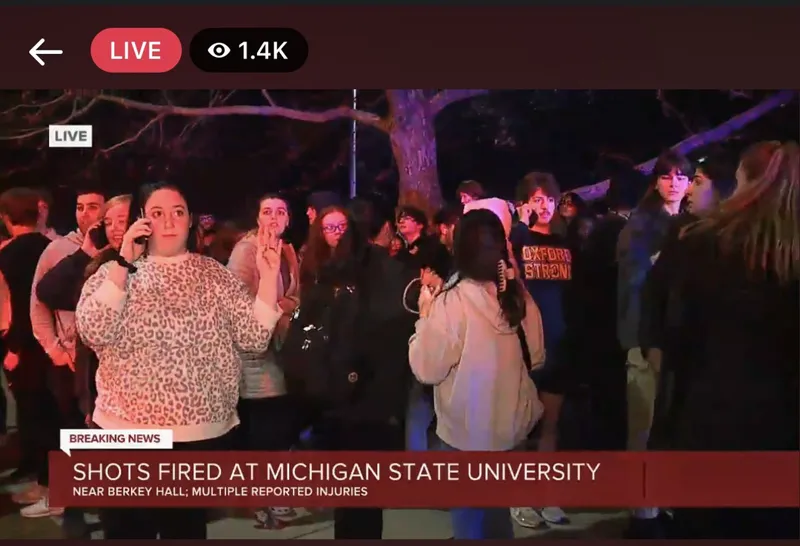
We've entered the era where a Sandy Hook survivor can now also survive a mass shooting in college. Someone wearing a sweatshirt to show solidarity and support for survivors of a mass shooting at a Michigan high school in Nov of 2021 (possibly themselves a survivor) can be the survivor of a mass shooting at a Michigan college, not even a full two years later. You can see them in the image above.
It looks very much like the survivors of the mass shooting in Michigan this week included people who had previously survived at least three other mass shootings.
What it suggests for our future that it's not even noteworthy in the press or in the halls of power that we are already at a point where we have people surviving multiple mass shootings before they're likely even twenty-five or twenty-six is not at all good. It suggests that this is something which has become normal, to a degree we either don't think it's worth the effort to produce an effective solution or that we don't believe we can.
We can't talk about gun control. That's what authoritarians want, and besides which, could the police really get away with killing people so often if we weren't a nation just absolutely flooded with guns? Is "I was afraid he might beat me up" really where you want your police turning when they've just gunned someone down? It's much more effective when they can say, "They were reaching for something," isn't it? How else would we keep the poor in their place? If you ask about whether or not the cumulative problems created by the evolution of our attitudes about guns might be detrimental to our ability to exist as a stable nation or society, you hate freedom.
We can't talk about why over 90% of mass shooters are men. Nope. That's just the talk of people who hate Western Civilization or are pussies or don't know their place. It's not at all people who can read, and see the overwhelming evidence about who commits violence and want an answer more factually accurate than "testosterone." Can't do anything effective because we can't even have a discussion to produce a consensus. Attempting to have those discussions devolves into threats of violence from the far right, and rhetorical support from the "mainstream" right and "reasonable" liberals, who are more afraid of being deemed extreme than they are of continuing to be utterly ineffective in the face of basically every problem we have. It's "mental illness," but we can't make treatment free and/or cheap and easily accessible because that's "socialism." It's "economic anxiety," but bring up the possibility of something like UBI and that's "communism." Okay, how about we make college free or subsidized to be within the grasp of the majority? Nope. That's "communism" or "socialism," depending on the day of the week and whether the particular person responding even understands there's even a difference.
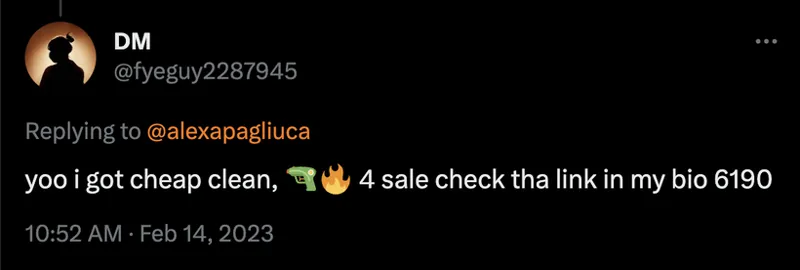
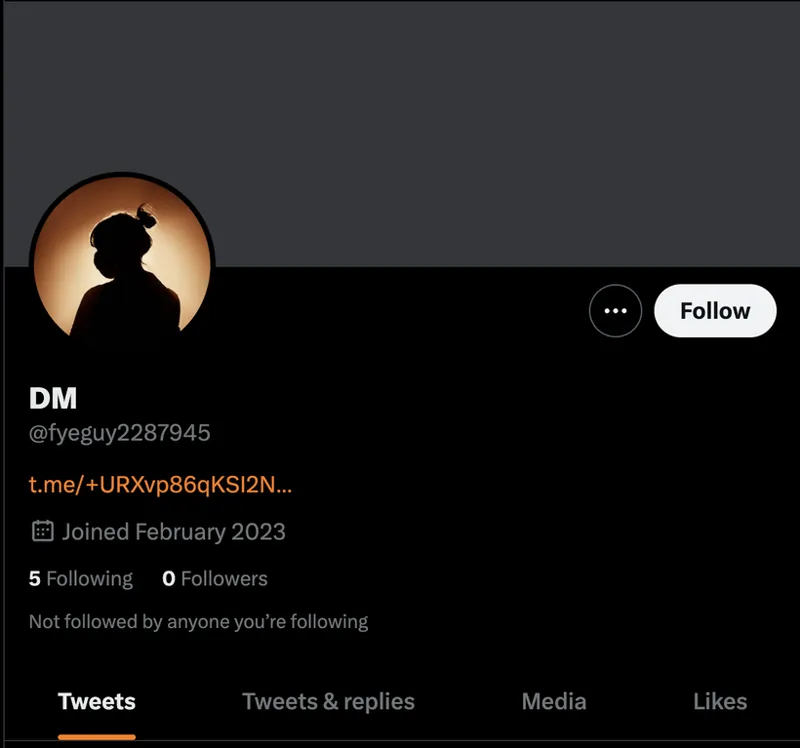
Not twenty minutes after seeing the image of the kid in the "Oxford Strong" sweatshirt, I had someone try to peddle "cheap clean" guns to me on Twitter, of all fucking places.
There's a part of me that hopes young people, witnessing this collectively headassery, will do better than any of us have. There's also a part of me that wonders whether it's a good idea to expect too much at all from a generation heading toward, through and probably further into a clusterfuck of traumatic experiences, because we've so effectively dropped the ball. "They've got it great! Our parents used to beat us with belts." Sure. Surviving the constant fear of, not to mention actual mass shootings, definitely a bunch of pussies. And to all my fellow Gen X'ers who might want to reply that we survived the constant fear of nuclear apocalypse, I'd suggest you're putting a little too much stock into just how well we came out of it. Our only saving grace has been that as a generation, we've been too overwhelmed by the sheer number of Boomers and Millenials to get to show our asses in just how badly we would have mismanaged things. The Boomers came along at just the right time for medical tech to keep them alive long enough to skip over us, and Millenials have been more than willing to take the baton, even if that means ripping it from the hands of Boomers who refuse to pass it. As much as it pains me, I can't overlook how well represented Gen X is in the "I ❤️ Fascists" category either. The assumption that we would have done better is just that, an assumption.
There are lots of different reasons people claim we're at a precipice, but as I've noted before, the fact that we have such an array of pressing problems, and we are incapable of realizing we aren't capable of attempting to address any of them with any sense of urgency or efficacy is the most damning, as a practical matter. The number of problems we face which could reach the level of existential threat on their own, isn't insignificant. Looming climatological collapse, wealth and income inequality, the many forms of discrimination we exist with and within, inability to provide adequate health care of any kind, automation eliminating once good paying jobs (which will soon further extend to white collar jobs through the growth of AI). A complete inability to meet the responsibilities brought on by new information technologies, like social media and the internet more broadly. It's a long list. That we can't address one is bad. That they so often compound each other is the key to understanding that our days are numbered, at least as The United States is concerned.
It's strange to live in a time where we've just given up on anything but the most superficial facade where solving problems is concerned. Most recently, I wrote about this where the epidemic of police murdering people is concerned. It's one thing to look at that, and another altogether to take into account just how many things we're approaching by reapplying topical treatments which didn't work previously, like "training" in instance of police violence. It's not an attempt to fix anything. It's an attempt to be seen as taking action, by doing the most politically expedient thing, that isn't going to cause police advocates like unions and fraternal organizations any discomfort, even as police are the institution which needs to be fixed. Where problems with police and mass shootings converge, specifically at schools are concerned, we can look to Uvalde.
What happens when the police are killing people by the thousands each year, and have no duty to attempt to stop someone engaged in a mass shooting from killing children? We can all be very angry about that reality, the one that the events at Uvalde highlighted, but it is the reality. The Supreme Court has ruled that police have no duty to protect the public. We can die by the thousands, at the hands of police, but we can't expect them to protect anyone, which at least nominally (though not practically), has been the reason our attitude about policing has evolved to become, "You can wander our streets with guns on your hips and kill anyone who frightens you when they don't immediately comply, whether your commands or even your reason for interacting with them has any basis in legality." In reality it's only slightly different than saying, "You have to learn to live with the fact that we don't want to address any of the reasons angry men pick up a gun and try to randomly murder you or address the fact that they can do this, obviously at will." Of course, we'll create a long line of excuses, but the lived reality is essentially the same. "It's too difficult, too costly (in either dollars or in political cache) to attempt to fix this problem, so you have to learn to live with it."
Not shockingly, the higher we can pile our privileges, the further we get from those realities. I can't say it's astonishing anymore. Absurd, sure, but not astonishing or even mildly surprising. This is a thing other societies and civilizations have contended with before. The most privileged, also being the most powerful, being so separated from the lived experiences of the majority of the population, leading them into a kind of catatonia, a kind of euphoria of ignorance, where they aren't capable of understanding their misuse and mismanagement of the power they have is actively undermining the stability they seek to protect, because they're incapable of feeling there's any urgency to solving the problems pressing on the people who do most of the living, working and dying.
What it's not is sustainable, in part because we genuinely believe we've reached the apex, the zenith, and what we are, what we've created is so good, to attempt to create something more sustainable, something more stable is to court disaster, when the reality is this sclerotic belief is as unsustainable as what we fear is frenetic, wild, chaotic change or progress. This isn't navel gazing either. Navel gazing would suggest being so inured by the exploration of the facts and conditions within these problems we couldn't decide what to do. That would suggest there is a genuinely living interest, even if ineffective. This is much worse than that. This is like a nihilistic cosplay of navel gazing. We trot out identical arguments every time one of these problems calls attention to itself. We go through the same scripts. "Thoughts and prayers," a sentiment which might at some time have been the expression of care and compassion has become exactly the opposite, a shield against having to act on compassion, with care for the damage that's been caused. It's now, rightly, an expression we sneer at, because of the inaction its meant to give cover to.
I can't help but think about the way many people talk about hope, in relation to politics and social problems. Hope is necessary. It's not the same thing as faith though. Faith is belief without evidence. Hope is the result of evidence, and it doesn't even take much evidence, but it does take at least a trickle of reliable evidence, in intervals. In this case, it's getting harder to find hope because the evidence that our institutions are able to address any of the persistent problems we face with any effectiveness is vanishing and in the lived experience of many people, has already vanished. That's a recipe for the kind of instability that brings down nations, and we currently have a fascist movement very interested in bringing down the nation, as it's been understood to exist, and refashioning it to their diseased liking. It seems it's our faith, that we are the Greatest Nation, that we are somehow supernaturally imbued with the power to be an infinite empire, that progress is inevitable because of that greatness, is killing the realistic needs which foster hope.