
Carnality and Repression in Damien Chazelle's Babylon
I've written a general review for Babylon. After seeing it again, I'm struck by how little of the commentary in the film about repression via conservative social norms has been left out of discussion surrounding it. Part of the response to the film belies the unconscious conservatism in much of the audience. This act of reflection is deliberate on the part of Damien Chazelle and the filmmakers as a whole and deserves more attention and examination.
This will contain spoilers, as I discuss specific parts of the film.
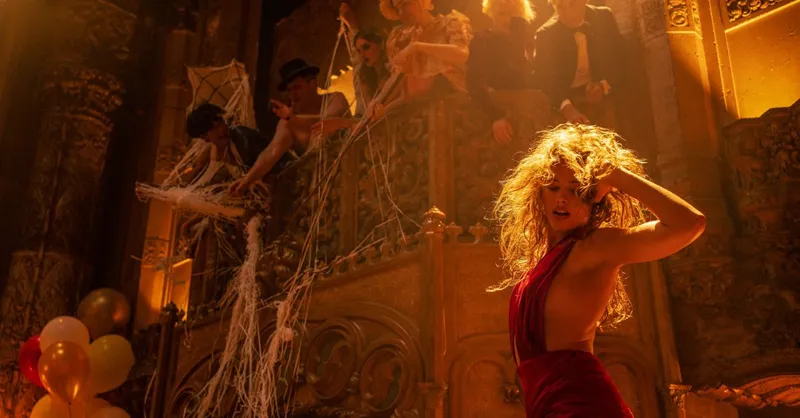
In the early part of the film, as Diego Calva's Mannie is headed toward the party, attempting to transport the elephant, it's clear there isn't a very high bar to entry to Wallach's party. There's even a joke, once he's arrived at Wallach's mansion, about his efforts to bring the elephant to the mansion resulting in a cavalcade of people who want to be at a Wallach party. Once the party gets started, it has a properly Bacchanalian flare. Sex, kink, drugs, excess and indulgence are on full display. But, everyone is involved and it's clear the only reason some of the characters who aren't publicly indulging in their particular excesses is their particular pleasure is derived from whatever act being done in private. Nothing we see being done in private is any "worse" or more taboo than what we see being done publicly.
In her review for the New York Times, Manohla Dargis, suggests Damian Chazelle is portraying and championing early Hollywood as a place of unbridled personal freedom. This misses the nuance of what is in the film though. As much as Babylon is portraying this period as being one of personal freedom, that personal freedom is happening in the larger context, and the movie is clearly about how that context changes over time, and what that means for the people who create in it. What personal freedom these characters have to indulge their excesses, and what they create as a result, hinges on how the environment they exist in treats those excesses. When everyone is indulging their own carnal excesses, in whatever degree or fashion they want, it's a participatory atmosphere. The celebration of this desire for excess is open to everyone, and it does have consequences, as we see when a budding starlet has overdosed and needs to be snuck out, but the problem isn't the more taboo acts she's participating in, it's that she's a child participating. This is clearly a party and environment for adults. At the same time, one of the few reasons this engagement in carnal revelry stops is to give the stage to Li Jun Li's character, Lady Fay Zhu, so she can perform a spellbinding ode to her lesbianism. It's a celebration of performance and of the carnal, and everyone is welcome to participate.
This is a decadence human beings have engaged in since we've begun creating civilizations. All of this is so deeply human, it crosses every other boundary or strata we have. In the case of this party, it's happening in the lavish setting of the home of a Hollywood studio owner, but the setting doesn't matter. Human beings engage in behavior like this whether they are rich or poor. Anyone whose spent any length of time in the restaurant industry can attest to the degree this variety of decadence is in no way solely the realm of the wealthy. It's a celebration and performance of the carnal, and that is so deeply human there are no boundaries it can't transcend. As I said in my review, "People fuck. People have kinks. People dance. People do drugs. They eat and drink to excess. They often do these in combination."
Part of what we're seeing is that the personal freedom Dargis refers to in her review is related to this community aspect though. As long as everyone is participating, no one has the time or inclination judge what anyone else is doing. Participation is by choice, and to that degree it is about personal freedom, but in the world of Babylon that freedom can also only exist so long as there is a place for it. It's about how the broader environment shapes the creation, and part of what Babylon is concerned with is the cost repression has for human beings. The environment also influences what can and can't be performed or exhibited for the public. What we're seeing is the result of the openness that comes from participation.
One of the things that changes over the course of the film is this aspect of participation in the excess. Margot Robbie's character, Nellie LaRoy, becomes a star because she can bring those characteristics of carnal excess to the screen, within the world and narrative of the film, but also for us as an audience. She is practically the embodiment of anarchic creation. She is an id of volcanic emotional outbursts, unbridled sexuality, and the desire for validation via attention. Her ability to channel this in performance is what makes her what the audiences of the world of Babylon want to see, and what makes Margot Robbie's performance as Nellie so captivating.
As the film progresses though, as the perspective audience for film grows within Babylon, the expectations change. One of Nellie's eruptions into her signature variety of chaos results in her being bitten in the neck by a rattlesnake. She does this in reaction to the dismissive, belittling way she's overheard some men talking about her and her career. It's a scene Chazelle plays for our amusement, implicating the audience in this string of events by doing so, but it's Lady Fay Zhu who treats Nellie as something more than just a spectacle, and a human being deserving of care and consideration. Nellie LaRoy could have her choice of lover and confidant, but she chooses Fay Zhu for this reason. It's not a coincidence that this is all the result of a party Brad Pitt's Jack Conrad is throwing, more or less to announce his engagement to theater luminary Estelle, and his attempt to "class things up" because he wants her to see him as an equal, where she sees movies as a "low art form" in comparison to theater. This kind of social conservatism, exclusivity, what is socially acceptable, and what is and isn't art are intricately connected in Babylon.
Not long after we get a scene where Mannie, now a studio executive for Kinoscope, the studio Nellie has a contract with, fires Fay Zhu, telling her she has to disappear from Nellie's life because of the way their relationship is effecting Nellie's career. He says, "People care about morality now," as a reference to a lesbian relationship hurting Nellie's image. The morality of the entire system and environment are never called into question. Instead, it's this faux morality about sexuality he's referring to. Before this, as we're shown a headline about Fay and Nellie's relationship, we get a snippet of dialog referring to the "Hearst crowd," a reference to this newly introduced sense of conservative morality and the incredibly rich outside of Hollywood.
It becomes clear, when Mannie is brought into Kinoscope in large part to rehabilitate it, Nellie's star is waning specifically because of the changing environment. The exact thing which made her a star in the first place, the degree to which she isn't concerned with the high manners of polite society, the ability to channel a sense of individual freedom and embrace raw carnal impulse, is now a detriment to her continued success. Where the chaos connected to this ability was being managed and handled by Wallach and Kinoscope prior, so that they could continue to profit from it, the dwindling profits have meant less appetite for attempting to manage the consequences as well. Her usefulness is coming to and end, and they're preparing to cast her aside, without consideration for what being used has cost her.
The next party scene we get is the attempt to prove to the "Hearst crowd" that Nellie is now one of them, and it does not go well. Nellie may be a person of raw impulse, but she isn't an idiot. She's highly attuned to the motives of the people around her. It's why she remembers Mannie when he runs into her in New York, even as she's only had one interaction with him prior, and why she responded to Fay Zhu as she did. At this party, both Nellie and Sidney Palmer are treated almost like zoo animals, expected to perform for the Hearst crowd. Where in the party that opens the film everyone is participating in a celebration of carnality, everyone is engaged in some degree of performance, this is a crowd who simply wants to be entertained, within their narrow standards, and to feel both separate and superior to those doing the performing. The separation has become concrete at this point. It's not just a whisper. These people would never deign to lower themselves to the point of performing. It's too carnal an act, which is why it's outside of their limited morality, and why they use this illusion of morality as a method of control. Nellie LaRoy has already told Mannie, and us as the audience, in the scene following her visit to her mother in NY, she is not going to be controlled, and she rightly recognizes the claim to propriety and morality as exactly that.
This is a morality which claims to want to eradicated decadence, and it's a definition of decadence is inextricably connected to the carnal, the pleasure of flesh, performance and participation. It is a morality disconnected from the realities of human behavior.
What we see though is that decadence hasn't been eradicated. It's literally been driven underground. It's no longer out in the open, and there has been success in decoupling it from participation and therefore, from creation. When Tobey McGuire's James McKay takes Mannie to "the best party in the city" it's in the underground aqueducts of the city. It's sadistic and depraved. It's literally a freak show. Because this is now an audience that isn't participating, has become indoctrinated, individually infiltrated by this sense of participating in the carnal being filthy or wrong, they are now purely spectators. Without participating in their own desires or excesses, and because those carnal experiences and desires are now repressed, they've turned to a sadistic pleasure of this freak show, of watching the "other" perform acts which are explicitly about self debasement, self destruction as entertainment. McKay explicitly says, as we've just seen a gargantuan, mind boggling mass of muscle eat a live rat, "This guy will do anything for money!" The implication is that outside of the community participating in creation, celebration of the carnal and its performance, the repressed have had their appetites fester and grow fetid with a depraved sadism, along with this desire to exercise the power of their money to turn the "other" into a freakish spectacle. Because of repression decadence has become, "Let's go see what kind of sick shit we can pay the freaks to do for our entertainment," which is as hard a contrast to the participatory celebration of carnality in the beginning of the film as one could imagine.
Chazelle is using these party scenes to make a statement about repression, the acceptance of the carnal, the illusion of conservative morality related to the carnal, and what that means for human beings broadly, but for artists specifically too. That world is a world without a place for Nellie LaRoy. She is a creature of the carnal, and what makes her undeniable and magnetic is her inability to deny it.
It's also a world where someone like Pitt's Jack Conrad has no place. For his many faults, Conrad is a true believer in the power of movies, and is someone who believes the responsibility of the artist is to marry the art of the form with the connection to the audience. He doesn't see a separation between film being an art form and being able to give audiences what they want. The responsibility of the artist, from his perspective, to be in conversation with the audience and to lead them to the new vistas within the art form. As we see, there is no place for someone like him in this new world of conservative morality, even as he is in many ways, the picture of traditional masculinity that conservative perspective venerates.
What Chazelle is saying is that when our creative arts are bent to this facade of conservative moral values, when they aren't allowed to include and celebrate some of these things that make us human, in this case the very carnal aspects of our humanity, and we restrict who is allowed to participate in that creation, because we readily other increasingly large numbers of people, we inevitably turn to a kind of ugly sadism. When we don't all get to participate in the celebration of performance and creation, when we strictly become spectators, we have no skin in the game. We're not connected to the act itself. It becomes an abstract, something we feel we can judge, without ever having experienced it ourselves. We come to want a freak show, where we'll pay to be spectators to increasingly depraved acts, seeing those who are performing for us as the freaks, who don't deserve any sense or semblance of a respect for their humanity, and whose only value is whether they're willing to continue escalating their own debasement if we'll pay them to.
Chazelle uses Jean Smart's character, Elinor St. John, as the voice of conventional wisdom, and she placates Jack Conrad with her description of a kind of immortality his fame has given him. It's not wholly untrue, but it's also somewhat hollow, as we see when Jack shoots himself. Movie stars come and go. Trends and eras pass. This is all true, and much of it is beyond the control of any individual, and even the control of the machine that is Hollywood overall. It's also a bit too easy, as the rest of the film demonstrates. It's as true that because one era passes, doesn't mean we shouldn't be asking ourselves about the era that is becoming.
What is referred to as "morality" within the film isn't moral though. It's ingrained puritanism which has snuck its way into perspectives of even people who would consider themselves directly opposed to religiosity or puritanical thought. It's a complicated and uncomfortable reality that we don't fully know what to do with or what to make of, that there is clearly a human drive to celebrate the carnal, and participate in that celebration by both being witness and being witnessed. It's a morality at work in much of the reaction to Babylon as a film, some of which has been expressed as the degree to which it's not a transgressive film and it's not showing us things that are truly shocking. This is the deeply humanistic aspect of the film. It treats all of these things are being very much part of the human drives of creation and performance and not as inherently destructive or damaging. They aren't shocking, because of just how innate they are, and they aren't meant to be.
Babylon is in many ways, asking the audience to think about how we're participating in these cycles. What are we demanding of movies (and the arts more generally)? How do we see the people who create them? Is bending to this conservative instinct to devalue explorations and presentations of the carnal having ancillary effects, and if so, what are they? Can anyone who doesn't engage in their own acts of creation and presenting it to the public accurately assess the creations of others who do? Can we treat those who do create for our entertainment as fully human if we don't understand what it is to create?
It's a film that asks a lot of the audience, and we're not used to having a big, expensive studio film ask this much of us. We're used to big budget studio films being superficial and more or less clanking us over the head with their themes and being explicit about what they have to say. Part of what Babylon is doing, is arguing that there can be more than that, and that as audiences we can not only accept more than that, but we should look for more than that as well. It's possible though, the reaction to the film proves that thesis incorrect.
