

Kitchen Tables, Culture Wars And Identity Politics
For a decade or more, among our political commentators, pundits, media personalities, operatives of both parties and no shortage of self identified leftists, there has been a dismissive tenor toward what are often called "culture wars" and/or "identity politics." The dismissiveness is founded in the supposition that these are not issues of importance to "average Americans," they are not, in political parlance, "kitchen table issues."
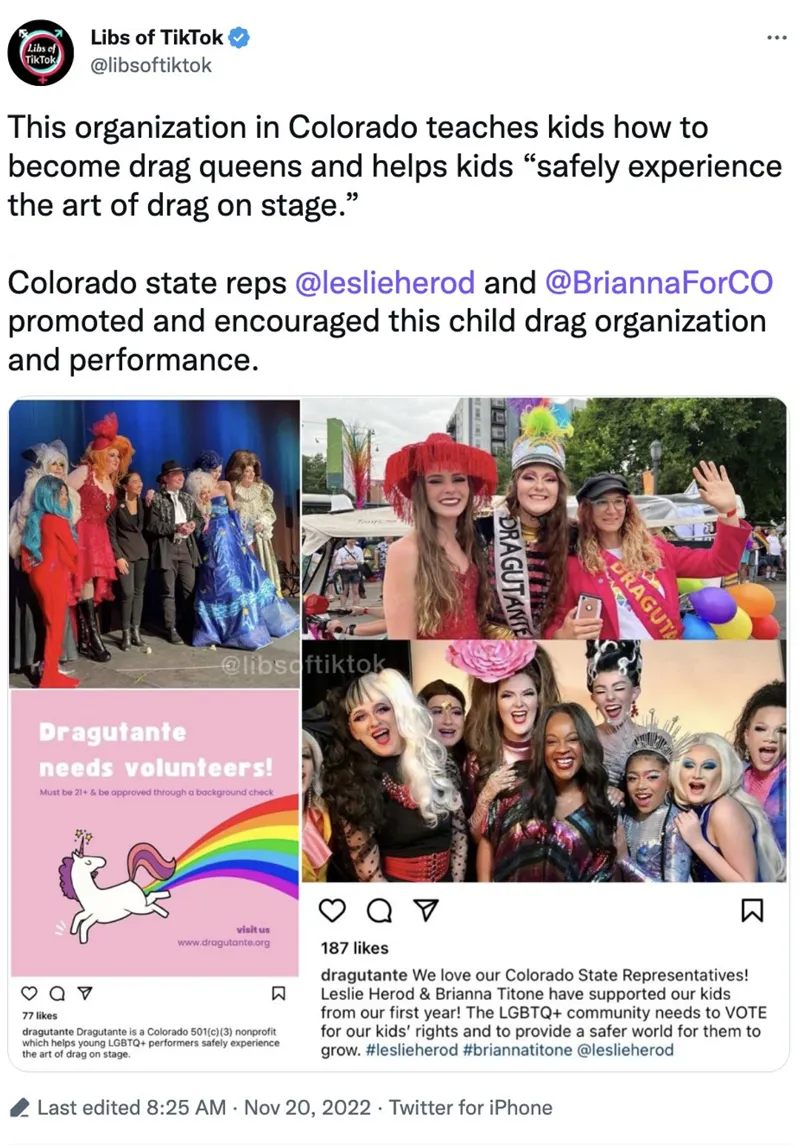
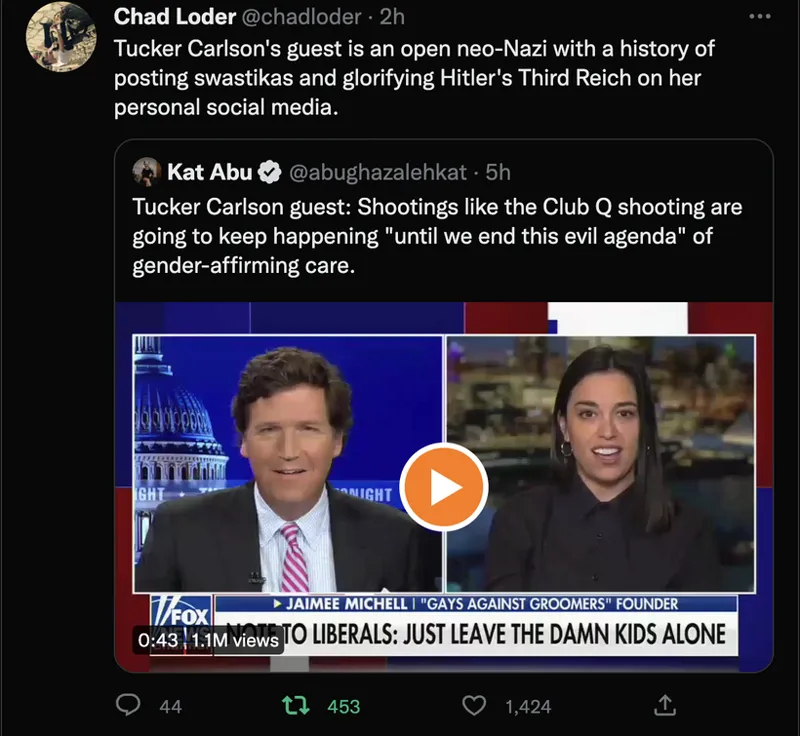
On Saturday, November 11, a twenty-two year old man walked into a nightclub that serves the LBGTQ community of Colorado Springs, Colorado, killing six people and injuring eighteen others. This is following a now months long campaign by the right to conjure up some connection between LBGTQ people and pedophilia, being waged by the likes of Tucker Carlson, a popular Twitter account run by Chaya Raichik called Libs of TikTok and no small number of right wing politicians and candidates. Chaya Raichik has been alternating between targeting children's hospitals which provide gender affirming care (none of which perform gender reassignment surgery, despite the claims of the right), and basically any entity or organization she can find which publicly advertises drag shows, especially any of those that are all ages. She has previously targeted the same children's hospitals which have received numerous bomb threats in the last few months. On the morning following the attack at Club Q, Raichik continued targeting the LGBTQ community of Colorado Springs. Club Q apparently had a drag event on Friday night, and another scheduled for Sunday morning. Tucker Carlson has taken to picking up what Raichik is claiming, and airing it to his millions of viewers on a regular basis.
It's become this simple. Using social media and their media silos more generally, Tucker Carlson, Chaya Raichik and dozens of others identify and call out targets. They wait for the faithful to act on their directions and then feign ignorance. For a long time they would point the finger at people with mental illness as the problem. The point has now been reached that they realize they don't even have to scapegoat people with mental illness.
To a substantial portion of our political press, politicians and again, no shortage of self identified leftists, the efforts by people who've been historically discriminated against to insure they are considered worthy of protection from exactly this kind of violence and these kinds of campaigns is treated as a "distraction" from "kitchen table issues that matter to average Americans."
When I put it this way, it seems like an accusation or a provocation, doesn't it? It seems like they couldn't possibly be saying that. I will give the majority of them the benefit of the doubt to say they don't realize that is what they're saying, that our neighbors, coworkers, friends and loved ones don't deserve the same level of consideration as the rest of us. If they were to be confronted with this, there's a good chance they'd take offense. "Of course that's not what I'm saying. You're twisting my words and attributing to me things I didn't say," would inevitably be the response. They would be technically correct. They'd also be wrong, because the suppositions on which euphemisms "culture wars," "identity politics, "average Americans,""kitchen table issues" are based, purposely exclude people who have some aspect of their identity which has historically targeted with discrimination, and these phrases have been used and deployed in part because they obscure this fact. These are phrases about identifying the us as much as they are about identifying the them.
They are phrases obscure that there is a default perspective in American politics, media, economics and culture. It can't seriously be argued that this default perspective isn't white, Christian and heteronormative. It can be argued, but not seriously. We have a few centuries of history which are directly contrary to this argument. When our political media and other professional spin masters employ them, it is possible they aren't purposely attempting to exclude people who don't fall in this nexus of cultural identity because they're so used it being the default, they don't even consider it themselves. The majority of them share this identity. Even I do. I'm white, and heterosexual. It's the culture I was raised in, and even as I'm in no way what most people would consider Christian (I'm an atheist, in fact), I can't escape the fact that the culture I was raised in placed a premium and privilege on Christian beliefs. Even without any religious education, by the time I was about twelve, I could fairly well relate the events of any number of Bible stories, because we're just saturated in it as the default perspective.
"Kitchen table issues" get brought up as this reference to the things average Americans care about. They're primarily economic. Housing costs, the state of the economy in general, food costs, things like this. They're presented as oppositional to "culture wars" and "identity politics" to signal that things outside of this realm can't be part of the default perspective, because average Americans aren't going to be worrying about them, sitting around their kitchen tables with their families. These are phrases which obscure who isn't at the table being referred to, and what might be of importance to them.
There are six families today for whom there is no issue more important around their kitchen tables than the deaths of the loved ones who were snuffed out because we have continued to use euphemisms like "culture wars" and "identity politics" as a way to refrain from confronting the eliminationist politics of the right. I have no doubt of the six murdered and eighteen injured, the majority of their families are distinctly average. Their loved ones murdered though, haven't been afford this same consideration. In reality, there are no such things as "culture wars" or "identity politics." These are euphemisms and phrases which have been popularized specifically because the last decade or so has seen challenges to the concept of a default perspective which weren't possible before. Some eighty million indigenous people died on this continent because identity politics have always been part of our politics, in no way separate. This is how the United States has conducted its politics since it was a collection of colonies. The only thing that's new is that people who do not share the identity centered as the default have been able to insert their descriptions and reactions to the failures resulting from this being the default perspective into the public square in ways previously unavailable to them.
Take a step back and just look specifically at the phrase, kitchen table issues. What it obscures is who isn't at the table. When we see things like racial discrimination in policing referred to as identity politics and identity politics as positioned in opposition or as a distraction from kitchen table issues or the concerns of average Americans, are those Black families who have to have The Talk with their young children (especially, but not only, the boys) about the dangers police pose to them not average Americans? Is this not a kitchen table issue for them? How about the wave of antisemitism we now see? Is that not a kitchen table issue for Jewish Americans? What about the family headed by two mothers? Considering gender based wage discrimination, that's probably a kitchen table issue for them, isn't it? Would anyone suggest the onslaught of legislation anti-LGTBQ legislation in right leaning states isn't a kitchen table issue for them? How about a family who has an LGBTQ child? Are the anti-LGBTQ policies being advanced by right wing legislatures and school board not a kitchen table issue for them? If you really want to put a spin on your head, start considering the way housing and lending discrimination effect what home that kitchen table ends up in. One last example, what about that increasingly large population of people who are choosing not to have families, either because of their assessment of the economic realities they face or because they just don't want to? Are they not average Americans? Consider that men who are not married and don't have children earn less than their married counterparts who have children and are less likely to be offered advancement and promotion. Is that not a kitchen table issue for them?
This is always about obscuring the fact that the default perspective is that of white, heteronormative and Christian. Why is racial discrimination automatically a matter advocated by special interest groups? What exactly is special about people in the United States asking for their institutions and leadership to live up to stated aims and aspirations? Is being Jewish alone enough to make someone an advocate for a special interest group? For the right, the fascists, this is a means to continue to center the people who have empowered them based on the identity politics they have engaged in, and to encourage those people to target anyone they feel are a threat to the default nature of their status. When anyone continues to treat this framing as if it doesn't help empower the right and fascists, they're being willfully ignorant or disingenuous.
From the left, the argument tends to be that we can find common ground with the supports of fascist discrimination if we lure them away with promises of economic prosperity. This absolutely negates the very real history that the right has not produced the prosperity they've promised, and those people, primarily on the basis of their sense of identity, have continued to be loyal. What the right has done, what fascists are today doing, is promising to marginalize and punish the right people in the eyes of their loyal base. The arguments and the evidence are there, and have been there for a decade or better that it is the policies of the right which have harmed working class whites. Those who have not abandoned the right, even as it has become a full blown fascist movement, are not going to in exchange for promises of better opportunity.
This argument also leaves open the question of what exactly is the offer to all of the people the fascists are targeting? If your solidarity ends when you clock out, how reliable is it? Not to mention that this is no answer to the history of the right using discrimination as a lever to aggravate and broaden already existing schisms in left coalitions and in the history of labor organizing. Are all of those people who are not white, heteronormative and Christian not as deserving of being considered Americans (i.e. average Americans) as their white, hetero, Christian counterparts? So long as the practical answer is no, and understand, so long as their calls to be considered as worthy of consideration and protection are considered a distraction, there is little hope of any genuinely effective workers movement that includes a large section of the white working class. It is an argument which begins with compromise having to be primarily from the people who are already starting out in the position of being marginalized or living with the effects of discrimination which privileges white, hetero, Christian people. It begins with telling them their concerns for their basic safety aren't as important as the economic concerns of people who don't have those "other" concerns.
Simply put, there is no such thing as a culture war or identity politics, and as long as these euphemisms are put to use in media and politics, fascists are going to keep conquering ground in the American political landscape.