


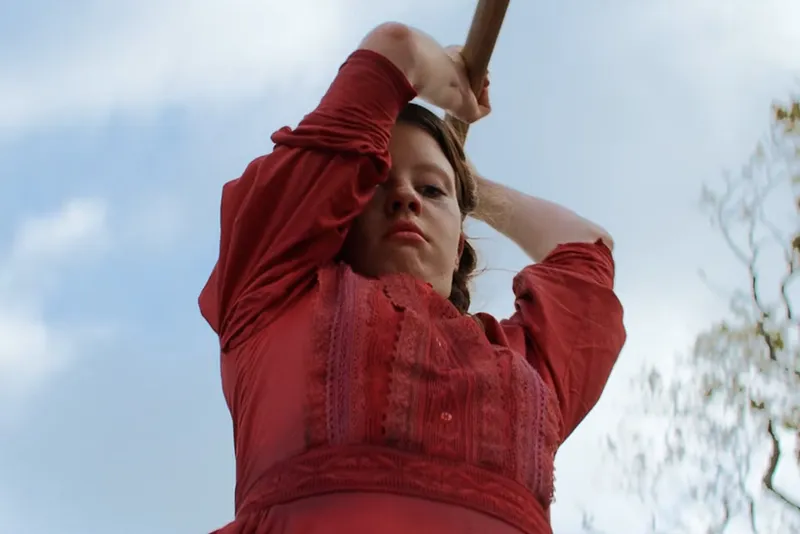
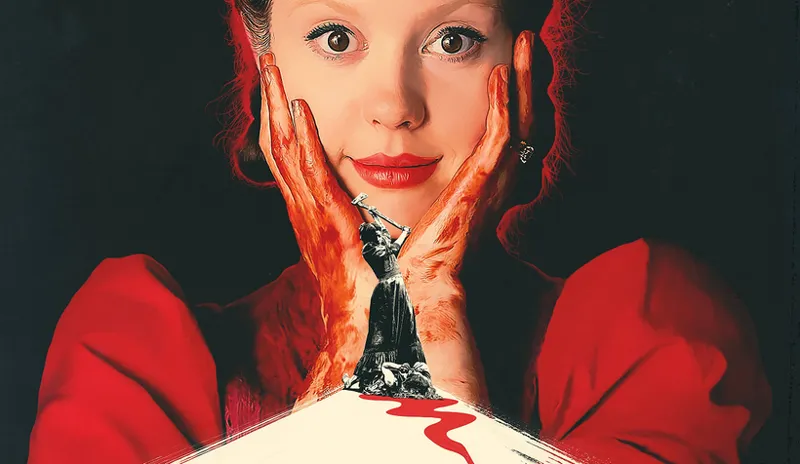
Pearl (Ti West, 2022)
Note: There will be both a spoiler free review, and a more in depth discussion after.
Spoiler Free Review
If nothing else, Pearl is something different. It has most of the elements fans of the slasher sub genre are going to be looking for, and is simultaneously so much more than that.
Earlier this year, horror fans were shocked to find director Ti West had a new film coming to theaters. There had been no news about it prior to the release date being announced. West and company spent the beginning of the COVID quarantine in New Zealand shooting the film, and with all that the things COVID quarantine connotes, they skirted under the radar of the film press. With the success of that film, X, it was announced that not only was there going to be another film, a prequel origin story for the elderly woman who is at the center of the madness and mayhem of X, but it was already completed. X was released in March, and now we have the prequel, Pearl being released in September.
In the process of making X, Ti West realized he and the crew were in the fortunate position to be in New Zealand, where due to strict constraints, had very few COVID cases and they could work relatively freely, they should shoot another film. Once the production/distribution company, A24, were on board to finance and distribute it, West enlisted Mia Goth to cowrite the script, and Pearl was brought into being. Goth had just played dual roles in X, as Maxine, and under heavy prosthesis, playing an elderly Pearl. Initially, West thought it was a good bit of fun to have the same actress playing these two roles, because they are at the opposite ends of the spectrum of youth and age, dreams of the future and disillusionment. It turned out to be a fortuitous choice, as it made sense for Goth to be the lead in Pearl.
X was unusually rich in its themes and subtext for a slasher film. It has a lot on its mind, from repression to aging to gendered attitudes about sex and where filmmaking and storytelling fit in all of this. Pearl takes this thematic richness a step further, to the point that it's no longer subtext. Pearl is essentially the commingling of a character study and a slasher film, which is what does make it something different and original.
In X, the character of Pearl is written as a person, not a mythical force. She becomes a lurking evil waiting to dispatch our cast of horny characters, but she's also more than that. She has motivations not at all related to simple blind revenge. As twisted as it may be, there is a real sense of love and care to her relationship with her husband. This is also a big departure from the usual slasher formula.
The slasher sub genre, maybe more than any other variety of horror film, is littered with examples of films and scripts the majority of whose cast of characters have no purpose but to meet the requisite body count. Of course, the Final Girl is as central to the slasher as the character doing the slashing and the the body count, and she is usually the one most closely resembling a fully written character. At the same time, the slasher film is as concerned with creating the mythology for its villain/killer, as it is creating a character in the Final Girl. The villain/killer is rarely a fully formed character though. They exist as an embodiment of something, usually revenge of some kind, past sins coming looking for recompense in the form of body parts, but very rarely do they exist as characters in the way we expect good, well written characters to represent human beings. What we come to know about these killer characters and their motivations is usually a mythology. What we can know of them without this, is only through their actions, and in the conventions of the slasher, all there is to the actions of the villain is hacking people up. Even Freddy Krueger, one of the few slasher villains who speaks, isn't as much a real character in the first Nightmare On Elm Street, as he is treated more like a mythical force. There are exceptions, but more often than not, this is how villains/killers are treated in a slasher film. In the case of something like A Nightmare On Elm Street or Halloween, this works, serves the story, and helps deepen the emotional resonance of the film, as well as heighten the scares.
Pearl is entirely about that character, our killer, and how she comes to be who she is in X. Ti West and Mia Goth have pulled off the minor miracle of writing a film that is successful as a slasher film in many ways, but is also successful as a genuine character exploration of the person who is responsible for the carnage. Pearl is not a one dimensional character, by any means. She's complicated, conflicted and fully realized. The beautiful trick this film pulls off is lulling the audience into believing what they're going to see is something much more formulaic and standard, and then delivering something much more complex, convincing viewers to take the ride through the force of Mia Goth's performance and the quality of the filmmaking. In this way, Goth and West are doing the yeoman's work of presenting a section of the audience who wouldn't necessarily seek out more challenging films, with a film that is both what they expect to see, and is going to challenge them.
Roughly the first half of the film plays like it's setting up the bloodbath that's standard in any slasher film, and we do get a good bit of that. By slasher standards, Pearl has a low body count though. At the same time, the second half of the film is challenging almost everything we think we've known about Pearl and her motivations. It pulls off this wonderful trick of acknowledging we've been right about what her motivations are, but they are in no way as simple and as superficial as we've thought they are. The final act of the film, steeps Pearl and everything we know about her in tragedy, which deepens the understanding of the character in X. We see Pearl committing horrible acts, and at the same time, through the power of Mia Goth's performance, we're rooting for her fifteen minutes later. The film creates nuance and complexity in an interesting way that isn't pedantic or didactic.
That brings us to the thing in Pearl which can not be escaped, the Mia Goth of it all. Throughout the film, she shows a sly range, from playful, childlike giddiness and innocence through to a focused, furious, murderous rage. All of this comes to a crescendo in a scene in the last act, the kind of monologue most actors would sell a kidney for an opportunity to play. Goth demonstrates why pieces like it are so coveted, by extending the range she's already shown in the film, while piercing every moment with vulnerability. The scene deepens everything we thought we knew about Pearl. It's nothing along the lines of a shocking twist, but it complicates what we know, gives it different shades and hues, while also adding these to some of the other characters in the film. We don't get to leave the film with a simple, superficial perspective. The final shot of the film, which continues as the credits begin to role, puts an even more haunting cap on the whole affair.
Mia Goth has everything it takes to be a Movie Star. She is clearly an extraordinarily talented performer.
Beyond her performance, Ti West has left behind the homage to the 1970's, DIY aesthetic of X, and instead embraced the vibrant color and bright hues of Hollywood's Golden Age. The cinematography by Elliot Rockett is excellent, between its ability of the communicate the isolation of Pearl's farmhouse home and its use of space and composition to help add tension to some of the scenes involving violence. There's also a score by Tyler Bates and Tim Williams that also recalls the lush, enveloping style of that era. These combined with the content of the story to create a surreal atmosphere to the whole thing. There's almost an undertone of Pearl being a Disney princess who found herself in the wrong film. It would have only been slightly more surreal if she broke out into song as the way the film communicated her inner life.
Pearl is an unusual film, and one of the better films of 2022 for it. Ti West succeeds in creating a prequel which is extremely different in style to the film which originated the character, while still tying the two solidly together. This alone is unusual. Sequels and prequels invariably end up trying to recreate the exact atmosphere, visual style and beats of the film from which they originate. One can see Pearl or X without seeing the other, and each would stand completely on its own, but seeing both does enhance the experience of seeing either. Pearl is all of these things while being entertaining and deeply engrossing.
Spoilers Ahead
There's been no shortage of reference to the fact that Pearl can be seen as a comment on the selfie obsessed, very online variety of culture of influencers and wannabe influencers. Pearl, as a character, is obsessed with getting away from her small life and hitting it big in Hollywood. She wants to be a star. She wants to be "loved by as many people as possible." She needs to believe she is special. Her motivation for murder comes from these desires. Anyone who stands in the way of her achieving this goal or who makes her feel small is stepping into a murderous path. It's been especially popular to comment on for film journalists who've achieved some level of notoriety and status, especially those with a leaning toward the horror genre.
It's a facile and superficial response though, and given the text and subtext of the film, it says more about them than it does about the film. This isn't throwing shade, by any means. With the way so much of the culture of film discourse has deteriorated into harassment and every variety of disgusting behavior, it's completely understandable why someone with a level of recognition to be consistently subjected to it would be quick to point this out. They're not completely wrong, they're just stopping short, instead of acknowledging all of what Pearl suggests.
Part of what's great about Pearl is that it avoids being so easy and simple as this. In the first half of the film, this does seem to be where it's going with the character and with the perspective of the film. All of that changes as soon as the dinner scene happens where Pearl and her mother have their final blow out.
What hasn't completely factored in, to that point, is the depth of the isolation these characters have been enduring. The flu pandemic of 1918 is in full swing, which we've seen is effecting their lives significantly, so there's the level of isolation which comes from this. It's something audiences can certainly relate to, given the experience of the COVID quarantines. That's a secondary isolation though for these characters though. The flu is resulting in a physical isolation, but what we get during the dinner scene is the depth of the isolation these characters were experiencing even before the flu epidemic. They were already emotionally isolated, and the flu then causes physical isolation.
It's clear Pearl and her mother have been at odds over her dreams of getting away from the farm for some time. This isn't something her mother finds appealing. She's already trying to keep the farm afloat, keep them all fed, while caring for Pearl's father who has been rendered paraplegic by the flu. Without Pearl, chances are it would be impossible. It's understandable that her mother has these fears and feelings. It doesn't make her a bad person or a bad mother because she feels this way.
What we get during this scene, is her mother's expression of feeling just as trapped and just as resentful toward the situation as Pearl is. She does express it all with venom toward Pearl, but it's clearly parallel to what Pearl herself feels. Up to this point, we've seen her mother is an austere and repressive presence in Pearl's life. She claims to have some level of fear of Pearl, having seen what Pearl "does when she thinks no one is watching," which seems to be a reference to things like skewering a goose with a pitchfork, which we've seen early in the film. Nothing about the way she acts or speaks suggests she's afraid of Pearl though. If her reaction to fear is to demean, insult, dominate and belittle Pearl as aggressively as she does, that also tells us something about the way she establishes a sense of control.
The way Pearl's mother is expressing these things is in a familiar sentiment though. "Why shouldn't you have to suffer through what I have and like I do?" When Pearl honestly expresses herself to her mother, attempts to have some sense of agency, the reaction is a torrent of belittling, demeaning vitriol. Pearl's shock at this suggests it's the first time her mother has expressed her own sense of resentment and disappointment with her place in life. "I was supposed to be his wife, not his mother!" she yells.
Instead of these two women finding a way to bond and support each other through their shared experience, the repression of the silent expectations they're trying to meet is keeping them apart. Each of them is literally all the other has. They are both feeling the same resentments, the same sense of being trapped by the concepts of duty, by fate and circumstance. Instead of being able to express these things to each other in way which promotes a bond, a sense of shared burdens, even a shared attempt to find some solution, the repression of these feelings, the failure to say these words creates the chasm and enmity which exists between them. It's no great feat to imagine Pearl has grown up in this extremely cold, essentially loveless home. Both of these characters are emotionally isolated, and I can't help but wonder how different this story turns out if repression didn't prevent them from turning to and opening up to each other.
It's not a mistake or a coincidence that her mother is the first human being Pearl kills or that its essentially an accident or that it's right after her mother telling her people are afraid of her, which we later see as as concept that sends her into a murderous rage. The way it's positioned and presented in the film, Pearl becoming a full on murderer may or may not be because of what her mother has said to her in this scene. We've seen signs this might be what she's capable of and where she could go, but the vitriol and belittlement of the person she most needs something resembling love and acceptance from is what clearly pushes her over the edge, either way. When Pearl returns from the dance audition, has killed The Projectionist and needs comfort, it's her mother's body she goes to, imaging her mother as a loving, comforting figure. It's because this is a horror film, and those of us who've seen X know where Pearl ends up as a character, but Pearl as it's own film isn't definitive in the idea this was who she was destined to be.
Pearl's emotional isolation seems to have been nearly complete, for most of her life. Every time she believes she's going to escape it, circumstance prevents her from doing so. The monologue she gives at the end of the film lends further credence to this. Ti West and Mia Goth are slyly asking the audience, "If you spent the first twenty years of your life this emotionally isolated, what wouldn't you do to escape it?" Smartly, they never try to excuse the heinous lengths she goes to. Nothing about the film treats Pearl's murderous rages as anything but unhinged. It also doesn't treat her isolation as less tragic because of them, but suggests these are intimately related.
The monologue is the first time we get to see the real Pearl for more than a second or two. We've seen flashes of her in other parts of the film. This is the first time Pearl is being truly honest, in not putting on a facade she thinks someone else wants to see and not hiding in her fantasy life. It very much seems the film wants us to feel this is the first time anyone in Pearl's life has ever asked her or suggested to her she might just be honest about how she feels. In this way, Pearl is deepening the exploration of repression that was started in the first film. We're getting a glimpse of another way repression effects people and relationships. Pearl is where she is, and has become who she is, has crossed the lines she has because of repression, so that when she finally does honestly express herself, it's this mingled, intertwined mess of truly normal, banal fears and anxieties, and the utterly monstrous results of all the repression that's been preventing that expression. In a way, it's almost as if Pearl has come to these monstrous impulses, because she has never been able to realize just how normal all the rest of her feelings are in her situation. Without someone reflecting these very human feelings back to her, and having grown to be a young woman with her single strongest influence having treated her as if she was monstrous, that's what she became. The only thing mirrored back to Pearl in her life, is the image coming from the silver screen of the smiling, happy women who are the center of attention and adoration.
What adds another interesting twist to this is that we also get the suggestion Howard is running from something. Earlier in the film, we'd gotten the tidbit that Howard enlisted to go and fight in World War I. Interestingly, the film gives no explanation for why he would go enlist in the midst of the a war. The culturally accepted explanation is that he had some sense of duty, though it's as true men have delusions of achieving glory in combat. We don't treat the pursuit of glory through combat with the same distrust and disdain we treat the pursuit of fame and celebrity, though the root is often very much the same. The desire to be special and to be recognized as extraordinary. Why on earth would a human being choose to subject themselves to the experience of combat otherwise? Here in this monologue, we also get the information that Howard has essentially walked away from the life ahead of him, with his family. He's turned away from a life of wealth and plenty, and chose to marry Pearl and live on her family's very modest, struggling farm. Together, these certainly suggest Howard is trying to get away from the life which was his circumstance. This could certainly be the foundation for the strength of the bond we see that they share in X. It leaves this open to being the answer to the question, "Why doesn't Howard run screaming from this farm, the second he understands who Pearl really is is, and what she's done?" It creates the suggestion these are two characters who ran into each other, believing the other was going to be their ticket out of what they were running from. If Howard isn't also running from something, the only answer we have for why he doesn't abandon Pearl (who is a serial killer by the time we come to the story in X) is that he is just that loving and devoted to her, which isn't particularly believable, even in this well constructed fictional universe.
When the final shot comes, as the credits begin to roll over it, and we see Goth performing this transformation, the various stages we've seen of her character, all through this very showbiz smile, tragic and more than a little disquieting. It's the mask, and all of the tragedy we've seen and heard expressed, seeping through. It is properly haunting, as in I've been thinking about it since I saw it. It was like I couldn't look away, but it was painful to look at, and I still want to see it again soon. This, like Watcher, relies fully on the lead to deliver a final shot that's going to stay with the audiences, and both of them deliver, and then some.
Pearl ends up being one of the more intelligent, nuanced and humane explorations of the most destructs results of repression put on film. It's not preaching. It's not treating the audience as if they're too stupid to understand anything but the most dumbed down, simplistic perspective possible. It's also very much aware that this is a horror movie, and it's giving them what they expect to see when they buy their ticket. It's using horror, and the slasher in particular, as a vehicle for creating a necessary and meaningful comment on something we're seeing is very real today. Considering how much the slasher has particularly been associated with repressive and regressive social attitudes, there's an artistic courage in using it as a vehicle as well.
Pearl is the kind of marriage of horror and cinematic art that I absolutely love.