
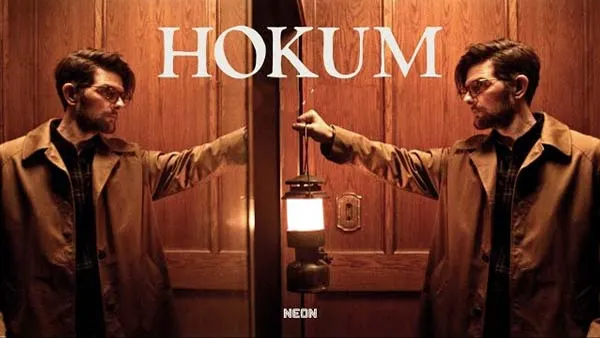
Hokum (Damian McCarthy, 2026)
In 2021, Shudder premiered a film by an unknown Irish filmmaker named Damian McCarthy. That film, Caveat, was met with a positive response from critics and audiences. A mixture of traditional ghost story, suggestions of folk horror and psychological thriller, Caveat demonstrated McCarthy had the skills to build and maintain suspense. In 2024, his follow up, Oddity, was met with even more positive reviews from critics and fans. Again, McCarthy was able to blend a very old tradition of story telling with the modern day, to great effect.
Hokum is McCarthy's latest concoction, and he proves yet again this very traditional form of storytelling has maintained a presence since the days of oral folklore because when done well, it is extremely effective. With these three films, McCarthy has proven himself to be a master at understanding how to bring these ancient myths and folklore into the modern day, structure a story so that it gets its hooks in the audience, and that he has the technical skill to translate all of that to the page and the screen in a way that evokes that beautiful sense of creeping dread and fear, that is among the things we go to horror films to experience.
Since the release and success of Obsession and Backrooms, Curry Barker and Kane Parsons have been getting an avalanche of attention from the mainstream and horror film press. Along with the brothers Philippou, Danny and Michael, who've had hits with Talk To Me and Bring Her Back, the writer/director of Weapons and Barbarian, Zach Cregger, Barker and Parsons, are being hailed as the future of horror. None of Damian McCarthy's films have been quite the same box office successes, but only Hokum has been given a nationwide theatrical release, and if the quality of the three films he has released are any indicator, McCarthy can't be left out of the conversation related to horror's future. Not only is he very likely to be a force in it, if his first three films are any indication, he's going to be insuring the genres foundation in folklore, gothic literature and this particular kind of creepy, suspense and dread driven supernatural horror will be part of that future.
Even as McCarthy has gained recognition, his third film doesn't abandon his home nation of Ireland for the shores of the US, as is often the case for European filmmakers who achieve some modicum of success here. We do have an American protagonist this time though, played by Adam Scott. Scott's character, Ohm Bauman, is a writer who travels to an inn in the Irish countryside his parents spent time at early in their marriage, to spread their ashes. Adam Scott has been building his resumé and career at a steady pace, for some years now. The early part of his career was marked by his comedic roles, but he has since spread into other genres, proving himself an actor who can range from capable and competent to charismatic and magnetic, depending on the material. He can play both the affable, likable, relatable character, and the venal, petty bastard, to great effect.
This is part of what makes McCarthy shine, and gives Scott one of the more interesting roles of his career. McCarthy is able to create complicated, unexpected characters within in a very old form of morality tale. Ohm proves to have more depth and nuance than he first appears, and Scott is up to the task of carrying it, as well as carrying the audience through the thoroughly, deeply creepy events of the film. All of the supporting cast are quite good, with David Wilmot's Jerry being the standout. Wilmot is able to bring a sense of compassion and decency to the role that wipes away the degree to which he could just end up feeling like an excuse to be able to move the plot forward. We believe Jerry is taking the actions he does, because of who he is, not simply because the film needs him to.
McCarthy's style has been evident since Caveat, and though he isn't necessarily updating it much, he is adapting to different, compelling and engaging stories. As prodigious as his skill is for building scares using the technical aspects of filmmaking, McCarthy's genius lies in being able to bring these old world terrors into a world we recognize today. It's the writing that makes McCarthy's work such an excellent doorway between the past and present. All of that is on display with Hokum. The atmosphere, the skill in building suspense over the course of a scene, and the film as a whole, are excellent. Hokum is creep-tastic in that regard. It delivers on the chills and the scares, by rooting it all in a compelling, emotionally impactful story.
Part of his talent for writing is evident because, really, these should be boring movies. The basic archetypes and framework of his films are so deeply traditional, most of us are going to be able to recognize them by the time we're ten or twelve. Hokum is taking a few different kinds of scary story that are sewn into the fabric of Western culture, and weaves them together into McCarthy's specific brand of chilling cinema. What keeps all this from getting boring is McCarthy's ambition to do it as well as he is capable, and he's extremely capable. The attention to detail in both the writing, and what goes on the screen, is driven by how clearly McCarthy wants his love for this tradition of storytelling to be adopted by the audience, and how well he understands the process of convincing them to adopt it.
Everything in this film is well tuned, and thoroughly considered, in service of delivering that experience. The consideration of shot composition in the cinematography, what should be in the frame, what shouldn't, how the camera should move, are all part of this potent brew, and they're executed with excellence. Cinematographer Colm Hogan isn't drawing attention to himself at any point, and the film is all the more enjoyable for it. The set direction from Claire McKenna is expending considerable labor in getting the audience there too. The environments achieve that strange magic of feeling very real, despite the fantastical nature of what's happening in them, and that feeling of reality helps to deepen the belief in those events. The sound department and makeup effects are also contributing to giving this film the depth of atmosphere that helps to make it work as well as it does. However small its film industry may be, Ireland is producing people who are as dedicated to, and good at the craftsmanship of filmmaking as any here in the US.
I'd recommend Hokum to just about anyone, from the die hard to even to the most casual horror fan. The only caveat I might give, is that it does succeed in creating an intensity of experience most other supernatural horror can't quite evoke. That said, McCarthy continues his trend of avoiding blood and gore as central aspects of the experience he's trying to give the audience. Hokum has more in common with The Others or Robert Wise's The Haunting than it does with many of the more gore friendly modern horrors.
I have a deep respect for the new generation of horror filmmakers and creators, continuing to bring the genre forward into the future, finding ways to keep it relevant to audiences who don't share the experiences and cultural touchstones of my generation. They're doing some great work. As you may be able to tell from this piece, I also have a well of respect for people like Damian McCarthy, whose love for genres past is continuing to keep cinematic experiences like Hokum in the broader landscape of film. Even as they have very different approaches, I think Damian McCarthy and Robert Eggers are both committing a kind of cinematic archeology of genre, on the screen. Eggers is literal to a fault. He's trying to introduce audiences to the horror of the past, in the time it had the most power of those who believed in it. What would it been like to live then, and believe this was real. McCarthy is instead giving audiences reason to understand why these ancient horrors were so terrifying, by making them relevant to that audience today, while holding onto the reasons we used folklore and fables in the first place.
In this, as well as the overall quality of his work, McCarthy has demonstrated he deserves as much recognition and fanfare as Eggers, and the other filmmakers even more recently introduced to the public. Damian McCarthy has set himself up for a future as a Master of Horror, and there isn't a valid argument to suggest otherwise.