
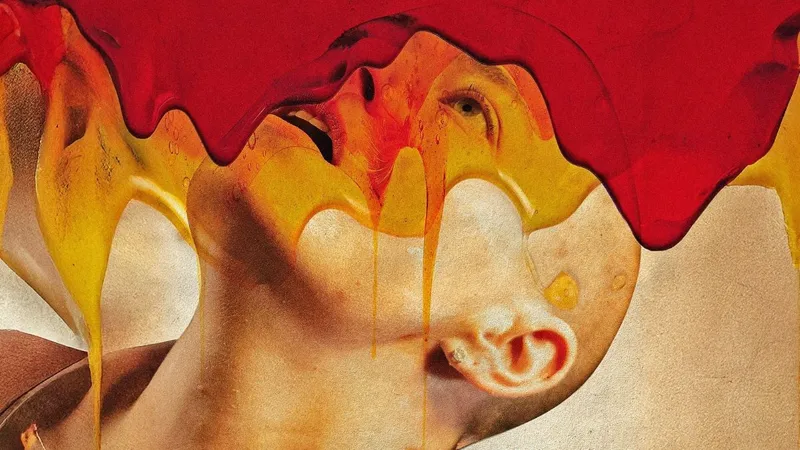
Bugonia (Yorgos Lanthimos, 2025)
Though none of us knew it at the time, the release and reception to The Favourite turned out to be the announcement of one of the most interesting filmmaking collaborations the twenty-first century has yet produced. Emma Stone employing her considerable talents in Yorgos Lanthimos odd, dark, quirky, off kilter narratives and perspective on filmmaking has given us The Favourite, Poor Things, Kinds of Kindness and now Bugonia. Poor Things was a sensation in 2023, and one of the most received films of it's release year. Stone's performance, Lanthimos adding some whimsy to his sensibilities and a phenomenal supporting cast made it one of the best films of its year and one likely to influence future generations of filmmakers. Kinds of Kindness wasn't quite as well received, but is still an adventurous, odd, interesting film, and where Jesse Plemons joined Stone and Lanthimos in their exploration of the odd and absurd ways human beings approach and react to this thing called life.
Back now with Bugonia, nominally a remake of the 2003 South Korean film, Save The Green Planet, Lanthimos, Stone and Plemons are doing what they do best together. Like Poor Things and Kinds of Kindness, Bugonia has a clear connection to the unfolding world we're experiencing today, but isn't chidingly didactic, and is surprising in how it decides to approach and reveal what it has to say about that world. I have a feeling that if you put Stone and Plemons on a stage, with Lanthimos directing, without props or set design, and had them do a rendition of Plan 9 From Outer Space, they could produce something interesting, surprising and entertaining.
Fortunately, the source material here, Save The Green Planet, is a thoughtful and interesting piece of genre work. Where this team takes it, adding Aiden Delbis to their roster in an excellent performance as Don, sidekick and confidant to Plemons' Teddy, might even surpass the respected and acclaimed original. Bugonia takes elements that could easily be the lesser variety of juvenile provocation and declaration, and turns them into a more thoughtful, ultimately more searing, exploration of what power really is.
Teddy, written as a kind of everyman loser, someone whose slid through the cracks at the margins of society, convinces his best friend Don, who seems as if he might have a developmental disability, to aid him in kidnapping Michelle (Emma Stone), the CEO of a major medical technology company. Teddy is convinced Michelle is a member of an alien race that has been attempting to eradicate the human race, and he plans to hold her hostage so he might negotiate with their leadership.
This premise sets up something incendiary. It's possible conspiracy theories have never had a more substantial hold on our politics and culture than they have in the last decade. Not that they're new to influencing US culture and politics by any means, but the significance of that influence is arguably greater than it has been in the past. This has been mingling and mixing with questions of the influence of wealth over the lives of... well, everyone who isn't wealthy. Lanthimos and writer Will Tracy, take the elements from the original film's script, and fashion them into a deeply humanistic exploration of these facts of our lives, and come to a conclusion as sensitive and insightful as Lanthimos filmography has previously demonstrated, through a surprising route and conclusion.
It's a provocative film, in one of the most interesting ways a film can be. It takes what could be stock characters, in a story meant to speak to the audience most easily accessed preconceptions, and subverts the expectations of those intentions by revealing a hidden depth of human experience, the messiness of our ways of internalizing and attempting to resolve those experiences. It creates a confrontation with our assumptions that is isn't about recrimination so much as it is about encouraging investigation.
Maybe the most amazing thing about Bugonia, is that it is able to reveal a truth about power rarely faced in art or in public discourse of any kind. Power is, in and of itself, destructive and dangerous. Without accusation, Lanthimos and his collaborators reveal the fact of power's existence, no matter how benevolent or benign it may seem, is dangerous. It is the allure of believing it can be wielded responsibly that is the fount of that danger. The fact of that belief, that anyone or any body might believe they are capable to, or have a responsibility to wield power, even in their most sincere attempts to do so responsibly, is that it is belief in superiority, and the belief in superiority is always going to lead to harm and danger to those believed to be inferior. Power will always create the justification for the harm it causes, and the justification for that harm, is always in the fact of power's existence.
I'm not necessarily surprised Bugonia hasn't experienced the overwhelming praise and accolades Poor Things did, even as its as insightful, searing and still warm in its exploration and conclusion. The themes, insights and observations of Poor Things are more forefront in the zeitgeist and cultural consciousness. Bugonia is getting at one of the conundrums most central to the establishment of human civilization, and one human beings are loathe to confront so plainly. In this, Lanthimos, Stone and Plemons continue to demonstrate the kind of creative courage that makes storytelling necessary. Bugonia confronts this conundrum, in a way that invites investigation, invites the audience to consider it's conclusion, in a way that simultaneously implicates them, and doesn't accuse them of failure of the moral or intellectual variety in that implication. It lays the questions bare, as openly as possible. Not "This is what you are," but "This is what we are," and "What does that mean where power is concerned?"
With Poor Things and Bugonia, Lanthimos and Stone have now given us two of the most humanistic, insightful films of the earliest twentieth century.