
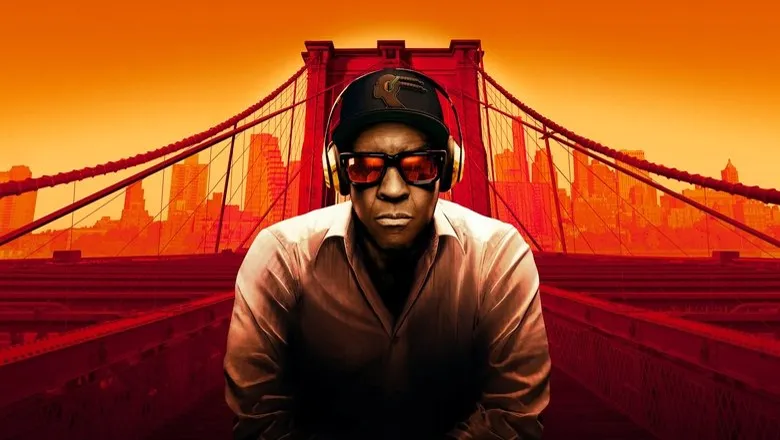
Highest 2 Lowest (Spike Lee, 2025)
I can't think of another filmmaker who would take on the project of making the film that is Highest 2 Lowest. A remake of Kurosawa's High and Low, set in the contemporary United States is something only a very small number of directors would consider, and an even smaller number would go through with it. It's also a film with a level of trust in the audience which is rare, in part because it plays like two films, and in part because of how deeply into a very honest, confrontational territory its willing to go.
Denzel Washington and Spike Lee were frequent collaborators earlier in their careers. The seminal Malcolm X, being the most well regarded collaboration, and 1998's He Got Game (a film I don't think gets enough credit) being the last, until now. It makes sense to see Denzel in this role, for reasons that range from the meta-textual to the film's need for an actor who is going to be able to win the audience back after taking a hard stance on following a course of action that would be loathsome to most people.
Highest 2 Lowest isn't in that group of either Denzel or Spike's best films, but it does end up being enjoyable overall, and thought provoking for anyone interested in the what it takes and means to be involved in creative endeavors in this world. One of the things which makes Spike Lee's filmography and career unusual, is that he's never boring. Whether you agree with his perspective, whether you think it is too narrow in some ways, what is always true is that he takes creative chances and even the films which don't work and aren't very good, are interesting in how they fail or what they have to say. Highest 2 Lowest falls into the second tier of Spike Lee's filmography, where it isn't necessarily a transcendent piece of work, like Do The Right Thing or Malcolm X, but it is entertaining, engaging, and thoughtful, like Clockers, 25th Hour, He Got Game, or Crooklyn.
Remaking Kurosawa is a big swing. He's one of the most beloved and respected filmmakers among his peers in the medium, critics and academics. Every remake faces the question "Why?" Highest 2 Lowest gives itself relevance, the answer to that question, by adding questions about art, artistic integrity and the grind of capitalism to the issues of class that were inherent to the original. All of that works quite well. It also gives us Denzel Washington and Jeffrey Wright (another of the world's great dramatic actors) time on screen to play and bounce off each other. All of their scenes together are a delight. It takes very, very little for them to communicate a long history between their characters, and what that history means for their relationship.
Highest 2 Lowest opens strong, with a demonstration of why Spike Lee has made cinematographer Matthew Libatique a frequent collaborator. Sweeping shots of New York and New York Harbor are set to Oh What a Beautiful Morning from Oklahoma. The combination conveys one of those defining aspects of a Spike Lee film, the love he has for the city that pours out of the screen and into the viewer. It almost feels like Spike saying, "Hey, remember what it's like to sit down with a Spike Lee joint?" The character introductions all work well, as does the setup for the journey Denzel's character is going take. He plays David King, CEO of Stackin' Hits Records, which in the world of the film was a defining force of the music industry in the '90s, but has been in decline financially.
I'm avoiding spoilers here, so I'll just say that first quarter of the film works well, it sets up the characters and players well, and is engaging. The second quarter of the film has some problems. Once we're introduced to the central conflict that is going to drive the rest of the film, it flounders a bit. There are scenes where composer Howard Drossin's score is too present. It's a good score, Drossin composes beautiful music, and it works for the overall mood and atmosphere of the film, but it's just too present in some of the scenes. There are a few scenes in particular, which would have benefitted from not having the score underneath them, and this may partially be an issue of the sound mix, but it overpowers the intimacy scenes between characters. It may have been Spike trying to establish something about the relationships, but it just pulls attention from the scenes, what is happening and why. Maybe this is a personal bias, but it's often most impactful to let the audience sit with the actors and their interaction without the score, and a few of these scenes need that impact. They're undercut by inserting the score, especially at the level it is in the sound mix.
In the second half, it almost becomes a different film. It goes from somber, heavy family drama, to propulsive, fleet footed crime thriller, and this second half works extremely well. It employs all of Denzel's many talents, from his ability to communicate clearly in silence and stillness to the explosive charisma and commitment that emerge when he is allowed to squeeze the script with another actor. Other than the opening, it's also where Spike's trademark ability to present New York in a way that is authentic comes into play. It's engaging, beautiful, vibrant, fast paced and has the slight air of danger around the next corner. With the exception of Martine Scorsese, as different as they are as filmmakers, there is no one who has been as successful in bringing an authentic New York to the screen. All of this is communicated through Matthew Libatique's unique ability to use the camera in a way that feels spontaneous, elegant and without pretension, all at the same time.
Not many people would take on the challenge of trying to make a film that shifts gears as many times as Highest 2 Lowest does. Fewer would understand how that contributes to the overall effect and success of the film. Even as it does have some stumbles, some decisions which take away from the impact of that second act, Lee's understanding of how to shift tones and gears and more importantly why, in the context of this story, overcomes those stumbles where the overall impact and experience of the film are concerned. Spike Lee's understanding of all of this, as well as his trust in the audience to take that journey, are among the reasons he is such an essential filmmaker.