
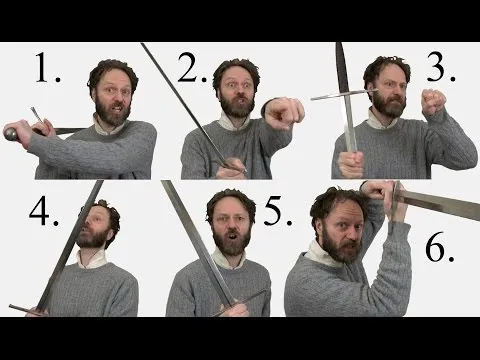
Six reasons to parry with the edge of a sword
Did you know that a real swordsman never parried with the edge of his sword? Neither did I.
Comments (4)
I liked the reasoning in this one. I know the controversy for some time, and I really go with the arguments I and VI. Sword fights are a lot faster and trickier, and dirtier, than most people think they are. I also visited the Landeszeughaus in Graz, and they show a number of blades that have seen action, and quite a few show substantial dents and chips. I asked a guard, if that meant, these were handed to untrained recruits, and he said: " I don´t think so. You see, we have lots of broken blades, too, and quite a few of those were hit on the flat, so there you go..." That leads me to my point: Parrying doesn´t necessarily mean blocking. If I can manage to let the enemy sword flip off my blade at a low angle, that does not take so much force as aim and timing, and my enemy will briefly follow its momentum, opening him up for a fraction of a second. That is actually easier if I presented the flat to his swing, and if I planned it that way, I may have created an opportunity for myself, IF it worked and he fell for it. And there are captions in fencing mnual that read like that. So, my opinion: Master swordsmen in duel situations against weaker opponents might have tried to use the flat as often as possible. Regular soldiers in melee would have tried to stay in one piece, no matter how. So, even if there is reason to try to get the flat side working while you are in control of the fight, I agree with the argument that the statement "..NEVER parried with the edge.." is flat-out wrong.
Interesting points on Eaton port. Personally Looking fwd to purchasing the book on Hannibal
Another excellent video by Lord Beige.
You were looking particularly beardy in this video. Well Done Sir!!