
Radio War Nerd #314 — The Decline & Decline of the Spanish Empire, 17th-c.
Guest: Lucas Fernandez, history nerdo
Recorded: January 27, 2022
This episode we look at the decline of the Spanish Empire, which entered the 17th-century as the most powerful & wealthy in Europe, bar none...and ended the 17th-c. as the sick man of Europe, in seemingly terminal decline. We talk to friend of the show/fellow war nerdo, Lucas Fernandez, about what happened to Spain in that period—and how much we can draw analogies to a certain modern-day overextended empire ruled by a filthy rich, pigheaded oligarchy drunk on their self-righteous faith in what they call "the US-led liberal international order." (Not mentioning names.)
Total time: 1:37:33
Comments (37)
Cool episode! Question: is the Betrothed any good if you can't read Italian? Are there good English translations out there, or does it just defeat the purpose to not read it in the original?
I just read it in English and it was very good. I can tell at certain spots that there were linguistic jokes and twists that didn't translate, but it was still very worth reading.
Great episode and many thanks to Lucas for his insights into Spanish history, especially that the 17th century wasn't so much about Spanish decline but of other European powers catching up, dynamised by all that gold flowing in from the New World, no doubt. Anyway, Spain was still able to hold its own even later - see "The War of Jenkins' Ear" - 1738-42. Hope Lucas comes back to do more episodes on Spain.
Absolutely, I would love to talk about the Bourbons and the American and European Reforms. About that time in particular there is a couple of excellent books by Storrs. one of the authors I mentioned, "The Spanish Resurgence" https://www.goodreads.com/book/show/29563723-the-spanish-resurgence-1713---1748
Love this episode and would also like hear more. Just some random thoughts: it is well known that from the first some of most humane writing about native Americans came from Spanish clergy and that the Spanish treatment of American indigenous people, bad as it might have been, was arguably better that than of the North American Anglo colonists. Intermarriage, for example was not frowned on. Later, there was that defender of Spanish Catholicism, R. B. Cunninghame Graham (Socialist Liberal MP and founder of the Socialist Labor Party of Scotland, who argued for disestablishment of the British church and for women's suffrage). Graham, whose beloved grandmother was Spanish, wrote a famous account of the Jesuits in Paraguay: "A Vanished Arcadia" (1901) that was the basis, supposedly, for the film, "The Mission" (a personal favorite). Most anti-Spanish (i.e. anti-Catholic) novel that I can think of is "Melmoth the Wanderer" (1820), by Charles Maturin, an Irish Protestant clergyman. This is a phantasmagoric horror novel about a cursed man who cannot die and who must wander the earth telling his story -- or stories -- with frame stories within frame stories until the reader loses all track of what is happening in the dizzying maze of narration. It is set in Spain, and anti-Catholic or not, is quite mesmerising, featuring, in passing, among other things, the discovery of an secret underground city of persecuted Jews under Madrid (IIRC). It was a favorite of late 19th century French surrealists and decadents, they say. Maturin, like other Protestant writers, makes much of the supposedly malevolent influence on families of the institution of the confessional. My understanding of why the Italians resented Spanish influence was that during the early years of the 17th c., Spanish grandees were appointed as governors, or officials of towns all over Italy, displacing native-born Italians who were more familiar with local language and customs, and more to the point, had themselves been accustomed to receiving such rewarding advantages. The Spanish also tended to be more hard-line in their interpretation of religion than the more easy going Italians, a further cause of resentment. Spanish gold enabled the beautification of Rome under Pope Paul V (1603-15), not least the magnificent coffered ceiling of Santa Maria Maggiore, one of the most beautiful spaces I have ever been in, and the patronage of Bernini, who designed a famous spiral staircase there. That's what they said when we visited it, anyway.
Fantastic interview - would love to hear another one
Yeah I really enjoyed this episode. I feel like it could have been expanded into a series. If anyone is interested in more of the econ history/banking angle and the tri-continent trade circuit, Braudel's Civilization and Capitalism part II gets into it
Wow thanks for the explanation!
Thanks for the maps but I was kidding.
As an aside: The biggest synagogue in Amsterdam is called the 'Portuguese Synagogue'. Worth a visit if you're in town, I would say. Also, the synagogue was in the news last year in relation to Spinoza: https://www.timesofisrael.com/spinoza-scholar-banned-from-amsterdam-synagogue-is-now-invited-to-visit/amp/ The rabbi had gone rogue...
There is a substantial Sephardic community in NYC that goes back in some cases to pre-Revolutionary times (Poet Emma Lazarus, of Statue of Liberty fame was one). I used to accompany one of my high school friends on Saturdays to services at the beautiful Congregation Shearith Israel Temple on Central Park West. We sat upstairs in the women's section balcony. It seemed to me like any other temple and the congregants like any other New Yorkers, IMO, except that some of them are able to speak Ladino, apparently. Years later, I also attended several concerts of Sephardic folk songs there, given by a friend, Canadian ethnomusicologist Judith Cohen. People sang along in Ladino. Judith, who is herself not Sephardic, specializes in hispanic traditional music. She says that there is considerable philo-Semitism in Spain nowadays, especially in the western regions of the country. She thinks, however, that some of the claims of Sephardic ancestry there may be rather fanciful. It seems that the populace has only in recent years been learning about the history of the expulsion of the Jews of Spain.
Another great episode but no maps?
Lucas kindly provided a link to some maps above.
At 48:10, Lucas starts to say "We still have a saying in Spain..." but doesn't finish. What's the saying?!?!
I believe I was refering to old sayings (refranes) like "para adelante como los de Alicante" (forward like the people from Alicante) which in many cases refer to claiming these local tax loopholes that allowed exceptions from paying fees in bridges, doors and markets.
When I was in Spain, I took a Spanish-language college class at the Autonomy about modern Spanish history (~1492 to Present). My professor was great and very open about how the best historians on the Spanish Civil War through the Transition to Democracy were Anglo (mostly English, some Americans). ANYWAY, what I remember about the description of life and events following the Reconquista/Unification was how as the empire expanded and the kingdom grew rich, the regime never stopped being provincial all the way through Napoleon's conquest. Oddly enough, this happened while the monarchs saw their purpose and destiny as being the defenders of the Faith. To use a modern analogy, they were the Saudis of their time - a bunch of hillbillies who found themselves sitting on a seemingly unlimited fortune who knew that it was their purpose and destiny to fund holy wars on the godless Muslims and Protestants. And to use the Dune analogy, the Spanish infantry may have once been hot shit like the Fremen under Paul, but they quickly became the Saudi military that exists today.
they became Museum Fremen
Somewhat related, but mostly just an interesting aside when thinking about how the Dutch would later kick the Portuguese out of Asia except for Goa and Macao. "Mind-blowing. I just learned that Samurai, Conquistadors, Ottomans, and Aztecs fought one another." The battle of Diu in the Philippines. 3 February 1509. https://threadreaderapp.com/thread/1476554924339175430.html
This does hand and hand with this Diaz book.
Another banger
Great episode, looking forward to the follow up! I was reminded by this quote from Eduardo Galeano’s incredible Open Veins of Latin America: “As it used to be said in the 17th century, ‘Spain is like a mouth that receives the food, chews it, and passes it on to the other organs, retaining no more than a fleeting taste of the particles that happen to stick to its teeth.’ Spain owned the cow, but others drank the milk…The Crown was mortgaged. It owed nearly all of the silver shipments, before they arrived, to German, Genoese, Flemish and Spanish bankers.”
Hey, this isn't US Civil War content!! What's going on here?? Heh sorry couldn't help myself. I await ep 7 with great anticipation
It's the toughest series to listen to by far. So I hope this isn't padding to lighten what's coming.
Great episode. Another triumph for RWN!
any info about early basque military and modern basque resistance would be LOVED!
Correct. Here in Slovenia mercury was mined in the town of Idrija from 1490 to 1995. Incidentally, the mine has been turned into quite a nifty museum, so if you ever visit this neck of the woods, you might enjoy checking it out.
You are absoutely right. They are somehow "sister cities" and Almadén and Idrija are recovering their industrial heritage and are part of an binational Unesco site.
Some notes, maps, bibliography in Spanish, English and Italian https://bit.ly/3ofvXGK
and in this thread too https://bit.ly/3IL6f4C
More of this please! Let's hear about the basques
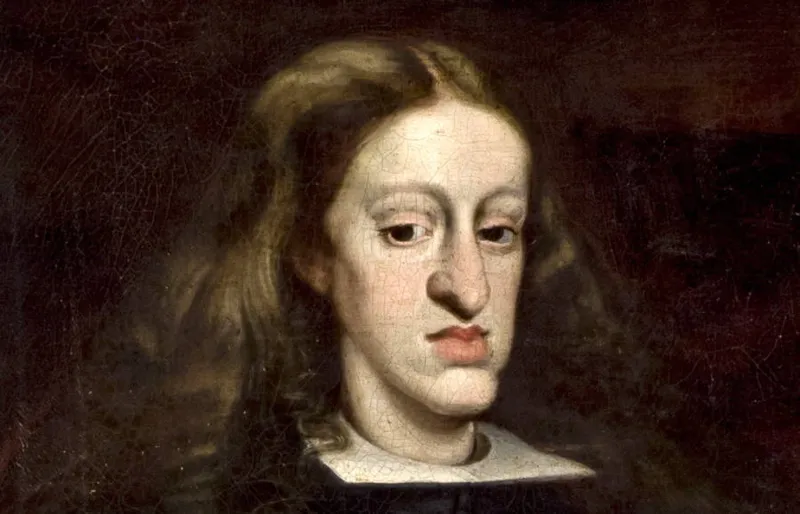
I wondered around the Prado an entire day in Madrid a few years ago and there's an entire section that feels like wall to wall Hapsburg jaws.
It's like how the only people with money now are de facto inbred tech and finance cretins. You go where the money is.
Every time I see that portrait of Carlos the Accursed, I think: That painter would've self-consciously aimed for a portrait that would keep him in the good graces of the crown, right? So how much worse than THAT did Charles II really look? Imagine trying to make somebody look good and thinking, " ... Nah, I can't make his eyes look the same direction. It's just not plausible."
https://www.bruce-campbell.com/if-chins-could-kill
Incredible how much of history at this point revolves around Spain keeping those mountain passes open for troops to move from Italy to the north. Read a book about 30 years war and this kept coming up.
Love this ! Reading duron the iron king right now thanks to your recommendation. Loving it ! It is relevant to this!
Hell yes. Love these early modern era episodes