



Radio War Nerd EP #230 — Indonesia Holocaust & American Anticommunist Terror, with Vincent Bevins
Guest: Vincent Bevins, journalist & author
Recorded: May 15, 2020
The 1965 anticommunist holocaust in Indonesia killed somewhere between 500,000 and 2 million, though we don't know the actual figure, for reasons we discuss—and it was fully supported by the US Embassy and Washington. Why do we know so little about this seminal Cold War slaughter in the world's 4th most populous country, a massacre that became the model for US-backed anticommunist terror campaigns around the developing world? We talked to journalist Vincent Bevins about his new book "The Jakarta Method"—an amazing, dark, must-read work.
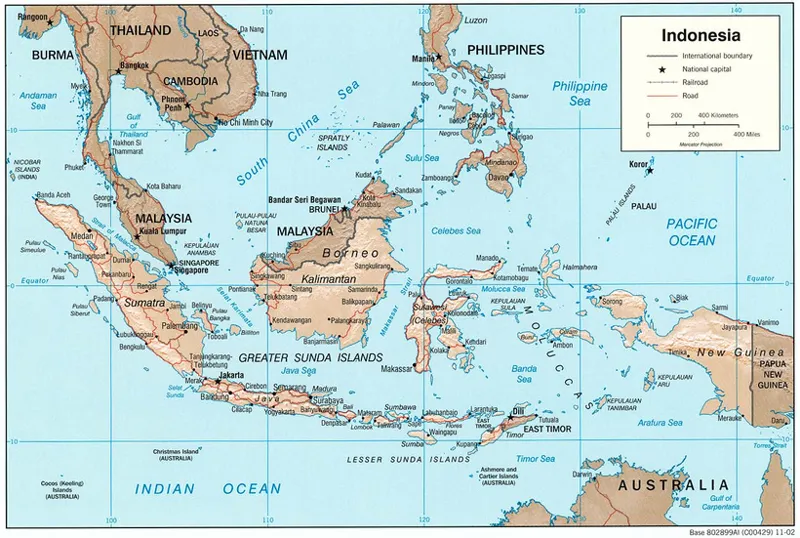
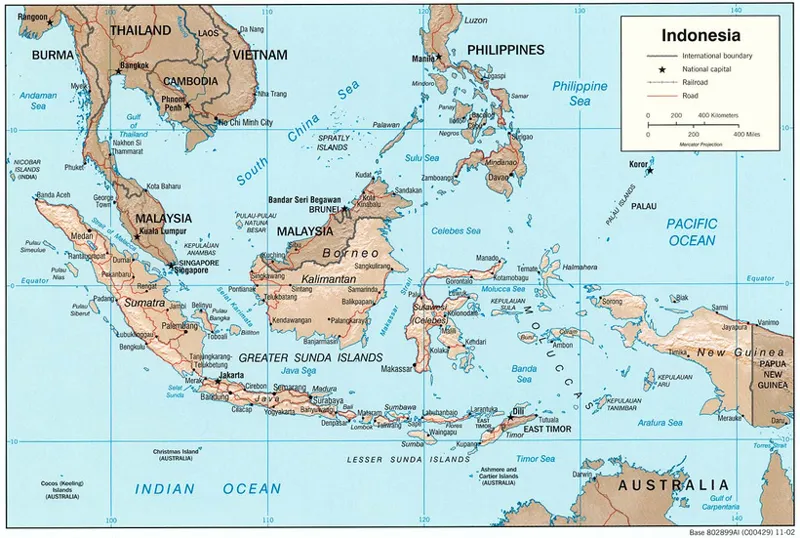
*Map of Indonesia
*JFK and Sukarno
*Time cover, 1966, just as Suharto presided over 1 million murders & 1 million in concentration camps
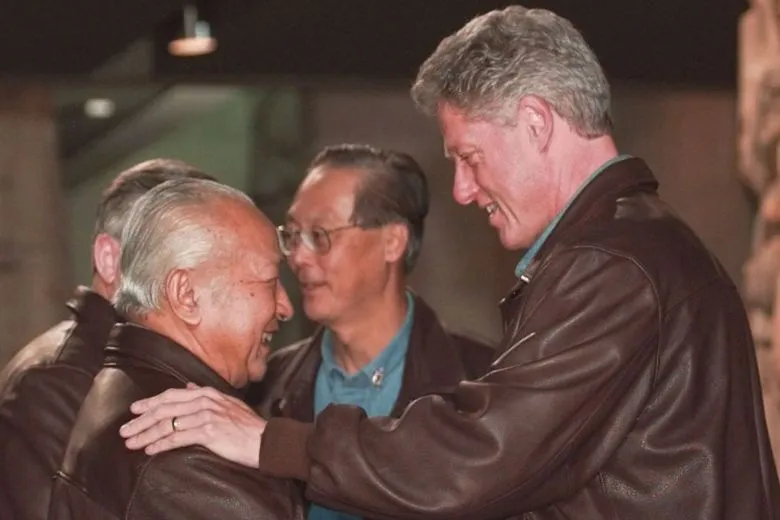
*Clinton & Suharto, 1997
Buy Vincent Bevins' book The Jakarta Method: Washington's Anticommunist Crusade & The Mass Murder Program That Shaped Our World. Follow Vincent on Twitter.
Total time: 2:18:55
Comments (42)
Hey Vincent do you still have the CIA's phone number? Thanks
Just read this book after hearing the interview on RWN, it was definitely worth the purchase for sure. Really puts the events of 1965 in Indonesia into global context, for instance you see what a huge impact on Latin American politics this had.
Thanks! A lot of the book was new to me as well.
One of the most chilling details to me was the CIA handing lists of communists to the butchers. Knowing tech and intelligence's connections it wouldn't be too tricky to find the "Reds" nowadays. Posting this the day the president tweets about sending the military to Mn to shoot looters.
Sukarno had a Japanese wife, calledd Dewi. she used to be a bit of a socialite into the 70's as I recall. She is still around and apparently glassed someone in the 90's in Aspen.
I actually met her in 2016 and that story sounds about right to me
Hope you can at least enjoy Rochester for a little bit while you're here, Mark.
Honestly we really like it here a lot, the more time we're here.
Best episode in a while and that's not a knock on your recent work - this was just really great.
Another excellent interview-although to quote Mark "Ah shit...". Now that you have both decamped from NYC to Rochester and Portland, I have the courage to ask you something that has been bothering me for some time. Say it becomes time to decamp from the United States for political or economic reasons. You're not rich (i.e. you can't live off your investment income indefinitely) but you have some funds. You don't have any other citizenship but US. Where do you go and (just as importantly) why? What is the signal that it is time to go? Any insight from history? Any place likely to be stable when (i have shown my bias) the shit hits the fan here?
It's a good question. I have 2 very young kids, so our options are extremely limited. If I didn't have kids I'd be out of here. One thing I learned—and this will seem laughably obvious to everyone but me—is that you HAVE to have a car if you have kids and a respiratory pandemic comes round your dense, disastrously-governed neighborhood. I haven't owned a car in 20 years and I ain't making that mistake again if I can afford it.
Indira Gandhi was supposedly paranoid about possible CIA activities in India when her rule started becoming unpopular during the 70s world economic crisis. The paranoia if it was real is understandable when you see what happened in Indonesia.
Will be buying the book.
Great episode! Whoever created the deadly cockamamie story about Devil worship and used it to target the communist would have known about Indonesian psyche and culture. It has the fingerprints of the folks who did the vampire story in the Philippines
Great episode guys. In multiple episodes now there have been side references to the Soviet habit of abandoning their allies. I’m very interested in that topic but I dont have enough Soviet-centric cold war knowledge to know what yall are referring to. Does anyone know a sort of comprehensive list of these instances to prime my reading? -clueless millennial
We're scheduled to interview Piero Gleijese tomorrow about his excellent book "Visions Of Freedom" about the Cold War battlegrounds in southern Africa. It's just one of many such battleground examples, but the differences between the Soviets and the Cubans are legion.
Received the book today.
This is awesome! Gonna wait for this to come out in paper back because I'm cheap and I buy too many books haha
It's on Kindle if that's an option.
Get well soon Gary! At least they stop for pedestrians there. They don’t stop in Central Europe until you step out onto the road and take the leap of faith.
Yeah, that would be bad in a crowded city. Most places you can just wait until no one's in range but if there's constant traffic, you may as well be looking across a fast river.
Thank you for this excellent episode.
Superb episode.
Thanks! We're proud of this episode and everybody should do what they can to promote Vincent Bevins' book.
Can RWN do a Hong Kong update on the next episode? Chinese national security law is being debated
We'll need a guest for that. Any nomination?
If you want to get into the weeds about the September 30th Movement, John Roosa's Pretext for Mass Murder is excellent. He does a sober analysis on a number of the theories about what happened and does some important original research.
Yes, his is probably the "best" theory (though it's very very from the final word) - btw he has a new book coming out next week
The Bloodbath in El Salvador https://www.globalresearch.ca/el-salvador-war-revolution/5692937
We need to do an episode on this.
Origin of “disappearance “? Wikipedia: “Nacht und Nebel”ˈa directive issued by Adolf Hitler on 7 December 1941 targeting political activists and resistance "helpers" in World War II to be imprisoned or killed, while the family and the population remained uncertain as to the fate or whereabouts of the Nazi state's alleged offender. Victims who disappeared in these Night and Fog actions were never heard from again. (Phrase supposedly taken from remark by Goethe that evil deeds take place under cover of night.) 1944 Nazi massacre of civilians at Ardeatine Caves in Rome a famous example.
A lot of US counterinsurgency strategy comes directly from Nazi experience, they didn't even hide it in their manuals from the 50s.
Mark wasnt sure what to call it at the beginning since the UN Genocide Convention doesnt include the killing of political groups. Worth pointing out that, originally, Raphael Lemkin intended to include this kind of killing as genocide, but he couldn't get the convention ratified if the category was included. Member states worried they'd be accused of genocide retroactively, if it was, and they didn't want their "right to suppress internal disturbances" to be limited by the Convention.
This is an ongoing debate and I never really take a position. Jess Melvin, in her groundbreaking recent book, puts forward the best case for calling it a "genocide." But for me that often kind of seems like a way to get it slotted in the right academic categories, or under the scope of the right international treaties, etc. Purely analytically I think it could go either way. The vast vast majority were killed for their political beliefs and I question why it is needed to lump that in with other types of mass murder.
There are a couple of documentaries on this: Interviews with a few of the butchers https://archive.org/details/The_Look_Of_Silence General story https://m.youtube.com/watch?v=kLT6G8FD3E4 CIAs roles https://m.youtube.com/watch?v=wP94mLYfeUc
Interviews with mass killers rarely prove much. If you're looking for satanic depths or heights, they're not there. You recruit the losers and the most ordinary men in a community to do this, and I do mean men. Again, Jean Hatzfeld's Machete Season is the best book on this. There's nothing there in these peoples' minds except self pity when they get caught. Don't expect anything else.
I’ve been waiting for an episode on this topic, which must never be forgotten
I enjoyed this podcast more than Bevins' book, which is rather poorly written. One thing that Bevins gets wrong in both the book and this podcast is this idea that white guys from the CIA injected the idea of a "state within in a state" into the naive, uncultured minds of the Indonesian army (mentioned here at 1:23:00). Bevins repeats this rather embarrassing claim several times in his book but never discusses it in detail. The Indonesian army was developing "state within a state" capabilities even during the independence war and they understood the Machiavellian possibilities of how this power could be used long before the CIA "taught" it to them. See David Jenkins’ article “One Reasonably Capable Man: Soeharto’s Early Fundraising” in the 2010 academic book "Soeharto's New Order and Its Legacy" (available freely online). It is unfortunate that Mark ends the interview at 1:51:00 saying that Suharto was a "number two kind of guy" and "nothing signaled" his capability for a coup, because he is precisely the person who came up with the "state in a state" method in the 1940s. He was simply good at keeping quiet about it because he read the domestic and foreign situations well.
[deleted an exchange with the interviewee, we've agreed to communicate privately]
Great stuff! In the beginning, Vincent mentions how the Javanese often merged imported doctrines with local customs. This is common throughout Sout East Asia. In the introduction to his book, A History of South East Asia, Arthur Cotterell recounts that the first elected president of Indonesia, Susilo Bambang Yuhoyono said that "the 'revolving clouds' sent against him by an ill-disposed sorcerer proved to be a greater challenge than the Acehnese tsunami" Doubtless the book has its faults, but if you know nothing of the region and its history, it is a good place to start. The introduction alone is worth it.
I like the revolving clouds bit.
Looking forward to this.