



Radio War Nerd EP #207 — Republic of Venice , Pt. 1: Rise of Venice
Guest: "Annibale", legendary war nerd
Recorded: November 24, 2019
Long before Venice became a mere tourist museum with canals, it was one of the most ruthless, enduring, efficient and innovative empires of the second millennium. Growing up in the US public school system, we at Radio War Nerd naturally had no idea until recently. Luckily for us, we have the legendary RWN guest "Annibale"—who previously educated us about the Hundred Years War, the Italian Resistance in WWII and Italy's "Years Of Lead". In part one, we learn about the rise of the Republic of Venice, its sacking of Constantinople, and its gory wars with rival Republic of Genoa.
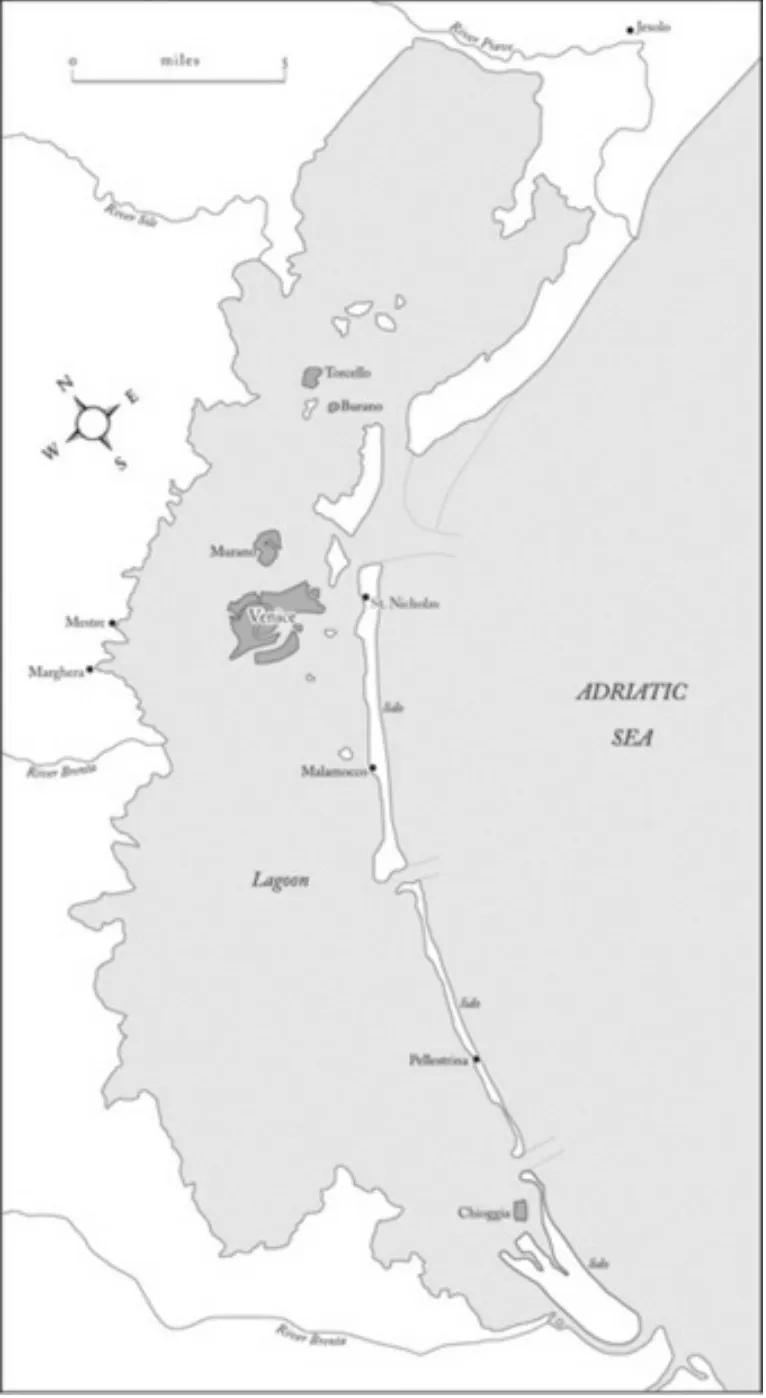
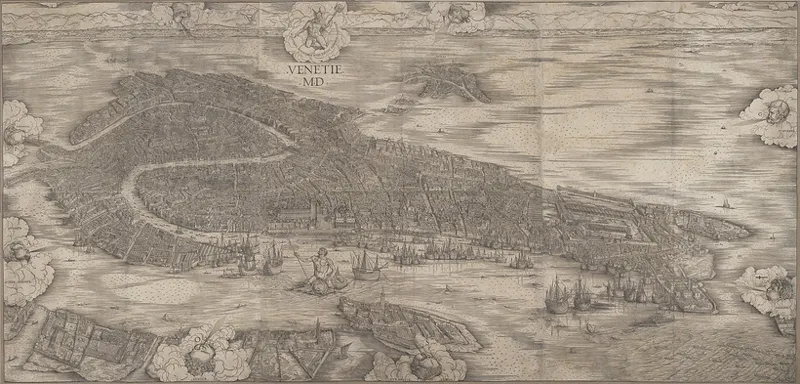
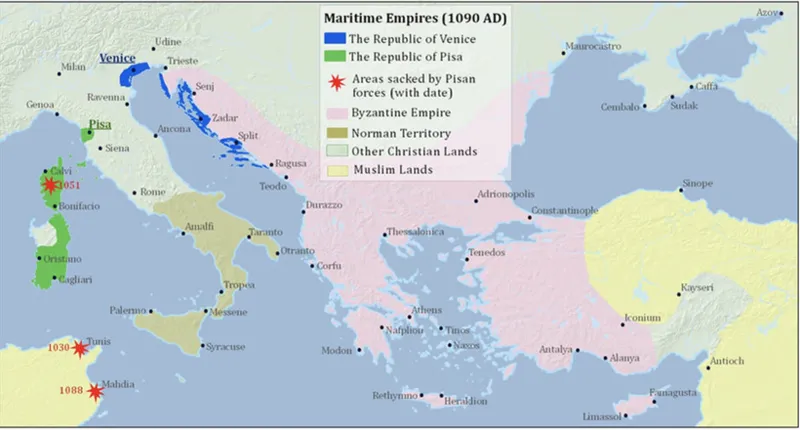
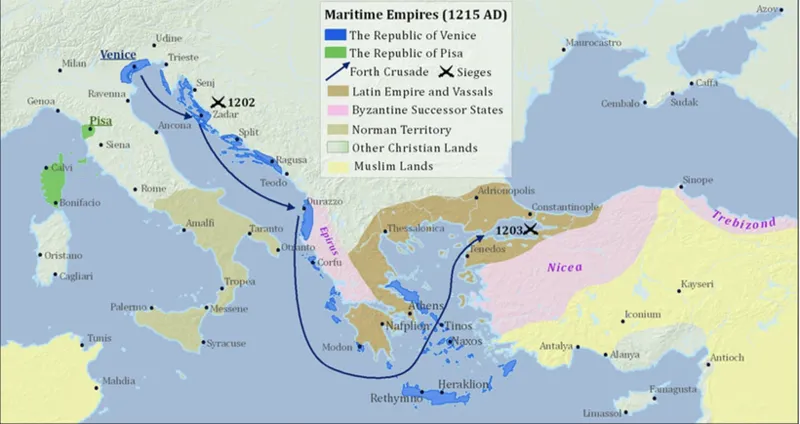
Maps:
*Map of Venice lagoon
*Map of Venice
*Olde mappe of Venice
*Map of Venice empire, 1090
*Map of Venice empire, 1215
*Map of Venice empire, 1400
Read: "City of Fortune: How Venice Ruled the Seas" by Roger Crowley
Total time: 2:13:28

Comments (19)
Very funny, the part where the dues are not paid to Venice for helping new emperor and then the new emperor's troops go on strike. Somehow this resembles some modern day events
Funny how the rise of a powerful self-absorbed elite beyond the control of the state often ends up destroying that state - almost as if there were a pattern there...
That would make sense as things were going pretty badly in the East - he was up against one of the most successful Caliphs, Muawiyah I (661 - 680) who repeatedly kicked the Eastern Romans' butts. But on the other hand, wasn't Constantinople itself virtually impregnable until the invention of gunpowder? Certainly the Caliphate had no joy there in their first (not really serious) siege in 674 - 678 and suffered a crushing defeat there in 717 AD and didn't really try again after that. Various others tried but generally gave up after seeing how massive the Theodosian walls were...
It was actually not just Constans idea - Heraclius wanted to move the imperial seat to Carthage. The point was that Italy and central north Africa were absolutely crucial to Bizantium in that era for a large set of reasons - food production, logistics etc. And more than anything else from Southern Italy (or Tunisia) it could have been possible to organize a vast response to the Arab expansion. Of course, there was another reason, more psychological - after Justinian most Byzantine emperors thought about the propaganda value of having the "roman empire" restored with Rome capital. But that was simply not possible, as Rome during the Lombard era was literally surrounded by enemies and was fi difficult to defend.
Great episode and I can't wait for the next one as well. There were a couple of inaccuracies about Byzantium ref the theme systems and the emperor who supposedly wanted to move the capital to Syracuse; from what I understand (listening to the great podcast series "The History of Byzantium"), the theme system was established some time in the course of the C7th during the Heraclian dynasty as a response to the Muslim conquest of the Middle East and subsequent annual raiding of Byzantine territory - it enabled a rapid, localized response by army groups based in the themes backed up by basically peasant militias. Of course, the theme system evolved over time with many tweaks, but was much less important after the annual jihads petered out after the fall of the Caliphate. Ref "Clemens II" trying to move the capital to Syracuse - it was actually Constans II (I don't think there were any Eastern Roman emperors called Clemens) and it is now thought (since he left his family behind in Constantinople) that he was more likely trying to set up a base of operations against the Muslim conquest of North Africa, which Byzantium still held; but he was assassinated ( (hit on the head with a bucket while in his bath - perhaps as a result of a conspiracy emanating from Damascus) in 668AD before he could achieve anything.
Hi thanks for pointing out that it was Constans II and not Clemens - that was actually me confusing the names. However (as far as we know - I'm using recent Italian sources here) Constans really wanted to move the capital to Syracuse, and not just have a major base. Constans was a bit of a weird guy for a Byzantine empire - he spent most of his later life caring only about Italy and very little about the eastern part of the empire. Moving to Syracuse made a lot of sense in that context, as Syracuse had been the "capital" of the Greek colonies of the classical era, and has many logistical and military advantages.
I am on tenterhooks waiting for the next episode!!
Bazically my favourite war nerd guest
This is a great book, too, Venice: The Hinge of Europe, 1081-1797 by William H. McNeill (1974 reprinted 2009). It is interesting that Venice, if you count Padua, which came under Venetian rule in in 1405, had been the epicenter of early Renaissance book collecting -- Petrarch resided there. And by 1500, the Aldine Press was the center of European printing, pioneering small format editions -- the first "pocket" books -- as well as ancient Greek texts. Later, the University of Padua became important as a scientific center with Galileo Galilei, William Harvey, and Pietro Pomponazzi among its professors. Jews, Muslims and also Orthodox Christians from the Eastern Ottoman and Russian Empires, were sent to Padua to obtain a rigorous Latin education not offered in their own lands and on their return home often attained influential government and Church positions.
Great show, btw
Two things that were kind of lingering questions after listening to this: 1) It was mentioned a few times in the episode that Venice was comparatively technologically advanced, but it never really got expanded on. I think it was with respect to the Genoa/Venice war, Annibale said something like "and this is where we start to notice how advanced they are" but we sort of left things on a bit of a cliffhanger with the siege in progress. 2) Was there a lingering significance to the mass mobilization of people for military service in terms of the politics and organization of the military for venice? Was it just for the siege or for the larger war with Genoa? If I understood things correctly this was kind of unusual for them, and was especially unusual for other militaries at the time in the region. How did the other more feudal surrounding powers understand this? Also, what role did the rest of the immigrant/other merchant populations play in this mobilization. Were they also mobilized? Was this not a meaningful distinction?
I will answer these two questions in the next show(s) as both are crucial getting what did really make Venice feel "different" to many contemporaries (the so-called "myth of Venice")
I'm almost looking forward to my commute on Monday to knock this out. Annibale is just great
I'm very excited to hear this. Since the Portuguese empire episode, in which one of Roger Crowley's books was a big part of the narrative, I've read City of Fortune. One heck of a story.
just download the mp3 lmao
No audio post :(
have the same question
Really looking forward to this! Is there an audio post associated with this or just the mp3 link?
If you're a subscriber you can usually find the rss on something like stitcher or podbean