

Radio War Nerd EP #113 — The Rape of Nanking with Carl Zha
Guest: Carl Zha, podcast host
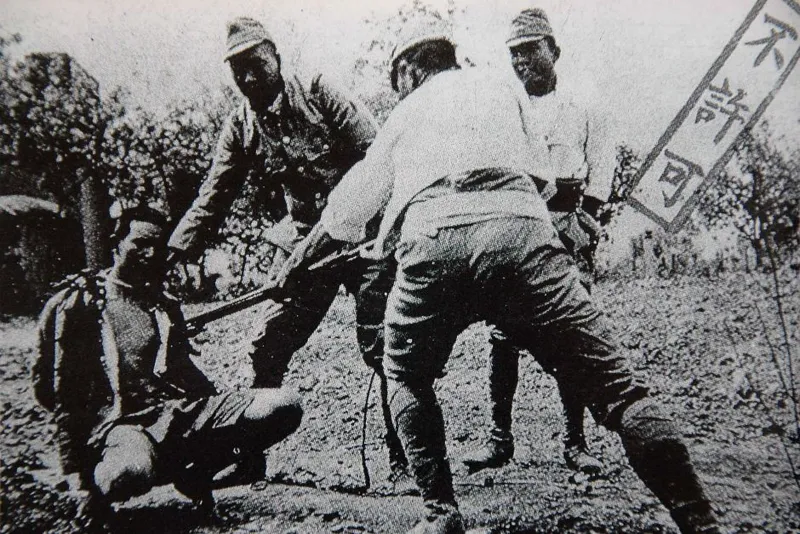
On the 80th anniversary of the Japanese military's Rape of Nanking, we talk to Chongqing-born history buff & show guest Carl Zha about the events leading up to one of the worst massacres in history—when Japanese forces murdered some 350,000 Chinese and raped between 20,000 - 80,000 Chinese women in a span of just over a month. We discuss the little-known Battle of Shanghai shortly before the Nanking massacre, when Chinese forces shocked Japanese troops with their tenacity, as well as the politics in Imperial Japan and warlord-torn China in the 1930s. We also talk about memory and politics — and the the vicious American academia hostility towards Iris Chang, the Chinese-American writer who popularized the Rape of Nanking, which they never forgave her for even after her suicide in 2004.
Check out Carl Zha's podcast CLASH!
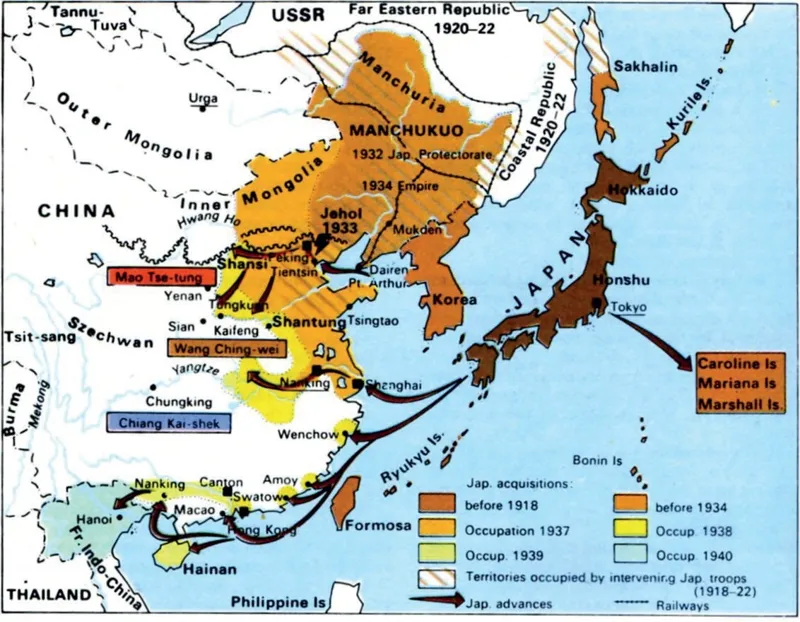
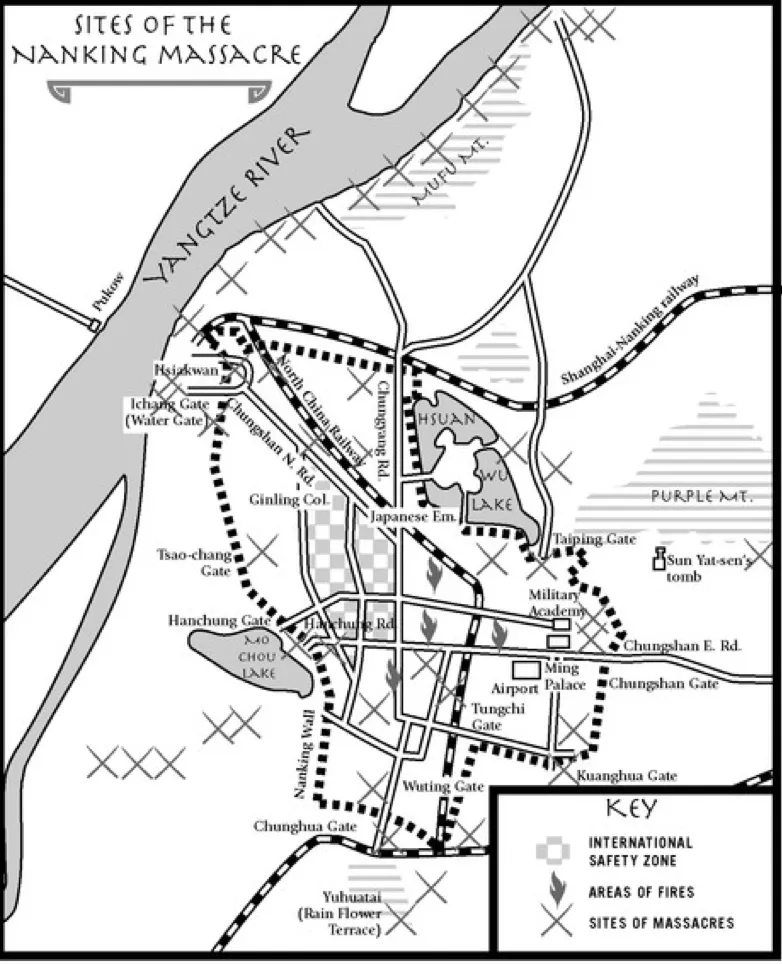
Maps:
* Japan's war on China, 1930s
* Japanese advance from Shanghai to Nanking, late 1937
* Nanking massacre sites
Total time: 2:59:09
Comments (24)
Carl Zha is excellent. Great overview on this nightmare.
This is a phenomenal and absolutely harrowing episode. Thank you again, Carl.
The comments about how Iris Cheng's book was received were interesting. I don't think anyone in Australia interested in this period doubts for a second the brutality of the Japanese military - treatment of Australian PoWs remains something of a sore point with older Australians, particularly the Burma railway and SEA prison camps. Yet these sound relatively benign in comparison!
In just released Part 2 of our interview with Fellow Radio War Nerd Fan and PhD candidate Avery Morrow on CLASH! podcast, we talk about the rise of Japanese Nationalism and Japan's path to War, and also postwar leftwing politics, strange alliance of Japanese right wing and US neocon, and Japanese PM Shinzo Abe's role in revising the Japanese Peace Constitution + We continue to make fun of everybody's favorite neocon Prophet Gordon Chang, and reveal his sleazy tie with a crazy Japanese cult. <a href="https://www.patreon.com/posts/ep-19-rise-of-16012919">https://www.patreon.com/posts/ep-19-rise-of-16012919</a>
Listening to the pod. Read some years algo that the German Mission in China was used by the Wehrmacht to send there any Jewish officer of the Reichswehr, so he could stay away from the nazi heat in Germany. Read it on an article about a Jewish WW1officer who was kept in Reichswehr, later sent to China and Spain, and who served in the Spanish Blue Division as a translator (died in Krasny Bor).
Good to know about Iris Chang. She was from Urbana-Champaign.
Wow I went to school with her. Remember my U of I journalism professors talking about her.
Epic! The relationship between the chinese communists, nationalists and the soviets was complex. Someone told me that Chiang Kai Shek even sent his oldest son to study in Moscow. You also have the three Soong (one of whom was Madam Chiang) sisters and their personal relationships with each other and their relationships with the main players going on in the background. General Joseph Stillwell (Vineger Joe for any Old Grey Whistle Test fans out there) also appreciated the fighting qualities of the chinese soldier of the period. He was controversial in his own right (he was a protege of George Marshall, who appreciated him nevertheless) and his own troops would gladly have killed him but he used Chinese soldiers against the Japanese in Burma. He had a low opinion of the British, accusing them on not wanting to fight, though to be fair the British might have been nervous of the effect their defeat might have been having on Indian nationalism. Stillwell despised Chiang Kai Shek and eventually fell out with Claire Chenault (of Flying Tigers fame), who supported Chiang, and was replaced. Chiang Kai Shek was a bit of a tool. In the book Politics of Heroin, Chiang Kai Shek sacifices a Yunnanese warlord and his troops by ordering them to Manchuria where they are all killed. I also read that the main reason the Nationalists lost was that in the civil war in Manchuria, a Manchurian warlord switched sides and opened the door to the communists. CCTV still shows a lot of series about the war with Japan. As an outsider, it just seems weird to me but I guess it is important for the Chinese government to keep the memories alive. I've seen episodes where the chinese soldiers were wearing German uniforms and it took me a while to figure out that the show was set in china. At first, I thought it was set in the first world war. Anyway, thanks for clearing this up. I had not been aware that the Soviets actually sent planes and pilots to the Chinese. I'd been brought up hearing tales of the Flying Tigers and thought that it was only the Americans who were helping. I've read that the Japanese were not always so brutal. in the first world war, they took Germans prisoner and (so I've read) treated them so well that some of the German POW's did not want to return. I looked up Fogel. Chang would have trodden on a lot of toes with her book and they are all represented in Fogel. I'm definitely going to read it now. Late, I know, but maybe her family can benfit from renewed sales. John is right that memory will eventually lose out, which is why books like this are important. Many years ago, the Malaysian Prime minister was trying to get his country to re-orient itself in the world and to "look East" to Japan. I remember a Malay friend telling me that this sparked a lot of outrage in the Malay community, particularly among the older people who still remembered the Japanese and the awful things they did. Now, nearly 25 years later, a lot of those elders will be dead and all people think of when they think of Japan is pokemon, cars and sushi. Osaka cut it's sister city ties with San Francisco "in protest over a Chinatown statue that honors human trafficking victims of the Second World War." - SFCurbed.Com
Great show as always! Do you think you could do something about the Boxer Rebellion with Carl too? Thanks!
This was probably my favorite episode. Obviously 3 hour episodes are a tough task let alone a 3 hour interview but if any guest can do it, it's Carl. The episode got pretty emotional with the readings, and for good reason
Hey Carl, what did you think of that movie Nanjing! Nanjing!(City of Life and Death)?
I could never bring myself to watch it. But I have seen the clip of a powerful scene in the movie where Japanese Imperial Army held a Taiko performance to mourn the Japanese war dead thru the devastated streets of Nanjing, while the bound Chinese look on. <a href="https://www.youtube.com/watch?v=IpwY42NsWqc" rel="nofollow noopener" target="_blank">https://www.youtube.com/watch?v=IpwY42NsWqc</a>
I read - once - that there was this American prisoner of the Japanese who did not surrender. He was knocked out by some explosion and woke up in custody. Apparently the Japanese were nicer to him than usual. Have you any information on that at all, please?
Great episode, I was not aware of the Battle of Shanghai before this. It's nice to know that the Chinese didn't let the Japanese invade without suffering for it! Go China go!
It's honestly one of the coolest battles of world war 2 that really shows off the martial prowess China can exhibit when given good equipment and training. Those German equipped and trained troops were no joke.
Our interview with Fellow War Nerd Fan and PhD candidate Avery Morrow about Modernization of Japan from Meiji Restoration to World War 2 (Part 1) is here : <a href="https://www.patreon.com/posts/ep-15-rise-of-15899528">https://www.patreon.com/posts/ep-15-rise-of-15899528</a> Part 2 will be released midweek
Thanks for the shoutout Carl!
Tsuji Masanobu could get his own episode, that guy was really scary
I've been looking forward to an episode on this topic! Carl remains one of the best people to feature on Radio War Nerd.
I think we can all support Carl by becoming patrons of Clash!
I hope by now you're at least considering paying Carl for his contributions to the show?
Just for the record, Gary not only paid me but also encouraged me to start my own podcast. He generously gave me permission to promote my own show on his Facebook page and comments. I am really grateful for the opportunity to appear on Radio War Nerd and all the support Gary and Mark have given me.
Manchuria was denied japan after the Russo Japanese war.
Japan was denied Manchuria by Triple Intervention of Russia, Germany and France in the aftermath of Sino-Japanese War in 1895. But Japan won the rights to Southern Manchurian Railway and Port Arthur after Russo-Japanese War. By treaty signed after Boxer Rebellion of 1900, Japanese like other foreign powers had the right to station troops in China to protect its interest, hence large Kwantung Army stationed in Southern Manchuria to guard the Japanese owned and operated Southern Manchurian railway