


Radio War Nerd EP #510 — British Naval Mutinies of Late 1790s, Pt. 1: Background
Recorded: March 20, 2025
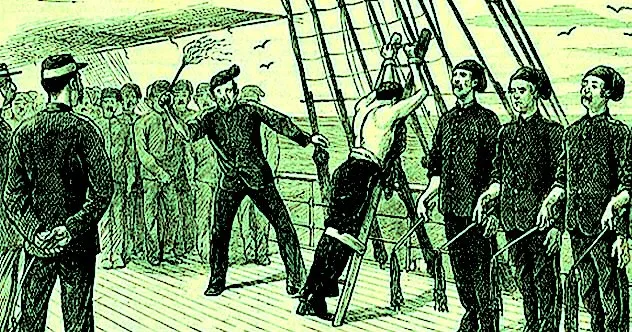
As promised, the War Nerd delivers a two-part series on the great British Naval Mutinies of the late 1790s. This episode explores the context of the mutinies: the brutality of life on board the ships, the press-gangs, British colonial rule in Ireland, Wolfe Tone, Hugh Pigot...
Total time: 1:00:43
Direct link to this episode's mp3 here
*
Subscribe to Radio War Nerd at patreon.com/radiowarnerd
Sound production by Telescope Audio
Check out the Radio War Nerd Merch store here!
Order your print or ebook of John Dolan's new book Erdogan Pizza: Dispatches from a Violent & Grotesque World
Comments (32)
This is RWN Gold!
After the mention of Ireland as a laboratory for the genocide we're currently seeing in Gaza (and beyond) in this episode, I was wondering if anyone has suggestions for some books that might speak to this aspect of Irish/British history. My interests on the subject are pretty wide so any recommendations would be greatly appreciated (I noticed "The Famine Plot" mentioned above and added it to my list). I've just added all the previous RWN episodes on Ireland to my listening queue but I'd be excited to hear if there's anything else you guys would suggest.
I've not read the book, but this interview with David Burke about his book Kitsons Irish War is really good: David Burke, "Kitson's Irish W…–New Books in Military History – Apple Podcasts https://share.google/KN7QzOFfXRwrz0czt
This episode made me do a re-play of Assassin's Creed 4: Black Flag. Although that one takes place in the 1710s.
Nothing can beat those sea shanties
“Looking for Group”? Different circles I guess
Just to note that the Church of Ireland is very much an Anglican church and is not defunct at all, while obviously not thriving or anything like that. Anyway, not presbyterian. Great episode!
John, a wolf tone has yet another meaning in music, specially when it comes to stringed instruments. So it’s got a triple meaning when used as a band name
The whole area of the Nore (never heard it called that before, just refer to it as the Estuary) is extremely tidal. Low tide you can walk out all the way, and there is a path you can drive your car on to get to some military-controlled islands. A tiny slither of deep water remains that is the main route for large ships. It's an extremely bleak place to be. Back then it wouldn't have been populated much at all, as much of the land on the north shore going towards london would have been marshland and populated by malaria. You would have had small pockets of fishing communities on the coast and that was it. (Today there's a whole city there.) It gets super windy as well. I literally live two minutes away, I can get pictures if anyone wants them.
I think pictures would be appreciated!
I just finished reading Tim Pat Coogan’s “The Famine Plot” in preparation for a trip to Ireland. A passage about one instance of peasant eviction during the famine: “The peasants had managed to clear out some four hundred acres of bogland so that the place was a little haven of prosperity, or what passed for prosperity in the West of Ireland in those days. But the landlady decided that she wanted to move into the realms of “high farming” and adapt her land for grazing purposes. On the morning of March 30, 1846, a detachment of troops and police turned up to eject the people from their houses. Their belongings were thrown out and the roofs of their houses collapsed. It was made clear to the people in the surrounding areas that if they took in the evictees, they would suffer the same fate. And so the evicted people passed from door to door vainly seeking shelter… the three hundred or so men, women, and children affected by the eviction were frequently barefoot and hopelessly ill-clad to withstand the rigors of a March night spent under the open skies of Ireland.”
Peter Linebaugh’s Red round globe hot burning is a brilliant account of that period. Also Niklas Frykman The Bloody Flag: Mutiny in the Age of Atlantic Revolution.
Also Marcus Rediker’s books and his cowritten book with Linebaugh The Many Headed Hydra, an audacious account of the revolutionary Atlantic.
I sail regularly around the English east coast, including around the Thames Estuary, where I guess the Nore is (too far into the estuary for me, so I've never been up to it). I don't have too much to add about the Nore, and definitely nothing that relates to the mutiny, other than that the east coast of England can be really really miserable. Unlike Wales, Scotland, or Cornwall, there are no dramatic, romantic peaks: Just a flat and marshy coast that transitions imperceptibly to miles and miles of a particularly sticky mixture of mud and sand. Though since the "weather" usually comes from the Atlantic, the estuary is relatively sheltered. A conjecture, but I imagine that the most important defense of somewhere like the Nore was that it was essentially impossible to navigate into it without extremely knowledgeable pilots. Every place has its peculiarities, and the English east coast has ever shifting underwater sand banks. Every season these are carefully remapped, since any little storm moves them out of the way, and even then, these banks are rarely exactly where they're charted. It is very shocking to be out of sight of land and suddenly see your depth drop to a couple of meters. Add to this a huge tidal range, and I'd have to imagine that entering the estuary without a local pilot would be essentially impossible.
Your comments on the east of England remind me of the description of the north German coast by (noted Irish nationalist) Erskine Childers in Riddle of the Sands, possibly the earliest spy novel I've read and very martimey. Also very reminiscent of my childhood spent during the summer at Southend, looking out over the mud looking for the cockle boats
When I read the Horatio Hornblower series of nautical novels by C. S. Forester, I was struck by how often in the series Hornblower refers to the mutinies at Nore and Spithead. I recall one remark that went something like, "It was still a damned hard service, but not so hard as would give rise to the suicide of mutiny." The mutinies apparently went some way to alleviating the worst aspects of the service (arbitrary punishment, abusive officers) but could not make it pleasant. Wasn't it Ben Johnson who said that a sea voyage was like being in prison, with the added possibility of drowning at any time? Interesting episode and a nice break from contemporary misery. I look forward to part two.
The Church of Ireland might have Crypto-Calvinist leanings when compared to the CoE but it is absolutely not Presybetarian they are Anglicans. The problem was many Irish protestants WERE Presybetarians or other disenters, In Ulster Presybetarians were the majority. As the Penal Laws discrinated to some extent against all non Anglicans, and that was a huge part of why the United Irishmen could count on support across the sectarian divide.
Haul away ye rollin kings
The French revolution is kind of like, “what if the CEO shooting was a community event”. Also, it’s not much talked about because everyone but the French got their ass beat for, what, 26 years? British ships were just as impotent to defeating France on land, as the French army was for defeating the Royal Navy, so it doesn’t fit with the whole “Britannia rule the waves” narrative these inbred historical revisionists are trying to craft
Copper bottom sheaths, sails all a’furl
So the British navy was copying the age old Russian recruitment tactics of Wagner PMC. Interesting.
It just occurred to me that British policy before ww1 was (I think) to have a fleet as strong as the next two largest navies combined. I’m not sure why, but that connected in my brain to the PNAC goal of being able to fight two wars at the same time. Both endeavors pushed the state purse to its limits
Please do a Irish famine series
Not really a war?
Brain-rewiring episode hell yeah
Nobody has ever done propaganda half as well as the English. It's practically necessary for their survival. If the world ever woke up to a third of the evil they've done, I can't help but feel like humanity would rise up en masse, obliterate that accursed island until it sinks back into the boiling seas, and wipe it out of our history books forever. It really seems like the English are uniquely malignant creatures, even compared to other imperialist powers. Even the Israelis and the Americans feel like bumbling amateurs by comparison.
May Allah awaken the people
Salt fish is probably easier to find modern images of, but I think the idea is the same for salt beef. You fill a barrel with salt, and burry the meat in the middle of the salt. Almost like modern dehydration preservation. Lotta salt.
shoutout to Townsends YouTube for making and eating / testing a lot of this stuff, his various military ration cooking vids are great
Driving into the techno hellscape of Seattle today and needed this ! Danke!
A nice esoteric episode like this hits the spot. Been pretty tough to metabolize current events so I could definitely use a break. Bring on the seafaring tales!
Very common theme of the show. Try to forget the horror of today's world by listening to the hell that was pre modern war lol