
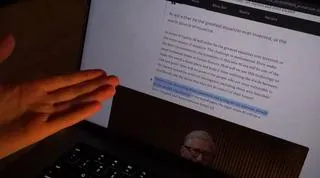
Just reading about AI in bed (and mildly scolding Bill Gates)
Well, my random pull of a mooncard inspired me to read in bed with you tonight. I'm just responding to an article about AI by Bill Gates, off the cuff, without having prepared or looked ahead.
I have some firm negative opinions on parts of it. But I don't want you to feel overly judged if you're someone who has used AI or even someone who's really into it. It's not like I'm perfect in the things I have strong opinions about. I just think Bill G is wrong on this one, that his take is bad, and that his actions make no sense for his stated goals and fears.
I was on a roll with producing this video once I got started, with my previous failed video attempts plus random providence colliding into a magical moon card to trick me into thinking this was a good idea. I don't know whether I'm under- or over-estimating how odd it will seem to those of you who are used to my scripted, polished, heavily-produced style. In this video I'm instead struggling to think out loud in real time, I don't have weeks to do research and polish my words to perfection, and there's so much missing context.
I might respond to some things differently with more reflection or information. But to quote Ted Carpenter, "Clear speaking is obsolete thinking," and also who am I to deny the will of the mooncard?
At least I'm cozy.
I made it a mission to get this out with a little time before the end of the month. I'm still grandfathered in to having everyone pay at once at the beginning of each month here on Patreon, so, if you don't want to support this take on AI, here's your opportunity to politely step away and not pay on Sep 1. This is a more tech-savvy audience than most, and I'd expect at least some of y'all are early adopters of AI who have strong optimistic feelings about it and who might not enjoy this window into my blunt real-time thoughts.
And I am QUITE anti-AI, with "AI" meaning the handful of large models people usually mean when they refer to "AI" here in 2026, the models/companies that scrape everyone's work off the internet without permission, the same ones demanding massive datacenter buildouts. I'm all for smaller bespoke research models, with good legal vetted data, created and overseen by legitimate people trying to solve useful problems. I just think it's not that hard to see and care about the difference between the two, or to see and care about the theft and corruption in the former. That the models of the former can also be quite dangerous in a bunch of ways would, you would think, be another reason to be against them.
One of the questions I ask myself at the end of reading the article is if maybe Bill Gates is using it as a launching point for something more tangible he'll follow up on in interviews. Well, this interview in the MIT Technology Review was the first one I read afterwards, and the only tangible thing in there he offers for the average person is that he argues not to protest data centers. Why? Because he says there's no point and it's not effective.
He's wrong on that. Data centers are hugely unpopular in the US, and this is having real political consequences, in a way that I think is positive for the country, for democracy, and against the corruption of the current administration. Data centers are a big issue for voters and could be the tipping point for which party controls the house and senate after the midterms.
If Bill Gates learned he was wrong about the effectiveness of protesting data centers, would he change his mind and encourage people to protest data centers? I think he should. I think he should use his power to help slow and stop the thing he's arguing is so dangerous and is happening too fast, rather than helping speed it up. Maybe he just didn't think of that.
This video doesn't have more than a sliver of my views on AI, the ones that came up in direct response to each line of the article as I was reading. Maybe I'll get more into it in the future, or if you have any questions, this is our tiny little patreon comment section where I'll be sure to see them, so ask away!
And I have a question of my own: did this format work at all? Or is it a fun one-time thing? Or a not-fun one-time thing?
🐌,
Vi
Vi reads about AI in bed (and mildly scolds Bill Gates) (Vimeo)
Comments (35)
I find the whole "Human Reserved" thing deeply unsettling because it wants to treat AI as the default option. Like he wants a future where every day-to-day interaction is with a bot, where you are expected to go to the store, eat at a restaurant, go to the bank, go to the hospital, and the whole time you aren't interacting with another human except for the few novelty places that are designated "Human Reserved" where you can experience the wonders of being forced to interact with another living human, and all because its more "efficient"? As if the social world that we are forced to live in, and is a fundamental part of our humanity is just another inefficiency that should be patched.
Hi, um I recently found out you’re no longer posting on YouTube so I was looking everywhere to find you. I am a math major at a community college and I have an assignment to interview/do research on a “career” or smth that I aspire to be ig. I was wondering if I could pick your brain about some things, or even just get some contact information for someone else who might be willing. Thank you so much you’ve been incredibly formative for me. (Apologies for the wall of text I can’t seem to do paragraphs without sending the msg ;-;)
Hey Vi, I’m just catching up and need a little more time to respond thoughtfully to this video. But in the meantime, I want to share this quote from George Hotz (the programmer who first “jailbroke” the iPhone) on AI hype. [quote] ---- What I don’t like is two things. One, this constant bullshit about some window closing, or the perpetual underclass, or falling hopelessly behind. This is negative valence hype, not only is it not true, it’s mostly designed to make you feel bad about yourself and move to shitty San Francisco where everything really does suck like how these people claim. And two, this strawman jump from, oh hey, it’s a fancy autocomplete, smart compiler, better search engine, to it’s gonna like own the whole light cone bro like if you aren’t in SF and at the right parties there’s gonna be like a flash of light in the sky one day and you’re not even gonna know what happened but everything just Changed. I’ll bet you everything I have that this doesn’t happen. The people perpetuating this are terrible people, but the justice is that this is how they feel inside all the time themselves. ---- His full blog post is here: https://geohot.github.io/blog/jekyll/update/2026/07/12/i-love-llms.html I’ve been in education 6 years now, and as I go on, I learn how much of human life is determined not by serious assessment of good and bad, but by sociological forces. The communities we inhabit, the people around us, shape our worldview. AI FOMO has taken hold in many spaces. There’s the game theory/competition aspect that other commenters have named. But there’s also another thing: exhaustion and expediency. Take my own field, education. Teachers are already overworked and underpaid, asked to produce more lesson plans, communicate with parents, prepare engaging materials to teach complex concepts, and differentiate for English language learners. And they spend 6 hours of their work day unable to really do it, because they’re teaching. AI, to a teacher, is basically a “go home early” button that could mean more time with their families. I’d feel very uncomfortable telling a teacher who made that choice that they were wrong. And yet, I have no doubt that this behavior will (in the aggregate) lead us to a bad place. Productivity demands will only go up, as they always have – so where did that saved time go? Simone de Beauvoir made the same observation in 1947: [quote] ---- **The time that one gains cannot be accumulated in a storehouse;** it is contradictory to want to save up existence, which, the fact is, exists only by being spent and there is a good case for showing that airplanes, machines, the telephone, and the radio do not make men of today happier than those of former times. ---- There’s also this weird perception that it’s so great how we’ll move faster than ever. Is the thing standing between you and creating something great… really speed? I’m not sure that it is. And about “revolutionizing education”. I would LOVE for someone to tackle problems educators have been complaining about for years… like the massive RACIAL OPPORTUNITY GAP. Sam Altman replies, “Best I can do is a fake-my-essay machine.” There is so much more to say – particularly after the Navier-Stokes kerfuffle – but I’ll leave it for a time when I’m less tired. Sorry if I’m not making sense.
Totally enjoyed reading your post. Thanks!
"And I am QUITE anti-AI, with "AI" meaning the handful of large models people usually mean when they refer to "AI" here in 2026, the models/companies that scrape everyone's work off the internet without permission, the same ones demanding massive datacenter buildouts. I'm all for smaller bespoke research models, with good legal vetted data, created and overseen by legitimate people trying to solve useful problems. " Here HERE.
I am also very very Anti-(Generative) AI. Because of the complete lack of regulation, restriction, or oversight, it is already causing severe amounts of harm that is being mostly ignored and I am so deeply frustrated with it and people's lack of willingness to boycott it. It is being used to generate chatbots that replace front-line workers, AI slop videos (with hallucinated data), AI slop crochet/knitting/etc. patterns (that are just...bad), AI slop art, etc. etc. etc. All of which is being sold by misleading AI slop marketing and allowing grifters to scam folks out of what little money we do have left after rampant inflation. It's so gross and already being used rampantly for unethical ends. We have already opened Pandora's box and I don't think there is any way to undo it. Asking us to just don't, only works when you have morals and ethics. If you are an unscrupulous actor willing to scam folks for money, then AI is the goose that lays golden eggs and no one is supervising the nest.
Yeah it's pretty terrible. I take heart in seeing the growing backlash, and knowing a lot of the problems it's causing are way too expensive to keep creating once the bubble bursts (so that's looking on the bright side of a potential catastrophic recession).
Vi, I think you show a fair amount of Dunning-Kruger here: You are well above average intelligence and expertise with regards to this subject (as well as many others). You've put in a lot of thought and time with regards to this topic (again, as others, such as education and writing, &c.) and I think you're making the false assumption that you're less above average than you actually are. That is, you're misassessing average ability. It is true that the best humans in each field are superior to the LLM, but very few humans have access to those humans or even their work. Your response to Bill's comment on effective teaching via AI struck a chord with me. As a teacher myself, I recognize that I am above average in some aspects of the job of a teacher, and decidedly below average in others. I agree that my students deserve access to the best human teachers, but they don't have that access. They have me instead. If the judicious use of an LLM can gain my students a modicum of access to the great educators who are out there, that is a benefit for them. While you're absolutely correct that all LLM AI is stolen, and there is legal precedent already that will support payments to the humans who did the creative work (royalties maybe? I hope that an AI lawyer someday makes legal arguments against its parent corporation!) I don't think it follows that the LLM AI are not worth pursuing. Perhaps not to the tune of trillions of dollars of investment, but they are enormously useful for indexing, accessing, and reproducing the stolen work. One thought this brings to mind is that I'll never read every book I'd like to in my lifetime. I probably won't even know about most of the books I'd like to read in my lifetime. Having a massive index of works available will undoubtedly introduce me to new authors and ideas that I would not otherwise encounter (As much as I'd rather learn about relevant authors and writings from you and others whose intellect and character I respect!) I'm also finding myself relating this to how I felt when I left university and lost my J-stor and Springer access. For the last 20 years I've felt a giant hole in my world representing all the research that is locked behind a paywall... Usually the new corruption is supported by the people because they believe it will undermine the old. Anyway, thank you as always for your thoughts in this video.
The vision you share of an LLM-enabled search of vetted, human-created educational and academic material sounds great to me. It could also have a much more useful and less computationally expensive interface to browse work on a topic than a chatbot designed to generate imitation human interaction. And why twist the work into a generative copy as a pretense of skirting past copyright law, when you could just surface the work? This is starting to sound like a library, and libraries have figured out systems for paying for intellectual property with our tax dollars while also sharing it at no cost to borrowers. So I like your idea and think it's plausible. When I imagined students using an AI tutor as Bill G described, I wasn't imagining an AI teacher and comparing that to what I imagine is an average human teacher. I was imagining the materials the AI generated for them versus materials they could find if they did a search on the web (or YouTube) for digital material that had already been created. I was assuming Bill's scenario where the teacher is too busy and the student is on their own, so the skill of the teacher in the room wasn't part of the equation in the scenario I was imagining. A better search of a better library of material would make it even more certain that the non-Gates-version is superior. I was imagining the difference between searching for info on WW2 and surfacing a Crash Course video about it, for basically no cost, versus asking a bot to teach you about WW2 and getting an AI-generated video with a borrowed Crash Course aesthetic that includes some interesting takes on the holocaust it learned from twitter, costs a not insignificant chunk of what a human teacher would've cost for the same amount of teaching time, and requires the use of a datacenter that has rendered one of your local towns uninhabitable. Maybe with AI improvements this hypothetical AI-generated educational video could get better, but, that's only because there's so many Crash Course and other videos that it has stolen, so, just use those instead, was what I intended as my point. I'm against the big predatory systems that big tech markets as "AI" in reality in 2016, and also against conflating being anti that with being anti every AI-adjacent algorithm for every possible use case. Which is why it took me the intro of Bill G's article to already predict he'd bring up using AI to find cancer treatments, and that he'd try to make it sound as if being against AI as people know it today is also being against the potential good "it" can do. I haven't put much thought into what good or bad AI-ish educational tools might be, beyond responding to Bill's vision and now your own, so I went to see what that Khan Academy article was on Bill G's webpage that I accidentally scrolled past while filming, to see what other visions of AI tech in the classroom might look like these days. It was from back in 2023, about a ChatGPT-powered classroom tool / home tutor called Khanmigo. I went to follow up on how that's been going and found this interesting article: https://www.chalkbeat.org/2026/04/09/sal-khan-reflects-on-ai-in-schools-and-khanmigo/ If it turned out that the tool had been super useful for teachers and students, would I reconsider my position? I don't know. I do feel pretty certain that if we want to invest in helping students and teachers, there's ways to spend money that we know will make their lives easier and improve outcomes. As with climate change and global health, we're actively stepping away from doing what we know works, defunding all that in a way that harms people now, and tying our fate to AI speculation instead. Even if there were a miraculous breakthrough in AI for education on the horizon, I can't say it would be worth it. But I do enjoy a computational tool for learning better and thinking better. I'd love a massive digital library with improved computational search, bring it on!
I haven't watched the video at all! But just reading all the comments and your responses to them was super entertaining.
The comments are probably better than the video! At least, y'all commenters have more interesting things to say than Bill Gates does, and I'm better at thinking while typing than with talking in real time. So this has been fun.
Hey, I also really liked this format. Even with the article being bland, I enjoyed seeing its implicit assumptions made explicit. It exposes the underlying propaganda and/or the misunderstanding of the technology.
Thanks! Once you notice the rhetoric once, you start noticing it everywhere.
I know you said these are negative opinions, but this was vindication I needed.
Thank you!
Just commenting to say I loved this format. Also interested in more discussion on effective altruism.
Thank you! Someone else also asked for more on effective altruism below, and I wrote just a few thoughts that avoided getting into "Effective Altruism" as a movement, which is a different thing than just trying to be effectively altruistic. But I'll let myself go on a little rant here, as a treat. Most charities cater at least somewhat to donors' desire to feel their money is spent well, which is fair. But there's a point at which trying to ensure money is spent optimally becomes counterproductive to it being spent well. And then, somewhere lightyears beyond that point, is the movement known as Effective Altruism. I'm talking about the movement where self-described "rationalists" try to convince each other of fantasies along the line of "there's a 1% risk of life-ending catastrophe x, which we have a 50% chance to mitigate with intervention y, therefore once you account for the future population and compute the numbers I've saved approximately 1.7 million lives by spending my $20 so judiciously." It's an entertaining game, to play with such thoughts and numbers. But these guys took it seriously and wanted to be taken seriously outside their bubble. At least that's my memory of the movement. It seems like maybe in the past decade or two the term "effective altruism" has caught on in wider circles and might be less associated with a specific group of out-of-touch armchair philosophers. I was reminded of the original movement when I read Bill Gates trying to argue that donating his foundation's money to AI is in fact a legitimate charitable act because of a story he has in his mind about future potential for global farmers. More generally, I think the pickiest most demanding donors are less likely to donate to the most helpful charity than to the charity most willing to cater to their ego, organized around delivering the fanciest powerpoint presentations to convince them of how their dollar will go further and create a lasting impact in ways that can be intellectualized about and packaged into shiny infographics. I love a good charity infographic, so long as it's not at the expense of common sense and good judgement. If a charity is providing tangible good to real people now, and if a dollar is doing about what a dollar should be able to do now, that's a green flag for me. I might trust a charity to invest in speculative projects with the hope of someday benefitting people more effectively, but only if they've shown themselves to be grounded in reality by doing work that benefits those same populations now. It's a red flag if a group claims to want to make the world a better place, somewhere someday, but in the present is only demanding sacrifices and applause. But also, I think charity doesn't have to follow rules or logic. If I simply have a good feeling about a donation and my intuition tells me the mission and structure makes sense, but they don't have a pile of numbers to back it up, I might still donate, because if I can afford to why not. It's not like I'm holding a significant fraction of the country's total wealth. ...yep, I have opinions on this... thanks for giving me the outlet! And if you're a fan of the Effective Altruism movement, don't let me yuck your yum unless you're Bill Gates. If you're a normal person enjoying the entertaining thinky parts and donating your own money you made with your own labor, that's not my business, have whatever fun you want with it.
Vi, you are so optimistic in expecting this article was going to be worthy of your time and analysis, and I very much appreciate the attempt at something new, to let us have your unfiltered thoughts on something as you experience it. If only Bill had something interesting to say, this could have been a much more interesting video. Anyone that tries to frame article as a nuanced and insightful presentation from an industry leader is either as equally optimistic as you or is already drinking the techbro simp kool-aid. The simple response of "just don't" is entirely sufficient to the arguments provided here. My own willingness to accept LLM tools would be altogether different if they had any amount of meaningful regulation. Bill could use his influence to help create that regulation instead of talking about the inevitability of something that he is helping to try to make inevitable. But, honestly, I want to thank you for being optimistic, for thinking that there would be something here, and for giving us a place cuddled beside you in bed to do something that could have been fun or interesting. I hope you don't let this stop you from trying this again. And, if you're willing, I'd be curious to know how many of your subscribers abandoned you because of this.
At first I felt a little bad about covering such a bland article, but when even after spending a couple days editing it I saw only fawning coverage I thought maybe it's not so bad to have a counterpoint out there. And the discussion in the comments has been interesting and makes it all worth it to me! I might try this format again on something with a bit more meat.
Realistically, the "just don't" option is not going to happen unless people get really scared. Which could still be how it goes, given the Hugging Face hack (clearly these things are already out of control) plus the huge potential for AI powered terrorism.
Maybe one upside of tech's overreach on AI is that people have a lot of feelings and experiences they're drawing on in the backlash. Outrage at electricity prices, disgust at AI generated content, annoyance at AI tools being shoved in their faces, anger at the wealthy elite who behave as if they are above the law and who pal around or worse with guys like Epstein. So, lots of legitimate emotions to get people moving besides fear. I'm personally not a fan of the fear angle because I've only seen it used as part of pro-AI propaganda, using fear to guide people to the conclusion that because AI is so powerful and scary we want to have it on our side, building it faster and stronger and accommodating it. Most people who talk about "serving our AI overlords" are joking, some seem to actually be hedging their bets...
Hi Vi, I've just rediscovered your videos after quite a while, and I thought this one was particularly good! I'm also deeply sceptical of this current AI absurdity (for lack of a better description) and find it to be deeply, deeply unethical and inhumane. There's so much hype around it that sometimes I feel like I'm just going to be drowned by its inevitability. It feels reassuring though when I come across other people who feel the same way. Your mention of minds being corrupted reminded me of something I've been thinking about a lot lately, which is the idea of information hygiene (to borrow a term from Snow Crash) and how to protect my mind from the negative effects of generative AI. I care a lot about being able to think clearly and about not polluting my brain with misinformation. Something interesting that I have noticed since I've started thinking about the idea of information hygiene is that I have increasingly found myself experiencing very strong feelings of revulsion when I recognise AI-generated text or images, as if my mind is trying to protect itself. Partly because of slop being pervasive and exhausting to wade through, but also partly because of worrying about information hygiene, I have found myself relying more and more on books and archived websites and documents because they remove the cognitive load of having to analyse whether what I am reading is slop. Changing my reading habits has also made me realise that most information actually has a very long shelf life compared to the breakneck speed of tech (where I have spent all of my working life so far). Your mention about rich people dollars was also a bit of a revelatory moment for me. I have a deep discomfort with and distrust of effective altruism, but I have found it hard to figure out what exactly puts me off them. I've been thinking about it recently (since seeing someone advertise a career information website created by effective altruists - yuck), and had got as far as being put off by how they apparently reason themselves into holding really odd positions. I think you've also given me another piece of the puzzle in that they want to feel like they're doing something special with their special rich people money, as well as wanting to feel like they're being clever. My comment has got a bit long, so last bit I promise! I also wish that there were agreed terms to refer to generative AI and non-generative AI, rather than the former just being commonly referred to as AI. In my head I use the terms generative AI versus ML (for ethical models like you describe), but that's not much use when nobody else uses them in the same way! Cheers P.S. If you do any more videos like these, I'd love to watch one where you expand on your thoughts about effective altruism (I am very much not convinced by its effectiveness). P.P.S. I still think about how the singular of sheep could be shoop every time I see sheep/shoops! (comment attempt number two, after pressing enter too soon the first time...)
You've articulated something I've experienced but had not put into words, with the cognitive load of having to figure out if something is AI. I've definitely found myself more comfortably relying on older publications, or checking the release dates on YouTube videos, because of the annoyance of having to consider how much of something might be AI. What you describe is so real. I'm glad you got something from my rant related to effective altruism, because the general idea of how to best use power is something I think about a lot. For me I decided to try to follow my beliefs in a way that left me with less power, leaving my tech career and focusing more on my local community. I don't think I'd be a better person with a better impact on the world if I'd focused on growing my career and making more money and having more "influence" with the big fancy players, and I've never regretted it, but I still sometimes wonder if I made the right choice. I don't think it's a bad thing that now I'm accountable to y'all Patrons for my income rather than Microsoft, despite that it's a fraction of the money and I'm no longer hobnobbing with the rich and famous. I'd rather be real here with a small group of people who actually care and who have real thoughts of their own, than be who I would've had to become if I'd stayed in the industry. What good is being Bill Gates if you're spending your 70s writing such tepid bullshit (to quote Erin's description)? I hope the meager inefficient altruism I've done in my life has helped some people who will end up much better and more effective people than Bill Gates is, and I don't need reports or proof to believe they can be. If you missed it, see my video last month about Pier Giorgio Frassati, who I admire for engaging in local acts of charity and addressing the problems in front of him. His family pressured him to dismiss the needs of the local poor, thinking that they weren't worth helping and that charity was a waste of money. But Frassati went against his family and followed his heart, and you can't argue the results. That's what I aspire to.
Forgive me if you answered the question already. (I'm about 50 minutes into the video.) Replying to: "or, maybe don't." Suppose we just don't. Communities around the country (or even world) come together and make it clear to their representatives that they don't want AI and data centers. Scraping the web and training models becomes illegal. Lawyers stop using AI and go back to hiring humans to deal with the vast amounts of text involved in their profession. Developers go back to writing code line by line and having other humans review their work. Then what? Will foreign nations follow our example? Will China stop developing their models? Will the people running local models on their personal Mac Studios delete those models? Will criminals and rogue nation states stop using AI to hack institutions and individuals? I don't think they will. A problem I see is that so much of our current infrastructure is running on legacy software with all kinds of bugs and code debt. So many of our systems are vulnerable to attacks from Mythos-class models. And in probably a few months or less, China is going to have Mythos-class models. There are soon going to be open weights models that people can use on their own hardware to perform sophisticated hacks. It's already happening. What is the cost of "just don't"? I personally worry about having my bank hacked and losing my savings. Or having the transportation network or power grid hacked over and over and having to deal with repeated waves of disruption. Or some crazy individual or rogue nation hacking into some weapons of mass destruction and sending us back to the stone age. I'm not saying I'm happy with our current trajectory. But Pandora's box is already open, and I can't see how "don't" is a viable option.
It's a fair question, and on the question of China I replied in some length to Matthew Ender a couple comments down. The gist is that I'm unconvinced that "more AI" would do more good than harm as a response to the threats of AI. Is more AI development a realistic step to protect against hacking, rather than enable more of it? Obviously bad actors will use it to the extent they can, but I don't take it as a given that a future where we crack down on AI will leave us more vulnerable to hacking than one where we embrace and invest in it. Data centers themselves are potential targets, and really juicy ones for a potential enemy AI, so at least to my uninformed intuition it seems safer to not have them, rather than to believe that building them out will help them to protect themselves. Meanwhile the only solutions I ever hear from the people who I've heard issue dire warnings about how amazing AI is at hacking is that therefore we need more AI which will, in a hypothetical future, be our defender and savior. I think it would be better to not assume more AI will save us, and instead focus on more practical protections we can implement immediately. Like, how much of our stuff is internet enabled that doesn't have to be? How much of our daily lives run on software as a service that live in the cloud, rather than us having our own software and data that works locally without the internet? I feel like a lot of the actual practical protections that would reduce the attack surface are at odds with what tech giants want, which is to gate everything behind always-on cloud-only systems that they control, which incentivizes them to put us more at risk with more AI and with more AI as the solution. But I'm not an expert on this stuff and that's just what comes to mind right now. It's a good question and I know there's actual experts who work on this stuff (and who could weigh in here if they want)
His friends (or his kids) are trying to make money on AI, so that's the reason why he's positive on AI. I use AI almost every at my job writing code. It's fine at automating things, but still screws up on a regular basis. Anyone who uses AI on a regular basis isn't going to buy the rosy future Bill was told by people who have a vested interest in seeing AI succeed.
Maybe it really is about the money. It feels more to me like he wants to feel relevant and fly on fancy planes to fancy meetings with fancy people that make him feel smart and important, and the money part is just the mechanism to be let into the cool kids club despite having nothing new or interesting to say. But that's just the vibe I'm getting, I don't know the guy. I think he, like all the tech billionaires in the news, needs to get rid of his money and make some real friends.
I'm reminded of a time long ago when I wrote a paper disassembling Marxism, which essentially boiled down to 'there's this one logical flaw near the beginning and then everything was built on that', but with lots more words, many of which repeated. IMO, 'just don't' is asking too much of 'just'. We're talking about a force that has large chunks of the powerful entities of the world (the tech companies, to be sure, but also governments) actively pursuing it or complicit. I think you'd be best off starting by noting the assumption that the AI era as we understand it with all the theft being inevitable, and that you don't agree that's necessarily so, then letting him build the case. Looking at the result and how it's largely still-bad or wishful-thinking, and the large-scale effort needed to ameliorate the situation, revisit that assumption. The AI sky-pie pretends that having more despite vastly increased inequality will be okay if we can make some of that trickle down to the people harmed, and quietly leaves out the 'despite the best efforts of powerful wealthy interests to keep it all for themselves, as they have done successfully through most of history'. With a better vision for the future, and TBH noting the sort of people your voice reaches, you can lay out how we could get there. Which is *hard*, to be sure, not a 'just' -- even if nearly-everyone successfully blocks massive data centers, you still need electing leaders who will put serious regulation together, far exceeding what Gates would call for. And then you need to deal with i.e. China having little incentive to follow our lead unless there's something bigger at play. Definitely a lot of work here.
You've got some good thoughts said well! I hope you're also sharing them with your people and wherever you share things. Getting better elected leaders is gonna take all of us. On the political front, I think a useful question to dig into would be envisioning a future where the US stops developing these models while China continues, but with a level-headed understanding of what AI could actually do and what it costs to do it. A lot of powerful people in the US have a gut reaction against the idea of China having what they think of as this incredibly transformative powerful all-seeing technology, but realistically, what would China actually have over us if they had big AI and we didn't? (That's not rhetorical, I really don't know.) And what would having big AI ourselves actually help in that situation? Are there other maybe better things we could be doing to address those concerns? (With one obvious step being to get our own house in order and work on returning to being a relatively dependable country that it's possible to work with. And getting ourselves together more generally.) I think it's possible that if you really dug into what big AI tech could actually do for China, and what it would cost, you'd see some fears come away as absurd (like Gates catastrophizing that China could use humanoid robots as cheap labor, undercutting the US labor market), while real concerns like hacking and cyberwarfare might have better and more real-world actionable ways to address them than just a vague idea that it's scary if China can do it so we need to do it bigger and better and faster, with a vague assumption that it's comparable to the nuclear arms race and that having it first (or both having it) would be better than not having it. (And to be clear, I don't know the answer to that. But I suspect that if we did look more deeply into the question and into the facts it's at least possible it could turn out that having the weapon inside the house puts us at more risk than if we didn't have it, regardless of its potential ability to counterattack or even defend. It's also possible that other kinds of security investments would be a better defense than AI, and we're underdeveloping those because we're too focused on the idea of AI as our savior. This isn't my area of expertise tho.) I know part of the fear is just that if China has big AI, and if you believe AI will be great for the economy and for growing GDP and having nice things, then the US doesn't want to be left behind and lose economic superiority. Some people even believe it's not a bubble, here in the US. And some people believe AI makes them more smart and more better, and react badly to the idea of a China that could prove itself more smarter and more better than us. Take a realistic and informed view on all these things plus other things I haven't thought of, and I don't know what answers we might find. Maybe we can have a bright future here in the US without Big AI even if China doesn't follow our lead. Maybe there's other paths forward. Maybe there's folks doing work along these lines, I haven't been following AI discourse again until recently so I'm way out of the loop. I imagine that to figure out any of this, you'd have to have as good an understanding of China's politics and tech leaders as you need to have of the US government and our tech leaders to disentangle the bullshit here, and I don't have much more than a layperson's understanding of China. But that's some initial thoughts.
honestly it's so freaking satisfying to watch someone shut down this AI propaganda couched in intellectual pseudo-concern with a very matter-of-fact "Well just... Don't."
I love this description and comment, thank you. I do think some things really are that simple!
Some initial thoughts, having quickly read the post and barely started the video: * oh wow that is long. Well, guess I'll buckle up * I am already worried that Bill Gates' take on all this is tepid bullshit. I don't know if he ever had an interesting take in his life? I wish there was someone interesting to argue with. I know Tao has put his thoughts out there but I haven't been able to bring myself to engage with them much. * Maybe it'd just be TOO MUCH in the edit, but I think the text you added to the video is important enough to deserve a...voiceover? dub? a pause in the video where they're read aloud? I feel like I see these in a lot of videos and I always think "OK well I guess anybody blind isn't going to know the truth because the correction isn't accessible." But maybe there are tools that scrape text out of video streams, idk. Maybe the only problem is for people whose attention wanders ok that's probably too much initial thought clickin play again
"Tepid bullshit" is a fair description of his take, IMO. This doesn't end up being a particularly intellectual video because of how bland and out-of-date his take is, which also makes it more relaxing and easier for me to just enjoy going on little rants. Pausing the video to add notes in voiceover isn't a bad idea. I guess my worry would be that once I'm making additions/corrections/references a "real" part of the video, now I'm just making a scripted edited video that's gonna take a billion hours and require actual research. I don't expect most people to read the footnotes, they're mostly there for my own peace of mind for spots where I can already predict some people will want to question me on something. But the comments are still here for anyone with a followup question even if it's something I already answered in the visual footnotes, if they can't see it.
I really would like to know your views on this but I can’t watch a 1.5 hour video about it. Could you make a transcript available, I wonder?
Most of it works fine audio-only, if you need something to listen to while you clean your kitchen. But I'll let you know if a transcript becomes available. A lot of it would be me reading a line of the article and then saying "or, maybe don't."