









Gays at the Gates of Hell - On Adapting A.E. Housman for the New HALLOWED GROUND Anthology
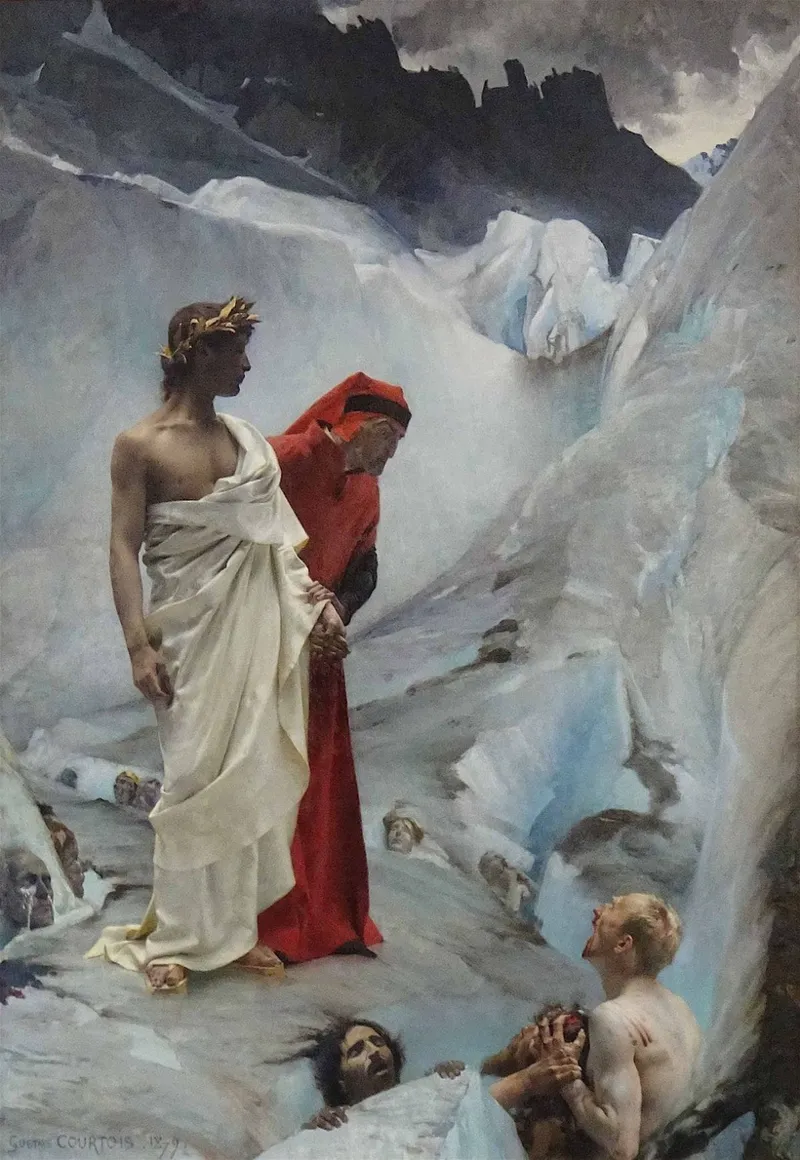
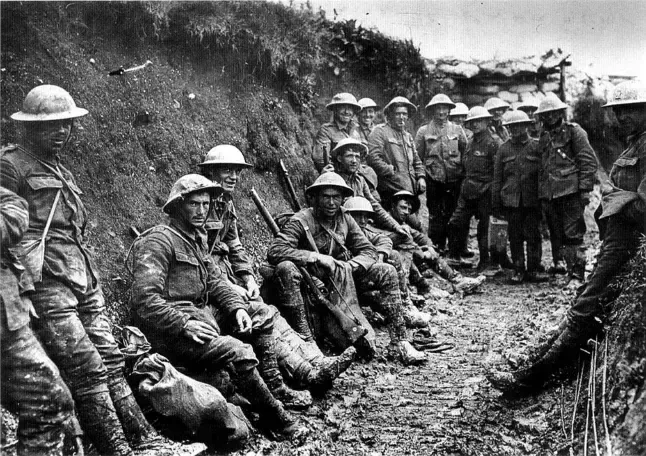
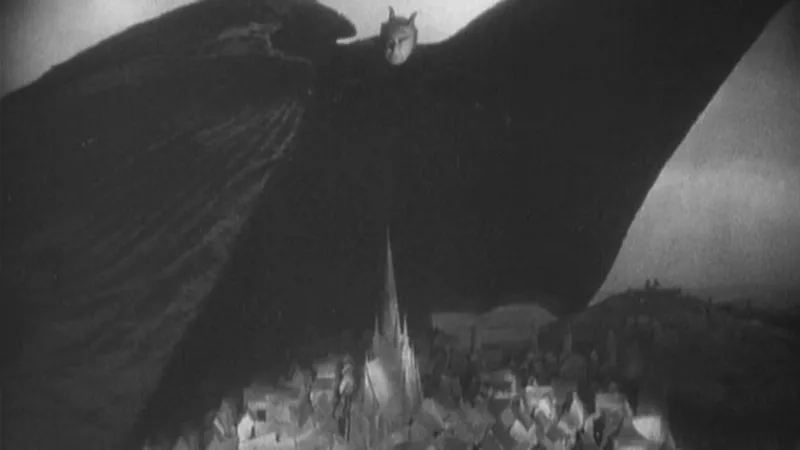
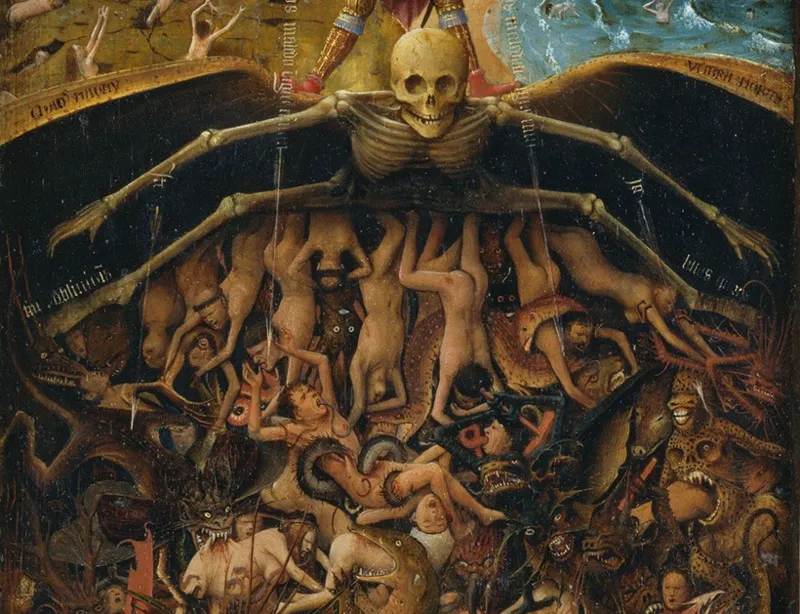
Hi everyone! I am in the midst of a VERY busy period of foment as several projects snap together (several many announcements soon!) but I thought I'd take a break and my thoughts about this project, and share the album of inspiration images I sent to artist Ian MacEwan for our entry in the HALLOWED GROUND anthology.
HALLOWED GROUND has just six days to go and is 75% funded - which is good, but still risky, so if you're interested now is the time to help us get that momentum that'll help carry us across the line in the final days!
When editor Michele Abounader approached me to be part of this collection (a queer anthology about Heaven, Hell, and Purgatory) in November I was obviously 6000% down. I sent three pitch options (the other two which I will be keeping in my back pocket) and she picked the one I hoped she would - an adaptation of A.E. Housman's poem "Hell Gate."
I have recently turned to the literature and milieu of the late 19th/early 20th century for obvious reasons and along the way have been completely stopped short by Housman. He is in many ways the Victorian age's opposite number to Oscar Wilde, his contemporary and schoolmate (there is an excellent but very inside-baseball play by Tom Stoppard on this score which I adored but which you basically have to be the kind of person who would subscribe to this podcast to enjoy). Both very queer, both achingly driven by the pursuit of beauty, but where Wilde was flamboyant Housman was suffocatingly straitjacketed; where Wilde was a magpie and a jackdaw Housman was an owl. He thinks deeply, slowly, and with an exactitude of meaning and expression (and rhythm!) that feels to me like something iron in a grassy meadow.
At university, Housman fell in love with his roommate Moses Jackson, a beautiful straight man, and one of Oxford's star athletes. Housman ruined his life to be close to him, shipwrecking a prominent career to blow off his studies and failing exams - then built it back up again as one of the age's most celebrated classicists, while pining for him distantly and unrequitedly for the rest of his life.
Housman's poetry was a distraction to him, coming in only two major bursts of inspiration and publication - the first in the period Wilde was on trial (and DRACULA, incidentally, was being written across town), resulting in the slim volume that made him immortal - A SHROPSHIRE LAD (1896), the little book of verse whose mournful brokenheartedness and nostalgia for rural England placed it in the pocket of almost every British soldier in the first World War. John Sparrow, Housman's fellow Oxfordian, remembered Housman's description of his compositional process:
Poetry was for him ...'a morbid secretion', as the pearl is for the oyster. The desire, or the need, did not come upon him often, and it came usually when he was feeling ill or depressed; then whole lines and stanzas would present themselves to him without any effort, or any consciousness of composition on his part. Sometimes they wanted a little alteration, sometimes none; sometimes the lines needed in order to make a complete poem would come later, spontaneously or with 'a little coaxing'; sometimes he had to sit down and finish the poem with his head. That... was a long and laborious process.
SHROPSHIRE LAD is a classic, and you should read it. It won't take long, though if you are like me you will be struck flat by its beauty.
But you won't find "Hell Gate," the poem we're adapting, in it, for a very specific reason.
SHROPSHIRE LAD was a hit, but it had to make several compromises to be one. Its flashes of queer desire are still quite shockingly forthright to modern readers, especially given its concurrency as Wilde sat in the trial for sodomy that would be his ruin and the great homophobic panic attack that would grip Britain in its wake in full swing. Nevertheless, the history of SHROPSHIRE's editorial process is full of careful and quiet censorships: the neutralization (or outright swapping) of the beloved's pronouns, for example, as Housman's melancholy queer desires became palatable mayfair heartbreaks of a more pedestrian kind. Its other careful choice is the simple excision of several poems that Housman knew simply could not be published in any form without revealing a love whose name was, in England, more unspeakable than ever. Housman's instincts of self-preservation - of his dignity, which was paramount, and of his life, which he valued significantly less so - were as ever inerrant; Wilde was quickly dead, and a generation of queer writers (like, again incidentally, Wilde's associate and matrimonial rival Bram Stoker) scuttled quickly back into closets of respectability, moralizing, and obscurity. And Housman quietly laboured on as years and decades rolled bt, translating the classics, teaching Oxford about creme brulée, and gathering dust.
But Housman's only other publication of creative work, LAST POEMS (published almost 30 years later than SHROPSHIRE in 1922, long after the war that made Housman its foxhole companion, had passed) makes no such concessions.
Moses Jackson, the great love of Housman's life and soul, had in the meanwhile lived the busy and happily pedestrian life he had always wanted - he married well (Housman was carefully not invited to the wedding, composing an Epithalamium that went undelivered), was given a series of useful and undemanding posts throughout the bustling empire in India and Canada, and had left Housman and his uncomfortable declarations behind in England to his bookishness (and the massive portrait of Jackson, which dominated Housman's Oxford library throughout his long life).
But now, in 1920s in farflung British Columbia, Moses Jackson was dying. Housman had one more chance to say it all, one last time.
And so LAST POEMS was assembled, set to print, and published to massive acclaim - but really for only an audience of one. Housman's introduction to the work speaks of this summative swan song, the sense of the death of his reason for writing and the end of his work, in the book's introduction:
I publish these poems, few though they are, because it is not likely that I shall ever be impelled to write much more. I can no longer expect to be revisited by the continuous excitement under which in the early months of 1895 I wrote the greater part of my first book, nor indeed could I well sustain it if it came; and it is best that what I have written should be printed while I am here to see it through the press and control its spelling and punctuation. About a quarter of this matter belongs to the April of the present year, but most of it to dates between 1895 and 1910.
LAST POEMS roars what SHROPSHIRE LAD whispers - of a love between men that is undying, uncompromising, that has no home to call its own but will shake Heaven and Hell apart in its faithfulness and beauty.
When Housman received word of Jackson's death he sent a letter to his friend Alfred Pollard - a letter the Pollard family kept secret until 2006:
Trinity College
CambridgeJan 17 1923
My dear Pollard,
Jackson died peacefully on Sunday night in hospital at Vancouver, where he had gone to be treated for anaemia, with which he had been ailing for some years. I had a letter from him on New Year's Day, which he ended by saying "goodbye". Now I can die myself: I could not have borne to leave him behind me in a world where anything might happen to him.
Yours sincerely,
AE Housman
When Housman did indeed die, his brother risked publishing some last fragments of poetry found among his papers, gathering up the last fragments of Housman's broken heart:
He would not stay for me, and who can wonder?
He would not stay for me to stand and gaze.
I shook his hand, and tore my heart in sunder,
And went with half my life about my ways.
"Hell Gate" (my favourite of Housman's works) appears in LAST POEM's pages, a series of narrative stanzas that encounter a fresh-dead soldier being escorted by a Virgilian guide to the Hell he knows he has earned - as it seems in Housman's worldview we all have earned. It is a distinctly Miltonic Hell; the narrator encounters the allegorical Sin and Death at its portcullis who we are used to in our podcast's reading of PARADISE LOST - but he also sees the shades of fellow damned patrolling the gates, aflame with the dull cold fire of their perdition.
And when one of these burning souls hears him ruefully and familiarly speak to Sin ("'Met again, my lass,' said I",) that anonymous and anonymized soul snaps to attention and life:
And the portress foul to see
Lifted up her eyes on me
Smiling, and I made reply:
"Met again, my lass,” said I.
Then the sentry turned his head,
Looked, and knew me, and was Ned.
What follows is, to my mind, one of the greatest moments in queer literature, as these two men - lost, damned, consigned to the fire and the ash-heap - turn in desperate yearning and love at the the entire superstructure of the God who damned them and the Devil who claims them, and bring it all to ruin.
It is magnificent (I won't belabour the work, but you can read it here) and adapting it for the page was extremely challenging, joyful, and healing work. Ian MacEwan's art for the piece is also transcendent - full of the aching loneliness, the awestruck sublimity, and terrifying agelessness that I hoped for and which Housman's work deserves.
I hope we can get the work funded so you can see it in its completion - the Kickstarter is here, and if you can share it widely before we end I'd be infinitely appreciative.
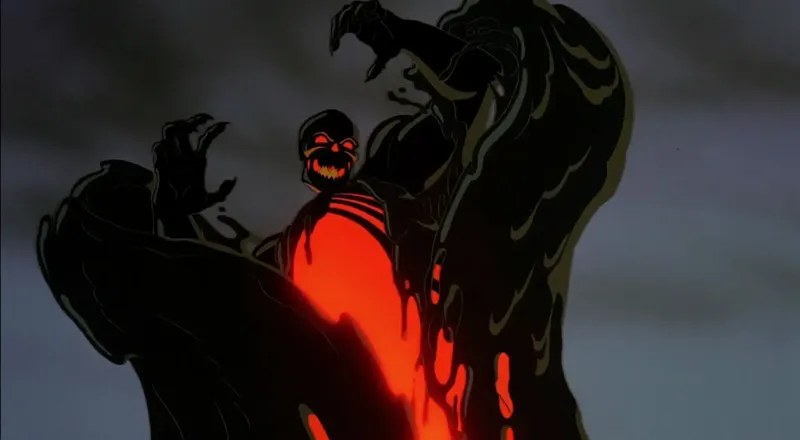
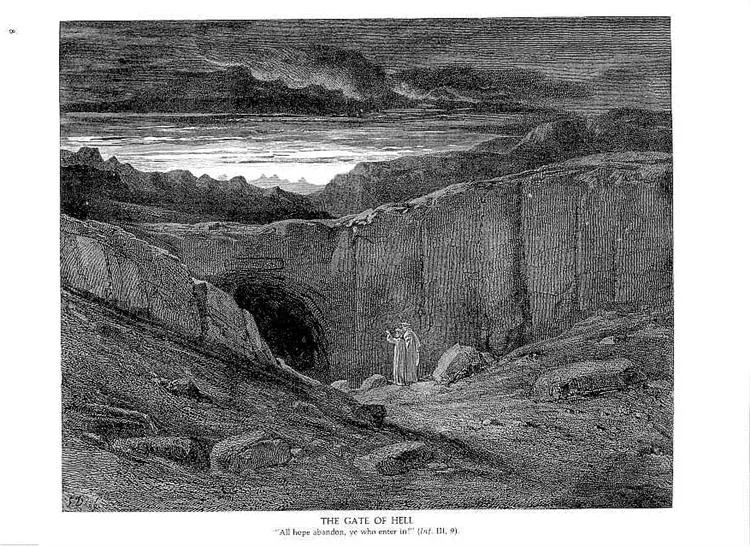
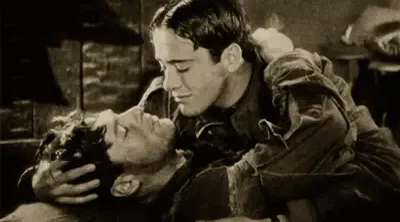
For now, I thought I'd share a selection of the inspiration images I included in my "look book" for Ian. I am a very referential writer, and I try in my scripts to give a large broadband of possible homages and ideas to draw from - see if you can spot the ways these speak to (or confront) Housman's vision.
Comments (1)
Kinda neat seeing the visual riffs with Sin, She's is giving Scylla, Lamia, and Sirena bicodula