



THIS WEEK IN VIOLENCE: VetClaims.AI
2026, Week 25
It was a busy one at Blood Work HQ this week, so this week’s newsletter is a little lighter on the commentary. Instead, we’ve got four articles for you which we highly recommend reading in full, and which collectively paint an interesting picture of our current conjecture.
The first is the complete text of the fourteen-point Memorandum of Understanding signed between the United States and Iran. The text is a little too long to put in the newsletter but also too holistic to abridge, so check that out first.
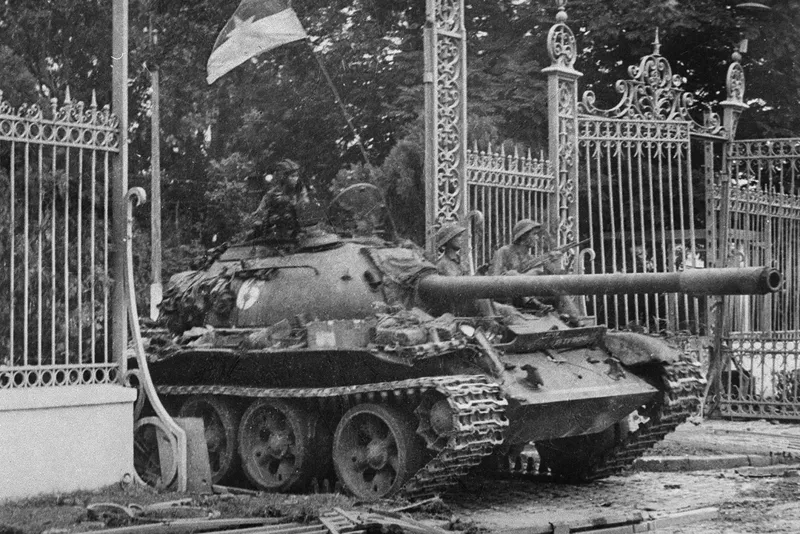
Then, we have some commentary from Professor Paul Musgrave, associate professor of government at Georgetown University’s Doha campus in Qatar, who took, as he called it, a ‘big swing’ on this war’s outcome, dubbing it a bigger defeat than the US’s retreat from Vietnam.
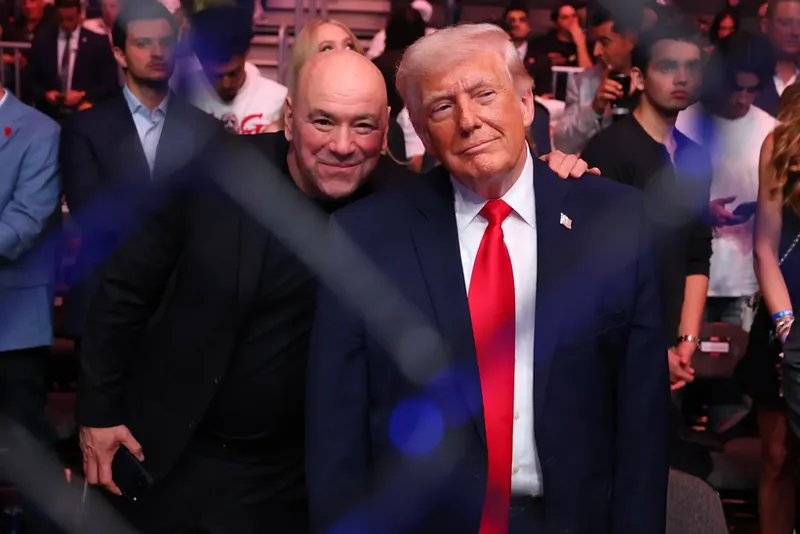
Next, Jack Crosbie, a reporter we’ve followed for a while, who produced some excellent frontline reporting in the early days of Russia’s war in Ukraine, wrote an essay about Trump’s Big Wet Birthday UFC Bash at the White House last weekend, with some pointed remarks about the true condition of that country as it approaches its 250th anniversary.
And lastly, we’ve got an excerpt from an interview with Alberto Toscano, Marxist professor and author of a number of books including 2023’s Late Fascism, thinking through the character of our contemporary authoritarian moment. Again, it’s an excellent interview worth reading in full. For our purposes, we’ve selected one of the more uplifting excerpts, from his conclusion, to go out on.
Iran Is a Bigger Defeat Than Vietnam
A war of choice has turned into a strategic disaster for Washington.
Foreign Policy – Jun 16, 2026
Written by Paul Musgrave
At his second inaugural, U.S. President Donald Trump pronounced his hope “that our recent presidential election will be remembered as the greatest and most consequential election in the history of our country.” By losing his Gulf war, Trump has achieved that goal. His choice to launch a campaign against Iran was encouraged by others, but fully his own. It has led to a reversal that marks a strategic calamity far greater than the U.S. defeat in the Vietnam War.
Defeat in the Iranian war looks, on the surface, nothing like other U.S. military defeats. The speed of the war and its remoteness have lent an air of unreality to the whole endeavor. The White House has not been burned, as it was in 1814; there have not been protests against a nonexistent draft. Even from my perch in Doha, where for the first weeks I could see and hear the war of missiles above my head, the past several weeks have been confusing. While shopping for groceries, filling my tank up with still-cheap petrol, and carrying on a Zoom call with distant co-authors, I have asked myself repeatedly, “Is this a war zone?”
The absence of substantial U.S. casualties in this conflict also masks the scale of the U.S. defeat. To be sure, the war has been deadly: Thousands of Iranians, combatants and civilians, have died in the fighting. Americans, however, have endured far fewer deaths: To date, fewer than 20 U.S. soldiers have died—and many of those in a single strike.
[...]
The United States is inarguably in a weaker position than when it began this war of choice, with core U.S. strategic objectives harmed.
Contrast how its military performance has seemed during this conflict with the U.S.-led coalition’s war to reverse Iraqi President Saddam Hussein’s conquest of Kuwait. In the 1990-91 conflict, the seeming ease with which Iraq’s military was dismembered stunned the world.
By contrast, the technically superior performance of U.S. arms in the Iran conflict has been overshadowed by the shallowness of U.S. arsenals, calling into question U.S. preparedness for a conflict with any foe more powerful than the Islamic Republic. The lasting image of high-tech combat from this conflict will be the blood-spattered bags of Iranian schoolgirls killed as the result of an apparent database error. And although U.S. defensive systems have performed well against Iranian missiles and one-way attack drones, Iran was nevertheless able to penetrate those systems to great effect, calling into question how those systems would fare against a more focused enemy or over a longer conflict.
Strategically, the outcomes are far grimmer. The United States achieved regime change of a sort: Rather than turning Tehran into a pliable client, the war made Iran more hard-line, leaving the Islamic Revolutionary Guard Corps effectively in charge of the country. Israeli and U.S. arms, however brutally effective in the first days of the war, ultimately demonstrated the limitations of kinetic solutions, to Iran’s great benefit. Iran’s nuclear program has now endured two rounds of joint Israeli-U.S. airstrikes. It seems unlikely a third would fare much better.
[...]
The United States, under whatever management, will confront these consequences while being itself weakened at home and abroad. Its allies will have less confidence in its capabilities; its public will be less willing to bear the costs of even productive engagement; its rivals will be likelier to challenge Washington’s will. Those results will be far more lasting and severe than the U.S. failure in its war in Vietnam.
One thing will be similar, however. Decades from now, students looking back to understand this American conflict will raise the same question I asked about the U.S. war in Vietnam: Why? Scholars will provide many well-researched answers, but none that will ultimately prove satisfying.
Why, indeed. As many have already remarked, there is more than something poetic about the fact that Donald Trump signed this MoU with Iran while in Versailles, France, in the same building where Germany had ratified the terms of its surrender in the First World War.
As the histories of Vietnam, Iraq and Afghanistan have ably demonstrated, as the global superpower, the United States often struggles to acknowledge moments of defeat. It’s a process which takes years, sometimes decades, and even then rarely achieves universal acceptance.
The bipolar political landscape which has engulfed the country over the past decade will only make this process harder. Indeed, we are already seeing signs that the MAGA contingent and the broader Republican base are going through the five stages of denial.
At Bari Weiss’s Free Press, the outlet finds itself caught between its financial and functional raisons d’être. Within the American media scene, it is an astro-turfed ‘sensible’ news outlet which serves to flatter and suck up to Donald Trump and his consortium of billionaire creeps.
On a more practical level, the news site is a retirement home for neoconservative Zionists; a desperate holdout for individuals who still desire to legitimise the Israeli state project, and push back against dwindling US support for it, by placing it within the virtuous, civilisation-building idiom of the beginning of this century.
As a result, we’re already seeing some truly impressive gymnastics from this crowd about how this might look bad for Trump, but maybe it’s so bad that it’s good; or that however severe this defeat might appear at first glance, hasty critics would be wise not to underestimate Donald’s ability to snatch a ‘deal’ from the jaws of defeat.
Ironically, a more honest read of the situation can be found from the Israeli camp itself, where politicians and commentators are frank and ruthless in their assessment that this ceasefire signifies a decisive loss, in the War on Iran, for the US and Israel alike.
Israeli politicians, in particular, have been scathing in their attacks on the Trump administration for their perceived capitulation to the terrorist Iranian regime — so much so that, at a press conference this week, Vice President J.D. Vance felt it necessary to remind the Israelis that the country now counts few friends on the international stage aside from the US, and that they should remember on which side their bread is buttered.
There remain two ways to read even this, however. Vance’s rebuke of the Israelis could signal an acknowledgement that even the GOP is going to have to temper its embrace of Israel, at least publicly, to remain credible with its own base going forward.
On the other hand, Vance occupies the unfortunate position of being both Trump’s whipping boy, and a 2028 presidential prospect who even his own party acknowledges is a non-starter. What better way to kill two birds with one stone than to send him out with a message that will garner some cheap heat from the MAGA base while also alienating the Republican donor class and further ensure he’ll be out of the runnings in two years’ time?
As Donald himself likes to say, wait and see.
The White House UFC Fight Was Donald Trump’s All-American Dream
For his 80th birthday, the president got exactly what he wanted: a bloody battle on the South Lawn of the People’s House
Rolling Stone – Jun 15, 2026
Written by Jack Crosbie
On Sunday night, Trump’s 80th birthday, the UFC hosted a blowout event on the White House’s South Lawn, in an arena custom built at cost by the UFC and its president, Dana White, who is one of Trump’s closest personal friends and most important political allies. White and everyone around him delivered for the President: seven bloody fights, all of which ended in a knockout, two military flyovers, a fireworks show, and an entire weekend of supplementary events devoted, ostensibly, to celebrating the country’s 250th anniversary. Trump sat near Mark Zuckerberg and Larry Ellison, whose billion-dollar companies helped put on the event. Kid Rock was there as was recently-victorious New York Knicks owner James Dolan. Across the street, in the Ellipse — a huge grassy field directly across from the South Lawn — tens of thousands of fans packed in front of jumbotrons to watch the fights, walled off from the actual arena by walls and barricades and razor wire and hundreds of armed guards, but close enough to feel like they were part of something big, something beautiful, something shared and special and thrilling.
THE CELEBRATION OF DONALD TRUMP’S AMERICA started in earnest a few days before, on Friday evening, at the Lincoln Memorial. Below Honest Abe, the PA system blasted “99 Problems” by Jay-Z and “Click Click Boom,” by the band Saliva. The sky was a lurid, incredible shade of peach, the sun setting in the wake of a series of thunderstorms. Images of the fighters splashed out over the white marble of the memorial, projected at huge scale on “Monuments built by a nation to honor greatness,” as White put it in a pre-recorded video that played before the fighters made their way down the steps.
[...]
“Happy Birthday America!” White yelled when he took the mic, before announcing that deserving fighters would receive additional bonuses of $250,000 to $400,000 from World Liberty Financial, a cryptocurrency company owned by the Trump family.
The following day, I walked down to the White House to check out the UFC’s “Fan Fest” event, which had been set up on the Ellipse. The UFC’s custom-built arena, a massive metal structure called the “Claw,” was visible over the tops of the trees and fences, lit up in red and blue. UFC fans had completely swarmed downtown D.C., and by Saturday afternoon, thousands of them were sweltering in gigantic lines for a myriad of fan experiences put on by the UFC’s many prominent sponsors. Dodge Ram Trucks were jacked up on huge lifts in one section next to a Ray Ban Meta AI locker room. (“This thing’s badass,” a gangly 20-ish kid said to his buddies, looking admiringly at the Dodge racing truck on display.) Another stage hosted the Monster Energy Drink Girls, who were taking pictures with shirtless fans wearing replica UFC gloves. There were at least three full-size octagons to take pictures in, and half a dozen booths with retired or former fighters doing meet-and-greets. You could take pictures with the Budweiser Clydesdales, two placid-looking horses rotated in and out of the photo line and a small metal stall set up under a tent. Motocross legend Travis Pastrana popped up on the main stage wearing a shirt for Black Rifle Coffee Company, an aggressively right-wing coffee brand that sponsors the UFC.
The jumbotrons, meanwhile, played a looping selection of ads for the late Christian Nationalist Charlie Kirk’s Turning Point USA organization and a company called “VetClaims.AI.” There were Secret Service recruiters and a detachment of Marines standing around near a parked Amphibious Combat Vehicle. I was still trying to shake off the heady Lincoln Memorial event, and the all-senses assault of branding and advertising wasn’t helping. But the fans in the Ellipse weren’t as cynical. As I ducked under a large tent near the Clydesdales to get some shade, I met three guys in their late thirties who had had the same idea. They were old friends from a martial arts gym who were spread around the country now, but had reunited in D.C. for the fights.
“A lot of people talk about how everything’s so political, everything’s so divided,” Johnny, a Brazilian jiu jitsu instructor from San Diego, tells me. “You have people from all races, colors, creeds, all here celebrating this.”
“That’s what makes the UFC great,” Johnny’s buddy Tony, a D.C. local, chimed in. “That’s what makes America great.”
Again, there is little to be said here that hasn’t already been said. Crosbie’s article runs the gamut: between sardonic documenting of the scams, flim-flams and various vultures who swooped into participate in the feeding frenzy on the Ellipse; and an earnest, compelling perspective on the appeal of UFC and ‘lottery ticket’ enterprises which define much of the desperation of contemporary American life.
From NFTs and crypto pump & dumps, to cynical streamers seeking to turn any subgenre of humiliation and degradation (physical, moral, or spiritual) into monetisable ‘content’, to mixed martial arts fighters willing to risk their health and wellbeing for a fleeting shot at fame and fortune, it is noteworthy how so many of the ‘get rich’ pathways presented to young Americans today can be summed up by one word: desperation.
Setting aside the fighters and fans of UFC, it is notable how both last Sunday’s event at the White House and the broader culture of MMA fandom has attracted all and sundry of the most predatory aspects of American culture: big tech oligarchs spectating in the bleachers, various AI and crypto scam companies pitching to punters on the Ellipse nearby; military recruiters of various stripes, too. And all of this greased along by the Trump family and their various glorious money-laundering mechanisms.
The desperate need for these people to latch themselves to spectacular performances of a perceived masculine ideal says something about the so-called crisis of masculinity — though, not so much concerning men writ large as it does them: The CEOs, the billionaires, the political spinners.
And on that note, we’ll close out on a remark from Alberto Toscano which might help to illuminate the situation…
Vectors of Fascism
Communis – Jun 13, 2026
Interview with Alberto Toscano, conducted on April 22, 2026, by Lucie K. Mercier and Antoine Dubiau
At a certain level, then, there is a structural necessity to identify and amplify certain forms of hostility and threat: without this, the project does not work. If one does not produce a phobic emotional framework—the idea that the country is being stolen from you, that institutions are occupied by malevolent forces, that “cultural Marxism” is at work—then the concentration of executive and repressive powers becomes much harder to legitimize. At times, this takes on openly outrageous forms: trans women in sports, or, on a more conventional note, the portrayal of very marginal forms of armed antifascism in the United States as if they were a Daesh-style super-organization, more effective than any terrorist group that has ever existed.
But we must also consider the longer-term nature of the counterrevolution. Among certain figures—not necessarily Trump, but figures like Russell Vought or Christian social conservatives—there is the idea of a long process of reclaiming ground following a long series of victories by progressive, socialist, or anti-social forces. And it would be both empirically false and strategically short-sighted not to recognize the kernel of truth in that. In some jurisdictions, children today are learning things they weren’t learning fifty years ago: that sexual orientation is a matter of free choice and equality, that colonialism is a historical evil, and so on. Perhaps I am thinking about this because my daughter is nine years old and attends a public school here in Canada, but these transformations are real, even if they remain partial, limited, or detached from a comprehensive critique of capitalism. We must also remember that tens of millions of people took to the streets during the mass anti-racist uprising of 2020 in the United States. It was not a revolutionary moment—but Angela Davis also said that of the Black Panthers, that their moment was not revolutionary, when she wrote about preventive counterrevolution.
These reactionary movements are therefore also responses to a sense of insecurity and vulnerability among people who feel they still hold onto residual privileges, as well as among those who are socially and class-wise dominant. This helps explain the alliance between revanchist nationalist projects and significant sectors of what is known as Big Tech—that is, sectors of military and surveillance capitalism as well. These increasingly centralized, despotic, and intensely anti-worker forms of capitalism also feel precarious. They find something attractive in preventive counterrevolution—or at least in preventive counter-reform—because it rules out the possibility of restriction, expropriation, taxation, and regulation.
Just as the immense violence of the American imperial State can be understood both as a function and as a symptom of its decline, the extraordinary concentration of capital and repressive power is also haunted by its own sense of precariousness. This is why someone like Elon Musk exists almost as a pure symptom: the combination of anti-trans sentiment, the Great Replacement theory, an obsession with white Afrikaner farmers, and the feeling that his political and economic power is not secure. Individuals who possess historically inconceivable levels of monetary and social power can nonetheless feel that they could lose everything tomorrow. The rise of a company like Palantir—an ideologically far-right, hyper-nationalist artificial intelligence corporation—is also linked to extreme hostility toward workers, including tech workers involved in campaigns like “No Tech for ICE” or “No Tech for Apartheid.” Part of the reactionary and counterrevolutionary dynamic stems from these experiences. It is therefore important to return to the causes of this paranoia, rather than treating it as paranoia without a cause. In reality, if it had no cause, it would be far worse. It does have a cause: there have been real political and social threats—even embryonic or partial ones—against these forms of domination. We must take this seriously: a starting point for an anti-fascist Left might be to ask what it would mean to embody this thing they fear, to give reality to their paranoia about expropriation, “social justice,” or the “power” of working people.