
THIS WEEK IN VIOLENCE: Before the Law
2026, Week 20
This week, I came across three separate news stories which each communicated different but interrelated ideas about the relation between law and violence, particularly in our present conjuncture.
You will remember that in our very first episode I dwelled on the true substance of violence, and circled around that etymological root, denoting an action which is swift and sudden, the imposition of something through force. Maybe keep that notion in mind as we work through these stories today.
‘It’s toxic’: Romania reeling over claims of high-level justice system corruption
System in ‘deep crisis’ six months after documentary exposed alleged network used to delay graft convictions
The Guardian – May 13, 2026
Reported by Andrei Popoviciu
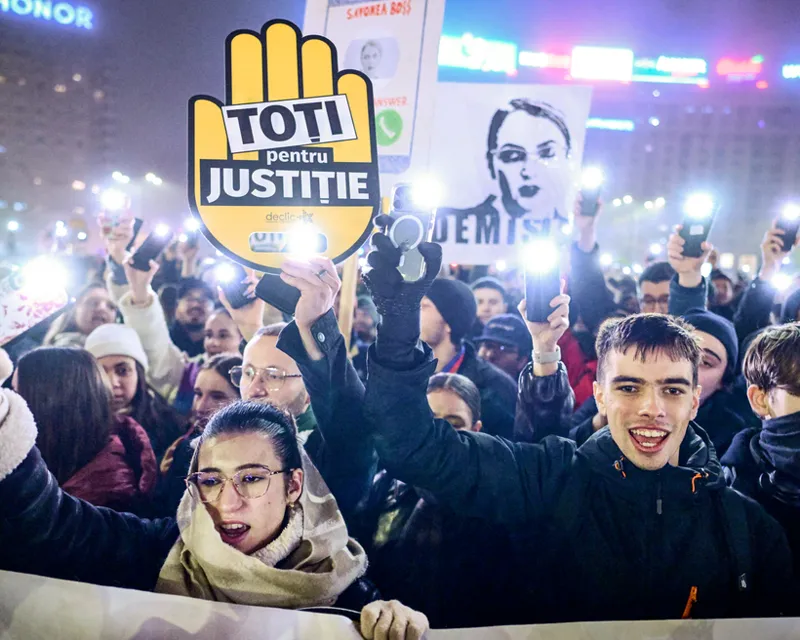
The courtroom was silent but tense, the whir of camera lenses the only sound as dozens of journalists fixed their eyes on the bench. An extraordinary press conference had been called after the airing of a documentary late last year that claimed the top of Romania’s justice system was riddled with corruption.
Seated at the bench at the Bucharest court of appeal was its president, Liana Arsenie, flanked by her two vice-presidents. Behind them, in support, stood about 30 judges.
Then, Raluca Moroșanu, also a judge at the court, entered the room and asked to speak before the press conference began. “We are simply terrorised,” she said in a steady voice, breaking ranks with the leadership sitting beside her. “I can’t describe the atmosphere here, how toxic and tense it has become.”
Her declaration made, she swept out of the court in her robes, to a smattering of applause in the room and the stony expressions of her fellow judges.
Moroșanu’s intervention was made in support of a colleague who had been targeted after appearing in the documentary by Romanian outlet Recorder, which alleged that a network of senior magistrates and politicians had “captured” Romania’s justice system. “Everything he said is true and if anyone contradicts him, it is a lie,” she said in her address. Last month her colleague was referred for disciplinary proceedings over statements made in the documentary.
The film used rare prosecutors’ and judges’ testimonies to claim that the network used administrative manoeuvres to delay convictions in high-level corruption cases until they reached the statute of limitations.
The fallout was immediate: thousands of Romanians took to the streets and nearly 900 judges and prosecutors signed an open letter warning of “profound and systemic dysfunctions”. But six months on, meaningful reform has yet to materialise, and the allegations keep mounting.
Last month, the investigative outlets Rise Project and PressOne alleged that Lia Savonea – now head of the supreme court – had acquitted a convicted gangster of a seven-year robbery sentence while co-owning land with his uncle during her time as head of the Bucharest court of appeal 12 years ago, an alleged potential conflict of interest she did not declare. She has denied the allegations, saying they were part of an “obvious defamation campaign” against her “based on forced associations and speculation regarding people and situations that have no real connection”. The allegations had been “subjected to verification”, she said, with no wrongdoing found.
Earlier this month, the Romanian president, Nicușor Dan, deepened public disillusionment in the justice system by approving a controversial series of prosecutor appointments over objections from the judicial regulator and civil society.
Among those named was Marius Voineag, a former head of the national anti-corruption directorate – a figure Dan had criticised on the campaign trail and whom prosecutors in the Recorder documentary accused of intervening in sensitive investigations. Voineag denied wrongdoing and declined to comment.
The crisis is unfolding against an already volatile backdrop. In 2024, Romania’s constitutional court annulled a presidential election over alleged Russian interference, a decision that deepened public mistrust in the country’s institutions.
The cumulative toll is visible in the polls. A survey this year found that seven in 10 Romanians do not trust the justice system and more than half believe the law is not applied equally.
When we arranged our interview with Florin Poenaru in December of last year after reading his excellent essay in North South Notes, it was because we felt his analysis of the ongoing rupture in Romania’s political and legal system was instructive.
You will remember that essay concerned the fallout from Romania’s cancelled presidential elections in late 2024; the barring of right-wing populist Călin Georgescu from re-entering the race; and the eventual election of Nicușor Dan.
The technocratic and institutionalist Dan hewed closer to Europe in the EU-Russia schism which has engulfed countries across the continent over the past few years. In terms of policy, Dan’s programme has mostly entailed a fairly bog standard centrist austerity programme.
Given the exceptional nature of the intervention against Georgescu and the restorationist outcome it secured — placing a pro-EU technocrat in power at a time when Romania appeared to be turning away from Brussels — controversy swirled regarding what had just happened in the Romanian system.
But contra the types of narratives which circulate on social media, Florin’s theory of the scandal bucked the idea that this power struggle was primarily ideological. Rather, what had unfolded in Romania was actually borne from power struggles pertaining to Romania’s sprawling intelligence apparatus, the SRI.
As one of few avenues for well-remunerated employment in Romanian society — and offering stepping stones to future career paths in law, business, media and elsewhere — it was Florin’s contention that the SRI both functioned to produce, and then so operated around, the country’s ‘salaried bourgeoisie’ class; and that the power struggles of recent years had been primarily about protection of certain fraternities within that class.
As Florin mentioned in our interview, the latest wave of outrage in this saga had been provoked by the release of a two-hour documentary film, provocatively titled Captured Justice. That film’s synopsis lays out its contention quite clearly:
In a simplified form, the pact between the two camps looks like this: politics offered laws that created a pyramidal organization of the justice system, placing all power in the hands of a small group of magistrates, and this handful of magistrates offered in exchange a justice system that no longer bothers the powerful.
That this scandal is now beginning to be reported in mainstream Anglophone press, with connections to Dan, including allegations that span back to the early 2010s, indicates both how deep and widespread the potential rot in the Romanian system is. And how increasingly unignorable.
But the scandal is also a warning, about how severely faith in the broader political and social fabric can be damaged when the judiciary is made an instrument of cynical, factional interests. If emerging allegations about Dan’s connection to this clique within Romania’s judiciary are proven to be correct, then the figure drafted in to fend off an insurgent far-right populist movement will have thrown fuel on the fire of that same movement.
When the next election comes, he shouldn’t expect to be so lucky.
Abdallah A., a Nonperson Because of His Instagram Posts
Abdallah A. lived in Germany since he was two months old and last year gained German citizenship. But now he’s been stripped of it because of pro-Palestinian Instagram posts, in a disturbing legal case that points to the rise of citizenship-on-probation.
Jacobin – May 14, 2026
Reported by Hanno Hauenstein
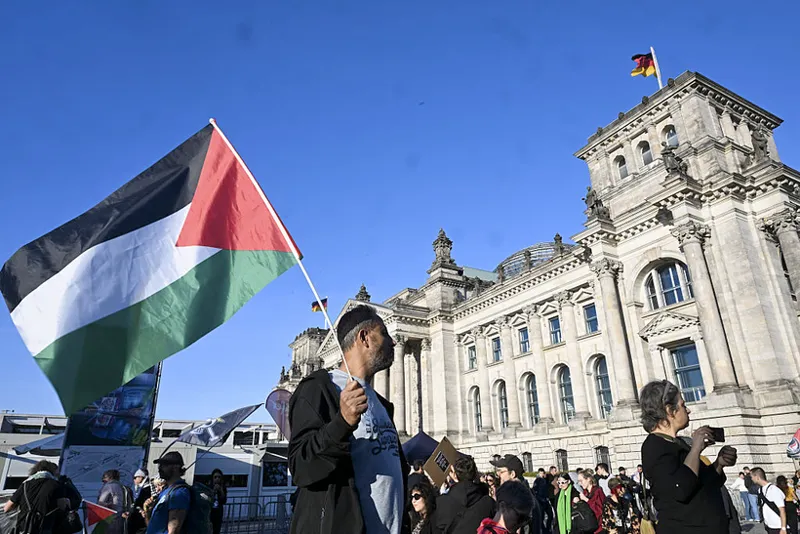
Abdallah A. was born in Lebanon in 1990, but from the age of just two months he lived in Berlin with his Palestinian family. Germany is where A. grew up, went to school, worked, and waited to become a German citizen. In September last year, he finally received a German passport. But only a few weeks later, the state of Berlin revoked his citizenship.
The trigger was a series of press inquiries sent to Berlin authorities, including the State Office for Immigration (LEA) and the domestic intelligence agency. The inquiries came from hard-right news portal Nius, newspaper Berliner Zeitung, and influencer and Weltwoche columnist Anabel Schunke. The case revolves around social media posts related to Palestine and Israel. This emerges from documents that are now part of emergency proceedings before the Berlin Administrative Court, obtained exclusively by Jacobin.
At the center of the case is Germany’s 2024 citizenship reform. While the move made naturalization easier in some respects, it also expanded the process by introducing a formal commitment to Germany’s special “historical responsibility” — using language critics consider deliberately broad and open to interpretation. Particularly since October 7, 2023, and amid debates over alleged “imported antisemitism,” critics argue this has created significant room for arbitrary evaluations of political speech.
A.’s case shows how quickly such interpretations can lead to consequences. In a press inquiry sent to the LEA on September 26, pundit Schunke described A. as an “alleged antisemite and supporter of terrorism.” She referred to the fact that A. had posted a photo of his newly obtained German passport on Instagram the day before. “How can people like this be naturalized in Germany?” Schunke asked in her inquiry. She also asked: “Are you planning steps to review and potentially reverse this man’s naturalization?”
A few days later, Wiebke Gramm, head of the LEA’s naturalization department, forwarded Schunke’s and other press inquiries to Claudia Vanoni, the Berlin Senate’s representative for the domestic intelligence service, requesting a “timely assessment.”
There is a concept in political philosophy, which I first encountered in the writings of Michel Foucault, known as raison d’état, or ‘reason of state’. In a nutshell, it refers to the bases on which a state articulates and justifies its own foreign policy and international relations, with the implicit assumption that such positions are rooted in that state’s own interests.
In some sense, raison d’état might be understood as a corollary to the English term, ‘national interest’, though in our view, this does not quite capture the same notion. Every state has its national interests, that set of positions, policies and priorities which it perceives as the most likely to secure and prolong its own existence and stability.
Raison d’état is something a little more; the reasoning on which such priorities are based. And yet, in their equation, and the way they are deployed in discourse, there are ways in which a nation’s interests and its raison d’état can enter a tautological relation: Policy 𝑥 is in the national interest because we reason it to be so; we reason it to be so because it is in the national interest.
In Germany, this term has its corollary, staatsräson, with the same denotation: national interest. But the term has acquired a more pointed meaning since the early 2000s, when it became increasingly used to both summarise and justify Germany’s relationship with the State of Israel. In the late 2000s, then-Chancellor Angela Merkel began to explicitly describe Israel’s existence as part of Germany’s national interest, owing to Germany’s historical responsibility for the Holocaust; that the existence of Israel was an integral part of German staatsräson.
I have always found it difficult to think of these terms, staatsräson and raison d’état, and not think of that similar phrase, raison d’étre, which literally translates to ‘reason of being’ but more accurately refers to one’s reason for being or one’s reason to be.
Though it might seem like mere syntactical quibbling, the simple change of a function word drastically alters the phrase’s meaning. There is potentially a world of difference between one’s reason of being, the why one is here, and one’s reason for being or to be; the meaning of one’s existence, or purpose one exists to serve.
As it happens, I actually lived in Berlin for a few years, in the late 2010s. At the time, I observed the awkward, stilted manner with which some Germans navigated the topic of Palestine, if and when it came up. Even among the few individuals I met who conceded some discomfort with Israel’s conduct and treatment of the Palestinian people, there was a (understandable) reflex with which such sentiments were swiftly tamped down: It’s not that simple for us, I am German, this is how it must be.
Since moving away, I have watched from afar as the fact of the mistreatment of the Palestinian people at the hands of their Israeli occupiers has become evermore unavoidable. I have also watched as the German state, in turn, has responded to this with increasingly brute violence, suppression, and denial of rights to people in that country who speak out about this issue.
This is where I think that syntactical slippage comes in. When Merkel declared Israel’s existence as part of Germany’s staatsräson, and as that position has become more crystallised within the German political apparatus, it has gone beyond mere reason of the state, becoming a reason for the state.
By fixing Israel as the proper and just compensation to the Jewish people for the crime of the Holocaust, and committing itself wholeheartedly to that project, Germany hopes that it can redeem itself of that crime. If the Germany of the Third Reich rooted its national project in the destruction of Jews, so the logic goes, then a redeemed Germany whose existence is indelibly rooted in the defence of the Jewish state rebalances the moral scale.
But justice does not work that way. It does not operate like balancing two sides of a mathematical formula, nor exerting alternate pressure in a hydraulic pump. Despite the culture of remembrance the country has instilled in its national education and cultural institutions, Germany has failed to properly confront its past and what that means for its national character not in relation to the Jewish people, but in relation to its own governmentality, the political and cultural character of the German state, with regards to itself, and on its own terms.
As a consequence, it is now wandering down a dangerous path in which it is beginning to repeat failures of the past, now imbued, once more, with the sense that such failures are justified by their service of a noble mission.
The violent, bloody policing of dissidents; the policing of speech and expression; the collaboration between politics and media to produce a culture of fear and instil compliance among the populace, particularly among minorities; and now the use of citizenship and national membership as conditionals, as cudgels, is a dangerous and troubling escalation in Germany’s attempts to amend for its past brutality by concealing it beneath a new articulation, directed to different ends.
The first was a great tragedy. The second, in every sense, quite farcical.
Palestine Action activists in Elbit protest could be sentenced as terrorists
Judge’s ruling was not disclosed to jurors in two trials and can only now be revealed after reporting restrictions lifted
The Guardian – May 12, 2026
Reported by Haroon Siddique
Four Palestine Action activists convicted after a retrial over a violent protest at an Israeli arms manufacturer’s UK site face being sentenced as terrorists despite the jury not being told this.
In an unprecedented move in a criminal damage case, the judge, Mr Justice Johnson, ruled before the first trial that there appeared to be a “terrorist connection” to the offences – even though the protest took place before Palestine Action was proscribed – but this could not be told to the jury. The finding and the restriction on telling the jury continued for the retrial.
Jurors subsequently convicted Charlotte Head, 29, Samuel Corner, 23, Leona Kamio, 30, and Fatema Rajwani, 21, of criminal damage over the 2024 break-in at the Elbit Systems UK site near Bristol.
The terrorism connection ruling can now be revealed after reporting restrictions were lifted on Tuesday. At sentencing, a separate determination will be made based on the criminal standard of proof of whether there was a terrorism connection.
If the court finds there was, it would mean the four would have to serve their whole sentence in prison, unless a parole board approved their release after completing two-thirds of their sentence. Non-terrorist prisoners usually serve 40% of their sentence.
The parole board would also have to be satisfied that the defendants were reformed and had rescinded their beliefs.
Upon release, the defendants could be recorded as terrorists for life, meaning any new device, bank account, email address or relationship would have to be registered with the police for the rest of their life and they could be sent back to prison if they do not comply or make a mistake.
The jury at Woolwich crown court was not told that this was a possibility when convicting the defendants last week of criminal damage – which is not ordinarily a terrorist offence – for smashing up drones and other equipment at the Elbit factory.
As I am neither a lawyer nor a journalist I’m going to keep my commentary on this piece brief. One of the basic, foundational principles in the practice of law, as I understand it, is that the accused is tried before a jury of their peers, with both parties having full knowledge and understanding of that of which they have been accused.
The news which emerged, this week, of a British judge potentially altering (indeed, enhancing) the criminal charges against a group of defendants not only after court proceedings had been initiated, but after they had concluded, the accused convicted of specific enumerated crimes, is horrific.
Sophisticated legal justifications notwithstanding, it turns basic precepts of law on its head, and even reverses them, defendants now discovering what they stand accused of, in actuality, after evidence has been presented, testimony given, and jury’s verdict delivered.
As another observer pointed out this week, jury members in any potential future case against activists such as the defendants in this case are now duty-bound to acquit the accused, as they cannot now be assured that the charges they have been entasked to assess and make judgement upon are those which will ultimately be levied against the accused.
Justifying their decision in this case, the judge argued that even if the acts concerned in this case were not necessarily directed to influence the actions of the British state, the possibility remained that they were perpetrated to influence the actions of Israel, and so therefore potentially constituted terrorism.
It is certainly news, to me, that the court system of the United Kingdom is entasked with pursuing the interests of other states and preventing their unfair influence or coercion through acts perpetrated on its own soil.
You may remember, a few weeks ago, when pro-Monarchy Iranian protestors in London climbed the front of the Iranian embassy, changing the flag of the Islamic Republic for one of the Pahlavist state. I do not remember any arrests being carried out by this quite blatant act perpetrated to influence the foreign government of Iran.
But this is part of what we have been trying to elucidate with the show over the past few months. There are those states who exist to exert influence, and those who exist to be influenced, and those who must not be made vulnerable to influence under any circumstances. And this is not an arrangement which operates according to those principles upon which law, or justice, or fairness rest. Such an arrangement rests, instead, on an economy – the maintenance of an order, ensuring everything is kept in its right place.
And as these three stories have hopefully shown, when a state’s judiciary is entasked, or indeed, entasks itself, with contribution to that particular mode of ordering, not only on its own behalf, but on behalf of another state, there is a severe risk of things taking a very dark turn.
Catch you next time.