



THIS WEEK IN VIOLENCE: Cóndor Dos, Águila Moribunda
2026, Week 19
For this week’s newsletter, we’ve got two news stories for you, which are separate, but which are nonetheless connected in a strange, poetic way.
The first is about some strange and suspicious events unfolding across Central and South America which suggest the US might be embarking on a new wave of imperial meddling. The second concerns the ongoing, and spiralling fallout from the US and Israel’s foolish war against Iran.
Collectively, we think they say something about the current condition of US empire, and what happens when imperial ambitions extend beyond even empire’s grasp.
‘Hondurasgate,’ the alleged US and Israeli interference plot to destabilize Mexico and other progressive governments
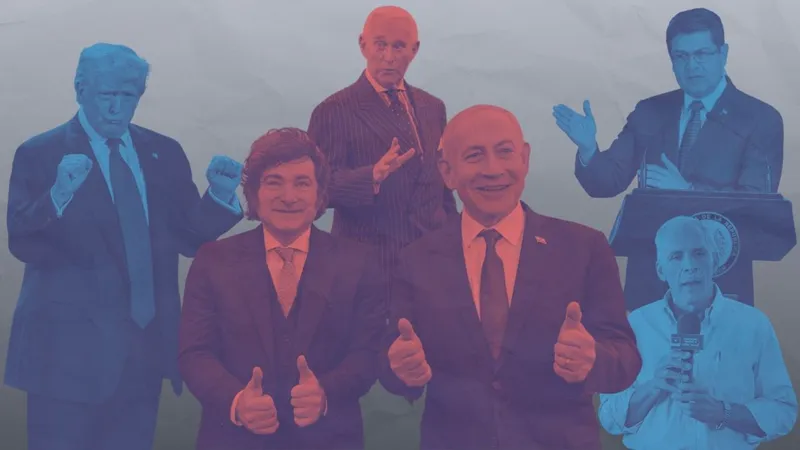
A leaked audio recording points to former Honduran President Juan Orlando Hernández, Javier Milei, and Donald Trump as attempting to create a platform to spread fake news about the administrations of Claudia Sheinbaum, Lula, and Gustavo Petro
El País – May 07, 2026
Reported by Andrés Rodríguez
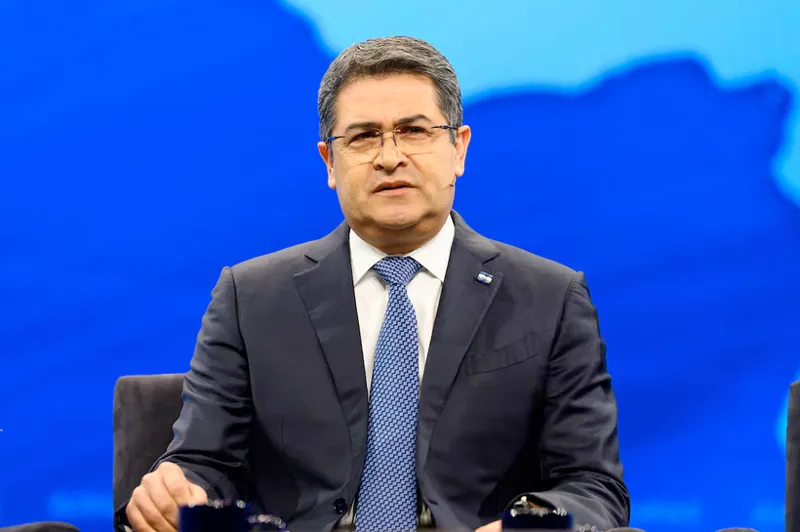
The United States and Israel, with the help of Honduras, are allegedly positioning themselves on the geopolitical chessboard to control spheres of influence in Latin America. The news outlet Diario Red en América Latina and the website Hondurasgate have revealed, in an investigation based on leaked audio recordings, the interventionist intentions of leaders of the global right. One piece of evidence, released at the end of April, claims that former Honduran president Juan Orlando Hernández, pardoned by Donald Trump from his 45-year sentence for drug trafficking — with the support of the Republican president himself, his Argentine counterpart Javier Milei, and the current Honduran administration — are conspiring to create a channel for disseminating fake news with the intention of spreading misinformation and destabilizing the governments of Brazil, Colombia, and Mexico.
The second installment of the Hondurasgate scandal, of the three released so far, includes a recording of an alleged conversation between Hernández, who had become an operative in the region for the U.S. president, and the current president and vice president of Honduras, Nasry Asfura and María Antonieta Mejía, respectively. The objective: to undermine the administrations of Claudia Sheinbaum and Gustavo Petro, both of whom adhere to left-wing ideologies.
In the conversation between Hernández and Asfura, the former president tells the Honduran leader that he needs $150,000 to rent an apartment in the United States, where he plans to set up an office for a digital journalism unit. This unit will publish information about Manuel Zelaya, who accused Trump of “protecting the plunderer of the state,” referring to Hernández’s pardon last November, and about Xiomara Castro, who served as president until handing power to Asfura. “Someone else here, from the U.S. president’s team, will handle it for me. Well, he’s one of the Republicans who are helping us. They’re going to set up a news site for us.”
Asfura’s response is: “I’m going to transfer it from a friend’s account. Let’s see if they can give it to you in cash, but explain to me, what are we going to do with it, what do we gain?” Hernández replies: “We’re going to set up a cell, Mr. President. From here, from the United States, an information cell, so they can’t track us there in Honduras. It’s going to be like a Latin American news site. I was on a call with President Javier Milei and it was successful. Very, very, very good, and I think that at this point we can do great things for all of Latin America. There are some cases coming up against Mexico, some cases coming up against Colombia, and, most importantly, against Honduras, against the Zelaya family.”
“Also, I think you need a little more money. For yourself. So we’re going to send another $150,000. And that way you can survive a little longer. We’re going to take it from INSEP [Secretariat of Infrastructure and Public Services],” Asfura says at the end of the conversation. On the same topic, in another alleged communication between the former Honduran president and the current vice president, Hernández emphasizes the importance of having that liquidity, “with the support of some Republicans,” in order to “attack and eradicate the cancer of the left” in Honduras and throughout Latin America.
You may recall that in our episode on The Monroe Doctrine from last December, we discussed a National Security Strategy released by the Trump administration. That document outlined what it described as a ‘necessary, welcome correction’ to America’s post-Cold War foreign policy strategy.
This former strategy was criticised for, among other things, lacking clearly defined desires and objectives, overestimating the US’s ability to shoulder geopolitical security burdens around the globe, and foolishly believing it could simultaneously fund a massive welfare state and administrative apparatus at home alongside a ‘massive military, diplomatic, intelligence, and foreign aid complex.’ (That last point will be news to anyone familiar with the concept of Military Keynesianism and the welfare-warfare state.)
As we covered in that episode, a key pillar of that National Security Strategy was a proclaimed pivot away from the Middle East toward regions in which the US’s strategic interests are more immediately concerned. Central to that pivot would be a reassertion of US military and economic dominance in the Western Hemisphere and the introduction of a ‘Trump Corollary’ to the historic Monroe Doctrine which has since become known as the ‘Don-roe Doctrine’.
With the events which swiftly followed from the release of that strategy, the Trump administration appeared to be serious about this. Roughly a month after it announced its renewed designs upon South and Central America, the US military conducted a brazen military assault on Venezuela, arresting and kidnapping that country’s Head of State Nicolás Maduro and his wife Cilia Flores from a military installation in the country’s capital of Caracas.
In the events that followed, however, US objectives once again became vague. With Maduro gone, he was replaced by his second-in-command, Delcy Rodríguez, whose tacit agreement to govern Venezuela as a pliant state appears to have staved off further US military meddling for the time being. Not so much a regime change as a coerced reorientation.
The Maduro raid was hardly the first incident in recent history to indicate a renewed US interest in rearranging its chess pieces in the Western Hemisphere. Following a period of comparative quiet during the War on Terror, numerous developments suggested both furtive attempts by Latin American nations to chart a new course out from under America’s thumbs, as well as attempts by the US to put such unruly nations back in their place.
In Brasil, the progressive left presidency of Luiz Inácio Lula da Silva (known to most as Lula) and his successor Dilma Rousseff was knocked over by Operation Car Wash (or Lava Jato), a sweeping anti-corruption probe carried out under dubious auspices, which saw Lula’s Worker’s Party replaced by Jair Bolsonaro and his far-right Liberal Party. (Look man, what can we say, Brazilian political parties, they’re a trip.)
Bolsonaro styled himself as a Brazilian Trump and was incredibly sympathetic to the Trump regime. One might even call Bolsonaro a Trump toady. Subsequent reporting by The Intercept claimed that Lava Jato had been carried out with assistance from both the US Department of Justice and the FBI, as well as possibly the CIA.
In Chile, the place of neoliberalism’s violent birth, the election of the democratic socialist Gabriel Boric in 2022 showed promise that that country might finally overturn the constitutional order which had been in place since the military dictatorship of Augusto Pinochet. That effort was defeated in a referendum, Boric’s once-promising presidency stalled out, and earlier this year he was replaced by the right-wing, US-friendly José Antonio Kast.
Mexico, America’s fortunate southern neighbour, has fared better than others. Under the presidency of Andrés Manuel López Obrador (or AMLO) and his successor Claudia Sheinbaum, of the National Regeneration Movement (Morena), the country has managed to chart a laudable centre-left path, in no small part due to Sheinbaum’s impressive ability to manage the emotionally volatile Trump.
By making loud proclamations of landmark deals with the Big Wet Boy which mostly amount to recapitulations of existing US-Mexico agreements and policy, the Mexican premier has largely managed to keep the American wolf at bay, despite increasingly belligerent and militaristic rhetoric from Trump and others related to issues surrounding immigration, trade and so-called narco-terrorism.
This is not to romanticise the Mexican situation in any way, domestic or international. The country remains beset by horrific violence at the hands of and between regional drug cartels, domestic security forces and US agencies such as the CIA and DEA serving ‘advisory’ roles – and possibly getting directly involved in anti-drug activities on Mexican soil in legally dubious manners.
From 2014 to 2022, the resource-rich Central American nation of Honduras was governed by Juan Orlando Hernández, a conservative politician who was praised by then-Florida Senator Marco Rubio for his staunch support of Israel and efforts to combat drug-trafficking in the region.
In 2022, Hernández was then arrested and extradited to the United States on charges of drug-trafficking, including allegations that he had accepted millions of dollars in bribes from the Sinoloa Cartel. In 2024, he was convicted and sentenced to 45 years in prison. In November of last year, that conviction was overturned by Donald Trump. Honduras is now governed by Nasry Asfura from Hernández’s conservative National Party.
And then, of course, there is El Salvador, where the far-right populist Nayib Bukele has used violent crackdowns on drug trafficking and other criminal activities to build a strongman political image which has appealed to Donald Trump’s own sensibilities. More appealing was Bukele’s construction of a Terrorism Confinement Centre or CECOT, a hellish maximum security carceral facility which he has since rented out to the United States for the housing of kidnapped and deported undocumented migrants on dubious charges.
The list goes on. Gustavo Petro, the left-wing President of Colombia who has attracted Trump’s ire on numerous occasions. Bolivia, which endured a likely US-backed right-wing coup in 2019 and another thwarted attempt in 2024. Argentina, that country in the southern cone which has a long, rich history of right-wing and military-led governments, which is now governed by Javier Milei, the anarcho-capitalist apostle of Milton Friedman and Friedrich Hayek, and who has styled himself as something of a Trump-Musk hybrid.
We sketch all of these contours out simply to say that the past decade has seen a renewed struggle between left- and right-wing tendencies in South and Central America. Small victories and slithers of hope aside, it seems as though the right-wing and militant capitalist factions are winning. Even so, the US appears unwilling to tolerate even the slightest deviance from its political programme for the region.
Taking the longer arc of history into account, it is not as though America needs any grand, strategic justifications for its imperial meddling in the region. As we covered in that Monroe Doctrine episode, as far as the US is concerned, the Western Hemisphere is its stomping ground, and so it will stomp that ground as it pleases.
If there is a core animating principle behind its new phase of animus, however, it is almost certainly the C-word: China. As America was building democracy in the Middle East and liberating Afghan poppy fields from inefficient Taliban agricultural policy, China was preparing to make inroads in Latin America. As of 2026, 23 countries in Latin America and the Caribbean are now signatories to China’s Belt & Road global infrastructure and development initiative. Those signatories include many of the countries we have already discussed here, and the grouping is far from ideologically uniform.
Belt & Road is now sufficiently advanced in the Western Hemisphere and around the globe, and so the US is probably disinclined to intervene against it directly. It remains staunchly opposed to China gaining a foothold in its backyard, however, and so the belief may be that by solidifying a unified right-wing governance network across Central and South America, it can at least ensure these states are satisfactorily disposed against repaying China’s largesse in ways that might threaten the United States.
Nevertheless, the broader tableau of South and Central America right now is certainly something to behold. As Moe Tkatcik’s brilliant reporting in The American Prospect last year shows, far from dismantling narco-trafficking networks in the region, the US appears to be working hard to constitute and then manage them in ways that suit US regional objectives, as well as likely providing necessary cash flows for ‘off-the-books’ operations.
In the cases of Venezuela and, more recently, Cuba, Trump seems to be attempting to shore up his legacy by settling old scores along classic, twentieth-century anticommunist lines.
Cuba demonstrates another popular utility of the Western Hemisphere for the US. Following military humiliations further afield, the US has occasionally lashed out at a soft target down south to flex its muscles and soothe its bruised ego. This is why the stalling out of Trump’s military blunder against Iran and ramping up of bellicosity against the beleaguered island nation of Cuba should not be disentangled.
And then there is the crux of the story quoted above about an alleged collaborative misinformation operation between the right-wing governments of Honduras and Argentina alongside the US and Israel. Eyebrows were raised last year when the Trump administration signed off on a $20 billion bailout for Argentina, whose economy has cratered following Javier Milei’s radical anarchocapitalist economic reforms. The Hondurasgate story might suggest the Trump admin understood they were paying for more than a bailout of an economic ideological bedfellow.
In her reporting on the Trump admin’s connections to Latin American drug trafficking operations, Maureen Tkacik described the apparent operation as an attempt to reconstitute Iran-Contra, a scandal in which the administration of Ronald Reagan was exposed selling weaponry to the newly-founded Islamic Republic of Iran so as to fund anticommunist deathsquads in Nicaragua.
Making sense of US aggression toward Cuba has long confounded regular onlookers and trained diplomats alike, whether discussing its crippling long-term economic blockade or its more acute recent efforts to starve the island to death. That these recent escalations appear to be a pet project of Marco Rubio on behalf of the West Florida Cuban exile community, suggests the explanation might be as simple as it appears: Settling scores from a Cold War conflict from sixty years prior. Revenge for the Cuban Revolution and the Bay of Pigs.
Looking at this recent story, another historical analogy comes to mind. From the mid-1970s to the early ‘80s, a coalition of right-wing and military-led governments, primarily Argentina, Bolivia, Brazil, Chile, Paraguay, and Uruguay, conducted a violent and brutal paramilitary campaign across the Southern cone repressing perceived political dissidents, communist campaigns and state enemies, real or perceived.
The programme was known as Operation Condor, and is estimated to have claimed the lives of tens of thousands of people, many of them civilians and unarmed indigenous communities. A continental slaughter carried out under the sign of an amorphous, opportunistic politics called ‘anticommunism’.
If the reporting on the Hondurasgate scandal is accurate, then it seems very likely that, along with assembling and protecting its own network of corrupt politicians and narco-trafficking rings all the way up to the US-Mexico border — whether for off-the-books revenue, good old-fashioned corruption, or both — the US is also working to establish an Operation Condor for the twenty-first century.
But whereas the original Condor relied on guns and mass graves to secure its goals (and it would be foolish to rule them out today), this new operation appears much more suited to the style and energy of right-wing politics in the era of Trump. By flooding the zone with shit and poisoning public discourse in target states, the right-wing international of the Western Hemisphere, with Washington at the helm, probably hope to kill two birds with one stone: Radicalising populations against progressive politics and governments in the few remaining vestiges of left politics in the region, and souring public sentiments against China.
If the history of US-South American relations during the twentieth century showed anything, it’s that Washington can countenance any amount of destabilisation, drug turmoil, destruction and death among its southern neighbours, provided it gets what it wants.
It is likely that in a few years, we will find out just what the US was looking for with this latest flight of the Condor.
US warns Europe of delays to arms shipments as Iran war drains stockpiles
Deferred deliveries could include those used in Ukraine’s defence against Russia
Financial Times – May 01, 2026
Reported by Demetri Sevastopulo, Henry Foy, Steff Chávez and Christopher Miller
Washington has warned European allies, including the UK, Poland, Lithuania and Estonia, to expect long delivery delays for US weapons as it scrambles to replenish stockpiles depleted by the Iran war.
[...]
The delays are partly driven by acute concerns about US inventory levels given the high volume of weapons used in the past two months in Iran. The American military has already been forced to move weapons from other regions, including the Indo-Pacific, to make up for the shortfalls.
But the Iran war has also deepened concerns about whether the US has a sufficient stockpile of weapons to deter Beijing or defeat China in any future conflict over Taiwan.
In addition to sparking alarm across Europe, the delays are bad news for Ukraine amid concerns about US support for the country after four years of war since Russia’s full-scale invasion.
[...]
Security experts said US allies in Asia should also be prepared for delays. Japan and South Korea, for example, rely on various US weapons, including Patriot missile interceptors, for their defence.
[...]
“Allies in Asia are likely underestimating the impact that US munition shortfalls will have on them and how long the impact will last,” said Christopher Johnstone, a former top Pentagon official at The Asia Group.
“Japan was already deeply frustrated with delivery delays for systems they have paid for, including the Tomahawk cruise missiles,” Johnstone said. “This reality will drive Japan, South Korea and other allies to focus more heavily on indigenous and non-American options, even in areas where US equipment is clearly superior.”
And so, now we return to the story which represents the rocks against which that National Security Strategy languished: the US and Israel’s disastrous and humiliating war against Iran. Contrary to what Donald Trump and Pete Hegseth have to say about matters, the US is not winning its war. On the contrary, the US is losing, and losing badly.
If you hadn’t picked up on this from the general tenor of news coverage, then look instead to Trump’s renewed obsession with his ballroom, his tumorous Arc de Triomphe for a triumph that was not won, recent press conferences for an upcoming UFC event to be hosted on the White House lawn, and a recent announcement that the US government is preparing to declassify yet more documents pertaining to aliens and UFOs.
Continuing a pattern of behaviour he established with his numerous failed businesses and bankruptcies, Donald Trump has recklessly entered into an endeavour he did not understand, driven it into the ground, and left a trail of wreckage and destruction in his wake, almost all of it inflicted upon innocent and undeserving people.
Having had his incompetencies and failures laid bare for all to see, he has conveniently grown ‘bored’ with this story, and is now frantically trying to change the channel. This is a modus operandi which has worked well for him in the worlds of US business and politics, where failing upwards is the name of the game, the price of entry and the reward for a job poorly done.
War does not follow the same rules, however, and he has apparently yet to come to terms with the fact that Iran has seized the remote controller, turned up the volume to max, then removed the batteries and flung the remote into a lake. There are certain blunders which bluster cannot paper over. How’s the price of gas doing today?
One way of understanding just how catastrophic this military blunder has been for the United States is to consider the reversal it has effected in terms of perceived potentialities and confirmed actualities.
Prior to this war, there was a widespread perception that, were it to be attacked, Iran would respond with a blistering horizontal campaign across the region and against its neighbours, and would likely use its strategic positioning across the Straits of Hormuz to shutdown shipping in one of the key chokepoints for oil, fertilisers and other strategic resources, inflicting widespread and devastating harm on the global economy, for which the US would take the blame.
With Trump’s decision to stumble dick-first into this war, that theoretical threat has been confirmed, and Iran’s potential is now actual. As the political scientist Robert Pape argued in a recent opinion piece for the New York Times, with strategic planning, tactical flexibility, regional influence and economic power now confirmed courtesy of US recklessness, when all is said and done, it is likely that Iran will emerge from this war as a world power.
On the other side of this, you have US empire and the global security umbrella through which it operates. Prior to this conflict, there was a widespread perception among the US and its allies that being party to this arrangement shielded partner states under an expansive and highly-developed military shield which was, for all intents and purposes, impenetrable.
Now, fallout from that same war has completely disoriented the presuppositions of that security arrangement and its own potentials and actuals. Following months of bluster and belligerence from Trump toward Europe and the US’s NATO allies (not to mention many years more of derision for Ukraine’s struggle against Russia’s invasion), those countries find their own security concerns being neglected.
And for what? So Trump can double and triple down in a conflict that is crippling their economies. To add insult to injury, he then castigates NATO for refusing to rush to his aid in a war of choice which any one of those partners would surely have advised against.
This was supposed to be a period when the United States would draw down in the Middle East and pivot toward Asia in preparation for a conflict with China that all agree is coming in the near future. Instead, US bases and military installations across the Middle East have been battered by Iranian drone and missile strikes; so badly, in fact, that US military intelligence has been charged with severely underestimating Iran’s capabilities, while Hegseth’s Department of War is being accused of a cover-up.
And Asia? US military partners in that region like South Korea and Japan are now being made to sit back and watch as the US transfers military assets out of that region, and delays on weapons deliveries, in order to — again — fight a war that none of these countries wanted, the fallout of which is now hitting that region hardest given its dependency on Middle East oil.
And as for the Middle East itself, diplomatic projects like the Abraham Accords were supposed to bring the Arab Gulf states closer to Israel, freezing out the Palestinians and their liberation struggle entirely. They were also supposed to bring the Gulf states closer together, papering over tensions between the Saudis, Emiratis and Qataris. Instead, those same countries are now seething about being effectively used as military buffer zones for the US and Israel’s military misadventure.
Not only that, old rivalries are possibly being reignited: It’s been reported that Saudi Arabia has been particularly displeased about recent events, while the UAE, despite being one of the hardest hit countries, is now drawing even closer to the US and Israel to bolster its own regional military aspirations. Not only that, last week it exited OPEC, the oil production cartel controlling fossil fuel extraction levels and prices. The UAE’s departure means it will likely pursue its own oil production and sales targets in ways that will buck the Saudis’ own interests in that area.
In a recent newsletter, I cautioned against overstating narratives about Israel and specifically Benjamin Netanyahu ‘hoodwinking’ Trump into signing onto this disastrous war effort. To clarify, this is not a rejection of now extensive reporting indicating Trump was the target of an extensive and heavy-handed propaganda effort by Netanyahu and Israeli intelligence – which he fell for, hook, line and sinker.
Rather, the point is, as with his apparent attraction to being the guy who finally avenged Cuba, Trump would not have been so susceptible to such efforts had Iranian regime change not already been a longstanding and sacred tenet of US foreign policy thinking. Netanyahu et al did not exactly pull off a masterful coup of manipulation and subterfuge; they were pushing on the latest in a long sequence of push doors, and this one had particularly oiled up, greasy, and (most importantly) wet hinges.
A common factor, in the histories of great empires and their downfalls, is overextension. No matter how feared the ruler, or formidable their forces, there eventually comes a time when they can no longer capably manage the vast expanses of territory they control. The collapse begins in the neglected, ungovernable peripheries, before slowly snaking its way back to the centre.
The American Empire is different from historical empires. The territory it controls is certainly vast, but exists more in metaphysical, intangible terms than in material control. Not only that, the sophisticated network of alliances, partnerships and security arrangements it has constructed across the world over the past half century and change means that the truth of this empire can always be downplayed or denied.
But it is an empire, all the same. And however ethereal this imperial structure may be, it remains embedded in, overlaid upon, a real world which requires competent control. And as the US vacillates between three regions — foolishly overexpending in one, recklessly withdrawing from another, while petulantly lashing out in its historical stomping ground — that same old imperial problem of overextension is beginning to rear its head.
This is not to make any concrete proclamations about the life or death of US empire. No one lost money betting on the continuity of the US war machine, and many have prophesied its downfall only for that prophecy to fail.
But it is also true that the downfalls of empires do not occur in days, weeks, or months, but years, even decades. And within that fall, there are many stages: the beginning; the end of the beginning; the middle of the end; the final fall. And it is very hard to know precisely where you are stood as the event itself unfolds.
One day, others might look back at this moment and identify it as this or that particular phase. As for us, it’s probably safe to say this: Something is happening, and it’s unlikely to stop here.
