



THIS WEEK IN VIOLENCE: The Pendulum
2026, Week 12
When it comes to the longer arc of political developments, the waxing and waning of various systems, the coming and going of different paradigms, it’s sometimes helpful to picture the pendulum.
Whatever the ideological valence of this or that project, its ideological, moral or ethical correctness, few political shifts ever last forever, in totality. Reality, chaotic and aberrant as it is, always finds a way of swinging back around.
The ongoing woke/anti-woke power struggle is exemplary of this. In the early-to-mid-2010s, the constellation of political and social struggles which represented what we now call ‘wokeness’ appeared to be on an unassailable rise to political supremacy, only to be violently interrupted by the rise of Donald Trump.
The Biden interregnum then birthed numerous pieces about the end of woke, and the return of moderate politics. When Trump was then re-elected in 2024, a flurry of commentary ensued about the defeat of woke, the rise of a new conservative hegemony, and the remaking of America, in its entirety, in the MAGA image.
Now, less than halfway through Donald Trump’s term, it is becoming clear that talk of woke’s death was greatly exaggerated. Even if people were not enthusiastic about the new vocabularies, practices and social dictums of that thing we call wokeness, it appears, contrary to the arguments of newspaper columnists and right-wing podcasters, people aren’t too crazy about MAGA’s countervailing offer either.
If there is one lesson which can be gleaned from this history, it is the folly of believing too strongly in one’s own dominance. Pride cometh, after all, before the fall. Whichever way the swing, and whichever direction one is rooting for, it’s always worth remembering that the pendulum goes both ways; and that it can only swing so high before it starts to come back the other way. Smart politics isn’t about simply pushing in your own direction, but knowing how to ride that swing without getting thrown off.
This week, we’ve got two stories about different pendulum swings in the political world, and the people attempting to ride the wave and come out unscathed. They’re stories about elites in political media, and so there are no winners, only losers. But spare a thought for them, won’t you?
Or don’t. They're all reprehensible.
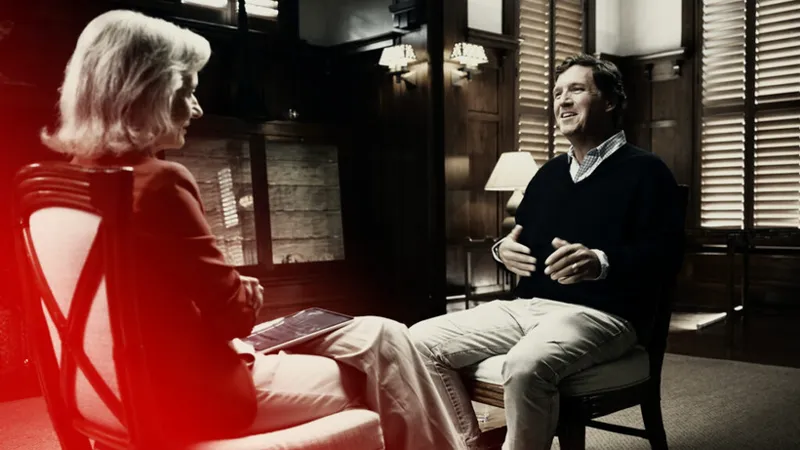
The Economist – Tucker Carlson on whether Trump betrayed America First over the Iran war
March 19, 2026
In conversation with Editor-in-Chief Zanny Minton Beddoes
Zanny Minton Beddoes
Let's talk about the way the debate develops in this country. Because I think you're right. There is it's extremely difficult to talk about subject that you and I have just spent the last half hour talking about, because there is a—
Tucker Carlson
Why is it difficult?
Zanny Minton Beddoes
Because there is a conflation. Very often, anybody who criticizes Israel is vulnerable to being called anti-Zionist or antisemitic, and that conflation—
Tucker Carlson
By whom?
Zanny Minton Beddoes
By the exact people you've just been talking about, by the, in the, in the kind of firmament of political—
Tucker Carlson
Do you think that's a good-faith response or a tactic?
Zanny Minton Beddoes
I was about to ask you that question. Clearly, I think you and I agree. We have both been critical of the Israeli government. I just want to kind of clarify terms a bit here.
Tucker Carlson
Well, I've really been critical of the Israeli government.
Zanny Minton Beddoes
I've been plenty critical of the Israeli government. I've told you at the beginning that we were again—
Tucker Carlson
What do you think of Gaza?
Zanny Minton Beddoes
What do I think of Gaza?
Tucker Carlson
Yeah.
Zanny Minton Beddoes
I think the war in Gaza, to start with, was a perfectly reasonable response, in response to the horrors of October 7. I think now the places, I mean, I've been there. Have you been to Gaza? I've been to Gaza since, since the war started. Since, since the war started.
Tucker Carlson
They would not let me into Gaza. Very few journalists get into Gaza.
Zanny Minton Beddoes
Yeah, no, I, I went with the IDF. It's the only way that you can go in. But nonetheless, you go in, you see a flattened place. I think it is a disaster, a disaster for the future of Israel, a disaster for the Palestinian people, a horror, 70,000 people dead—
Tucker Carlson
Why would you describe it first as a disaster for the future of Israel? You've got tens of thousands of civilians murdered, but it's foremost a disaster for the future of Israel? No, it's foremost a disaster for the families of the dead kids.
Zanny Minton Beddoes
No, I make — absolutely — I made three points.
Tucker Carlson
Everybody sucks up to Israel in this way that suggests they're afraid, and everyone is afraid. And you know that everyone's like, "The real problem is calling people antisemites allows real antisemites to flourish." It's like, no, actually, the real problem with calling people antisemites who aren't is accusing the innocent of a crime they didn't commit, and the real crime in Gaza is killing people who did nothing wrong. So those are the real problems, I can say, but no one can say it, because you have to be like, "Oh, no. But really, October 7th"—
Zanny Minton Beddoes
I don't know what you're talking about.
Tucker Carlson
[Laughs] Everyone watching knows what I'm talking about.
Israel’s genocidal onslaught on Gaza and the Palestinian people has claimed many innocent lives. Whatever happens to that tiny strip of land on the Mediterranean Sea in the years to come, what was once the world’s largest open-air prison and always a living monument to the ethnic cleansing of the Palestinian people from their ancestral homelands will forever be a mass grave atop many mass graves which preceded the latest.
And amidst the innocent lives taken in that land will lie another, more culpable one, that of the liberal international order.
The slow decline of the liberal paradigm which enjoyed quiet hegemony over much of the west these past few decades — safeguarded, always, by the more robust and proactive right-wing interventionism it quietly legitimised and acceded to perform the violent actions on which it relied but proclaimed to disavow — has been well-documented during the Trump era. The jerking transition from the presumed-to-be unassailable Democratic Party internationalism embodied by Barack Obama and his anointed successor Hillary Clinton to the frothing-mouthed violence-mongering of the Trump-era Republican Party induced a whiplash among the chattering classes and commentariat from which many have yet to recover.
And while there are numerous hypocrisies and contradictions which contributed to this steady delegitimation of the worldview espoused by this segment of the American and international political elite, few can now deny the centrality of one faultline in particular: The west’s ironclad support for the state project and military actions of Israel, and the murderous pretzel logic required to maintain this posture even as that country perpetrated a genocide, broadcast in real time to a global audience.
One would hope that a travesty like this, coupled with the Israeli government and body politic’s increasingly open embrace of Donald Trump and far-right figures and political movements around the world, would prompt a moment of introspection, reconsideration of the unhappy relationship between Israel and the liberal blocs of western developed nations – not to mention the voters on which those blocs depend.
Instead, what we have seen is a progression to an Omertà of an entirely different order, as individuals, institutions and organisations who claim to cherish rules, order and international law attempt to reconcile the chasm Israel exposes between their proclaimed values and the practical maintenance of the order they established and attempt, desperately, to uphold.
Long before Israel began dropping its latest onslaught of bombs upon the Gaza strip, dissent had bubbled up among the liberal left regarding the deliberate conflation of anti-Zionism and antisemitism. Many warned that conflation of anti-Zionism, opposition to the political project of the Israeli state and western legitimation thereof, and antisemitism, hatred of the Jewish people, was a dangerous equation which would endanger Jewish people; that this conflation also, implicitly, equated the politics of Zionism and actions carried out in its pursuit with that same totality of Jewish people, placing burden of guilt for the actions of a state upon an entire group, of many whom neither bore responsibility, nor supported, murderous actions which were proclaimed to be carried out, daily, in their name.
Concurrent to these warnings was one pertaining to the other side of the aisle, which holds far fewer qualms about exploiting popular outrage to advance its broader political agenda. The leadership of liberal political parties, organisations and news outlets could stamp down dissent within their own ranks regarding Israel and its actions and Gaza as long as was possible; this would not stop more unscrupulous figures on the right from observing the leadership vacuum their ear-plugging was creating, and then seizing on it for their own ends.
Over the past few months, there has been a troubling rise in far-right political figures exploiting outrage over the Gaza genocide to scoop up disaffected voters and onlookers and shepherd them to the right. In spite of the broader right-wing’s active and tacit support for the Israeli state project and its actions in Gaza, Lebanon, Syria, Iran and beyond, disgust with liberalism’s ‘See/Hear/Think No Evil’ stance with regards to Israel’s actions in the Middle East has created easy pickings for the right, which has long specialised in identifying single-issue voters, appealing to them on this basis, and bringing them into the fold.
One figure who has performed incredibly well within this new arrangement is Tucker Carlson who, despite being ousted from his enviable prime time slot on Fox News a few years back, and having been relegated to releasing streams on X, is now enjoying positive reviews from a broad range of casual viewers with his well-rehearsed condemnation of Israel’s actions in Gaza.
It is now a common refrain to hear comments applauding Carlson for being the ‘one person’ speaking the truth about Gaza. This is, of course, in spite of the many voices and figures on the left wing of the political spectrum who have made longer, louder and more forceful condemnations, but whose voices and influence have been intentionally drowned out by their own ostensible allies.
Anybody who cares deeply about the safety, well-being and dignity of not only the Palestinian people and civilians in the Middle East, but also Jewish people whether in the diaspora or in the Middle East, should be deeply troubled by this turn of events. We trust that Blood Work listeners do not need reminding about Tucker Carlson’s true character, nor the nature of his political views.
But nor should people be surprised by the ease with which figures like Carlson are able to run rings around liberal figures who then try to confront him on the subject of Gaza, as the editor-in-chief of stalwart liberal publication The Economist attempted above.
The simple fact is that, through his rhetorical technique, Carlson quite capably exposes an inability or unwillingness among liberal politicos to speak openly and frankly about Israel’s actions in Gaza. By flipping ostensible ‘gotcha’ questions back at his interlocutor, placing them on the backfoot and highlighting their own mealy-mouthed responses to Israel’s flagrant violations of liberal internationalist values and the laws from which they draw, he is repeatedly able to exit such exchanges with the upper-hand.
What are then elided, and secreted into the broader discourse, are the untrue, and more nefarious views Carlson then uses to buttress his stance, winking at the far-right as he gestures at Jewish control of the American state and fear of challenging it.
Later in the same conversation, Zanny Minton Beddoes attempts to skewer Carlson on the question of respecting Israel’s so-called ‘right to exist’. Carlson ably flips her once again, interrogating the meaning of the term ‘right’, and then dismissing the sanctity of any state’s right to exist with explicit reference to both the United States and Britain.
It’s an argument which will be familiar to many critics of Israel and Zionist politics on the left. The follow-up, however, is more troubling. Carlson buttresses his point with a comparison between the value systems of western and eastern cultures, arguing that the former abhor killing of innocents and collective punishment, while the latter support them.
Shortly after, Carlson makes a similar, familiar aside regarding international systems, but rather than speaking of law or institutions, he speaks of ‘universally applicable standards’, before remarking how he doesn’t believe Christians have more rights than black people or Filipinos, and that “human rights derive from the creation of people by God.”
On its face, the argument seems somewhat sound. But the implicit one, merely hinted at through peppered references to Christians and rights deriving from God, is more sinister. Tucker Carlson is a Christian nationalist, and the so-called ‘universally applicable standards’ to which he is implying are those of the Christian Bible, and so naturally give preference to adherents of that book and its doctrine.
This stance is then made impossible to challenge because of liberalism’s steadfast support for Zionism, which alleges that Jewish people are God’s chosen people (according to readings of their texts), and so enjoy a unique political sovereignty over the politics and affairs of their own sphere, the Middle East. Smuggled into this argument, also, is the conflation of Zionism and Jewish people writ large, which liberalism has already consecrated as an unassailable truth.
Far from being a universalist humanist as he proclaims, Carlson is able to sneak in his own worldview in more acceptable terms, to wit: If Jews can claim a unique right derived from scripture in their own lands, and this position is both a noble and uncontestable endeavour, then why shouldn’t Christians do the same in theirs?
For educated, ideologically consistent defenders of secular liberal politics, values and principles, this should not be a difficult argument to either refute or discredit. But it is precisely liberalism’s continued support for the Israeli state project and the Zionist ideology which subtends it — which is based on an implicitly religious ethnonationalist ideology which is incompatible with and indeed devalues those liberal pieties — which makes it both possible for Carlson to exit this exchange looking like the victor, and making it look so easy while doing so.
Again, anybody who cares seriously about the safety of Palestinians and Jewish people alike should not be celebrating the championing of Tucker Carlson as either a champion of Palestinian or Muslim rights (which he isn’t), nor a sincere critic of Israel’s political and military actions in pursuit of the goals of Zionism (which he also isn’t).
But similarly, anybody who proclaims to uphold the values of secular liberalism and the values which have buttressed its attendant global order from the post-war period onward should also be looking at exchanges like the one presented here, and begin asking themselves how someone like Tucker Carlson can go up against members of their set and make besting them look so easy.
Because the answer is not difficult to figure out. It is, in fact, quite obvious. All you have to do is start being honest about things.
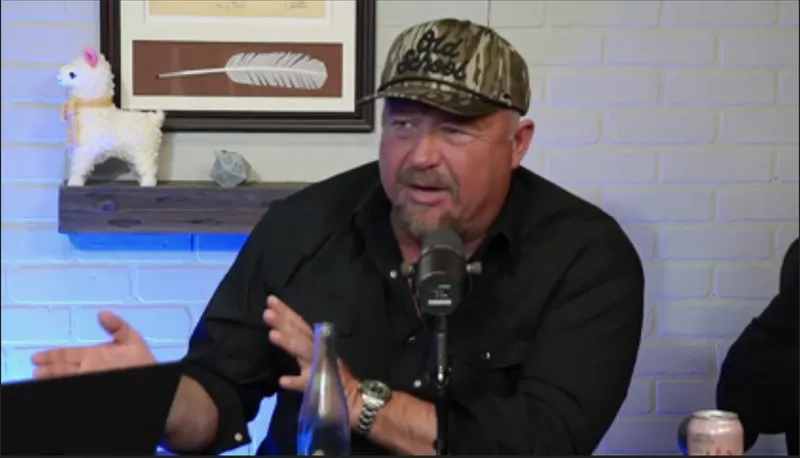
Media Matters for America – Alex Jones: Infowars will be shutting down in “the middle of next month”
March 16, 2026
Reported by Media Matters Staff
ALEX JONES (GUEST): We're getting, we're getting shut down. We've, we beat so many attacks. And, but finally, we're shutting down like the middle of next month.
TIM POOL (HOST): Wow.
JONES: It's going to be insane when it happens.
POOL: Yeah. So this is, this is —
JONES: The fake receiverships, the fake auctions, all of it's happening there right now.
POOL: So what are you going to do? You're launching a new thing, or what are you doing?
JONES: (UNINTELLIGIBLE) We're going to be fine.
POOL: All right.
Readers of the text version of our newsletter are advised to visit the Media Matters article linked and watch the footage itself. Listeners to the audio version will understand why. Though we attempted to transcribe the conversation between Alex Jones, Tim Pool, and his cohost and producers, it is impossible to convey the substantive information being communicated by Jones during his recent appearance on Pool’s podcast, and then simultaneously capture the drunken, incoherent, rambling manner in which it is conveyed.
Alex Jones’ battle with alcoholism is not a new revelation. A series of articles published by the Southern Poverty Law Center in 2023, written by researchers of the far-right Michael Edison Haden and Megan Squire, documented the fallout of two judgements against Jones and his Infowars media empire the previous year.
Following that lengthy legal battle, Infowars and its parent company Free Speech Systems were found guilty of defamation related to their coverage of the 2012 Sandy Hook school shooting, and hit with over $1.5 billion in compensatory and punitive damages.
An equally lengthy series of legal acrobatics and financial chicanery followed as Jones struggled to retain authority, both real and symbolic, over his media empire. Edison Hayden and Squire’s investigations during this period document the far-right provocateur’s embeddedness within larger right-wing political and media ecosystems, both his professional and personal travails, the troubling interlinkages between these two spheres, and how such linkages compound the ramifications for both his employees and his own family.
The extent and severity of Jones’s alcoholism was a central pillar of the reporting, including leaked text messages from Jones to both his employees and personal trainer requesting vodka in the early hours of the day, and references to security camera footage leaked by a former Infowars employee which appears to depict Jones drinking heavily throughout the day.
In recent years, particularly following Elon Musk’s takeover of Twitter and welcoming of the previously-banned Jones back onto the rebranded X platform, the Infowars founder has attempted to both restyle and rebrand himself multiple times. This is in part due to the legal and financial necessities of constructing a new media (and money-making) apparatus in the fallout of the Sandy Hook judgements.
Unfortunately for Alex, the particularly onerous conditions of that judgement have meant that many of his attempts to wriggle out of bankruptcy have been swiftly defeated.
In one particularly entertaining instance from 2023, Jones briefly ceased broadcasting under the Infowars in favour of a more intimate, ‘fireside chat’ format show in which he even floated the idea of doing paintings a la Bob Ross and his beloved The Joy of Painting programme on PBS.
When a judge swiftly instructed Jones that they knew what he was trying to do and that any revenue attained through this show would be seized and forwarded to the Sandy Hook claimants, the show abruptly ended, and he returned to regular programming.
Another reason for Alex Jones’ chronic rebranding is both more tragic and illuminating. Because the elusive new image Jones is quixotically seeking is one which is structurally impossible, because it exists within a new era of right-wing media production which emerged precisely because of the legitimisation of his own worldview and practices.
The conspiratorial element has long been an element of the American right. Fringe conspiracism in the conservative movement tracks back as far as the John Birch Society, founded in 1958, of whom Jones’ own family members and friends were members or fellow travelers.
Ever since then, the Republican party has been content to play footsie with these fringe movements, performing the deft two-step of validating and legitimising their worldview while also attempting to keep them at arms-length – demurring on endorsing their views as their views, but championing their right to hold and express them.
During the 21st century, however, this dance has ceased to work, whether by accident or intention, or perhaps a mix of both. Incursion of fringe extremism into the institutions of respectable conservatism, again, spans back as far as the post-war period and was accelerated by events of the 1990s, most notably the scandals surrounding the sieges at Waco, Texas and Ruby Ridge, Idaho, which reinvigorated anti-state isolationist movements within the American body politic and birthed the modern militia movement.
Secondly, attempted right-wing presidential runs by paleoconservative Republican Pat Buchanan and Ross Perot, a third-party insurgent with more elusive ideological underpinnings, exposed a split in the GOP between the ascendant neoconservative wing — whose worldview and eventual victory in that era are exemplified by the interventionist wars in Iraq and Afghanistan — and the paleoconservatives, who held a foreign policy outlook that was much more isolationist in nature, and so which also lent itself more readily to nativist sentiments within the American right, bringing with them particular views on race, ethnicity, religion, and so on.
This is the era in which Alex Jones first began his media career and his slow ascent to national fame. These are the inciting ideological struggles out of which he emerged. And this is the way he should, in fact, be understood as a political actor, rather than as a libertine renegade who, as he has repeatedly argued, transcends the left-right paradigm.
By the time of the Tea Party Movement of the 2010s, with the neoconservative worldview thoroughly discredited by its own successes, the fringe was becoming thoroughly mainstreamed within establishment conservatism. With the ascent of Donald Trump, who deftly synthesised the isolationist tendencies of paleoconservatism with the violent, masculinist desires of the American right writ large (including the neocons), the time for innuendo and ideological subterfuge had passed.
Since Trump’s first election in 2016, multiple prominent and mainstream figures in the Republican Party and broader conservative movement have embraced a worldview and accompanying rhetoric which increasingly resembles Alex Jones’ once idiosyncratic manner. Mainstream conservative politicians, media commentators and movements alike have embraced the style of conspiracist, breadcrumb-chasing theorisation once the purview of Jones and Infowars alone. These include figures like Marjorie Taylor Greene, Tim Pool, Elon Musk and, yes, Tucker Carlson.
In a world where views like Alex Jones’ can be openly espoused by members of congress, wealthy billionaires and mainstream commentators without fear of reprimand or exile, there is no longer use for an Alex Jones. This is, of course, a world perfectly suited to Alex himself, if not for the fact that it is also one which has surpassed him and rendered him redundant.
And while many of these figures do, still, venerate and celebrate Jones as their champion, what he fails to understand is that they do so because they view him not as a vanguard or thought-leader, but as a trophy or trinket; a symbolic old-fighter of the once-fringe turned establishment, now placed upon the mantle to gather dust, as the younger, more spry and smartphone-adept movers collect the clicks and cash he once preyed on and which he now needs more desperately than ever.
Anyone who has tracked Jones’ movements in even a cursory manner over the past few years will have picked up on certain events signalling his attempts to keep up. He has gradually moved away from call-in portions on his own show with Infowars listeners, instead hosting Spaces on X featuring controversy-sparking debates between various right-wing firebrands du jour. For a brief stint, he allegedly quit drinking and emerged having achieved a miraculous (and unnerving) degree of weight-loss which he attributed to diet and exercise, and certainly not one of the several miracle weight-loss drugs which emerged in the same time period. He has invited controversial and radioactive personalities like Kanye West, Russell Brand and Nick Fuentes on his show in attempts to ride in the slipstream of their own controversies and harvest new audience members for his dwindling empire.
And he has made numerous appearances on shows hosted by Tim Pool, Joe Rogan and, yes, Tucker Carlson, in a reciprocal parasitism on each others’ potential for outrage, eyeballs and ad revenue which Jones consistently fails to realise is always more beneficial for those new, ascendant right-wing firebrands than it is for the fading star of the erstwhile conspiratorial fringe.
It is in this light that Jones’ recent disheveled appearance on Tim Pool’s show should be read. Once again, he’s back on the podcast circuit, back on the booze, weight regained, slurring his words while attempting to stir up drama with other figures on that same circuit who don’t generate controversy the same contrived way he does, nor need to.
Again, not wishing to revel in Jones’ personal unravelling does not reflect a sympathy nor fondness for the man, but rather a preference for looking at this event for what it is: the pathetic tragedy of a right-wing conservative firebrand suffering from getting everything he wanted. That any of his friends and allies in the conservative media movement would exploit him in this condition by bringing him onto their shows to make a fool of himself in a practice akin to bear-baiting is reflective of the ethics and morality which animate the voices of the modern moral majority.
With friends like these, who needs the Globalists?